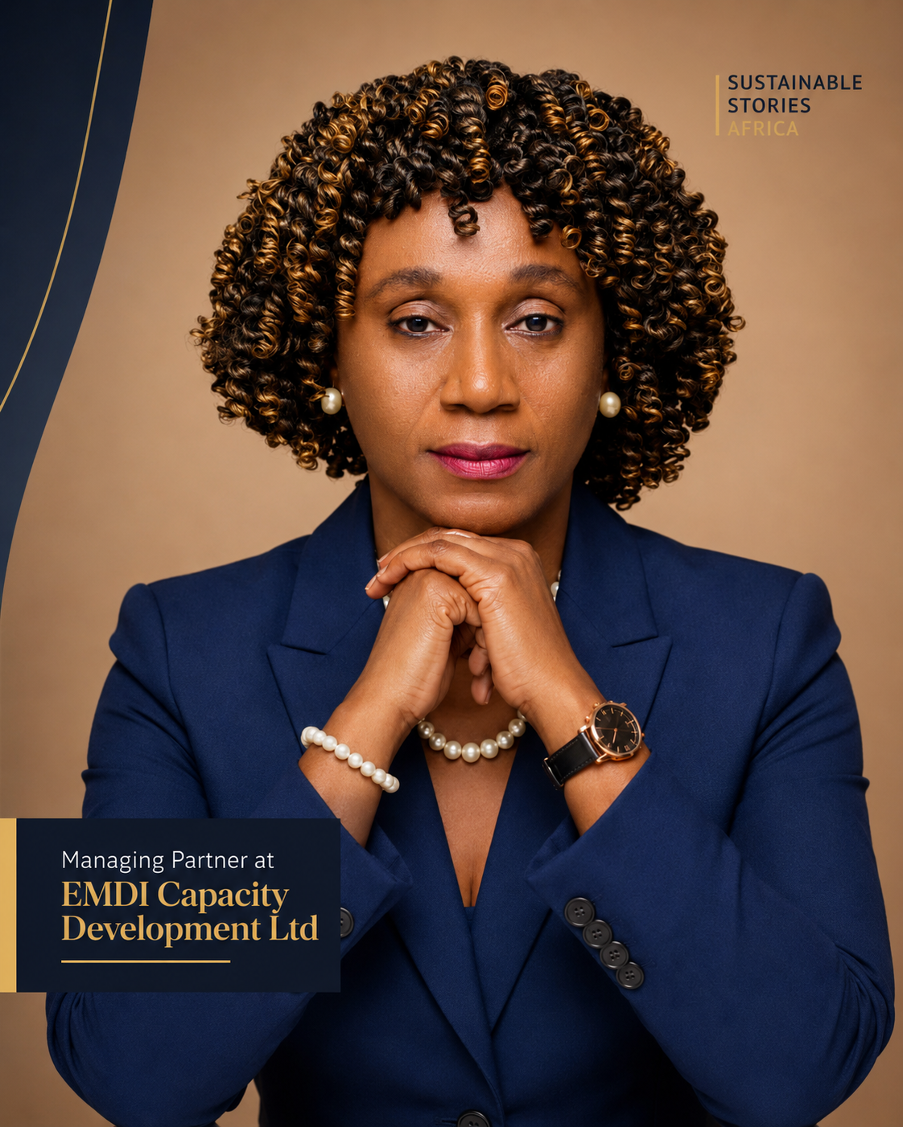
In an era when institutions are tested by shocks, from abrupt regulation to pandemics, Jumoke, Managing Partner at a leading Nigerian commercial law firm, Udo Udoma & Belo-Osagie, argues that true sustainability is built long before the crisis hits.
It starts with uncompromising integrity at home, meritocracy at work, and a leadership culture that treats every lawyer as “the next leader.”
Her story shows how people-centred policies, readiness for the future and quiet, values-driven courage can anchor a firm for decades.
Born into a family with a celebrated athlete father, A.K. Amu and a mother from the Oyekan Royal House of Lagos, as well as “people of integrity,” Jumoke decided by age five that she would become a lawyer and be the best at it.
That ambition was not handed to her through family name or privilege, but tested in the heat of Nigeria’s legal market: walking to print CVs, knocking on law firm doors, being rejected because “nobody sent” her, and then enduring a famously tough interview that drilled home the value of writing, communication and discipline.
Those early years set the foundations for the leadership she now embodies.
Today, she leads a firm that insists on merit over gender, institution over dynasty, and long-term thinking over short-term gain.
From the outset, the founding partner was clear: this would not be a family business, but an institution that any capable lawyer could help carry “with dignity, professionalism and humanity.”
Jumoke’s own journey, from youth corper to managing partner, from secondments into crisis moments at major institutions to steering the firm through COVID-19 without a day of shutdown, shows how that promise can be kept in practice.
What makes her leadership stand out in Nigeria’s evolving ESG landscape is how deeply people sit at the centre of strategy.
Data protection and technology adoption were not reactive moves; they were deliberate bets on where the law and clients were going.
The firm became one of the first registered data protection compliance organisations, built technology systems that made remote work seamless, and embedded integrity so firmly that it could walk away from government work that risked its reputation.
However, behind these institutional choices is a very human philosophy. Jumoke speaks openly about mentoring, about not attempting “the journey of life alone,” and about leadership as an exercise in emotional intelligence rather than domination.
She rejects the notion that women must choose between ambition and family, crediting strong support systems and urging younger professionals to seek guidance rather than silently struggle.
For her, everyone who walks into the office is “the next leader,” and the task of leadership is to create the conditions that let each individual become “the best you that you can be.”
In a profession often criticised for opacity and erosions of public trust, this blend of faith, fairness and foresight offers a different model of sustainable leadership, one where business continuity is rooted not just in systems and policies, but in how a firm chooses to treat its people when nobody is watching.