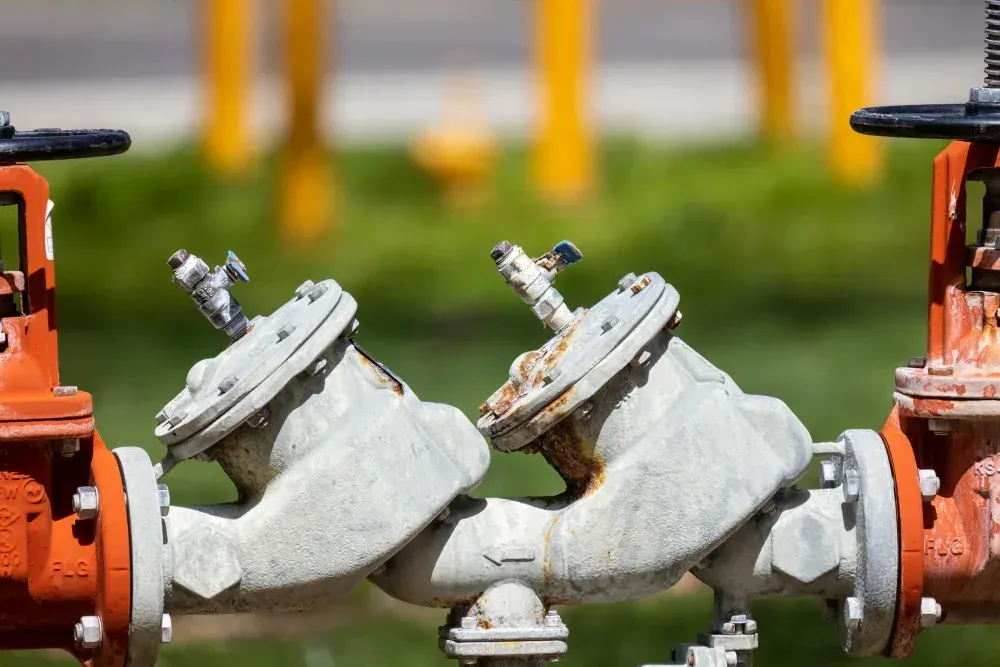
Methane control often turns on ordinary equipment: a valve left open, a degraded gasket, a poorly tuned pressure device or a failed flare.
Clean Air Task Force guidance shows why regulators and operators need a common leak vocabulary, safety-based repair categories and optical gas imaging verification that proves the emission has stopped.
Methane Repair Begins With Better Classification
A methane plume seen through an optical gas imaging camera is evidence of a problem, but it is not yet a diagnosis.
Regulators and operators still need to determine where the emission begins, whether it is continuous or intermittent, what failed and which repair can be completed safely. Inconsistent answers weaken leak detection and repair programmes.
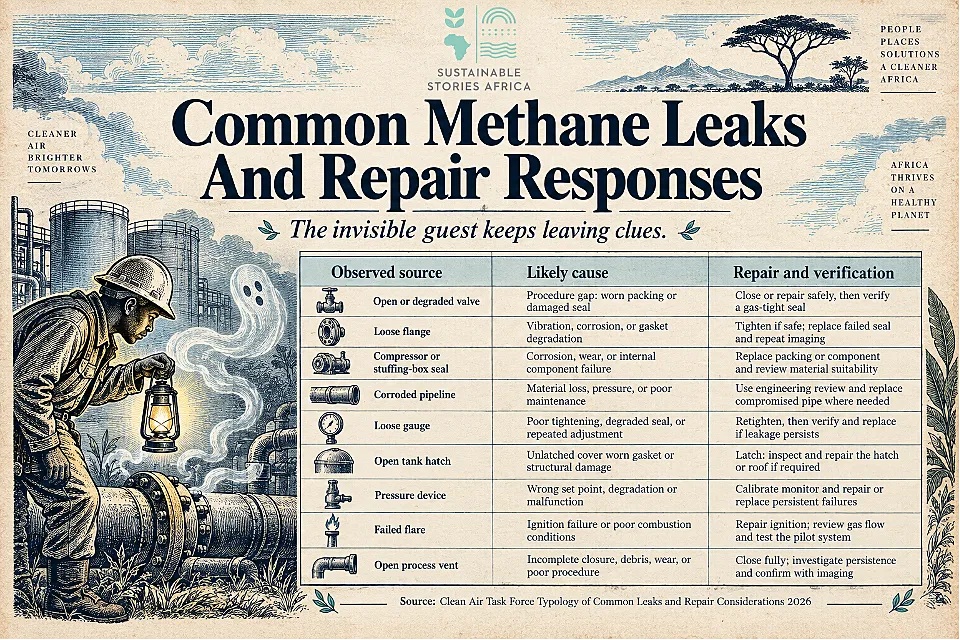
A Clean Air Task Force factsheet, drawn from its Policymaker's Guide to Implementing Leak Detection and Repair for Methane Mitigation, offers a practical typology.
- It classifies emissions by spatial pattern, timing and source, then links common field observations to likely causes and repair considerations.
- The guidance is based on field campaigns and discussions with personnel.
For African oil and gas producers, the framework is useful because it converts a broad methane commitment into tasks that can be inspected and recorded.
- It is not a substitute for site engineering: the factsheet warns that field interpretation and optical gas imaging have limitations.
- Its value is to establish a shared starting point for decisions, documentation and follow-up.
Invisible Leaks Create Visible Governance Failures
Clean Air Task Force says a significant share of oil and gas emissions comes from persistent, unnoticed leaks caused by routine operations and equipment failure.
- A valve can remain open after sampling, a gasket can degrade under heat and vibration, or a flare can release methane because ignition has failed. Individually, these events may look like maintenance defects.
- Together, they reveal whether a company can manage environmental risk at asset level.
Detection alone does not deliver the emissions reduction.
- A programme must define which components are inspected, the method and frequency of surveys, who records a finding, the repair deadline, the safety conditions for intervention and the verification test.
- When those rules differ across inspectors or facilities, comparable reporting becomes difficult, and leaks can remain open while responsibilities are disputed.
Leak Type Determines The Repair Response
The first classification is spatial.
- A point source has a localised, identifiable origin, such as a storage-tank vent.
- A diffuse source spreads across an area, as with a wastewater pond.
The second is temporal.
- A continuous emission persists at a relatively steady rate across a day, while an intermittent or single event occurs during a specific activity or process change.
The third distinguishes equipment malfunction from an operational upset caused by configuration, control error or operation outside design conditions.
Repair planning then considers complexity and safety.
- Routine leaks on standard components can often be addressed through established maintenance without major disruption.
- Process-critical or safety-related leaks may require shutdowns or special procedures.
- Structural or access-limited leaks can need engineering review, scaffolding, elevated work or specialist access.
This structure prevents a simple leak from being ignored and a hazardous repair from being attempted without control.
The field examples show how diagnosis changes the remedy.
- A loose flange may stop emitting after a safe mechanical adjustment, but a failed gasket requires replacement and another inspection.
- A tank hatch may simply need to be latched, while corrosion or roof damage can require structural work.
- A pressure-release device may be leaking because its set point is wrong, because the valve has failed or because operators lack confidence in vessel capacity.
The visible plume is similar; the corrective action is not.
Standardised LDAR Can Improve Safety And Accountability
A consistent leak detection and repair programme improves more than emissions reporting.
- It gives technicians a common escalation path, helps supervisors distinguish immediate work from planned shutdown maintenance, and creates evidence for regulators that an identified problem was closed.
- Mechanical integrity and worker safety benefit when recurring leakage prompts investigation of corrosion, vibration, process conditions or material selection rather than repeated temporary fixes.
The typology also strengthens capital planning.
- A pattern of small valve and fitting leaks may justify changes to inspection frequency, spares or operating procedure.
- Compressor-seal failures may require upgraded materials. Repeated pressure-device releases can expose incorrect set points or equipment that no longer matches the process.
- Tank or pipeline degradation can move the issue from routine maintenance to asset-integrity investment before a larger failure occurs.
Consistency can also improve regulatory fairness.
- Operators should face comparable expectations for similar equipment and risk, while inspectors need a documented basis for allowing a delayed repair when shutdown or specialist access is genuinely required.
- A shared vocabulary makes those decisions reviewable.
- It separates a safety-based deferral from simple inaction and helps regulators identify facilities where the same equipment repeatedly fails after nominal closure.
Regulators And Operators Need Shared Protocols
Regulators should define a minimum LDAR chain: approved survey methods, operator competence, component coverage, leak classification, repair deadlines, permissible delay grounds, record retention and post-repair verification.
- Requirements should recognise that optical gas imaging can show the presence and apparent origin of emissions but may not establish root cause or quantify every plume accurately.
- Rules need room for engineering investigation while preventing uncertainty from becoming an indefinite exemption.
Operators should connect every field record to a component identifier, operating state, image or video evidence, suspected cause, risk category, work order and closure test.
- A second optical gas imaging check under actual process conditions is essential after tightening, repacking or replacement.
- If a vent still emits after it appears closed, debris, wear or internal damage may require deeper investigation.
- Temporary workarounds should be replaced with engineered, low-emission solutions.
Boards and lenders can use aggregated LDAR data as an environmental and operational-control indicator.
- Useful measures include time from detection to repair, overdue leaks by safety category, recurrence by component type and the share of repairs verified after work.
- Public reporting should avoid implying precision that the detection method cannot support.
The strongest disclosure shows the programme boundary, method, limitations and closure discipline alongside emissions estimates.
Path Forward – Detection Must End In Verified Repair
African methane rules can become more enforceable when inspectors and operators use the same leak categories, safety thresholds, repair records and verification tests.
Facilities should connect imaging to work orders and recurring-failure analysis.
Regulators should audit the full chain from detection to closure, ensuring that operational uncertainty prompts investigation and that temporary fixes do not become permanent practice.