A GlobeScan and BSR survey reveals a sharp internal gap in how companies understand sustainability.
77% of sustainability professionals view it as a core driver of long-term strategy, but only 39% believe senior leaders share that view.
Closing the gap will require sustainability teams to connect risk management with growth, innovation, resilience and measurable performance.
Internal Perception Gap Widens Sharply
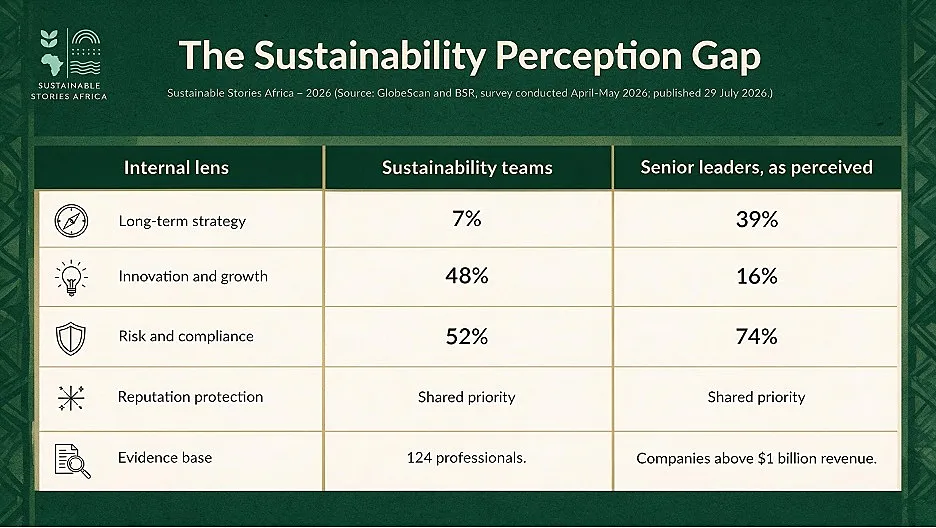
Corporate sustainability teams and senior leaders are increasingly perceived to disagree about what sustainability is for, according to 2026 research from GlobeScan and BSR involving 124 sustainability professionals at companies with annual revenue of at least $1 billion.
77% of the respondents said sustainability teams see the function as a core driver of long-term business strategy. Only 39% believed senior leadership viewed it the same way.
The gap was even wider on innovation and growth: 48% associated those opportunities with sustainability teams, compared with 16% for senior leaders.
Senior executives were instead perceived as more likely to frame sustainability around risk management and compliance at 74%, compared with 52% for sustainability teams.
Both groups, however, recognised its importance in protecting corporate reputation.
Compliance Pressure Crowds Out Opportunity
The findings arrive as regulation has become a dominant driver of corporate sustainability programmes.
- Mandatory disclosure, supply-chain due diligence and climate-risk rules can secure attention and budgets, but they can also narrow the conversation to deadlines, controls and exposure.
That defensive framing is understandable.
- Senior leaders are accountable for legal risk, investor scrutiny and performance.
However, when sustainability is positioned only as a cost centre, businesses may overlook efficiency, product innovation, resilient sourcing and access to new markets.
For African companies, this distinction is important.
- Climate shocks, energy costs, natural-resource dependence and social inequality are not distant reputation issues; they affect production, financing, employees and customers directly.
Shared Metrics Can Rebuild Alignment
The research does not require companies to choose between risk and opportunity.
- Effective sustainability management should reduce exposure while creating value.
- Energy efficiency lowers emissions and operating costs.
- Better worker conditions can reduce turnover.
- Climate-resilient supply chains protect revenue as well as communities.
Teams can make this connection visible by translating environmental and social priorities into the language of business decisions:
- Capital allocation, margin, revenue growth, asset life, cost of capital and disruption avoided.
They should also acknowledge uncertainty and avoid presenting every initiative as an immediate financial win.
- Boards and executive committees, meanwhile, need enough sustainability competence to challenge assumptions and judge longer-term value rather than delegating the subject to a specialist function.
Leaders Must Integrate Strategy Reviews
Companies should include sustainability leaders in strategic planning, investment committees and enterprise-risk reviews.
Major proposals should show both compliance implications and value-creation pathways, supported by common metrics and accountable owners.
In African markets, management teams should prioritise material issues grounded in local operating realities rather than copying global scorecards.
Clear links to energy security, water, workforce capability, community trust and supply resilience can make sustainability indispensable to execution.
Pah Forward – Risk and Value Need One Story
Senior leaders and sustainability teams should build a shared business case that treats compliance as a floor and strategic value as the destination.
Reputation offers useful common ground, but it is not enough.
Progress will depend on integrated governance, credible financial evidence and incentives that reward resilience and innovation alongside short-term performance.