Africa’s climate response needs sustained investment in independent local journalism. Communities require reporting that explains risks, tests solutions and follows public promises beyond disasters and diplomatic meetings.
Drawing on APRI and MiCT’s 2024 analysis, this opinion argues that funding, protecting and equipping African reporters should be part of climate action.
The challenge for African and emerging markets is to connect climate decisions with people’s livelihoods, rights and ability to demand accountability.
Climate Accountability Begins With Local Reporting
Africa’s climate response should treat independent local journalism as essential to public accountability.
Governments and financiers can announce ambitious programmes, but citizens also need reporters who explain their implications, investigate delivery and ask whether communities benefit.
Without that scrutiny, climate action can remain distant from the people it is meant to serve.
Telling Climate Change Stories: Perspectives from African Journalists, by Grace Mbungu, Sage George and Isabella Roberts, provides a useful foundation.
Published by the Africa Policy Research Institute with Media in Cooperation and Transition in 2024, it draws on nine journalists from eight African countries involved in a Berlin and Potsdam programme held from 2 to 7 May that year.
Their experiences identify barriers to effective reporting, rather than establish a representative continental survey.
The argument for policymakers, media owners and funders is nevertheless compelling:
- Climate information becomes more useful when journalists connect scientific findings and policy choices with everyday life.
Human Stories Reveal What Headlines Miss
In the report’s foreword, Ugandan climate activist Vanessa Nakate recalls visiting Turkana County, Kenya, in 2022.
- She describes meeting Desmond, a severely malnourished boy who died later that day.
- Her account places a human life at the centre of a discussion too often reduced to weather statistics.
Responsible journalism should explain how climate hazards interact with poverty, public services and vulnerability.
- It should also establish what evidence can support a climate link in a particular story.
- Reporting a family’s suffering demands care, context and respect for dignity; an arresting image alone cannot explain why protection failed or what would improve it.
This is where sustained local reporting matters.
- A journalist can return after the emergency, examine recovery spending and ask whether warnings reached people in a language they understood.
- Such work can expose the difference between a policy announcement and a functioning service.
Funders should recognise it as a contribution to climate resilience, while preserving reporters’ freedom to challenge the institutions financing that response.
Event Coverage Leaves Critical Questions Unanswered
The APRI and MiCT analysis describes reporting that frequently follows disasters or major meetings.
- It cites a Konrad-Adenauer-Stiftung study published in 2023, whose content analysis covered 464 stories from 35 media outlets in seven countries.
- Of those stories, 337 concerned events, compared with 87 analyses or opinion pieces and 40 investigations.
This historical sample illustrates a coverage imbalance; it does not measure the whole continent’s media in 2026.
The consequence extends beyond editorial variety.
- Event coverage can tell audiences what happened while leaving them uncertain about how decisions were made, which promises were fulfilled and whose interests were protected.
- Investigations require time to obtain documents, verify competing accounts and revisit communities.
A newsroom budget built around occasional assignments makes that continuity difficult.

The report’s examples show what deeper coverage can involve.
- It describes South Africa’s #PowerTracker initiative, associated with Oxpeckers Investigative Environmental Journalism, mapping renewable energy projects and coal power station decommissioning plans in Mpumalanga.
- That work provides a basis for examining the human consequences of the energy transition, alongside its technical ambitions.
Ghanaian journalist Justice Baidoo’s account of reporting at Agbogbloshie’s e-waste site highlights another constraint: exposure to toxic fumes and hostility.
- Environmental pollution is not automatically evidence of climate change, but his experience demonstrates the safety support needed for reporting on interconnected environmental risks.
Participants also described restricted data access, complex scientific language and unreliable funding.
These are institutional obstacles.
- Training a reporter cannot compensate for missing travel funds, withheld documents or an editor unable to allocate time for an investigation.
Trusted Reporting Can Strengthen Community Agency
Better reporting can make climate decisions easier to question and use.
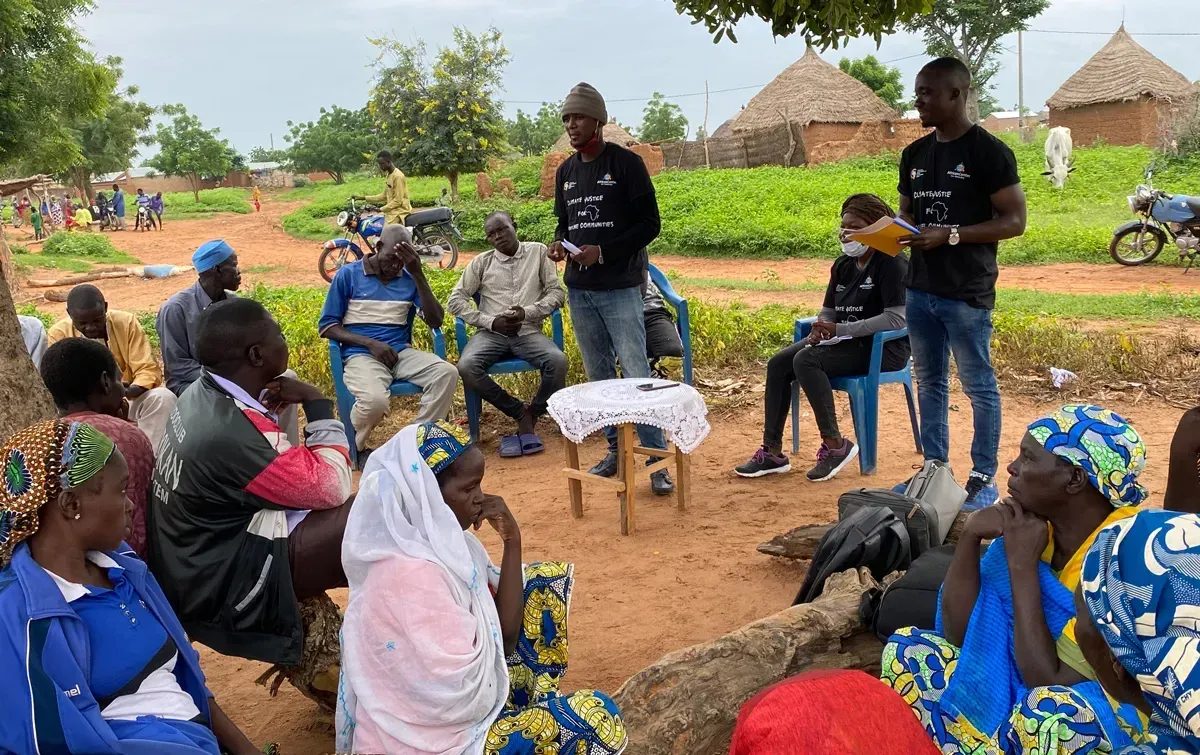
- A farming community may need an explanation of an official seasonal forecast, the limits of its certainty and the support available if crops fail.
- People living near an energy project may need to understand consultation arrangements, employment promises and routes for raising concerns.
These are practical information needs, not abstract requests for greater awareness.
Local language reporting and Indigenous perspectives can improve relevance, provided journalists verify claims and recognise differences within communities.
- The report stresses including women and young people and historically marginalised groups.
- Their experiences can reveal consequences that official summaries overlook.
Solutions reporting also requires scrutiny.
- A promising adaptation project deserves questions about cost, access, maintenance and evidence of results.
- Highlighting community initiative should help readers assess what works and under what conditions, rather than turn a project into an unquestioned success story.
As Zambian journalist Mary Kasoka puts it in the report, “It matters how we tell the stories.”
- The opportunity is to show communities as knowledgeable participants in climate decisions, while keeping responsibility for structural problems visible.
- That approach can support public trust without concealing failure.
Finance Independent Newsrooms And Protect Reporters
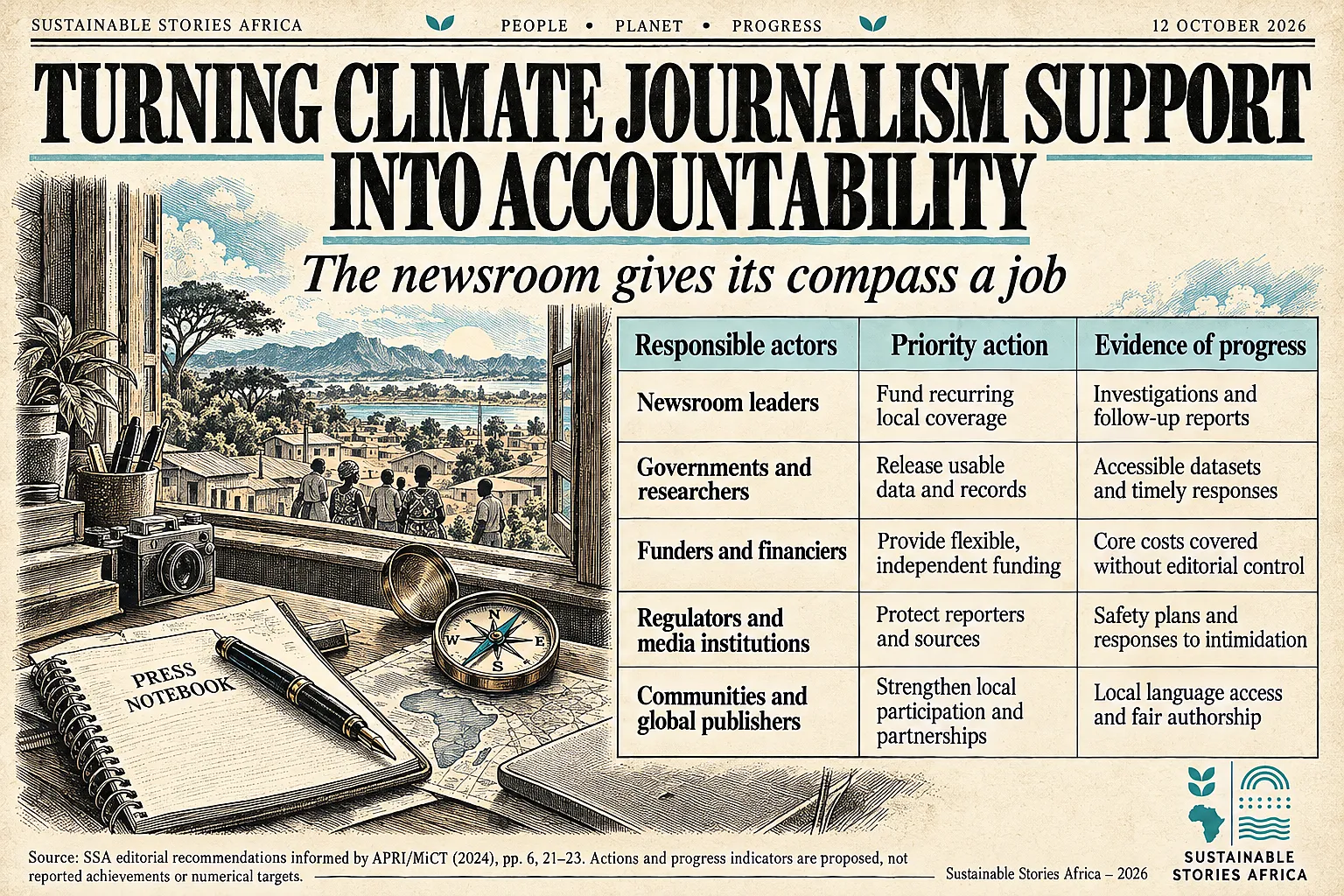
Media owners should establish recurring climate coverage budgets and connect the subject with agriculture, health, business and governance reporting.
- Editors need training alongside reporters, so that commissioning decisions recognise slow developments as well as emergencies.
- Assignments should include time for verification and follow-up, with safety planning built into their cost.
Governments, regulators and research institutions should make usable climate information and project records accessible.
- Public agencies should publish spending and implementation updates, answer reasonable information requests and provide clear explanations of technical findings.
- Protection for journalists must include effective responses to intimidation.
- Transparency is meaningful when inconvenient questions can be asked safely.
Foundations and development financiers should provide flexible funding that covers newsroom capacity, fair compensation, travel, legal advice and protective equipment.
- Grants should make editorial independence explicit.
- A funder’s preferred narrative must never determine the findings of an investigation into its own programme.
This is how support for climate communication can also support accountability.
Businesses should disclose the assumptions behind environmental claims and allow scrutiny of project outcomes.
- Independent journalists need access to affected residents, workers and records, rather than only corporate spokespeople.
- Supporting media capacity should create room for examination, including findings that a sponsor finds uncomfortable.
International publishers should pursue fair partnerships with African journalists, recognising their reporting, knowledge and authorship.
- Support for attending climate negotiations should also enable follow-up at home, where commitments can be tested against delivery.
- Conference access alone cannot sustain community accountability.
Citizens and community organisations can identify unanswered questions, contribute local knowledge and support trusted outlets.
- Newsrooms should maintain accessible correction channels and listen to the people whose lives they report.
- Progress should be judged through the quality and continuity of coverage, the diversity of credible voices and the responses investigations obtain, alongside audience reach.
Such measures can help funders assess their support while preserving editorial independence.
Path Forward – Make Local Climate Accountability A Priority
African climate strategies should include sustained support for independent local reporting.
Priorities include flexible funding, accessible data, reporter protection and coverage that respects community knowledge while verifying claims.
Media owners, public institutions and funders should turn those priorities into budgets and working practices.
The purpose is to help people understand climate decisions, evaluate solutions and hold promises to account long after an announcement or emergency passes.