Nigeria’s weak grid has made solar lighting an infrastructure necessity, rather than a lifestyle accessory.
Aiona’s leaders argue that efficient LEDs, climate-adapted batteries and off-grid design can lower costs while improving safety and reliability.
Their case is persuasive; however, Africa’s lighting transition will endure only if procurement shifts from wattage and installation counts to verified lumens, lifecycle cost, warranty performance and responsible end-of-life systems.
Lighting Must Become Accountable Public Infrastructure
In Nigeria, darkness is rarely just the absence of a lamp. It can mean a road that becomes unsafe after sunset, a filling station running another diesel generator, a public park losing its usefulness, or a business paying twice for electricity it still cannot trust.
That is the reality behind the answers Ayo Onabamiro and Jide Pratt, Aiona Nigeria Limited’s chief executive and chief operating officer, gave Sustainable Stories Africa.
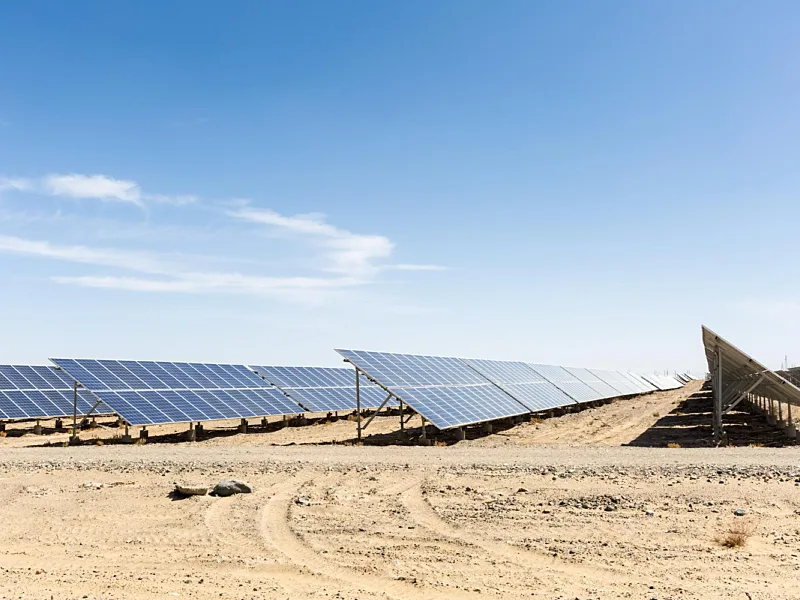
Their proposition combines solar power, high-efficiency LED lighting, lithium iron phosphate batteries, weather-resistant equipment and smart controls to move public and perimeter lighting away from an unreliable grid.
The direction is right. The larger lesson is not that every solar lamp is automatically sustainable.
It is that Africa should procure lighting as measurable public infrastructure: useful light delivered reliably, at a transparent lifecycle cost, with claims tested under local conditions and responsibility extending from installation to battery disposal.
Nigeria’s Darkness Is A Governance Problem
Nigeria’s lighting deficit sits inside a wider electricity crisis. The World Bank reported that, as of 2021, more than 85 million Nigerians lacked access to electricity, while many connected households and businesses still faced unreliable supply.
Its $750 million Distributed Access through Renewable Energy Scale-up project aims to provide more than 17.5 million people with new or improved access to electricity and mobilise private capital for distributed renewable energy.
Those figures explain why Aiona’s starting point matters.
Pratt said the company’s transition toward solar lighting was driven by grid unreliability.
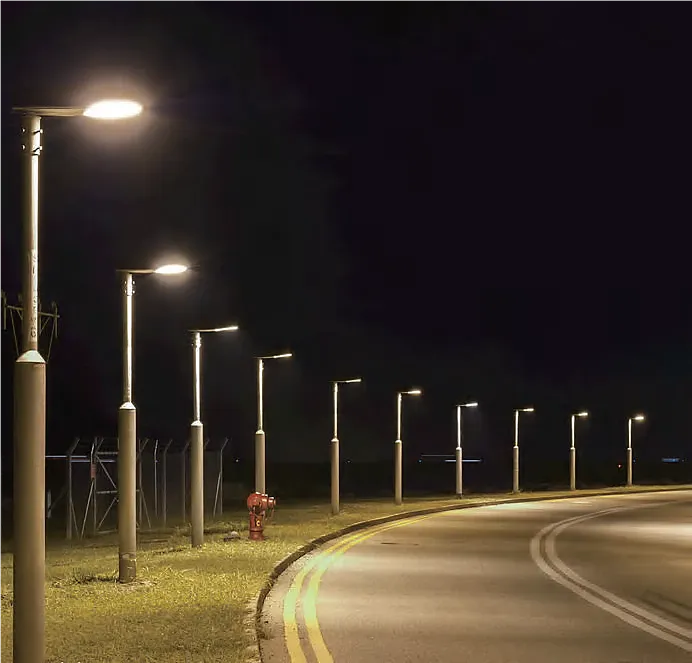
Taking street, public-space and perimeter lighting off-grid can isolate an essential service from blackouts while reducing the need to burn petrol or diesel to keep an area visible.
This is not a minor efficiency intervention.
- Lighting shapes road safety, security, commerce, mobility and the use of shared spaces.
- A failed streetlight therefore carries a social cost that never appears on the equipment invoice.
The correct procurement question is not, “How many poles were installed?” It is, “How many hours of dependable, adequately distributed light did people receive, and at what full cost?”
Aiona’s interview answers point toward that outcome-based logic. They also expose the standard African infrastructure risk: ambitious technical claims can be mistaken for proven impact unless buyers require baselines, test results and operating data.
Efficiency Begins With Buying Useful Light
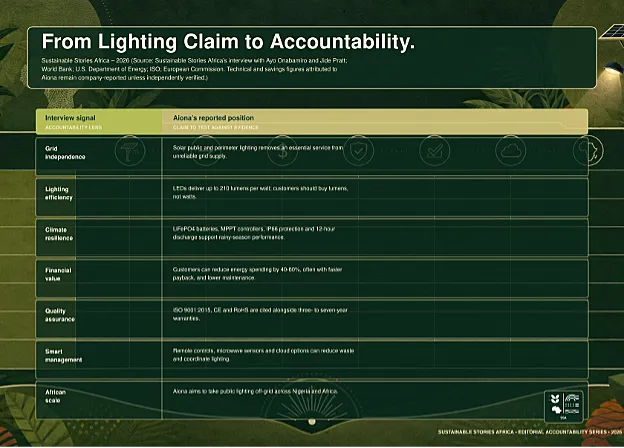
Aiona's core pitch, "buy lumens, not watts," rests on a valid technical distinction: watts measure power consumed, while lumens measure light produced.
The US Department of Energy defines luminous efficacy as lumens per watt; higher figures signal greater light output per unit of electricity.
Pratt states Aiona's LEDs’ efficacy reaches up to 210 lumens per watt, supported by lithium iron phosphate batteries, Maximum Power Point Tracking controllers, IP66 dust and water protection, and 12-hour night discharge.
Panel and battery specifications are reportedly designed to maintain performance through Nigeria's rainy season, when sunlight is limited.
These specifications build a credible engineering case, even if component claims differ from Aiona’s installed system performance.
Procurement teams need photometric tests, illumination readings at actual pedestrian and road levels, battery autonomy under cloud cover, degradation rates, and maintenance response data to continue to prove the maximums.
The same scrutiny applies to certifications. ISO 9001:2015 confirms quality management processes are necessary to ensure product performance. CE marking is a manufacturer's self-declaration verified against international standards.
Reliable Lighting Can Compound Public Value
With accountability in place, solar lighting can deliver value beyond electricity savings.
- Roads and walkways remain usable during grid failures
- Retailers and fuel stations reduce dependence on generators
- Public spaces support evening activity.
- Municipalities spend less on equipment replacement
- Communities gain confidence that installations work long after commissioning photographs are taken.
Onabamiro estimates Aiona's systems cut electricity and generator spending by 40% - 60%, sometimes more, while lowering maintenance costs and accelerating ROI, a material proposition in a high-cost energy environment.
- This should be treated and tested against each customer's baseline load, fuel price, operating hours, financing cost and maintenance record.
Durability reinforces the business case. Pratt calls quality control "non-negotiable," citing a three-year warranty on solar equipment and five to seven-year warranties on high-bay and floodlights.
This creates real sustainability value by supplying spare parts and the quick restoration of defective lights.
Smart controls are major gains; however, connected infrastructure should improve cybersecurity and vendor-dependence concerns. With this, Aiona's SDG 7 argument gains strength: affordable, clean energy means dependable services that improve resilience and daily life, and lighting makes that connection visible.
Procurement Must Turn Claims Into Evidence
Public authorities and corporate buyers should start with outcome-based specifications.
- Tenders should state required illumination, uniformity, autonomy, weather protection and availability, rather than just panel size or wattage, while bid evaluations compare whole-life cost, rather than upfront price.
- Every project needs a baseline and measurement plan: recording grid use, generator runtime, fuel cost, maintenance expense and failures before deployment, then disclosing the same indicators after.
- Standards must be verified at the correct level, with current certificates, issuing bodies, scope statements and product test reports, with sample testing where project size justifies it.
- Contracts should convert warranties into enforceable service-level agreements covering response times, spare parts, and fault reporting, with clear community channels for reporting failures.
- Lifecycle responsibility must include batteries and electronics, with take-back and recycling agreed before installation.
Finally, financiers should reward verified performance, disbursing capital against commissioning, uptime and savings milestones, so scale is earned by systems that keep working, community by community.
PATH FORWARD – Africa Must Measure Every Sustainable Light
Africa should accelerate solar lighting, but pair speed with proof.
Buyers must ensure they specify outcomes, technical and standards requirements, measure savings and uptime, enforce service obligations, and plan for batteries at end of life.
Aiona’s interview offers a new direction: efficient, climate-adapted lighting can reduce grid challenges and dependence on generators.
The next step is to make every promise auditable, so sustainable illumination becomes dependable infrastructure rather than a short-lived installation.