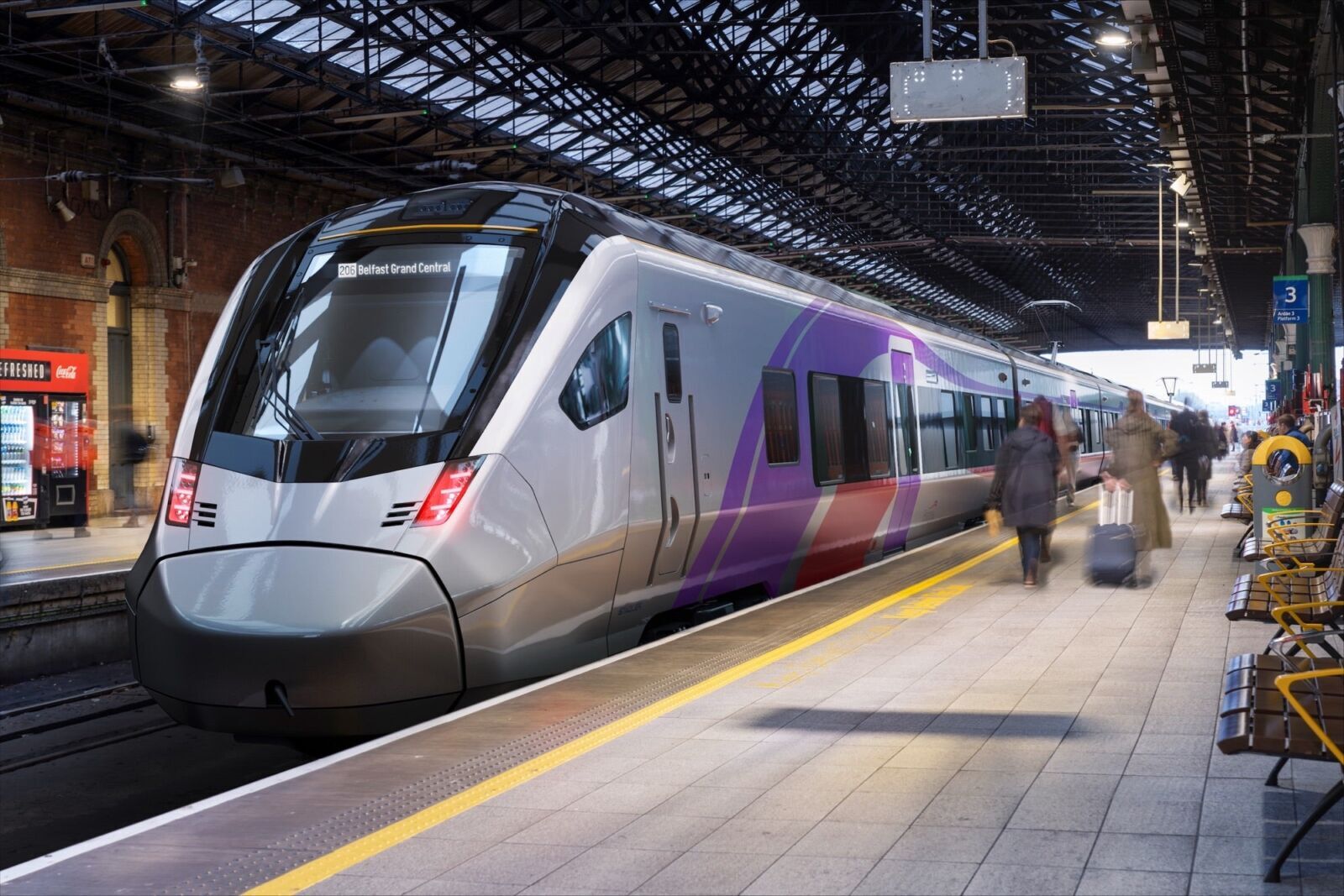
The African Development Bank is deepening cooperation with Germany to support modern rail infrastructure across Africa.
The partnership centres on a proposed African Rail Competence Centre and wider technical collaboration.
For African businesses and commuters, better rail could mean cheaper freight, safer movement and stronger regional trade.
Rail Partnership Targets Africa’s Mobility Gap
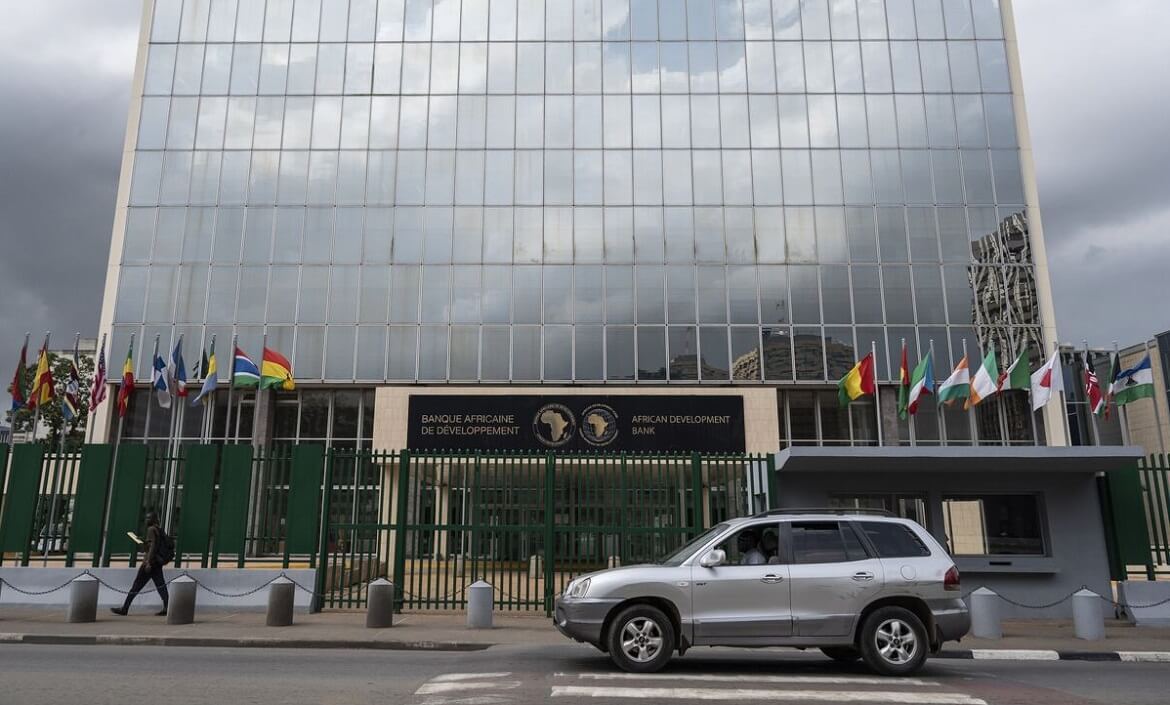
The African Development Bank Group has strengthened its partnership with Germany to advance railway infrastructure, skills development and integrated transport systems across Africa, following a Bank mission to Germany in the final quarter of 2025.
The engagement, led by Mike Salawou, AfDB’s Director of Infrastructure and Urban Development, included discussions with German transport institutions and DB Engineering & Consulting, the engineering arm of Deutsche Bahn.
A key outcome was a Letter of Intent to explore a feasibility study for an African Rail Competence Centre.
The move is significant because Africa’s transport challenge is not only about tracks, locomotives and stations.
It is also about skills, project preparation, corridor planning, maintenance systems and the ability to move goods across borders without turning logistics into a tax on growth.
Skills Centre Could Shape Rail Future
Under the proposed collaboration, the Rail Competence Centre would serve as a hub for railway knowledge, innovation and workforce development.
The Bank’s delegation also visited the DB Railway Academy in Potsdam, which has delivered more than 2,500 training programmes and trains about 250,000 participants annually, according to reports on the AfDB announcement.
For African governments, this points to a practical gap in infrastructure delivery. Many countries have ambitious rail plans, but projects often stall at the feasibility, financing, procurement or operations stage.
A skills-focused institution could help train engineers, planners, technicians and regulators who can keep railway systems safe, bankable and commercially useful.
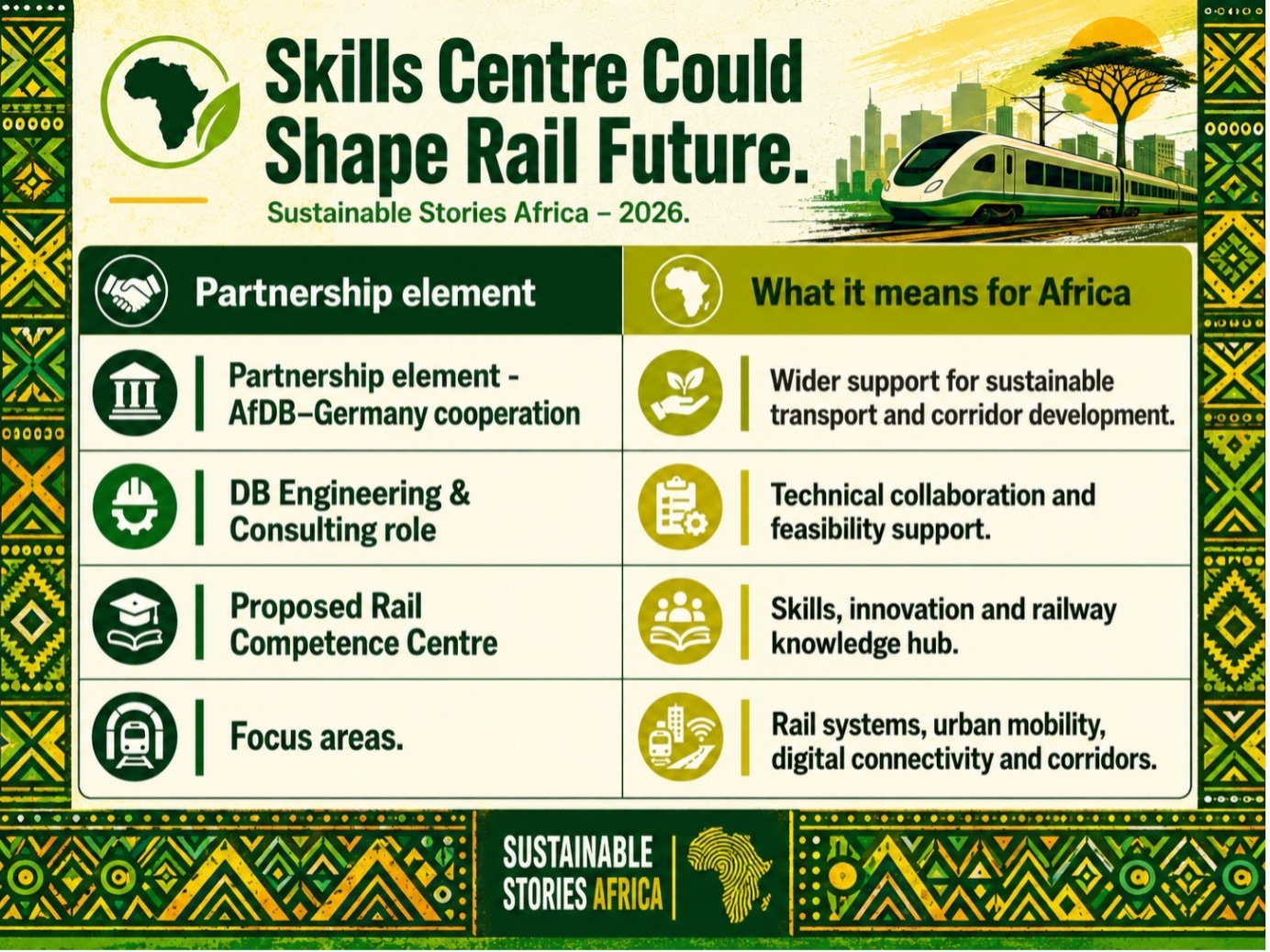
Corridors Can Unlock Regional Trade
The partnership also comes as Africa’s infrastructure agenda shifts toward economic corridors that connect ports, mines, farms, factories and cities. Projects discussed in related reporting include the Lobito Corridor, Abidjan–Lagos Highway, Uganda – Kenya Standard Gauge Railway and Ethiopia’s Bishoftu International Airport.
That matters because poor transport connectivity raises the cost of food, manufactured goods and exports.
A farmer moving produce to a city market, a manufacturer importing inputs, or a miner shipping minerals to a port all face the same problem: when logistics fail, prices rise, and competitiveness weakens.
Recent financing activity shows the stakes. Reuters reported last week that the Africa Finance Corporation is working with regional and international lenders to raise $3 billion to $5 billion for the Lobito Corridor, with railway construction and upgrades central to the project.
Better Rail Means Cleaner Growth
If implemented well, rail investment can support Africa’s ESG transition. Freight moved by rail can reduce road congestion, lower emissions intensity, improve safety and support more predictable supply chains.
For landlocked economies, corridors can also reduce dependence on slow and expensive routes to seaports.
But the AfDB–Germany announcement should be read carefully.
That distinction matters. Africa has seen many infrastructure announcements struggle because ambition has halted execution.
The real test will be whether this partnership produces bankable projects, trained personnel, credible maintenance systems and measurable improvements in freight and passenger services.
Institutions Must Turn Intent Into Delivery
For policymakers, the next step is to align rail planning with industrial policy, climate goals and trade integration.
Rail should not be treated as a prestige asset. It should be built around economic demand: ports that need throughput, farms that need markets, cities that need mobility, and exporters that need reliable delivery schedules.
For financiers, the opportunity lies in blending public funds, concessional finance and private capital without overloading strained public balance sheets.
For citizens, the promise is simpler: transport systems that reduce costs, improve access and make regional markets feel closer.
In this case, the human story is the technician trained to maintain a safer network, the trader who spends less time moving goods, and the commuter who gains time when the rail works.
Path Forward – Build Skills Before Steel
Africa’s rail agenda needs more than construction contracts. It needs credible feasibility studies, local technical capacity, transparent procurement, climate-aligned financing and long-term maintenance planning.
The AfDB–Germany partnership can advance sustainable mobility if it turns institutional cooperation into practical delivery: trained workers, bankable corridors, lower logistics costs and transport systems that support African growth without deepening environmental pressure.
Press Release: African Development Bank strengthens partnership with Germany to advance railway infrastructure in Africa