Europe’s Carbon Border Adjustment Mechanism has entered its definitive phase in 2026.
Importers of covered goods must report embedded emissions and buy CBAM certificates.
For African exporters, the rule turns carbon data into a condition for competitiveness, market access and long-term industrial credibility.
Carbon Data Becomes A Trade Passport
Europe’s carbon border tax is no longer a distant policy debate. From 2026, the EU Carbon Border Adjustment Mechanism, or CBAM, will apply a definitive regime, requiring importers of covered goods to account financially for the carbon emissions embedded in products entering the European market.
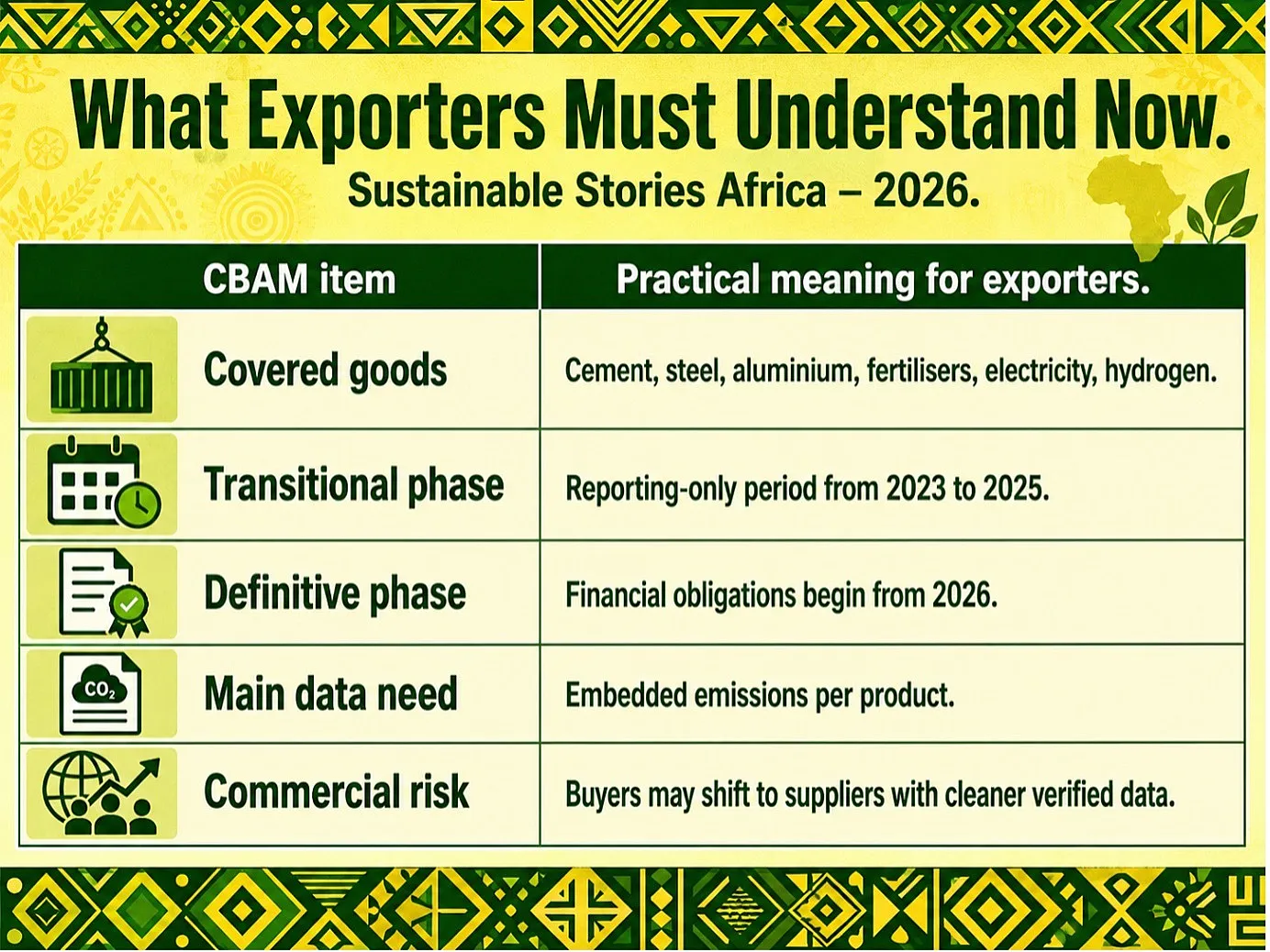
The regulation targets carbon-intensive sectors, including cement, iron and steel, aluminium, fertilisers, electricity and hydrogen, shifting exporters and EU buyers from a reporting-only transition into a compliance system linked to emissions costs.
For African manufacturers, miners and industrial exporters, the message is direct: access to Europe will increasingly depend not only on price and quality, but also on verified carbon data.
What Exporters Must Understand Now
CBAM was designed to prevent “carbon leakage”, the risk that companies move production outside Europe to avoid stricter climate rules, while keeping EU industry competitive under the bloc’s emissions trading system.
During the transition phase, which ran from October 2023 to December 2025, importers had to report emissions but did not pay the adjustment.
From 2026, financial liability begins, with importers required to continue reporting and purchasing CBAM certificates covering embedded emissions.
The first annual CBAM declaration for 2026 imports is expected in 2027, with certificate surrender linked to reported embedded emissions.
KPMG notes that, under simplification changes, the EU central platform for certificate sales is expected to open in February 2027, with the first declaration and surrender due by September 30, 2027.
Compliance Can Become A Competitive Edge
The risk for African exporters is real.
A steel producer, cement exporter or fertiliser supplier that cannot show credible emissions data may face tougher questions from EU buyers, higher default values or weaker negotiating power.
However, CBAM can also reward early movers.
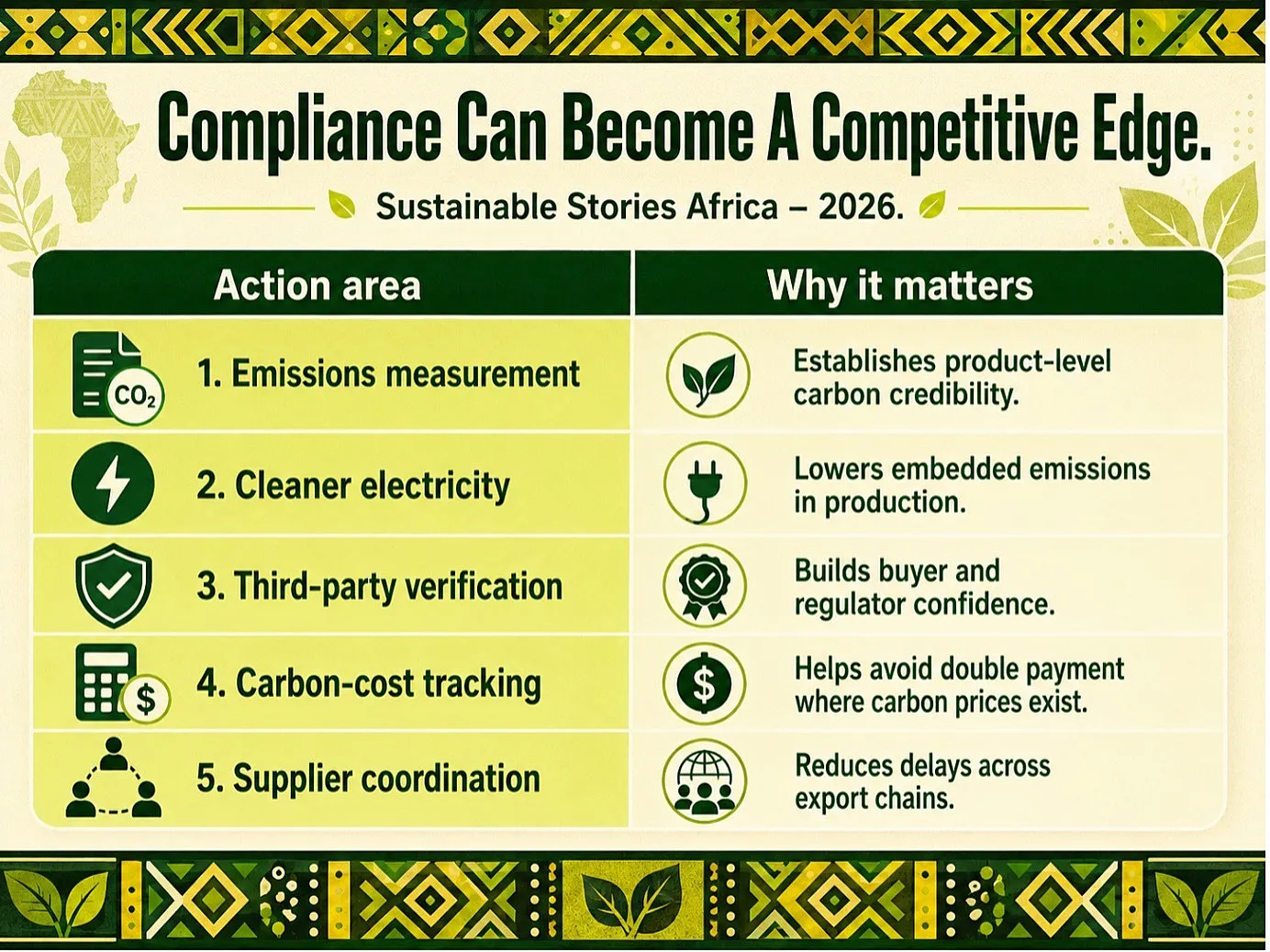
Companies that measure emissions, improve energy efficiency, adopt cleaner power, and document production processes can become preferred suppliers in a market where climate compliance is now part of procurement.
For countries seeking industrial growth, the regulation could push investment towards cleaner grids, efficient kilns, lower-carbon metals and stronger ESG reporting.
The biggest danger is exclusion.
Smaller exporters may struggle with data systems, consultants, verification costs and buyer documentation demands.
Without support, CBAM could widen the gap between large formal exporters and smaller firms trying to enter global value chains.
Exporters Should Prepare Before Pressure Peaks
African governments, industry associations and export agencies should treat CBAM readiness as trade policy, not only climate policy.
Exporters need to map product exposure, identify EU customers, measure direct and indirect emissions, check whether local carbon costs can be recognised, and build internal systems for documentation.
Governments should help firms access technical assistance, affordable verification and clean-energy infrastructure.
The EU lawmakers backed a simplification, exempting importers handling less than 50 tonnes of relevant goods annually, reducing administrative burdens for many smaller companies while keeping most emissions covered, with large importers accounting for nearly all targeted emissions.
CBAM fits that frame because it turns climate policy into a market-access story for the African industry.
Path Forward – Build Carbon-Ready Export Systems Now
The path forward is practical: measure emissions, clean up production, verify data and support exporters before compliance costs rise.
African markets should build shared CBAM help desks, sector databases and green industrial policies.
Well done, Europe’s carbon border tax can become more than a burden. It can accelerate cleaner manufacturing, stronger ESG disclosure and more resilient export competitiveness.
Culled From: EU CBAM 2026: A Practical Guide for Exporters Facing Europe's Carbon Border Tax