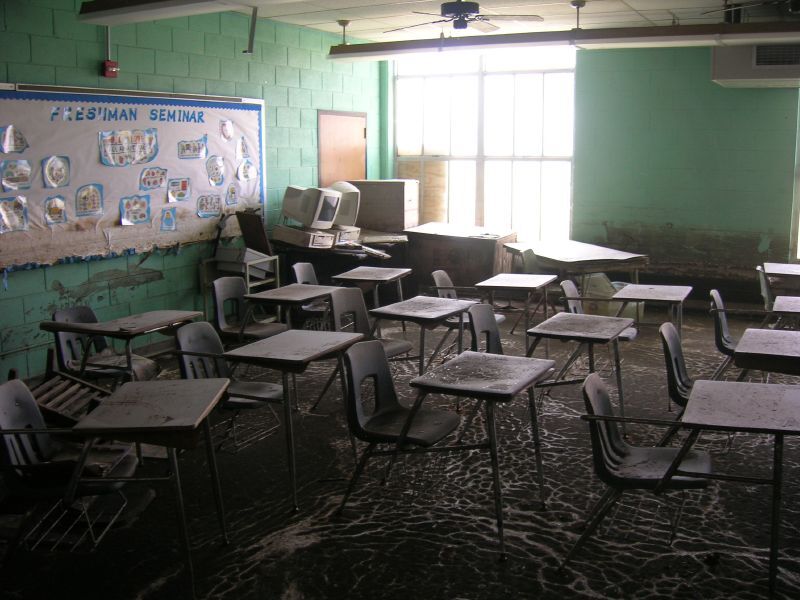
UNICEF and Dalberg warn climate disasters could disrupt learning for 440 million to 520 million children in Eastern and Southern Africa by 2050.
The warning matters because school disruption is becoming an economic risk, not only a humanitarian concern.
For children, the cost is measured in missed lessons, damaged classrooms and weaker lifetime opportunities.
Climate Is Now Disrupting Education
Climate change is no longer only destroying farms, roads and homes in Eastern and Southern Africa. It is also damaging classrooms, interrupting school calendars and threatening the future earnings of millions of children.
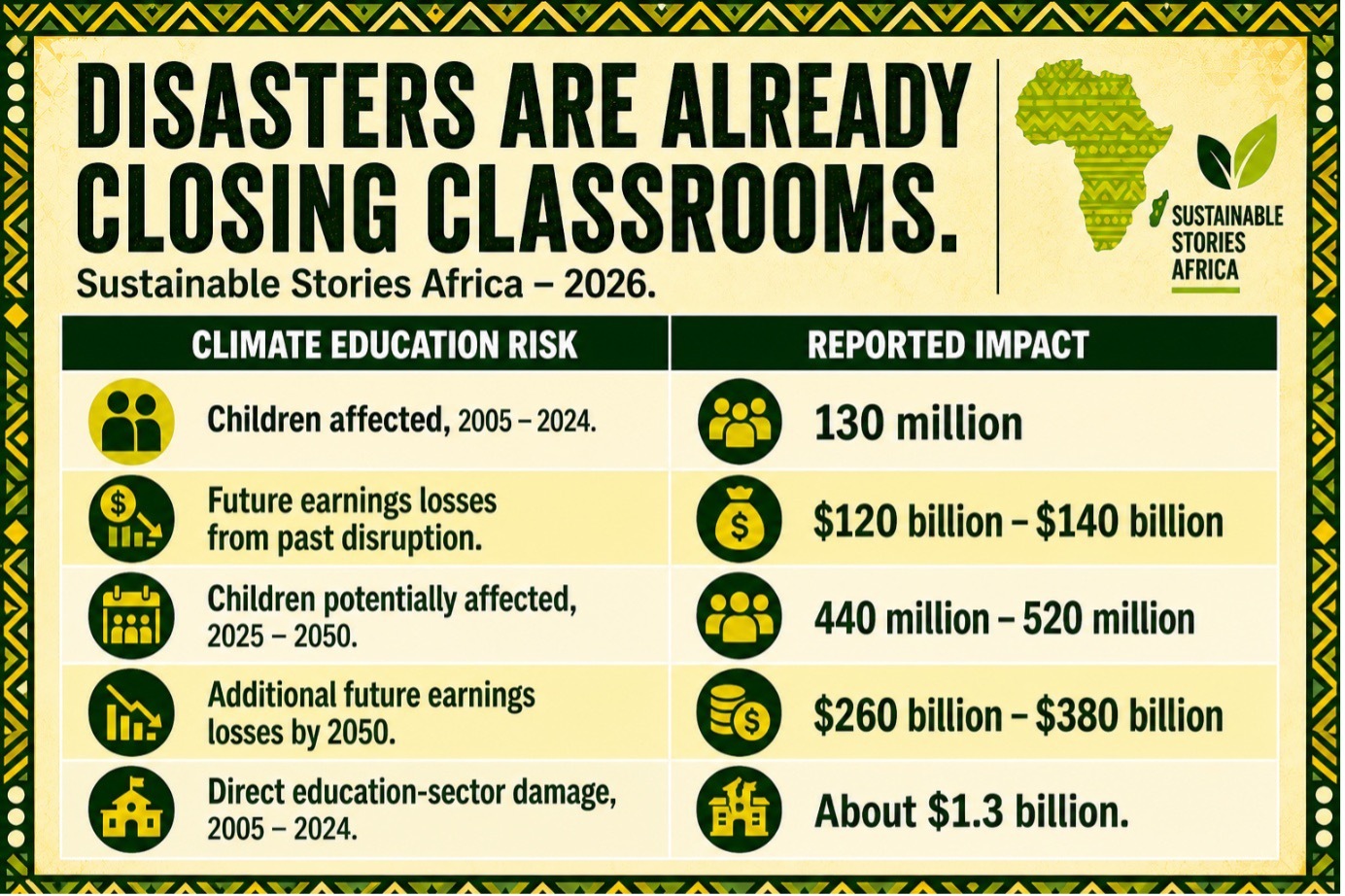
A new UNICEF and Dalberg report, cited by Down To Earth, warns that cumulative climate-related learning disruptions between 2025 and 2050 could affect an estimated 440 million to 520 million children across the region if stronger action is not taken.
Those disruptions could trigger an additional $260 billion to $380 billion in future earnings losses.
The warning lands at a critical moment for African governments already dealing with heatwaves, floods, droughts, cyclones, debt pressures and growing education needs.
For a child in Mozambique, Kenya, Somalia, Ethiopia or Zambia, climate risk is no longer abstract. It can mean a flooded classroom, an absent teacher, a displaced family or a school term that never fully recovers.
Disasters Are Already Closing Classrooms
Between 2005 and 2024, about 130 million children at pre-primary, primary and secondary levels experienced climate-related interruptions to their education in Eastern and Southern Africa.
UNICEF and Dalberg estimate that those past disruptions may translate into $120 billion to $140 billion in future earnings losses.
The damage is both physical and human. Floods, droughts and storms have destroyed classrooms, furniture and learning materials, while heatwaves reduce concentration, cognitive performance and exam outcomes. Teachers are also affected through absenteeism, lower productivity and stress.
The country examples are stark.
In Zambia, direct economic losses to education reached about $60 million between 2005 and 2024 and could grow to $230 million – $295 million by 2050 without action.
In Mozambique, cyclones Idai and Kenneth affected 1.1 million children, damaged nearly 5,000 classrooms and affected 10,500 teachers.
Resilient Schools Protect Children’s Futures
The positive case is clear: protecting schools from climate shocks is not a cost centre. It is an investment in human capital.
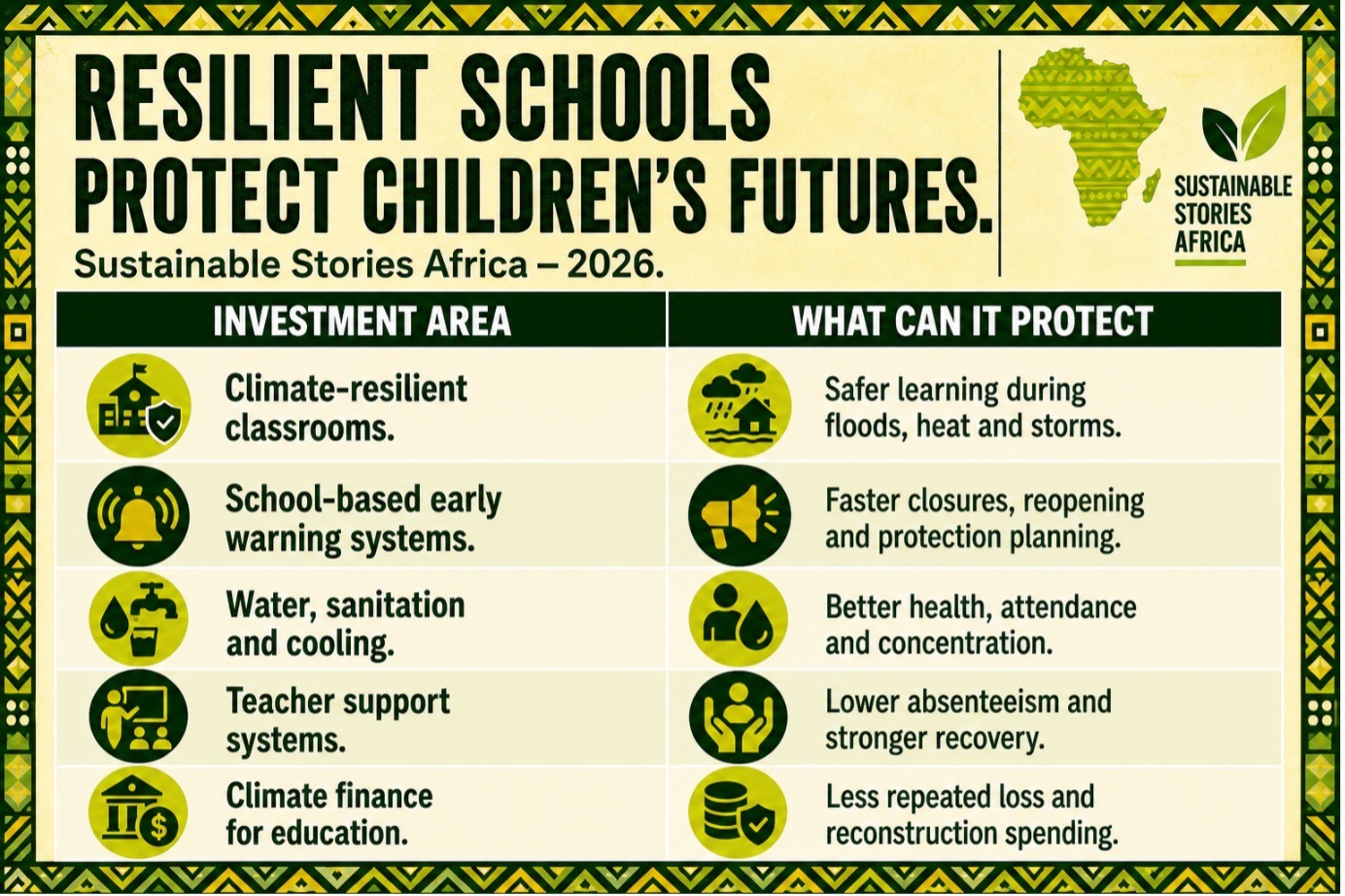
UNICEF’s analysis shows that every $1 invested in strengthening schools against climate shocks can generate up to $13 in benefits by reducing damage, protecting learning continuity and safeguarding long-term development.
However, education receives less than 1.5% of global climate finance, leaving school systems exposed to repeated cycles of destruction and repair.
For African markets, the implications are actually beyond education. Lost learning becomes lost productivity.
Damaged schools become public finance burdens. Interrupted education increases risks for vulnerable children, including child labour, early marriage, gender-based violence and recruitment into armed groups.
Education Must Enter Climate Finance
African governments, donors, development banks and private-sector partners should now treat schools as essential climate infrastructure.
That means climate-proofing classrooms, mapping high-risk school zones, improving water and sanitation, and integrating heat protection. This ensures that there are disaster response plans that help children to learn.
Education ministries alone cannot carry this burden.
- Finance ministries must budget for prevention, not only reconstruction.
- Climate funds must recognise schools as loss-and-damage priorities.
- Urban planners must stop placing school infrastructure in high-risk flood zones.
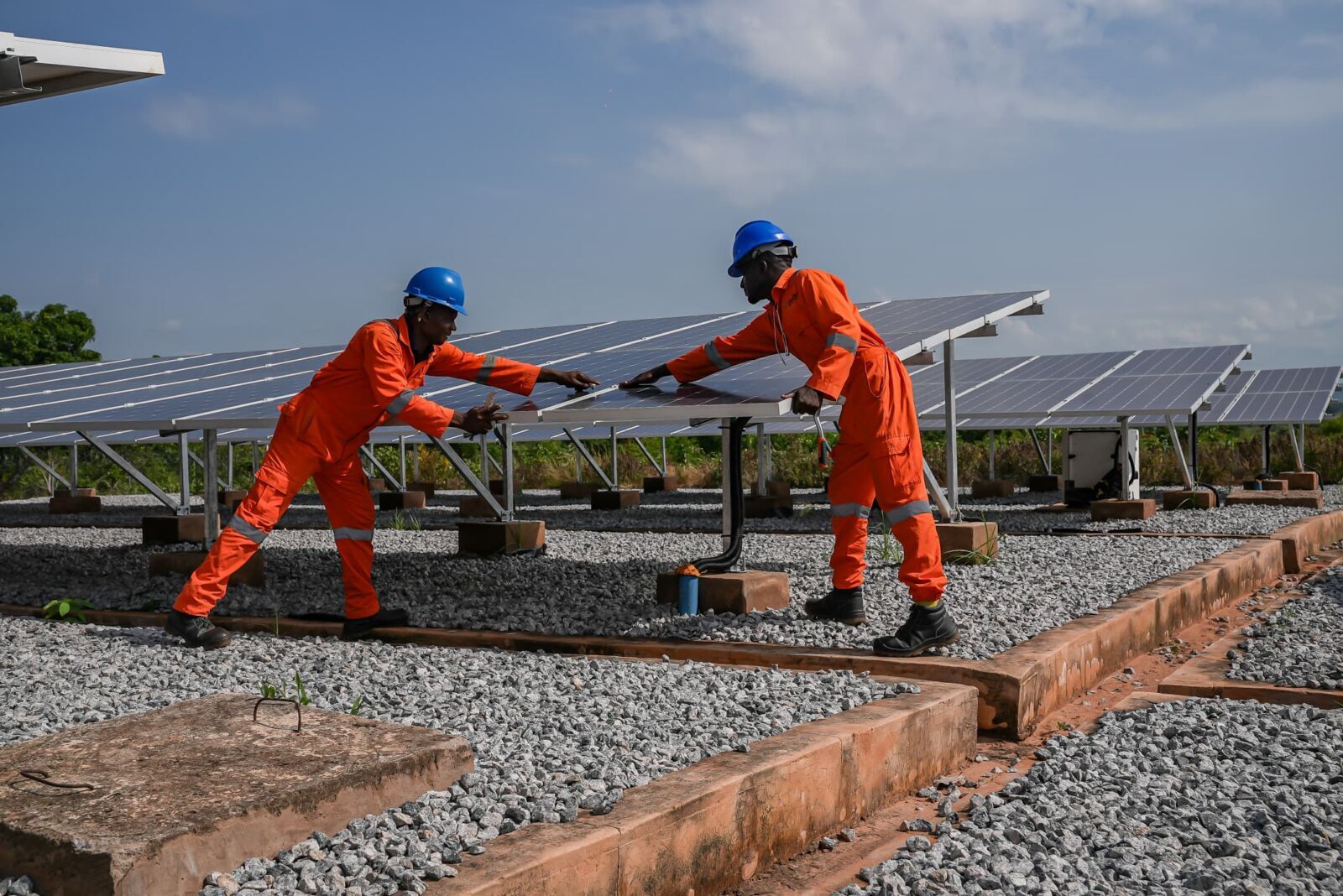
- Businesses and philanthropies can support digital continuity, solar-powered schools and safe learning spaces.
The core message is simple: when the climate crisis closes schools, it also closes future income, skills and opportunity.
Protecting education is therefore not just child protection. It is economic resilience.
Path Forward – Finance Schools Before Climate Losses Grow
The path forward is to move education from the margins of climate finance to the centre of adaptation planning.
Governments should map vulnerable schools, upgrade buildings and protect learning continuity before disasters strike.
For ESG and sustainability actors, the priority is measurable investment: safer classrooms, lower disruption, better attendance and stronger long-term human capital across African markets.