Sahara Power Group has called for faster deployment of digital grid technologies to improve Nigeria’s unreliable electricity supply.
The company says the problem is no longer only generation, but weak visibility, limited real-time data and poor system intelligence.
For households, factories and small businesses, smarter grids could mean fewer outages, fairer billing and more resilient energy access.
Power Reliability Now Needs Intelligence
Nigeria’s electricity challenge has shifted from simply producing more power to delivering it more intelligently, according to Dr Kola Adesina, Group Managing Director of Sahara Power Group.
Speaking through Emilomo Arorote, Group Head, Human Resources at Sahara Group, at the IoT West Africa Conference in Lagos, Adesina said digital grids offer one of the most practical pathways to reliable electricity supply.
His argument was direct: Nigeria has built generation capacity over time, but supply gaps persist because the grid still lacks visibility, real-time data and predictive intelligence.
That framing matters because electricity failure is not an abstract policy problem. It shows up in cold rooms that cannot preserve food, clinics that rely on generators, manufacturers that lose production hours, and households that pay twice, once for grid power and again for backup energy.
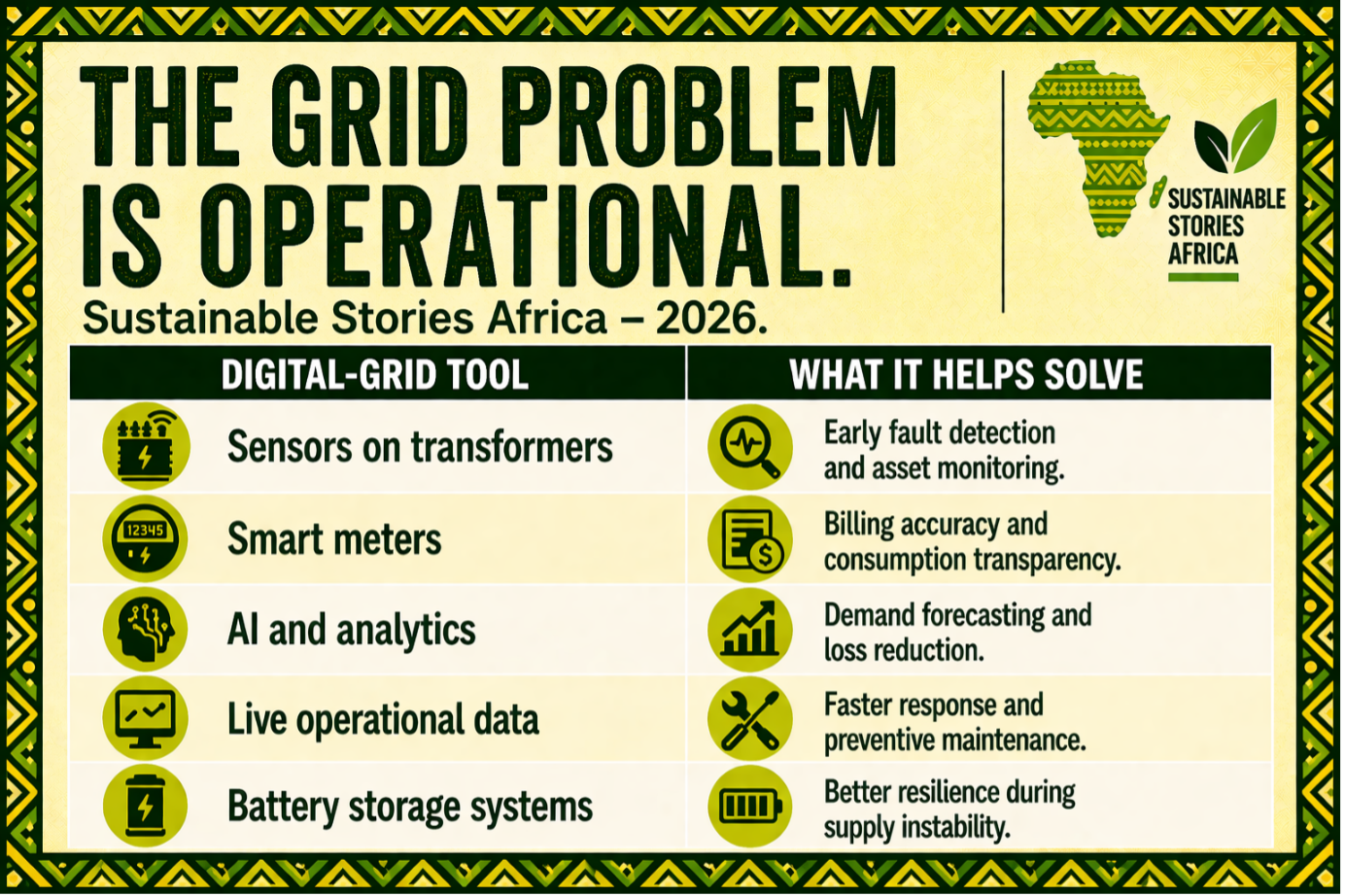
The Grid Problem Is Operational
Adesina’s central point was that digital grids can convert electricity networks from reactive systems into intelligent infrastructure.
He said sensors on transformers and other critical assets can detect faults before they become failures, while smart meters can improve billing transparency.
Layered with data analytics and artificial intelligence, operators can forecast demand, reduce technical and commercial losses, detect energy theft faster and move from emergency repairs to preventive maintenance.
Smart Systems Can Protect Customers
The case for digitisation is strongest where electricity supports jobs, factories and public services.
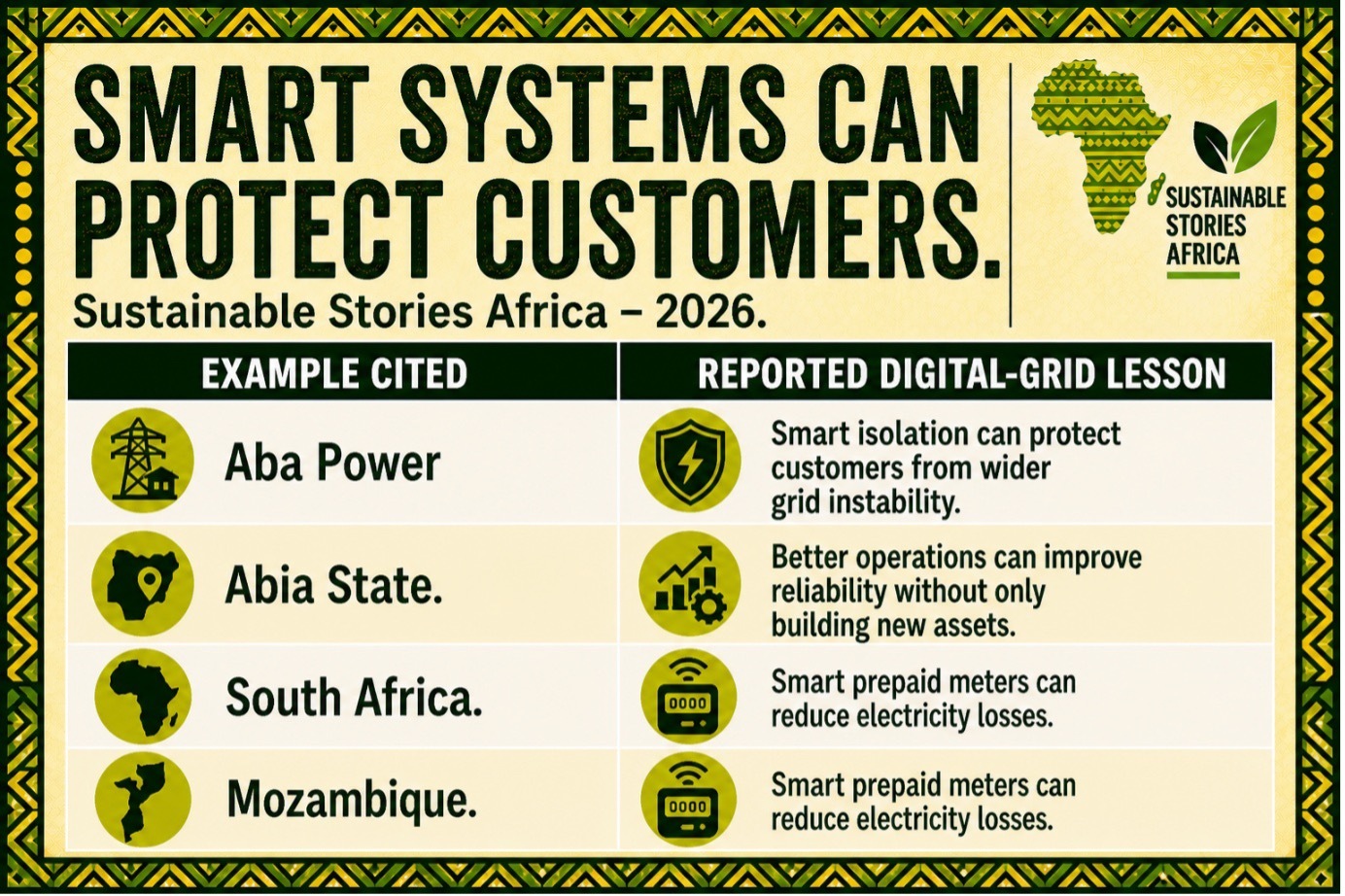
Adesina pointed to Aba Power in Abia State, describing the industrial cluster as a near-isolated smart grid that can disconnect from the national system within milliseconds when instability is detected.
For customers, that kind of automation can mean continuity when the wider system is under stress.
He also cited South Africa’s improved grid operations, which he said had delivered more than 320 consecutive days without load shedding largely on existing infrastructure, and Mozambique’s reduction of electricity losses from 43% to 21% through smart prepaid meters.
For Nigeria, the potential upside is significant: lower losses for operators, clearer billing for consumers, more dependable power for businesses and a stronger foundation for industrial growth.
Investment Must Follow The Technology
The digital-grid argument also raises a financing question. Smart meters, sensors, storage systems and analytics platforms require capital, regulation and technical capacity.
Adesina urged financiers to expand the use of blended finance, combining public, philanthropic and private capital to unlock investment in Nigeria’s electricity distribution segment.
He also linked Sahara Power Group’s inclusion in the Mission 300 Private Sector Council to growing international interest in private-sector solutions to expand access to electricity to 300 million Africans by 2030.
The policy implication is clear: Nigeria’s power reform cannot depend only on generation projects.
It must also improve the intelligence of delivery systems, the cables, substations, meters, transformers, software and operational decisions that determine whether electricity reaches users reliably.
Young Innovators Have A Grid Role
Adesina also directed part of his message to young Nigerian engineers, developers and technology founders, urging them to build solutions for the digital grid.
That call matters because grid digitisation is not only an electricity-sector reform. It is also a technology and a job opportunity.
Software developers can build monitoring platforms. Engineers can design sensor networks
Data specialists can improve demand forecasting. Local manufacturers and service companies can support metering, storage and maintenance.
“The quantum leap is not a slogan; it is a decision,” Adesina said, adding that reliable electricity is within reach with the right partnerships and choices.
Path Forward – Smarter Grids Need Coordinated Action
Nigeria’s electricity operators should begin digitising critical assets now, while regulators and policymakers reduce barriers to importing and deploying essential digital equipment.
Financiers also need to treat distribution intelligence as bankable infrastructure. If digital grids work, the gains could extend from cleaner billing and lower losses to stronger productivity, better energy access and more resilient African power markets.
Sahara Group Press Release