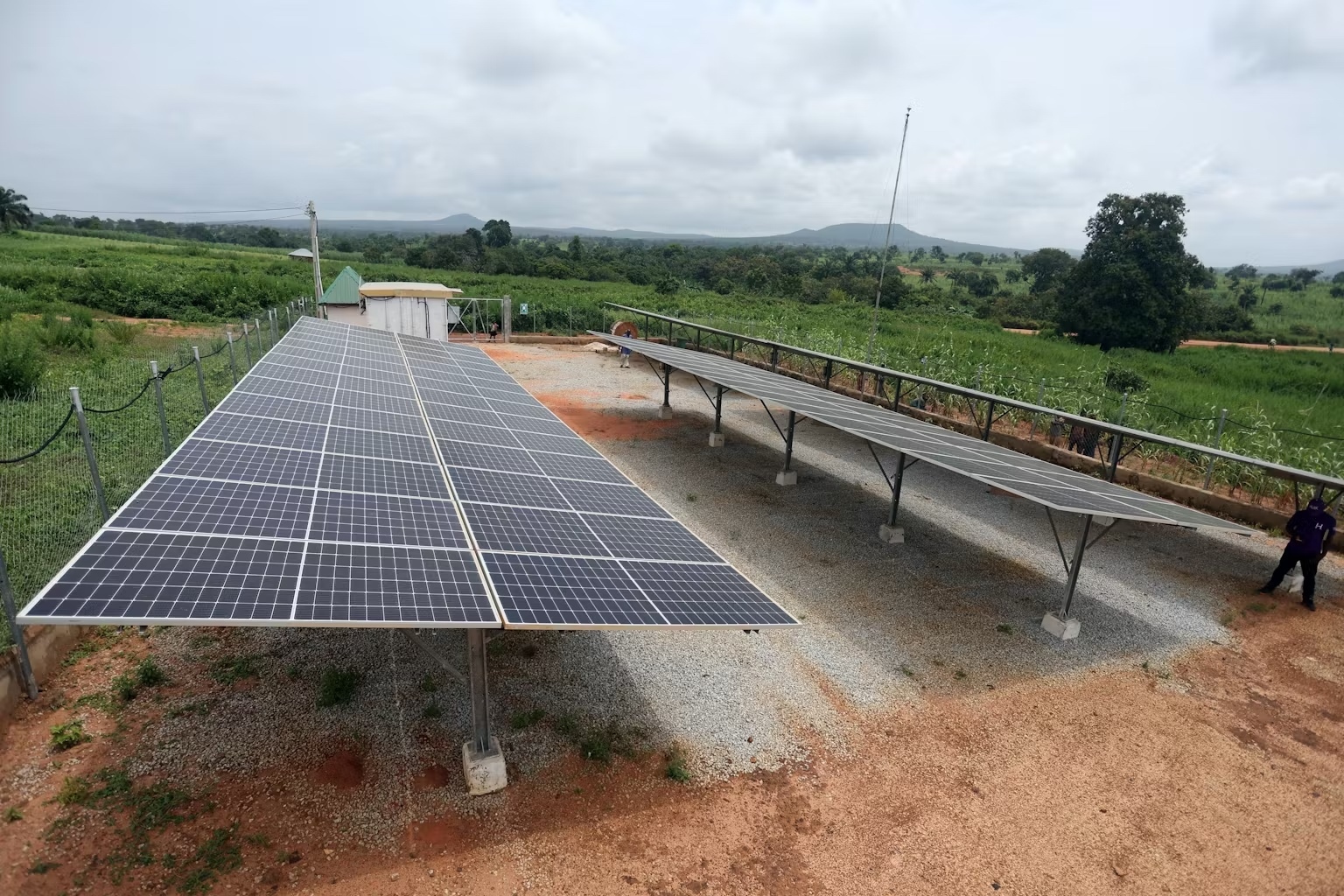
Nigeria’s power sector reform is moving into a more technical phase: mini-grid rules, regional loss reporting and sector debt reforms are now central to market stability.
The April 2026 power sector update by Udo Udoma & Belo-Osagie shows a regulatory system that is trying to improve transparency, attract investment and restore confidence across the electricity value chain.
Power Reform Needs Market Discipline
Nigeria’s electricity reform story, according to the UUBO Power Sector Updates for April 2026, is no longer only about generation capacity or tariff debates. It is increasingly about rules: who can build, who can connect, who bears losses, who reports data, and who pays legacy debts.
In April 2026, the Nigerian Electricity Regulatory Commission issued two major interventions: the Mini-Grid Regulations 2026 and an Order on Regional Transmission Loss Factor Reporting for Enhanced Grid Transparency and Efficiency.
Alongside federal efforts to address legacy power sector debts, these measures signal a sharper regulatory focus on accountability, liquidity and operational efficiency.
For households, small businesses, clinics and factories, the issue is practical. Power reform only matters when it produces reliable electricity, predictable tariffs and bankable investment.
Nigeria’s next electricity transition may depend less on new policy slogans and more on whether regulators can make the market measurable, enforceable and investable.
The Grid Needs New Rules
Nigeria’s power sector is trying to solve two problems at once: expanding electricity access beyond the reach of the central grid, and reducing inefficiencies inside the existing grid.
The Mini-Grid Regulations 2026, issued by NERC on 10 April 2026 under the Electricity Act 2023, create a revised framework for isolated and interconnected mini-grids.
The rules cover capacity thresholds, tariff design, loss allowances, reporting duties, coordination with Distribution Companies, exclusivity arrangements, interconnection and technical compliance.
This matters because mini-grids are becoming a serious development instrument, not a side experiment. For rural communities, commercial clusters, agricultural processors and peri-urban settlements, they can provide faster access to electricity where the national grid is unreliable or absent.
However, mini-grids only scale when investors understand the rules. They need clarity on permits, tariffs, losses, grid arrival, compensation and whether a project can survive when a DisCo eventually extends the main grid into the same location.
Mini-Grids Get A Clearer Framework
The new regulation applies to isolated mini-grids of up to 5 MW per site and interconnected mini-grids of up to 10 MW per site.
These projects fall within the mini-grid regime and are subject to registration or permitting, rather than the licensing framework used for utility-scale generation.
That distinction is important. It reduces the regulatory burden for smaller power systems while still creating oversight for projects that serve real customers and communities.
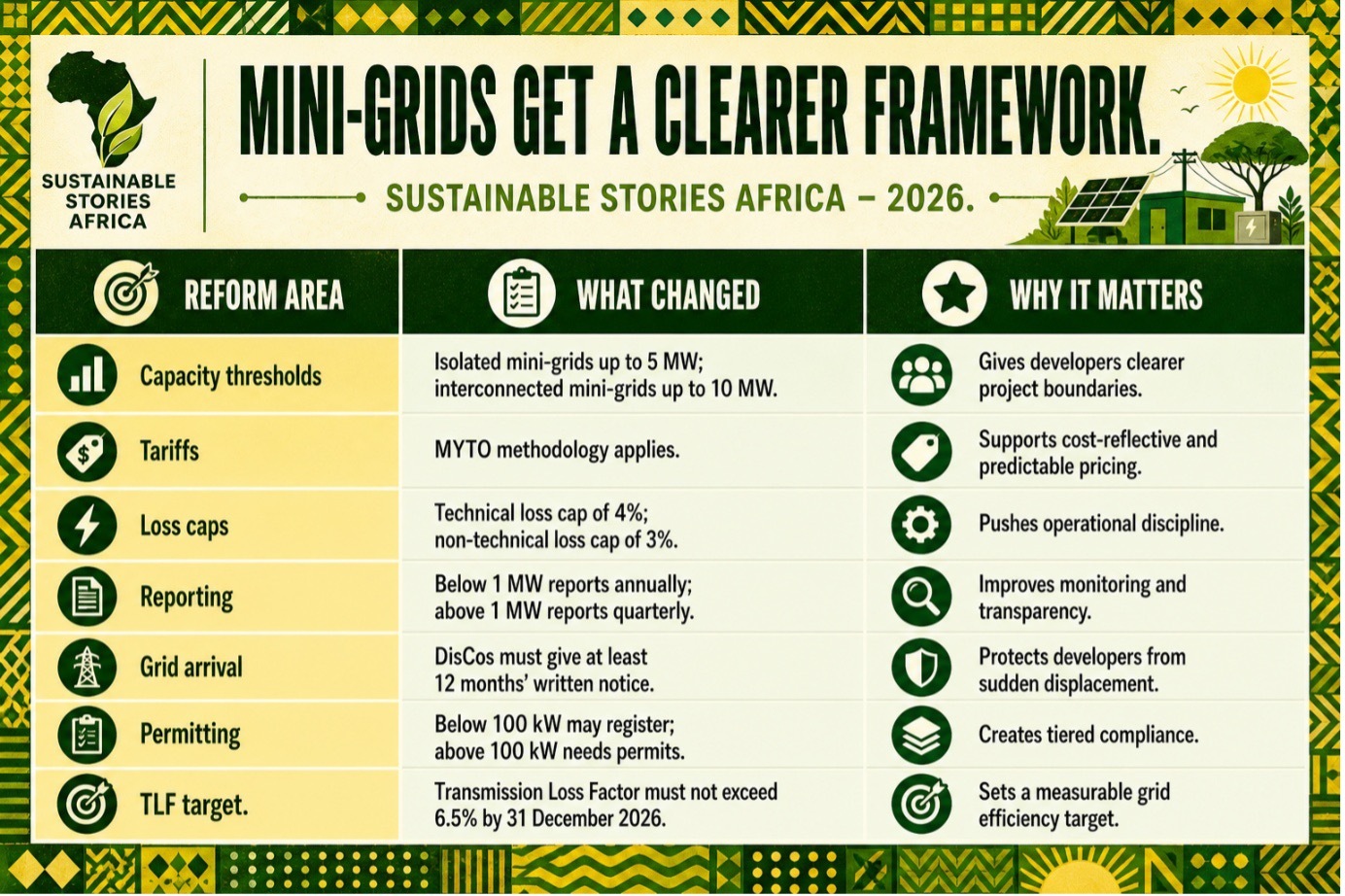
Tariffs must be determined using the Multi-Year Tariff Order methodology, while allowable losses are capped at 4% for technical losses and 3% for non-technical losses. Operators may apply for justified adjustments, but the regulation expects losses to reduce over time.
The reporting framework is also more detailed. Mini-grids below 1 MW are subject to annual reporting, while those above 1 MW must file quarterly reports.
Operators must also report project milestones, including financial close, procurement, construction, commissioning, energisation and commercial operations.
This is not just paperwork.
- For regulators, it creates visibility.
- For investors, it reduces uncertainty.
- For communities, it improves accountability.
Better Rules Can Unlock Access
The strongest development promise of the new framework is that it can make off-grid and interconnected electricity projects easier to finance.
A mini-grid developer serving a rural town needs confidence that a future grid extension will not destroy the project economics.
The 2026 regulation addresses this through a grid-arrival and compensation framework. DisCos must provide at least 12 months’ written notice before extending the grid into areas already served by isolated mini-grids.
Parties must then negotiate transition options, including conversion to an interconnected mini-grid, asset transfer, continued commercial operation or decommissioning.
If no agreement is reached, NERC may determine the outcome. Compensation for asset transfer is structured around defined cost components, subject to regulatory approval, and excludes speculative profits.
That balance matters: it protects genuine investment without turning compensation into a windfall.
The regulation also allows exclusivity agreements. Communities and DisCos may grant developers exclusive development rights for up to 12 months, subject to possible extension by NERC with demonstrated progress.
These agreements must be registered, are non-transferable, and prevent competing agreements over the same site during the exclusivity period.
- For communities, this could reduce confusion around the project.
- For developers, it improves site security.
- For financiers, it strengthens due diligence.
Transparency Must Reach Transmission
The second major development is NERC’s Order on Regional Transmission Loss Factor Reporting, issued on 8 April 2026.
Transmission Loss Factor measures the proportion of electrical energy lost between injection and off-take points on the grid. According to the update, data from the Nigerian Independent System Operator showed that national TLF levels had exceeded approved benchmarks, prompting NERC to introduce more granular regional reporting.
The order requires transmission losses to be measured and reported regionally. NISO must install smart meters at regional boundaries, track transformer energy flows and submit quarterly reports to NERC.
TCN must implement action plans in high-loss regions. Most importantly, TLF must not exceed 6.5% by 31 December 2026. Non-compliance may attract regulatory sanctions.
This matters because losses are not just technical details. They become costs. They weaken market liquidity, reduce confidence in settlement systems and make it harder to build a credible electricity market.
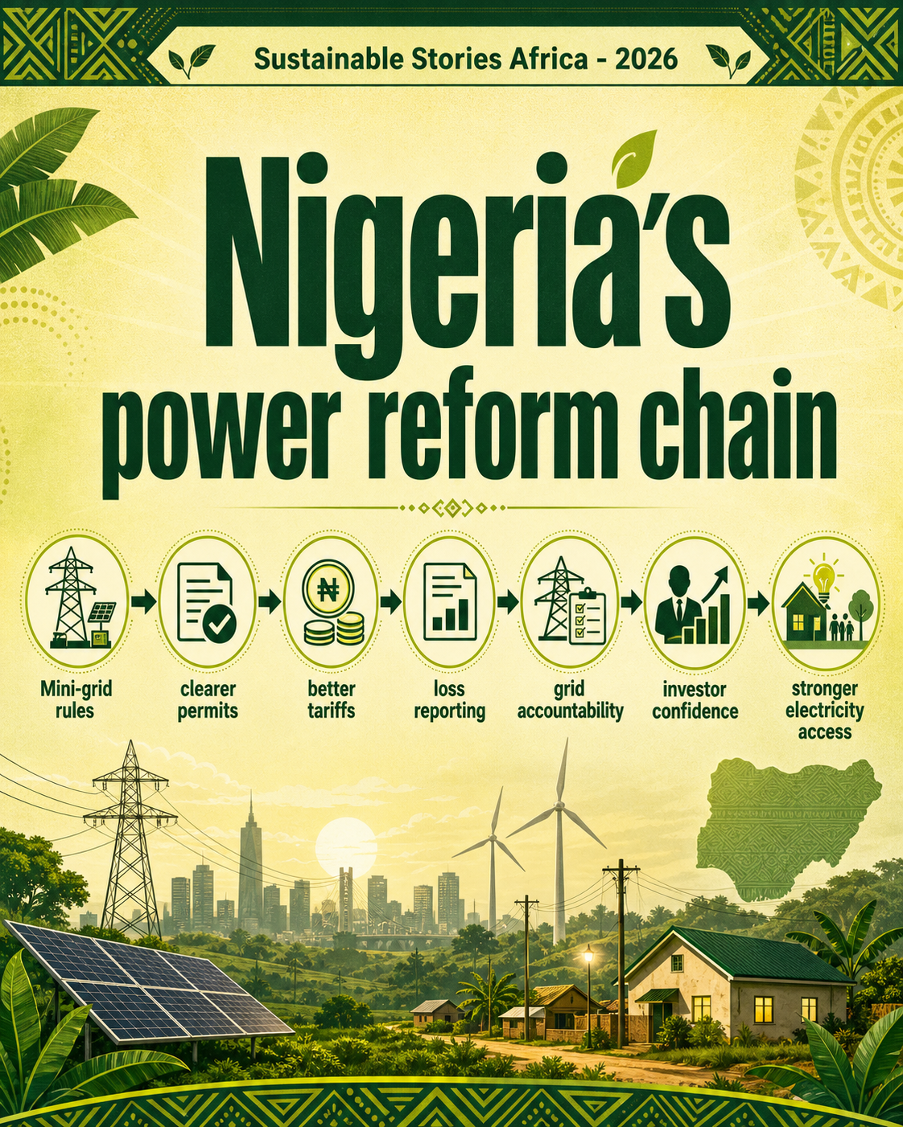
The wider reform signal is that Nigeria’s electricity market is moving from broad liberalisation to operational discipline.
The Electricity Act 2023 opened the door to decentralised electricity markets and state-level regulation. The 2026 mini-grid rules now clarify how NERC and State Electricity Regulatory Commissions should coordinate, reducing duplication where state approvals already satisfy equivalent obligations.
That coordination will be critical. Without it, developers may face overlapping rules. With it, Nigeria can build a more flexible electricity market in which federal, state, private and community actors work within a clearer system.
Path Forward – Delivery Needs Discipline
Nigeria’s power sector now needs consistent enforcement, credible data and faster project delivery.
Mini-grid investors need predictable permitting, communities need protection, and transmission operators need measurable loss-reduction plans.
The bigger goal is simple: make electricity reform visible in daily life. Cleaner rules, transparent losses and resolved debts can help turn Nigeria’s power market from a reform promise into a development engine.