Africa’s democratic story is no longer moving in one direction. Some countries are consolidating democratic gains, while others are sliding into military rule, electoral manipulation or entrenched autocracy.
A Brookings report argues that the next phase of democracy support must be local, targeted and politically realistic, rooted in African norms, focused on binding constraints and built around the actors who connect citizens to power.
Africa’s Democracy Needs Local Renewal Now
Africa’s democratic development is facing a decisive stress test. Across the continent, citizens continue to express strong support for democracy; however, democratic institutions are under pressure from coups, weakened civil society space, violent elections, patronage politics and shrinking donor funding.
A March 2026 Brookings report by Danielle Resnick and Landry Signé examines five country cases, the Democratic Republic of the Congo, Ghana, Kenya, Mali and Zimbabwe, to identify practical entry points for strengthening democratic development in Africa.
The report’s core message is clear: support for democracy must align with each country’s political trajectory, while not applying the same template everywhere.
For African markets, the issue is bigger than politics. Democratic credibility shapes investment risk, public trust, service delivery, anti-corruption systems, climate governance and ESG accountability.
When citizens do not trust institutions, development plans become fragile. When support for democracy ignores local realities, reform loses legitimacy before it starts.
Democratic Demand Remains Strong Despite Backsliding
The most striking contrast is that democracy is losing ground globally, even as African citizens still want it.
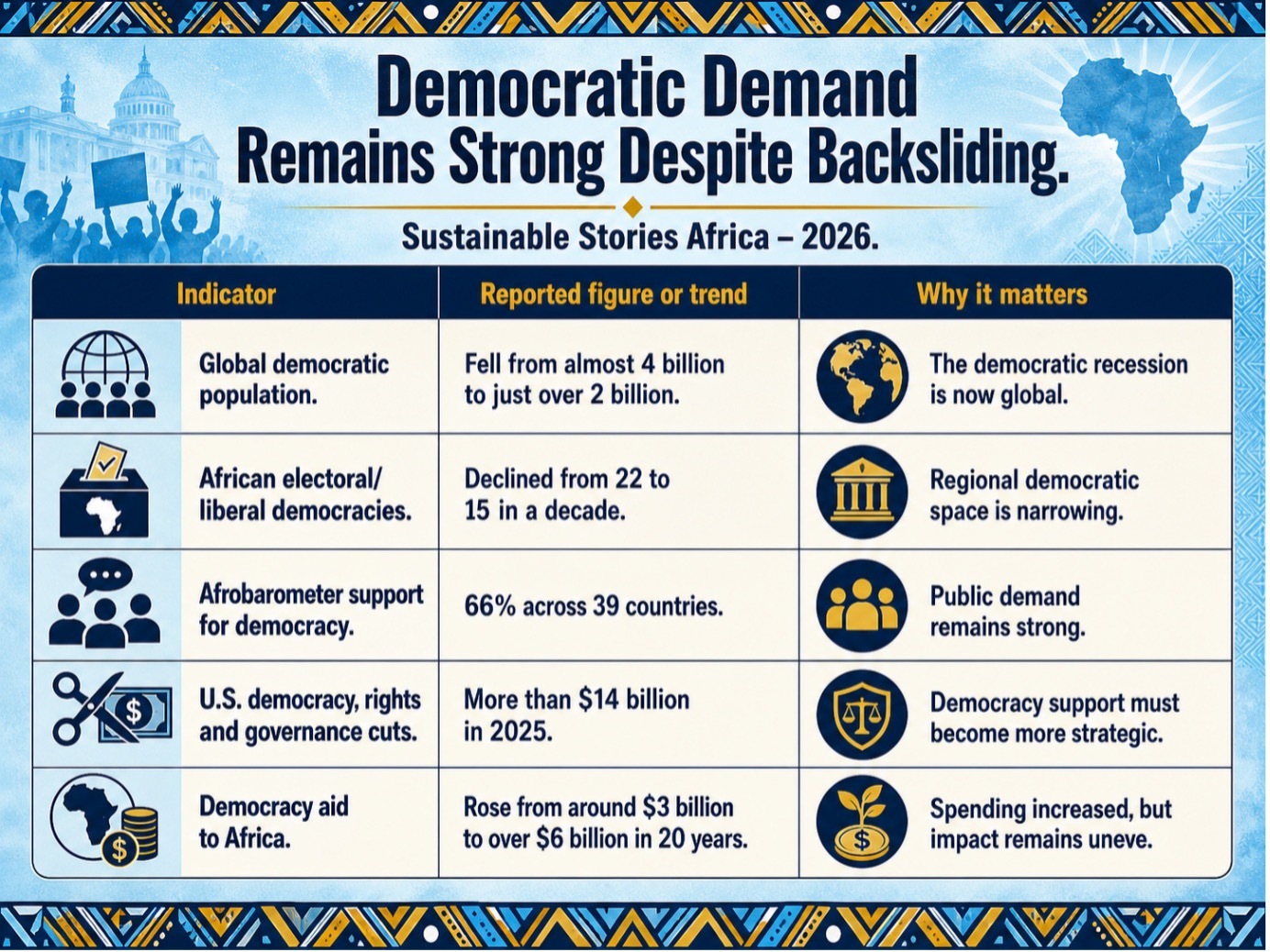
Brookings notes that as of 2016, almost four billion people across 96 countries lived in electoral or liberal democracies. Since then, the number has fallen to just over two billion. In Africa, the number of electoral or liberal democracies declined from 22 to 15 over the last decade.
However, Afrobarometer data collected in 2023 across 39 African countries found that 66% of respondents still agreed that “democracy is preferable to any other kind of government.”
That gap, between public demand and institutional decline, defines the policy challenge.
The funding context is also shifting. Brookings says donor support for democracy and governance has historically been smaller than other development sectors, and recent cuts have made the landscape tighter.
More than $14 billion in democracy, rights and governance grants were cut in 2025 as part of wider U.S. foreign assistance reductions.
Five Country Cases Show Diverging Paths
The Brookings report uses five cases to show why one-size-fits-all democracy support fails. Ghana, Kenya, DRC, Mali and Zimbabwe began in the early 1990s with relatively low levels of democracy, but diverged sharply over time.
The chart on page 4 shows Ghana and Kenya rising above the others on the electoral democracy index, while Mali drops sharply after earlier democratic gains.
DRC remains volatile, and Zimbabwe stays comparatively low and stagnant. The lesson is direct: countries deepening democracy need different tools from countries experiencing autocratic stagnation or military rule.
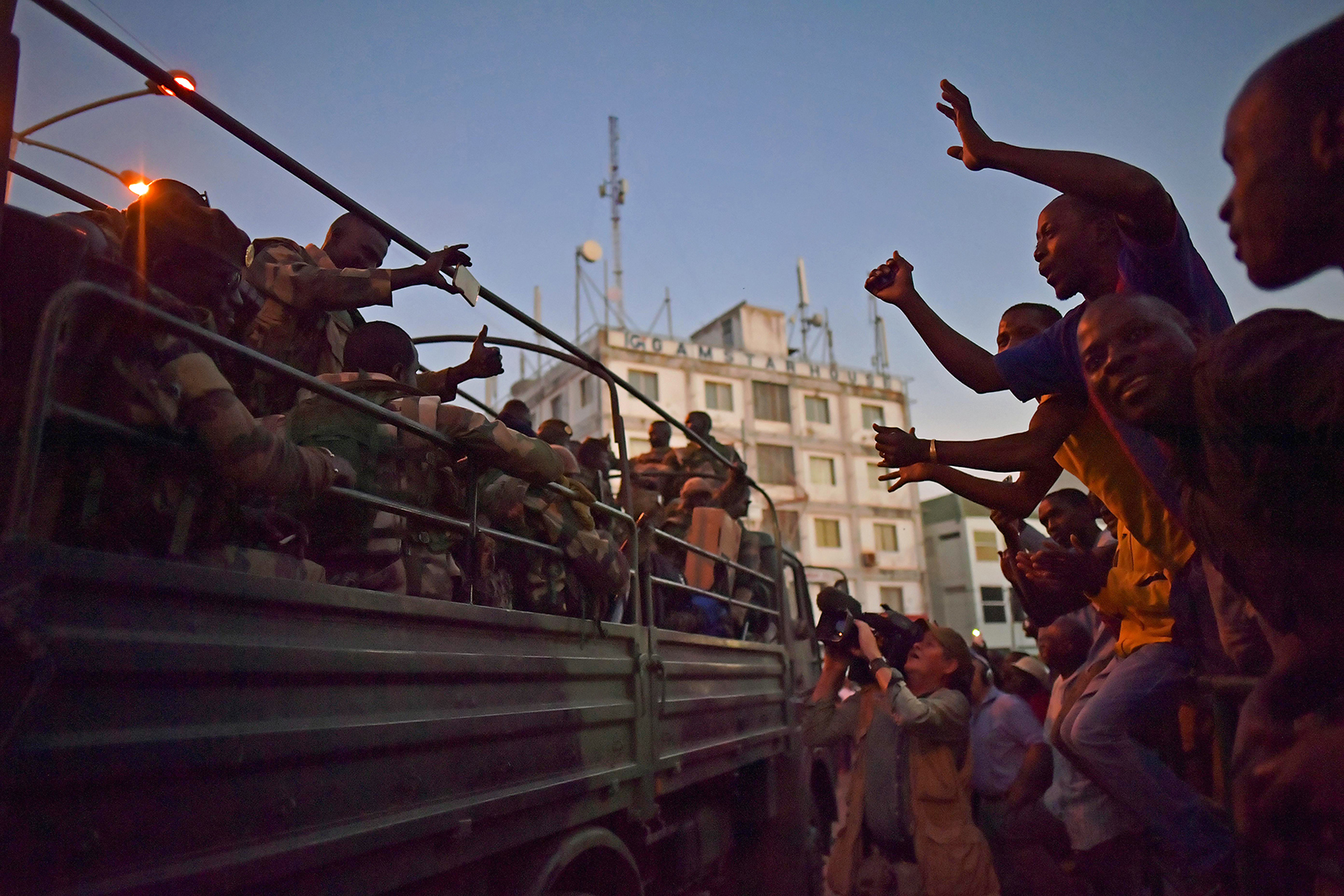
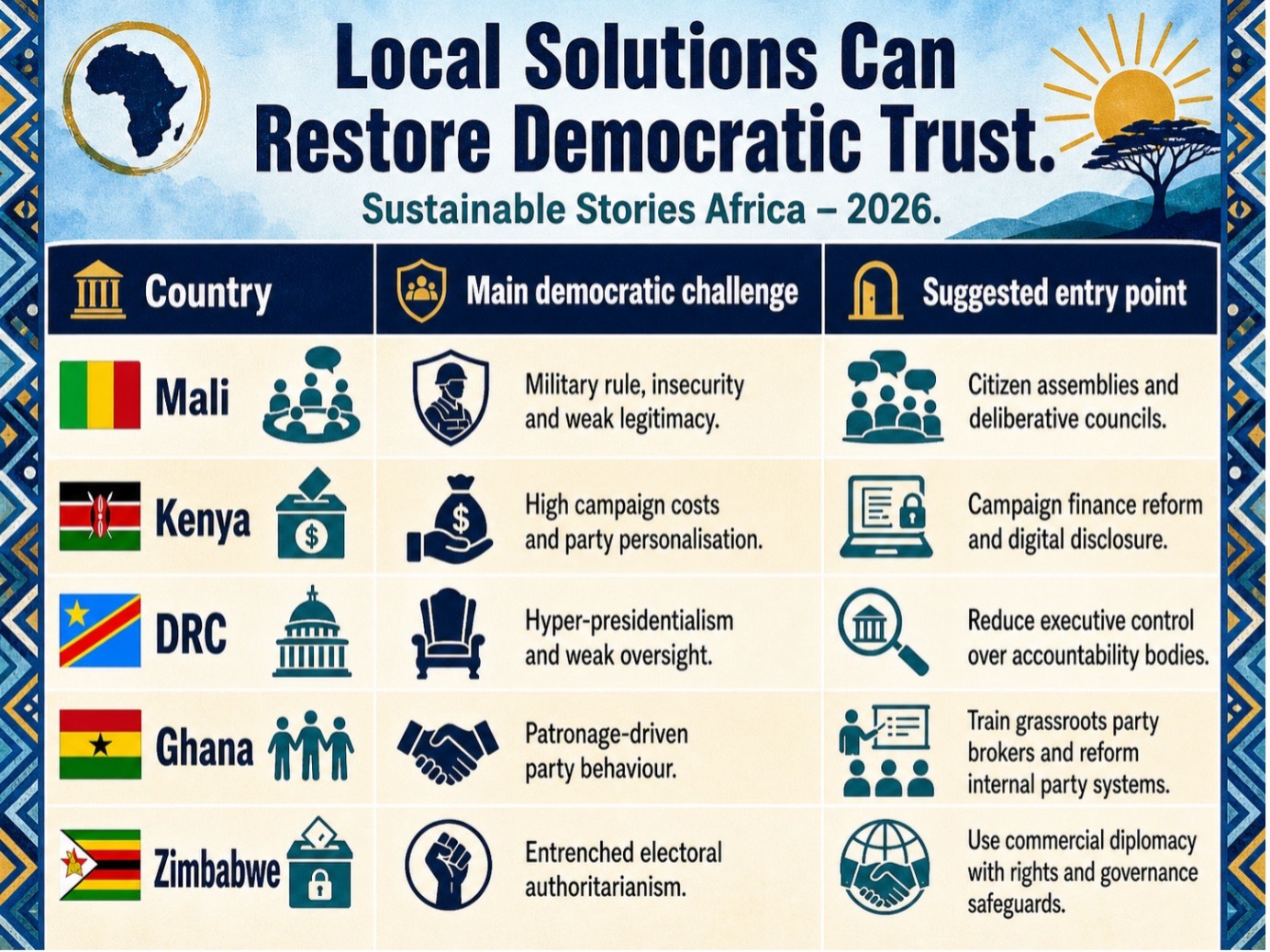
Mali illustrates the need for local legitimacy. After coups in 2012, 2020 and 2021, the country’s democratic backsliding has been linked to insecurity, corruption, weak service delivery and a widening gap between political elites and citizens.
Brookings highlights traditions such as chiefs’ consultative meetings and urban tea-drinking social clubs where political ideas are debated, as possible foundations for citizen assemblies and deliberative councils.
Kenya points to a different constraint: money in politics. The report cites campaign costs of nearly $39 million for the 2022 presidential election and up to $4.7 million for gubernatorial races.
Such costs weaken internal party democracy, marginalise reform-minded candidates and deepen personalisation of parties.
Local Solutions Can Restore Democratic Trust
The opportunity is to make democracy support more precise, legitimate and useful to citizens.
- In Mali, locally grounded deliberative institutions could help rebuild trust between communities and formal politics.
- In Kenya, campaign finance reform could reduce the influence of money, strengthen parties and give citizens clearer visibility into who funds politics.
- In DRC, reducing executive entrenchment could revive oversight institutions and limit the creation of parallel power structures around the presidency.
- In Ghana, the report identifies an often-overlooked layer of democracy: party brokers or grassroots “foot soldiers.” These actors organise rallies, canvass voters and monitor polling, yet they are rarely the focus of civic education.
Brookings argues that training this “middle layer” in tolerance, nonviolence, media freedom and vote-buying could strengthen democracy from within party structures, not only through elite reform or general civic education.
- Zimbabwe requires another approach. The report characterises the country as an “illiberal, militarised, electoral authoritarian regime” and argues that sanctions have produced complex outcomes without meaningfully shifting elite behaviour.
It suggests that commercial diplomacy tied to environmental, labour, corruption and human rights safeguards may offer a new entry point where older tools have stalled.
Target The Constraints Blocking Democratic Renewal
Brookings distils three lessons for actors of democracy working across Africa.
- First, support for democracy must be rooted in local traditions and norms. Externally designed interventions that lack legitimacy can be dismissed as a foreign imposition. Local deliberative systems, community dialogues and recognised social institutions can help make democracy feel owned rather than imported.
- Second, reformers should prioritise binding constraints instead of spreading resources thin. In Kenya, that means campaign finance. In DRC, it means executive entrenchment. In fragile or backsliding states, the right mix may include incentives, political conditionality and commercial diplomacy. In more consolidated democracies, targeted reforms to parties, civic education and oversight institutions may be more effective.
- Third, democracy support must invest in the middle layer: party organisers, local leaders, civil society intermediaries and community brokers who translate between citizens and formal institutions. These actors can either reproduce patronage or strengthen accountability. The difference often depends on incentives, training, transparency and whether internal party systems reward loyalty or democratic performance.
For ESG and sustainable development, the governance implications are substantial. Climate finance, public procurement, infrastructure delivery, corporate accountability and anti-corruption systems all depend on credible institutions.
Democracy is not separate from development; it is part of the operating system that determines whether development promises reach people.
Path Forward – Local Accountability Must Shape Democracy Support
Africa’s democratic renewal will require locally legitimate institutions, targeted reform and stronger accountability between citizens, parties and the state.
The priority is not more fragmented programming, but sharper political diagnosis: understand each country’s constraints, support credible local actors, protect civic space and align incentives with democratic performance.
That is how support for democracy can move from imported templates to practical resilience.