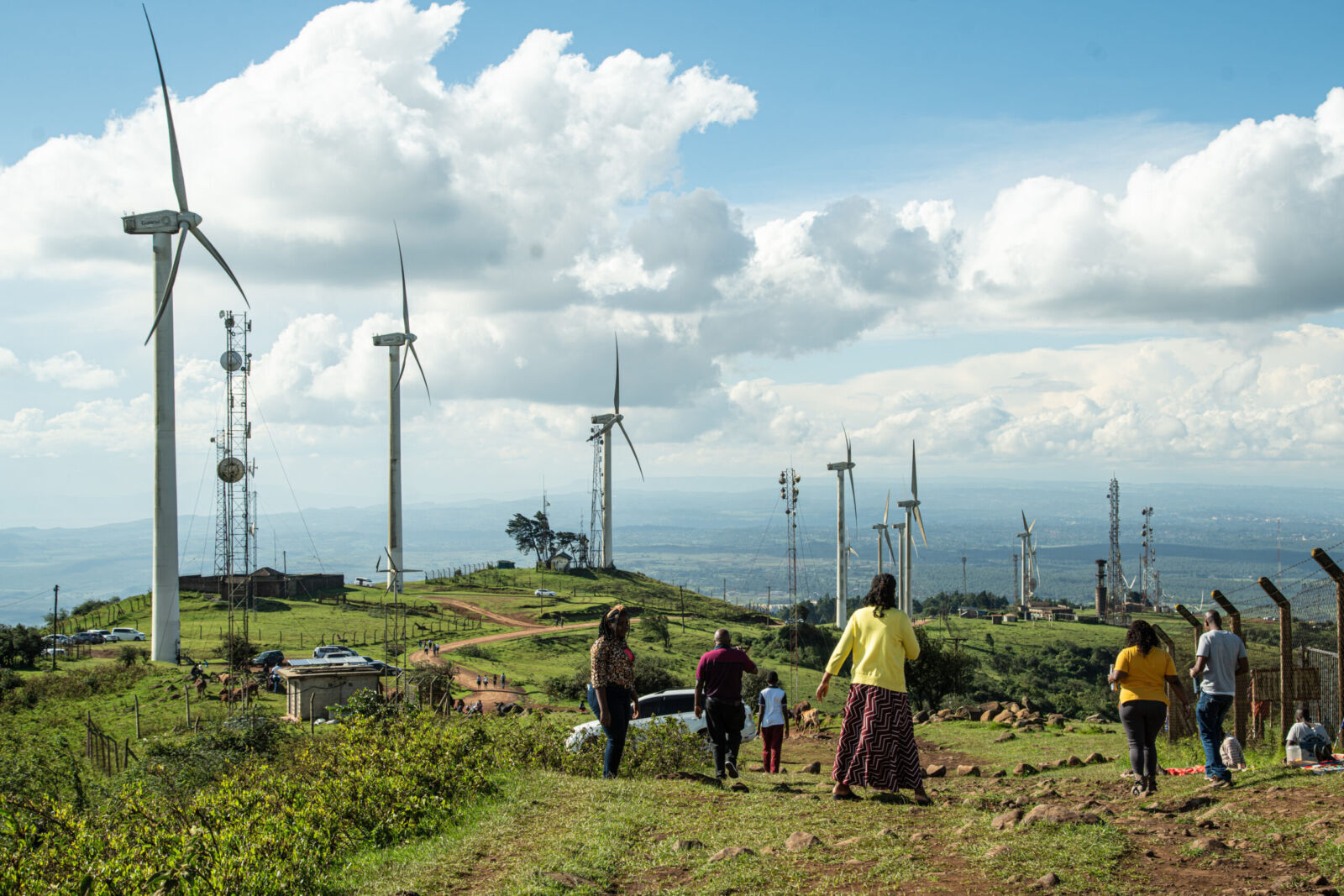
Kenya has become one of Africa’s clean-energy reference points, with approximately 90% generation capacity from renewable energy and increasing access to electricity.
However, the IEA’s 2024 review shows that leadership now depends on delivery.
The central question is no longer whether Kenya has ambition. It is whether grids, cooking fuels, finance and affordability can turn national targets into daily security for households, businesses and communities.
Kenya’s Energy Promise Meets Delivery Reality
Kenya’s energy transition has reached a defining stage. The International Energy Agency’s Energy Policy Review: Kenya 2024 presents the country as a regional leader in renewable electricity, energy access, and clean-energy policy; however, the market where ambition is now colliding with affordability, infrastructure gaps and implementation risk.
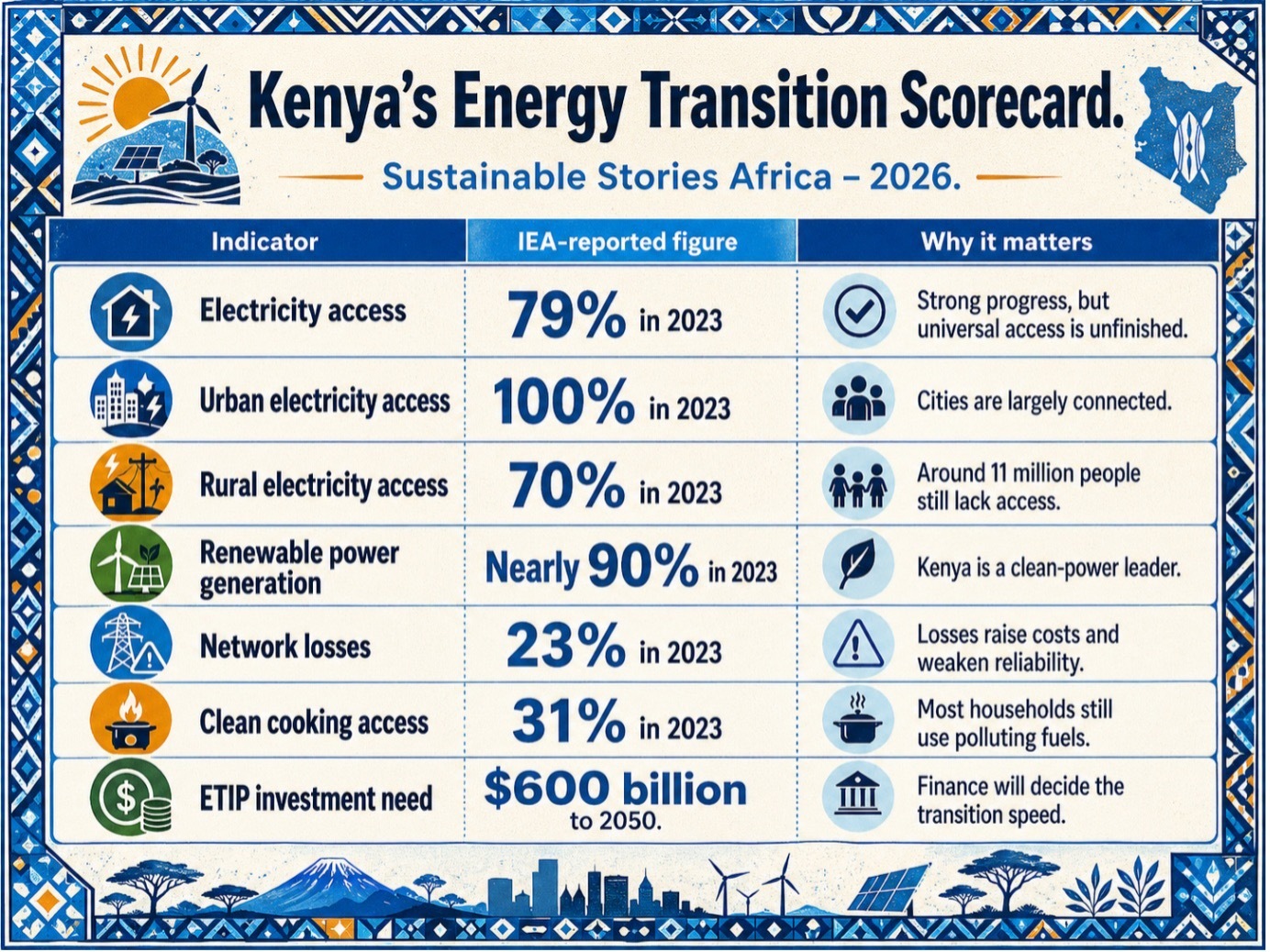
The report’s message is both encouraging and urgent. Kenya has expanded electricity access from 37% in 2013 to 79% in 2023, put itself on track to reach universal electricity access by 2030, and built a power system where renewables provide nearly 90% of generation.
However, the lived reality remains uneven. Millions of rural citizens still lack electricity, most households still cook with polluting fuels, and the power network loses an estimated 23% of electricity through technical failures, theft and billing anomalies.
Kenya’s story is therefore not only about clean energy success. It is about whether a green system can also become reliable, affordable and inclusive.
A Renewable Leader Faces Human Gaps
Kenya’s clean-energy advantage is difficult to ignore. According to the IEA, the country has around 3.3 gigawatts of installed generation capacity, including 950 megawatts of geothermal, more than 800 megawatts of hydropower, and almost 800 megawatts from wind and solar combined.
Its electricity generation mix in 2023 was dominated by geothermal at 47%, hydro at 21%, wind at 16% and solar at 4%.
That makes Kenya a rare African case study: a growing economy where electricity is already largely low-carbon. The Lake Turkana Wind Project is the largest wind farm in Africa.
The IEA describes Kenya as one of the lowest-cost geothermal developers globally.
However, the transition is not yet complete where it matters most: inside homes, schools, small businesses and rural communities.
The IEA notes that bioenergy, largely traditional biomass used for cooking, still accounts for nearly two-thirds of the total energy supply.
Imported oil remains central to transport and weighs on energy security, with petroleum products accounting for $4.7 billion of imports in 2023.
The Numbers Behind Kenya’s Energy Race
Kenya’s access story is one of Africa’s most important development gains. The Last Mile Connectivity Project, launched in 2015, reduced the number of people in rural areas without access to electricity from 20 million to 11 million, while prioritising households within 600 metres of existing transformers.
The IEA says the project aims to connect an additional 280,000 households in 2024 and 2025.
Off-grid solar has also become a defining part of the Kenyan model. One in five households uses off-grid solutions, mainly solar-powered mini-grids, and Kenya accounts for almost 74% of solar home system sales in East Africa.
In practical terms, this is the difference between a child studying by a lamp and a family depending on kerosene; between a clinic refrigerating vaccines and a nurse improvising through outages.
However, affordability remains a pressure point. Kenya’s electricity prices are among the highest in Africa, affected by inflation, subsidy removals and currency depreciation.
The 2023 tariff reforms aimed to reduce costs for low-income households, who represent approximately 70% of customers. The broader test is whether affordable tariffs can coexist with utility cost recovery and grid investment.
The clean cooking challenge is even sharper. Kenya’s clean cooking access rose from 10% in 2013 to 31% in 2023, but 69% of households, especially in rural areas, still rely on polluting fuels.
The burden falls heavily on women and children, who face indoor air pollution and lose time collecting fuelwood.
Reliable Power Can Unlock Local Prosperity
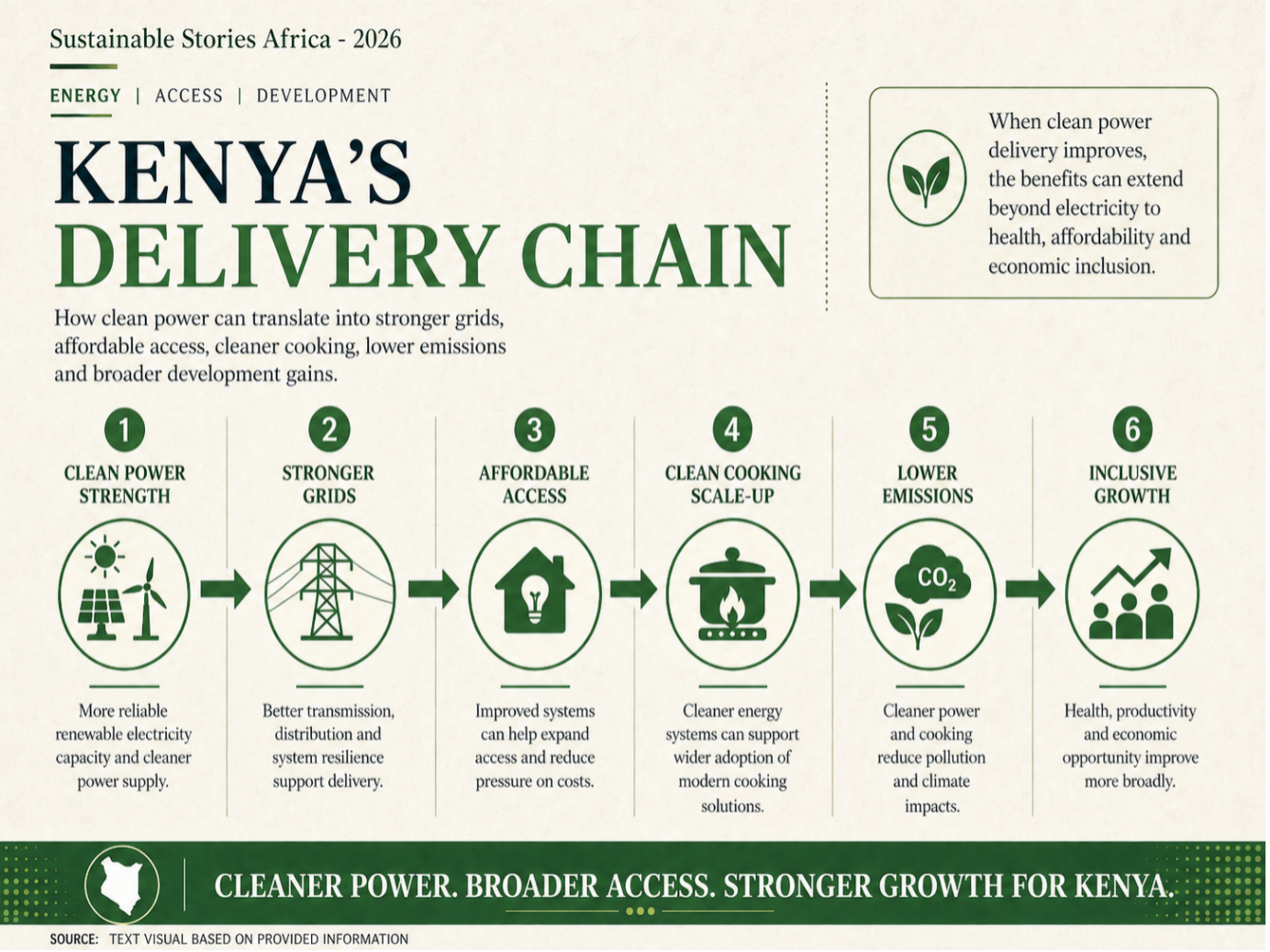
Kenya’s opportunity is not just to generate clean electricity, but to make clean energy productive. Reliable power can strengthen irrigation, cooling, digital services, electric mobility, manufacturing, health centres and schools.
In a country of 55 million people with a median age of 19.6, energy access is also a youth employment and enterprise story.
The IEA points to Nairobi’s role as a hub for innovators and start-ups, supported by a skilled workforce, developed tech and fintech infrastructure, and an attractive investment environment.
That ecosystem can help deliver affordable off-grid power, smart meters, pay-as-you-go solar, clean cooking solutions and local energy businesses.
Climate finance adds another layer. Kenya’s updated Nationally Determined Contribution aims to reduce greenhouse gas emissions by 32% by 2030, with the energy sector expected to contribute 45% of these reductions.
However, nearly 80% of the funding needed is conditional on international support, making finance not a side issue but the bridge between policy and implementation.
Fix Grids, Finance, and Cooking Access
The IEA’s recommendations point to a practical reform agenda.
- First, Kenya needs stronger coordination across ministries, agencies and counties, especially as the National Energy Policy review and Integrated National Energy Plan try to align electricity, clean cooking, transport, industry and climate priorities.
- Second, the grid must become a national productivity asset. Network losses of 23% are too high for a country trying to industrialise on clean power. The IEA recommends strengthening transmission and distribution reliability, mobilising capital for medium- and low-voltage upgrades, and improving system planning.
It also notes that customers experienced about 45 unplanned outages in the year to June 2023, with outages lasting nearly five hours on average.
- Third, clean cooking needs affordability, not just awareness. Kenya’s National Cooking Transition Strategy targets access to universal clean cooking by 2028 and envisions a 2050 cooking mix in which 50% of households use LPG, 30% use bioethanol, 10% use electricity, and 10% use biogas or other low-emission options.
However, the IEA warns that high costs can push households back to biomass.
- Fourth, finance must become more local and more patient. Kenya’s Energy Transition and Investment Plan estimates $600 billion in investment needs to 2050, with power and transport accounting for nearly 90%.
Development finance institutions remain crucial, but domestic banks, pension capital, guarantees, green bonds and clean cooking bonds will matter more as Kenya scales locally owned energy businesses.
Path Forward – Turn Energy Leadership Into Daily Security
Kenya’s next energy milestone should be measured not only in megawatts, but in reliability, affordability and healthier homes.
The priority is clear: cut grid losses, protect low-income customers, scale clean cooking finance, improve energy data, mobilise private capital and use renewable power as a platform for jobs, industry and resilience. That is how Kenya’s clean-energy leadership can become everyday security.