Artificial intelligence is becoming an energy story, not just a technology story. The IEA says data centre electricity use could nearly double by 2030, even as AI systems become more efficient.
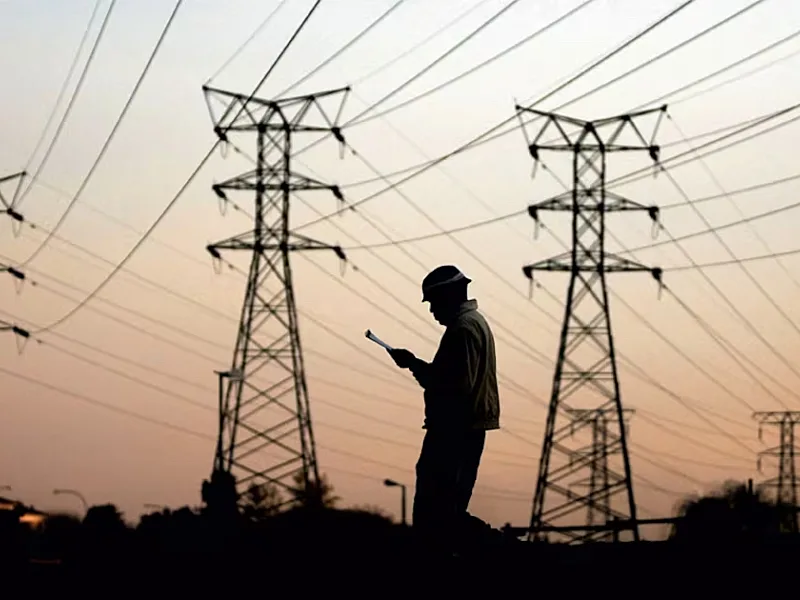
For Africa, the question is urgent: can countries build digital competitiveness without deepening electricity inequality, grid stress and fossil-fuel dependence?
AI Power Becomes Development Stress Test
Artificial intelligence is moving from the screen to the grid. In its World Energy Outlook Special Report: Key Questions on Energy and AI, the International Energy Agency says the AI-energy nexus is evolving rapidly as data centres, chips, grids, electricity prices and energy security become part of the same policy conversation.
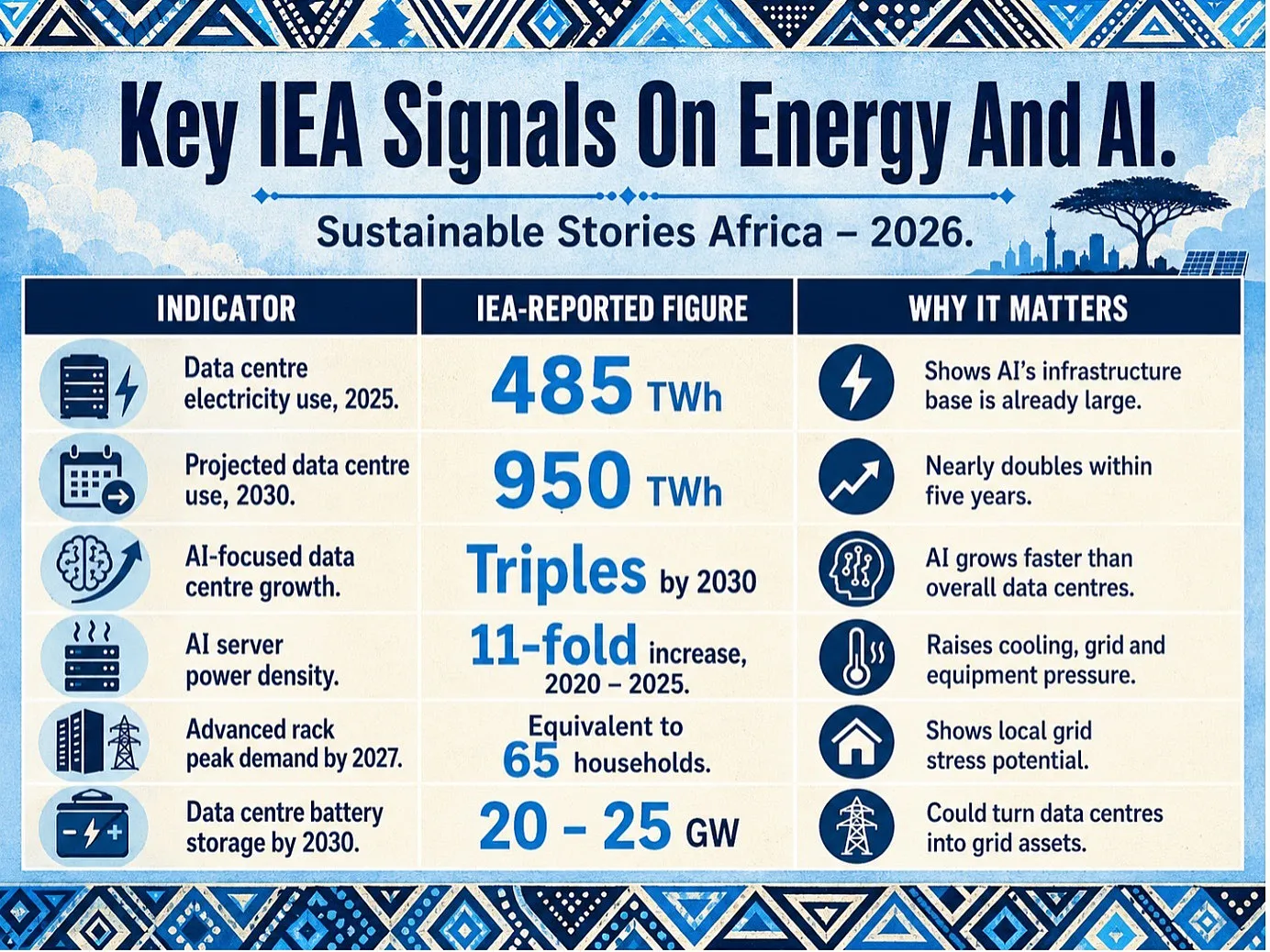
The report’s core finding is striking: global electricity consumption from data centres is projected to rise from 485 terawatt-hours in 2025 to 950 TWh in 2030, accounting for around 3% of global electricity demand by then.
AI-focused data centres are expected to grow even faster, tripling over the same period.
For African economies, this is more than a forecast. It is a warning and an opening.
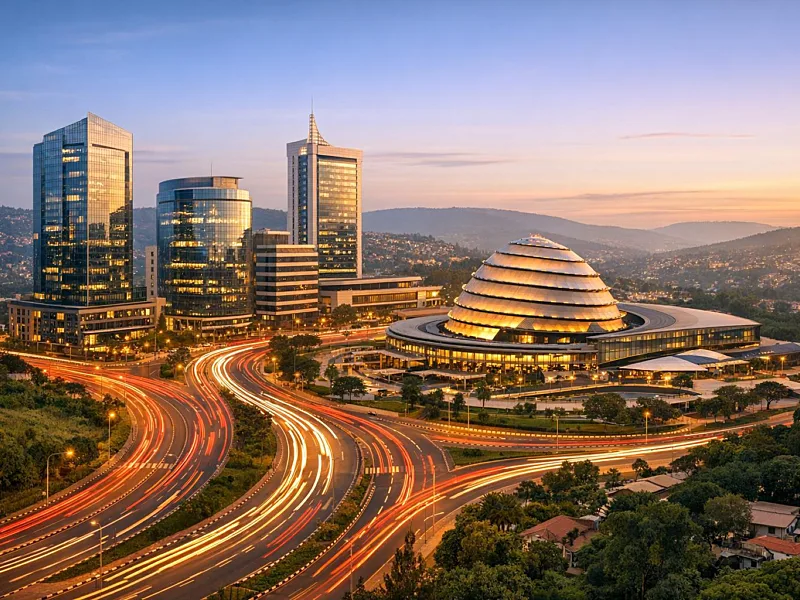
Countries that can supply reliable, affordable and increasingly clean electricity will be better placed to host digital infrastructure, train local models, protect data sovereignty and use AI for health, climate, agriculture, education and energy planning.
Those who cannot may remain consumers of AI systems hosted elsewhere.
AI’s Demand Now Meets Grid Reality
The AI boom is already extending the physical systems which support the digital economy.
The IEA says the largest technology companies’ capital expenditure exceeded $400 billion in 2025 and is expected to jump by another 75% in 2026. Capital expenditure by just five technology companies is now larger than global investment in oil and natural gas production.
That money is flowing into what the IEA calls “AI factories”: cutting-edge data centres designed specifically for artificial intelligence. Satellite-based tracking by the agency shows its capacity has more than tripled in the past 18 months.
However, the speed of AI deployment is colliding with slower-moving realities: grid connections, permitting systems, transformers, high-bandwidth memory, power electronics, gas turbines and local social acceptance.
The report makes a crucial distinction. Individual AI tasks are becoming dramatically more efficient, with energy use per task falling by at least an order of magnitude annually in recent years.
Simple text queries now typically consume less electricity than running a television over the same period.
However, advanced use cases, video generation, reasoning and agentic AI can consume hundreds or thousands of times more energy per query than simple text generation.
Efficiency Gains Hide Heavier AI Workloads
The energy demands of artificial intelligence present a complex and shifting forecast. Efficiency gains in chips and software are reducing power consumption per task.
However, market appetite for more sophisticated AI applications is simultaneously driving overall electricity demand higher. The IEA's Base Case projects global data centre consumption to double by 2030, with AI-focused facilities reaching approximately 465 terawatt-hours, supported by a 2.2-fold rise in AI accelerator shipments.
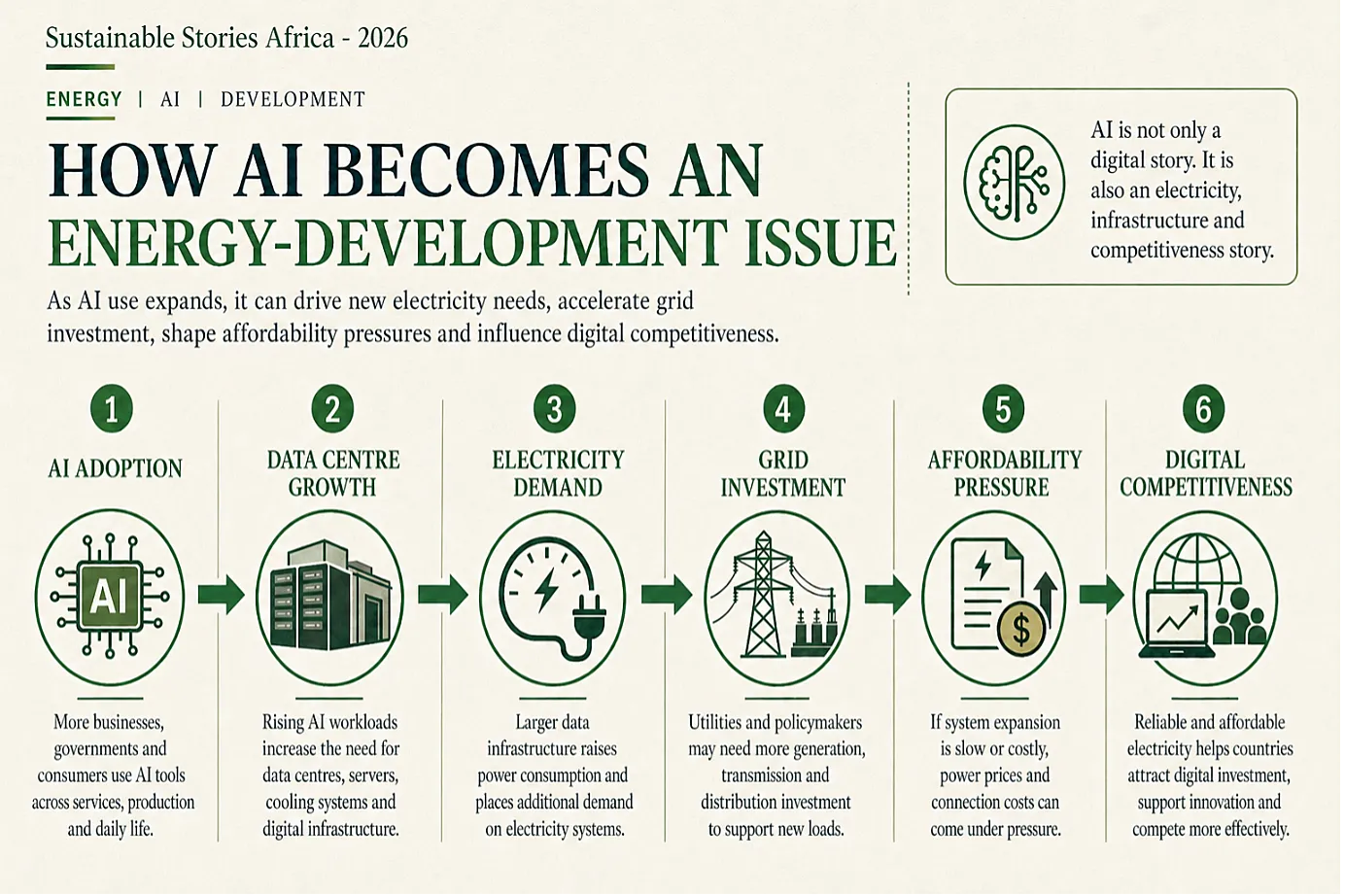
For African markets, this trajectory raises a structural question about where digital infrastructure will be built. Data centres require stable grids, predictable tariffs, land, connectivity, and supportive regulation.
Where these conditions are absent, investment will gravitate elsewhere, leaving African economies dependent on externally hosted compute capacity.
The development risk echoes a familiar pattern: exporting raw inputs while importing finished value.
Just as past economies exported commodities and imported manufactured goods, African countries risk generating data while importing AI services, unless energy planning, digital policy, and industrial strategy are deliberately aligned now.
Smarter Energy Systems Could Share Benefits
The same AI systems intensifying energy demand also offer tools to strengthen the power systems that support them.
The IEA identifies AI's potential to monitor grid infrastructure, forecast renewable generation, detect losses, predict equipment failures, and optimise maintenance scheduling.
For African utilities operating under capital constraints, this ability to extract greater value from existing infrastructure can be as consequential as building new assets.
The industrial opportunity is equally significant. AI-enabled optimisation could reduce energy costs by three to ten percentage points in energy-intensive sectors, and the IEA estimates that documented use cases could save more than 13 exajoules of energy by 2035, equivalent to roughly 3% of global final energy consumption, if adoption barriers are addressed.
However, deployment remains limited. An IEA survey identifies the lack of digital skills as the single largest obstacle to AI adoption in the energy sector.
Fragmented data, cybersecurity risks, privacy concerns, and insufficient digitalisation compound the challenge.
Only 10% of global electricity consumption is covered by open data policies, and fewer than half of energy systems operate under frameworks actively promoting AI integration. Closing these gaps is as urgent as scaling the technology itself.
Policy Must Link Compute And Power
The IEA’s policy message is direct: data centres do not automatically raise electricity prices, but poor planning can make them a cost burden. Large, concentrated, fast-moving data centre loads can trigger new generation and grid investments.
If demand forecasts are weak, grid connections are oversized, or cost allocation is unfair, ordinary consumers may face higher tariffs.
That concern should matter deeply to African regulators. Electricity affordability is already a political and development issue in many markets.
If data centre growth is managed as a private infrastructure race rather than a public energy-planning challenge, countries could end up with digital enclaves that consume reliable power; in the same vein, nearby households and small businesses remain exposed to outages and high costs.
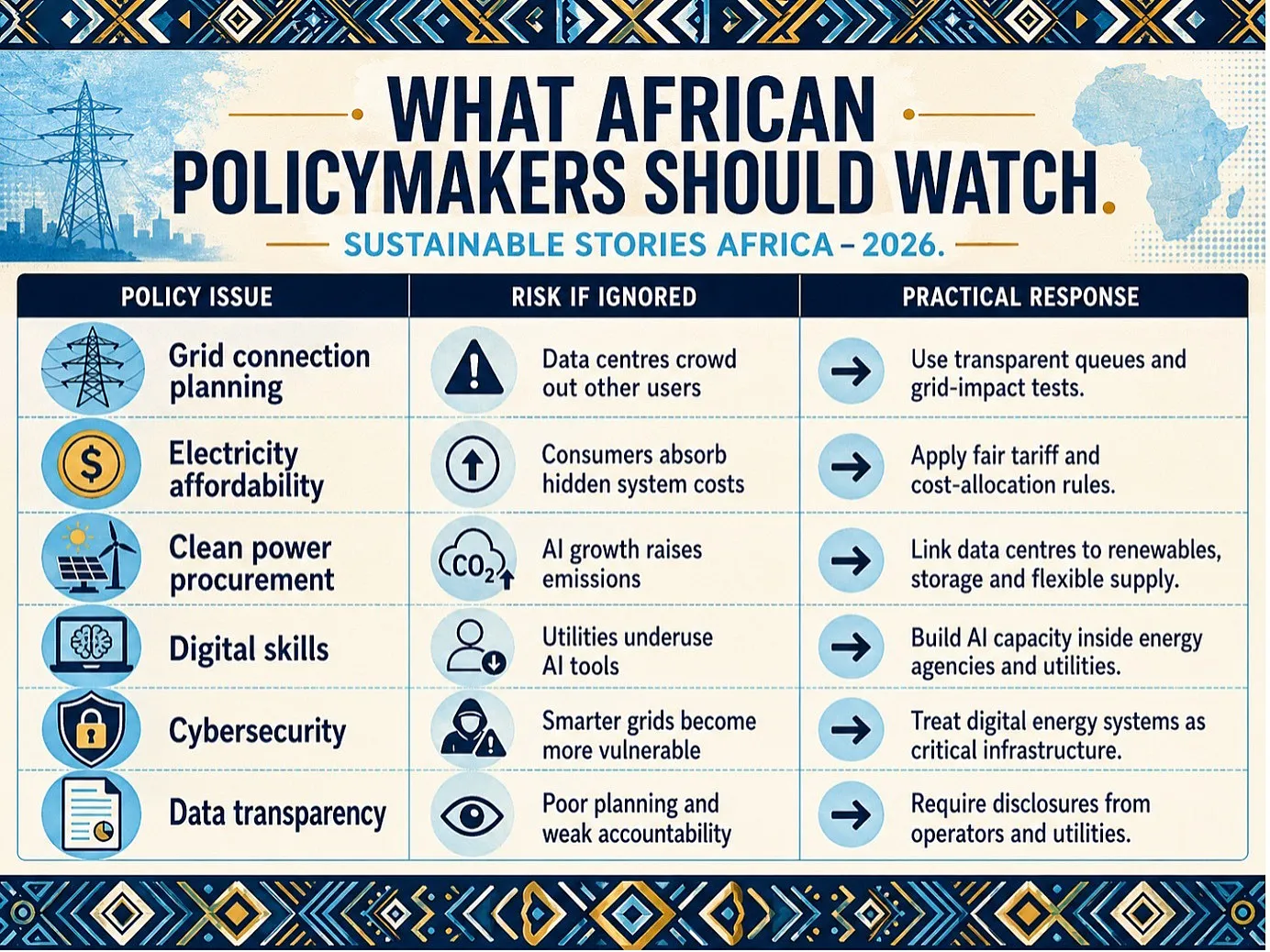
The IEA proposes three broad principles: proactively manage data centre project pipelines and electricity-sector investment; promote electricity-system flexibility; and remove barriers to AI adoption in the energy sector.
These include better connection-queue management, stronger demand disclosure from technology companies, fair tariff design, non-firm grid connections, demand response, battery storage and policies on data availability, cybersecurity, skills and interoperability.
For African governments, the agenda should be adapted to local realities. Digital infrastructure approvals should require clear power-sourcing plans, grid-impact assessments, water-use scrutiny, clean-energy procurement pathways, local skills development and transparency on who pays for grid upgrades.
Path Forward – Build Digital Growth On Clean Power
Africa’s AI future should not be built on fragile grids, imported compute and uneven access.
It should be built on reliable power, transparent regulation, clean procurement, local skills and public-interest digital infrastructure.
The priority is clear: align AI policy with energy planning, make data centres grid-responsive, protect consumers from unfair costs, and use AI to strengthen utilities, industries and communities.
That is how digital growth can advance ESG, resilience and inclusive development.