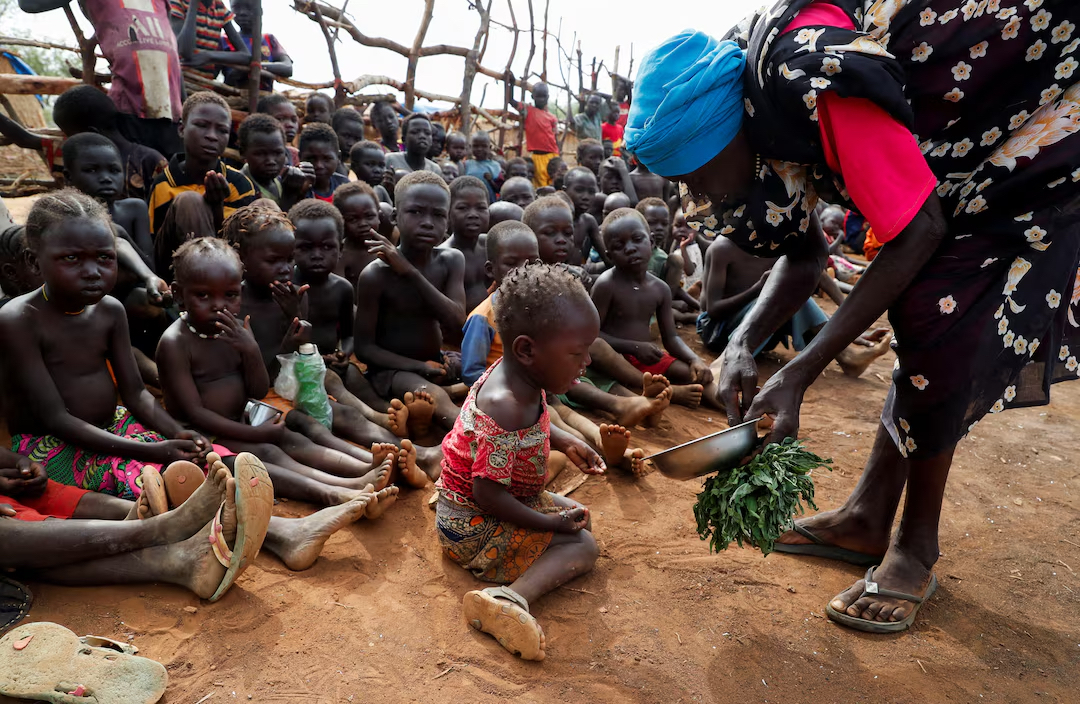
The 2026 Global Report on Food Crises shows hunger is no longer only a humanitarian emergency. It is a governance, climate, conflict and financing stress test.
For Africa and other emerging markets, the warning is clear: food security now depends on peacebuilding, resilient agriculture, credible data and sustained investment.
Hunger Is Now A Systems Test
The world entered 2026 with 266 million people facing high levels of acute food insecurity across 47 countries and territories, according to the tenth edition of the Global Report on Food Crises, published by FAO, WFP and the Global Network Against Food Crises. The report frames hunger not as an isolated food problem, but as the visible outcome of conflict, climate stress, displacement, economic fragility and shrinking aid.
For African markets, the findings land close to home.
Nigeria, the Democratic Republic of the Congo and Sudan account for nearly one-third of all people facing high levels of acute food insecurity.
East Africa, West Africa, the Sahel, and Central and Southern Africa remained central to the global hunger map.
The report’s central message is blunt: food crises are becoming more protracted, more data-sensitive and more expensive to ignore.
Hunger Becomes A Test Of Systems
The headline figure is severe: 22.9% of the analysed population in food-crisis countries faced high levels of acute food insecurity in 2025. That share has remained above 20% every year since 2020 and has nearly doubled since 2016.
However, the report warns against reading the lower headline number, 266 million, down from 296 million in 2024, as an improvement.
The fall largely reflects reduced country coverage, not a meaningful decline in urgent hunger needs.
Eighteen selected countries and territories had no qualifying acute food insecurity data or lacked data meeting GRFC technical requirements.
That matters because what is not measured is often not financed.
The 2026 edition records the lowest number of countries and territories with qualifying food insecurity data in a decade, raising concerns about the weakening of the very systems used to target aid, resilience investment and early warning.
Data showing crisis behind the numbers
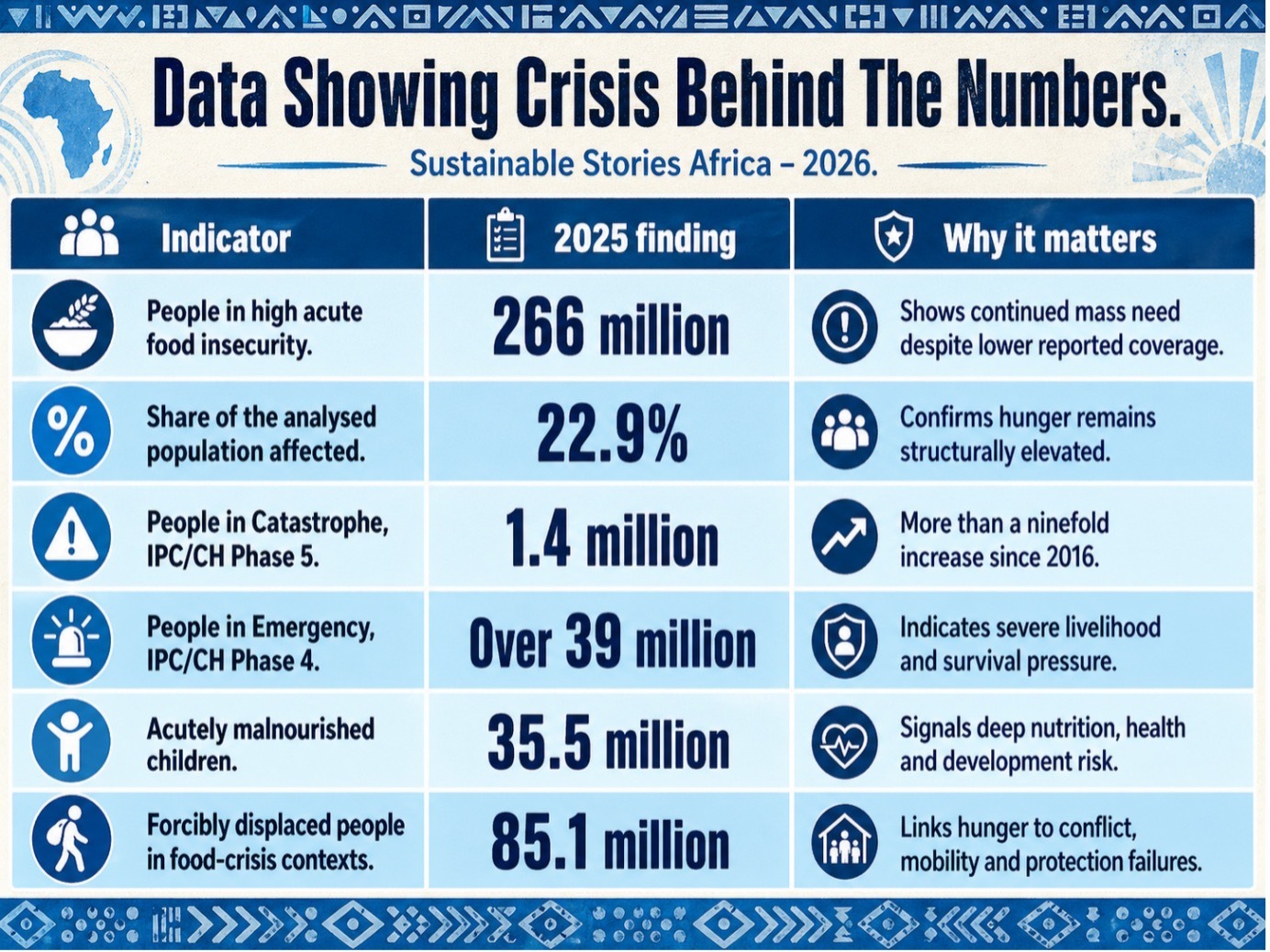
The human meaning behind these numbers is stark. A household in a drought-hit farming belt may lose a harvest, face higher food prices, reduce meals and withdraw children from school.
A displaced family fleeing conflict may arrive in a host community where markets are functioning, but incomes, land access and humanitarian support are too thin to restore stability.
The report says six countries and territories had populations in Catastrophe. Famine was confirmed in parts of the Gaza Strip and Sudan, the first such occurrence in two conflict-affected areas in the same year since IPC reporting began.
Conflict, Climate, and Prices Drive Hunger
Conflict remained the dominant driver of acute food insecurity.
In 19 countries and territories where it was the primary driver, 147.4 million people were acutely food insecure and in need of urgent assistance. Weather extremes were the primary driver in 16 countries and territories, affecting 87.5 million people, while economic shocks were the main driver in 12 contexts, covering 29.8 million people.
For Africa, this pattern is familiar.
- In Sudan, conflict pushed nearly 25 million people, more than half the population, into Crisis or worse by May 2025.
- In West Africa and the Sahel, insecurity in the Lake Chad basin and Liptako–Gourma region continued to shape hunger outcomes.
- In Southern Africa, the lingering effects of the 2023 – 2024 El Niño drought left countries including Malawi, Zambia, Zimbabwe, Eswatini and Lesotho exposed during the lean season.
This is why food security has become an ESG issue. It touches climate adaptation, social protection, human rights, public finance, supply chain resilience and political stability.
When food systems fail, governments face pressure, markets lose predictability, and communities absorb the cost.
Resilience Can Turn Risk Into Reform
The opportunity is not simply to respond faster, but to build differently. The report positions the GRFC as a shared evidence base that can help humanitarian, development and peace actors align to severity metrics, caseload estimates, drivers and trends.
- For African governments, that means strengthening early-warning systems, agricultural extension, water management, social protection and local food production.
- For financiers, it means treating food resilience as investable infrastructure, not just emergency expenditure.
- For businesses, it means understanding that food insecurity can disrupt labour markets, logistics, consumer demand and operating risk.
The most promising shift is from crisis response to risk reduction: supporting farmers before drought becomes destitution, stabilising markets before price shocks become unrest, and funding nutrition before malnutrition becomes a generational loss for development.
Finance And Data Must Move Together
The report’s warning on financing is especially urgent.
Humanitarian and development financing for food sectors declined in 2025, even as acute food insecurity remained high. Funding has fallen back to levels last seen in 2016 – 2017.
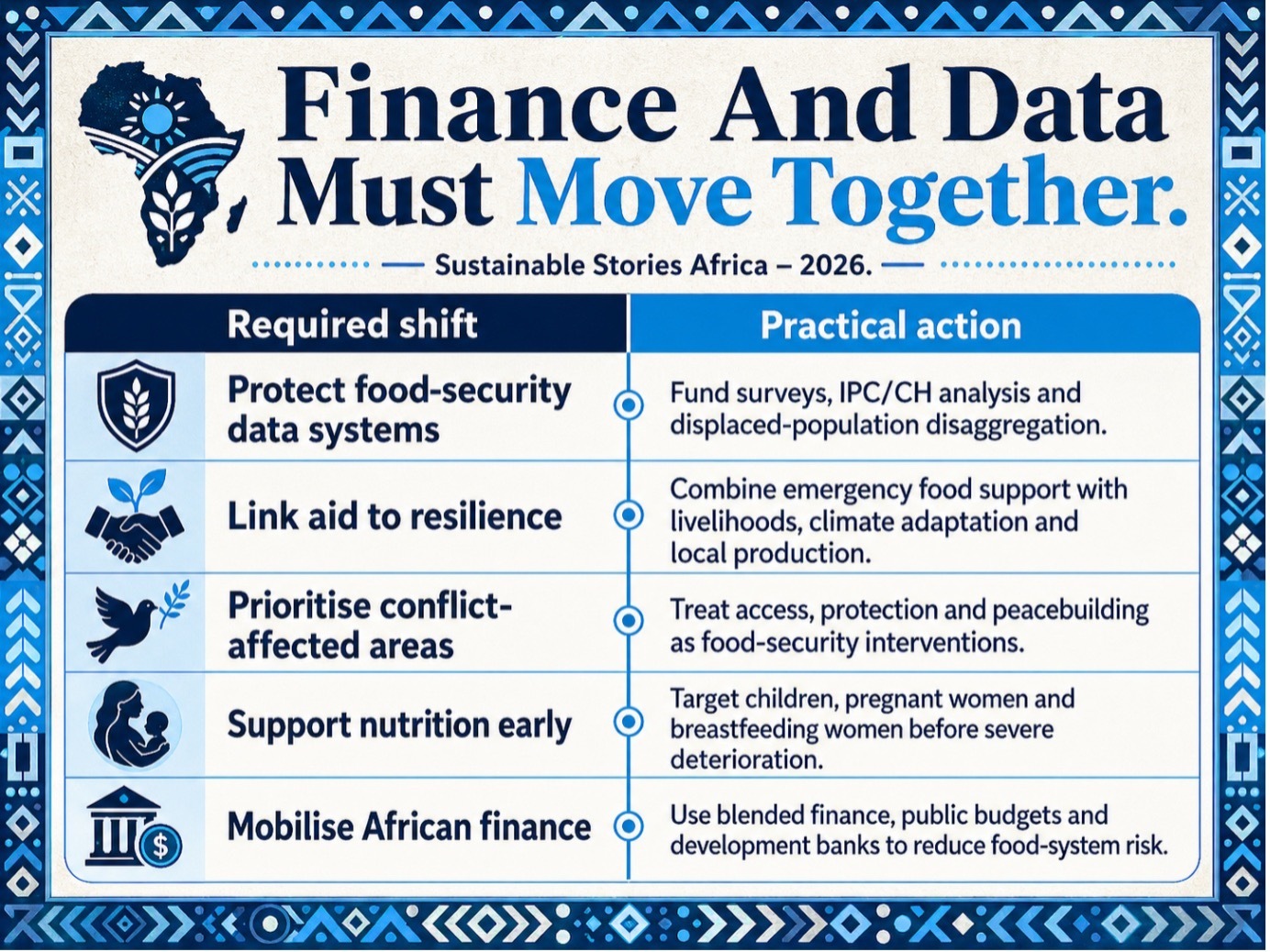
This is where policy must become practical.
- Governments need credible national food-security dashboards. Donors need predictable multi-year funding.
- Development banks need to scale agriculture, storage, irrigation, clean energy and transport investments.
- Citizens and civil society need transparent data to hold institutions accountable.
The report’s methodology also matters.
It defines a food crisis as acute food insecurity that requires urgent action to protect lives and livelihoods, that exceeds national response capacity.
That definition makes clear that food crises are not only about calories; they are about whether institutions can protect people when shocks hit.
Path Forward – For Food Security
Africa’s food-security agenda must move from emergency reaction to anticipatory governance.
That means investing in peace, climate-smart agriculture, nutrition, market stability and credible data systems before crisis peaks.
The 2026 GRFC makes the case for a new compact: protect lives now, finance resilience next, and build food systems strong enough to withstand conflict, climate shocks and economic volatility.
For sustainable development, hunger is the indicator no market can afford to ignore.