The Circularity Gap Report 2026 reframes waste as an economic failure, estimating that linear material use destroys €25.4 trillion in avoidable value each year.
For Africa and other emerging markets, the message is urgent: circularity is not only an environmental policy.
It is industrial strategy, resource security and economic resilience.
Waste Is Now An Economic Signal
The world is losing an estimated €25.4 trillion every year through avoidable value destruction linked to linear material use, according to The Circularity Gap Report 2026: The Value Gap, produced by Circle Economy in collaboration with Deloitte.
That loss is equivalent to almost 31% of global GDP, meaning that for every €3 of economic value created, around €1 is lost through waste, inefficiency, underuse and premature disposal.
The report marks a shift in how circularity is framed. Instead of measuring only material flows or recycling rates, it asks a sharper economic question: how much value disappears when economies extract, process, consume and discard resources without keeping them in productive use?
For African economies, the answer matters. Countries seeking industrialisation, infrastructure expansion, food security and climate resilience cannot afford growth models that leak value at every stage.
Linear Growth Is Destroying Value
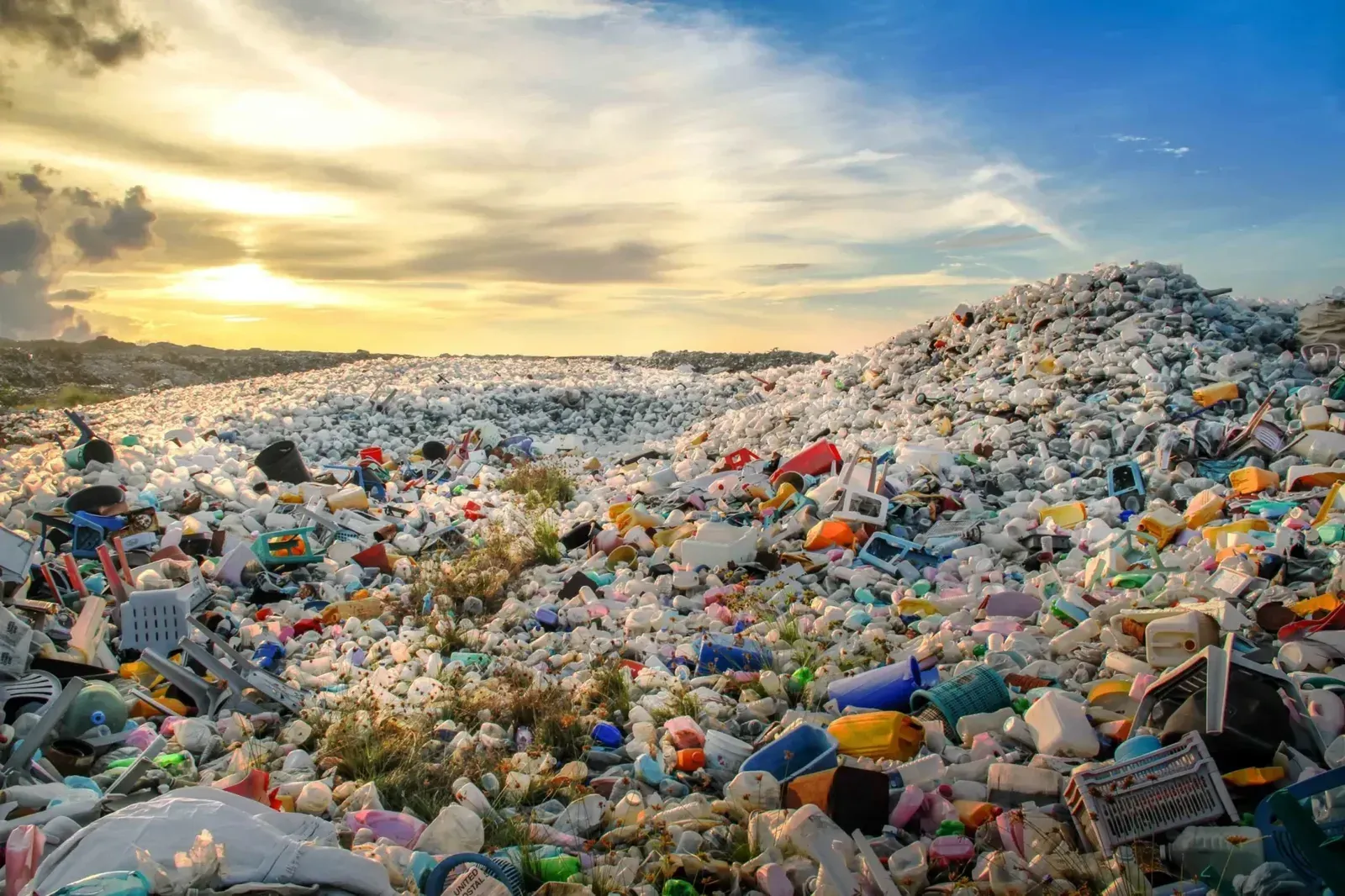
Each day, billions of euros’ worth of materials disappear through food spoilage, discarded electronics, underused buildings, wasted energy, deteriorating infrastructure and products thrown away before the end of their useful life.
The report describes these losses as symptoms of a deeper structural challenge: a linear economy that undervalues natural resources, underuses produced assets and enables premature disposal.
The environmental case is already familiar. Resource use has tripled since 1970, and material extraction and processing drive more than half of global greenhouse gas emissions, most biodiversity loss and water stress.
However, the 2026 report adds a financial argument: the world is not only damaging ecosystems but also destroying economic value on a massive scale.
That is the “Value Gap”, the monetary value lost because materials, food, energy and assets are not used efficiently, retained longer or recovered at a higher value.
Five Pathways Explain The Loss
The report groups global value loss into five major pathways:
- Processing losses
- Energy losses
- Food losses and waste
- End-of-life waste
- Consumption of fixed capital.
Together, they show where the global economy leaks value from production to disposal.
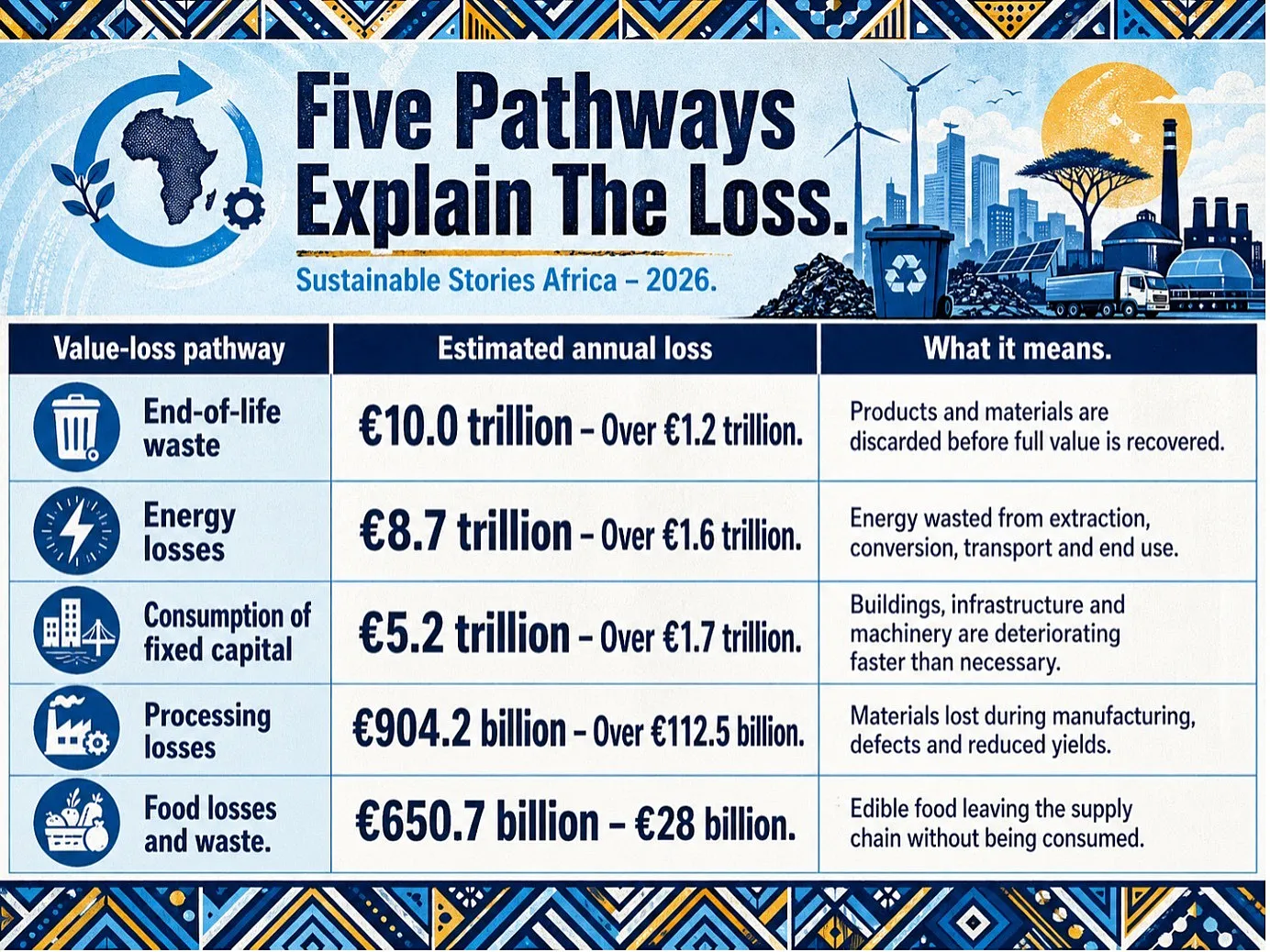
End-of-life waste is the largest category, at €10 trillion a year. This reflects the value lost when products and assets such as buildings, vehicles and machinery are dismantled or discarded, with only a fraction of their original value recovered through recycling.
The report stresses that repair, reuse, remanufacturing and adaptive redesign retain more value than recycling alone.
Energy losses follow closely at €8.7 trillion, largely due to inefficiencies across fossil fuel extraction, conversion, transport and end use.
The report notes that most of the value is lost in later stages of the energy chain, including buildings, transport and industry, where energy often fails to deliver useful service.
GDP Misses The Hidden Damage
The report’s deeper challenge is directed at conventional economic measurement. GDP measures activity, not value retention.
It counts production and spending, but it does not fully account for depleted resources, wasted materials, polluted ecosystems, deteriorating assets or food that never reaches a plate.
That creates a dangerous blind spot. A country can grow its GDP while reducing the natural, social and physical foundations that make future prosperity possible.
Cleaning up damage may even add to GDP, while the original destruction remains poorly captured.
The Value Gap tries to make those losses visible. It does not replace GDP, and the report acknowledges methodological limits. But it offers a practical lens for asking whether economies are creating durable value or simply increasing throughput.
For African policymakers, this is especially important. GDP growth built on raw material extraction, imported waste, inefficient infrastructure or unmanaged urban expansion may look positive in national accounts while quietly increasing future costs.
Circularity Can Strengthen African Resilience
The opportunity is not abstract. Circular strategies can improve resource productivity, reduce import dependence, cut waste costs, create repair and remanufacturing jobs, and support climate and industrial resilience.
In African cities, circular construction can extend the life of buildings, reduce demolition waste and lower the cost of housing materials. In agriculture, reducing food loss can protect household income, improve food security and reduce pressure on land and water.
In energy, efficiency and renewable systems can reduce waste while improving reliability. In manufacturing, better material recovery can support local value chains and reduce exposure to volatile import prices.
The report’s “value hill” concept is useful here: value rises as raw materials are processed into products, but it must then be retained through maintenance, reuse, repair, refurbishment, remanufacturing and recycling.
The highest-value circular systems are those that keep products and components useful for longer before breaking them down into raw materials.
For Africa, this means circularity should not be treated as waste management alone. It should be part of trade policy, industrial planning, urban development, climate finance and SME support.
Stakeholders Must Redesign Value Chains
The report says closing the Value Gap requires coordinated action from businesses, financiers and policymakers.
No single actor can solve structural value loss alone, because the losses are embedded across value chains, incentives, infrastructure and pricing systems.
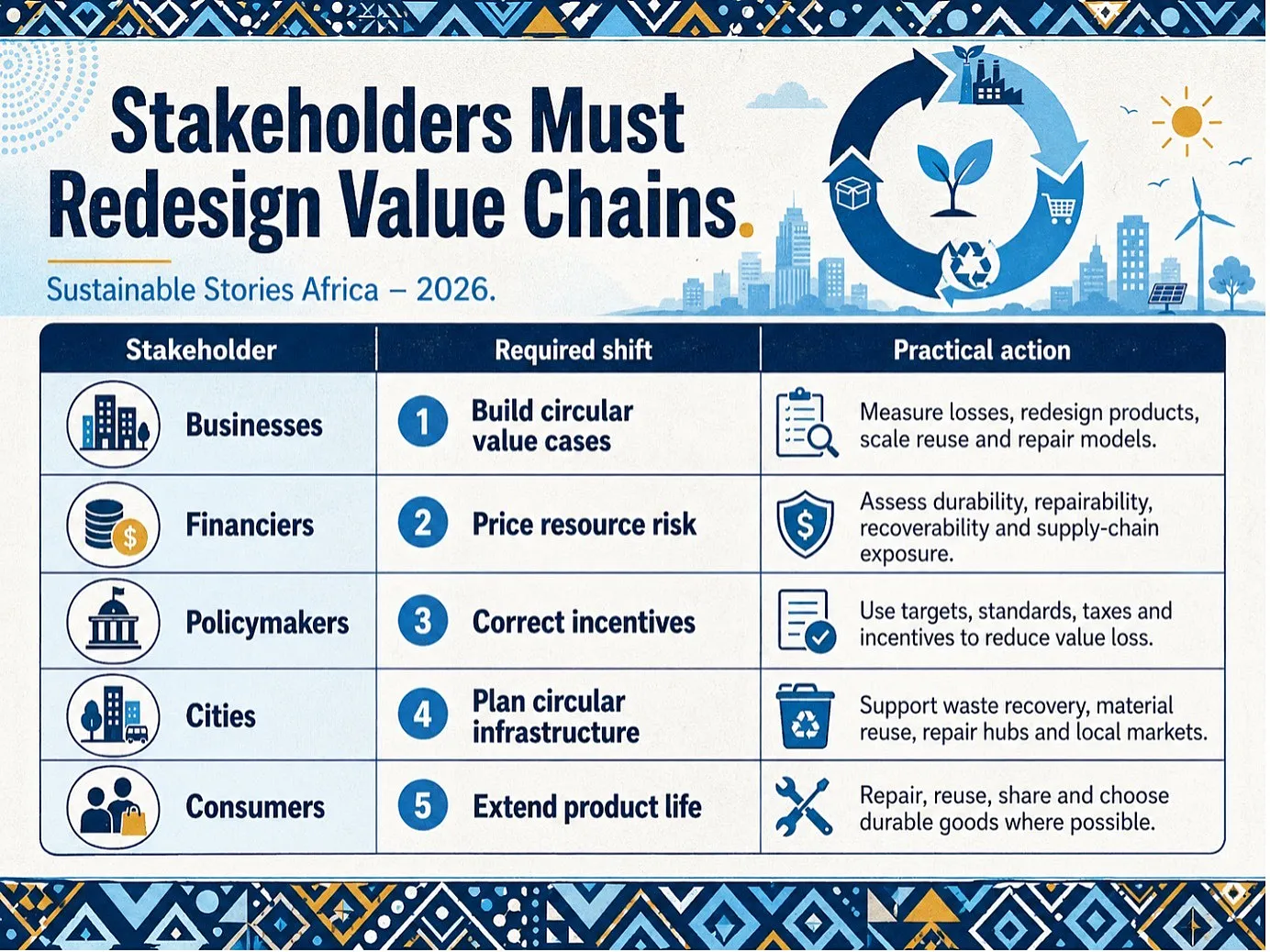
- Businesses need to identify where value is lost in their operations and supply chains.
- Financiers need to reward resource-efficient assets and business models that retain value over time.
- Policymakers need to set targets, price externalities and create incentives that make circular practices more profitable than wasteful ones.
This is where the circular economy becomes an ESG issue. It links environmental impact, governance quality, social inclusion, climate risk, asset productivity and long-term competitiveness.
Path Forward – For Circular Value
Africa’s circular economy agenda should focus on value retention: fewer wasted materials, longer-lasting infrastructure, lower food loss, efficient energy use and stronger local repair and recovery markets.
The Circularity Gap Report 2026 makes the economic case clear. Circularity is not simply about recycling more.
It is about designing economies that lose less, retain more and turn sustainability into measurable prosperity.