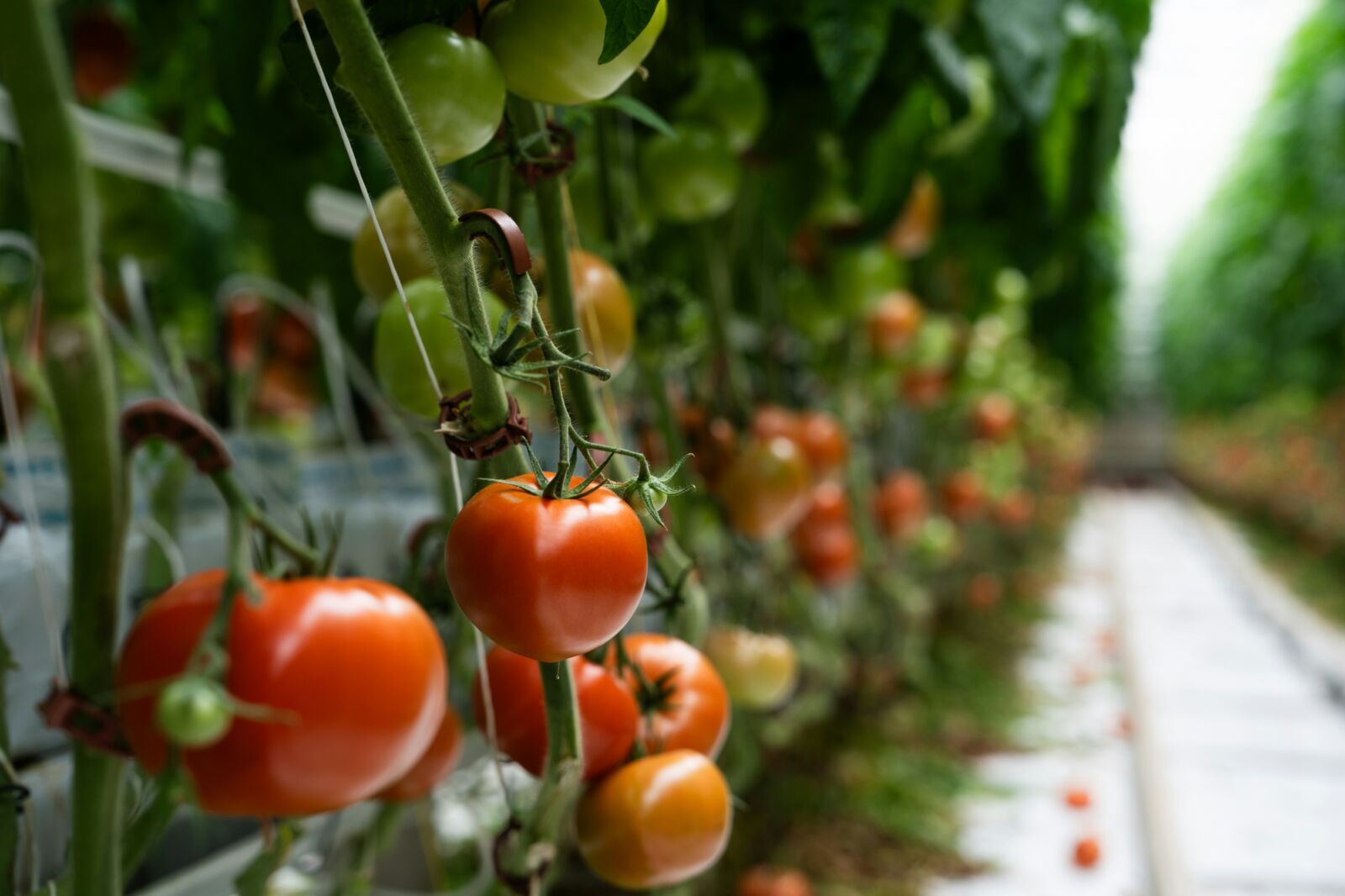
The world must produce about 50% more food, feed and fibre by 2050, yet the land and water systems that sustain agriculture are already under severe pressure.
FAO’s 2025 report warns that future food security will depend less on expanding farmland and more on smarter, sustainable use of land, soil and water.
Food Security Starts Beneath Us
Africa’s food future will not be decided only in markets, ministries or climate summits. It will also be decided in soils that are losing fertility, rivers under pressure, aquifers being overdrawn, and farms trying to produce more under hotter, less predictable conditions.
FAO’s 2025 report, The State of the World’s Land and Water Resources for Food and Agriculture, says agriculture can still produce enough for a world population projected to reach 9.7 billion by 2050.
However, the conditions under which that food is produced will determine whether the gains are sustainable, or deepen land degradation, water scarcity and biodiversity loss.
For Africa, where population growth, climate risk, food imports and rural livelihoods intersect, the message is direct: land and water management is now a food security, climate resilience, and a developmental economic issue.
The Resource Base Is Strained
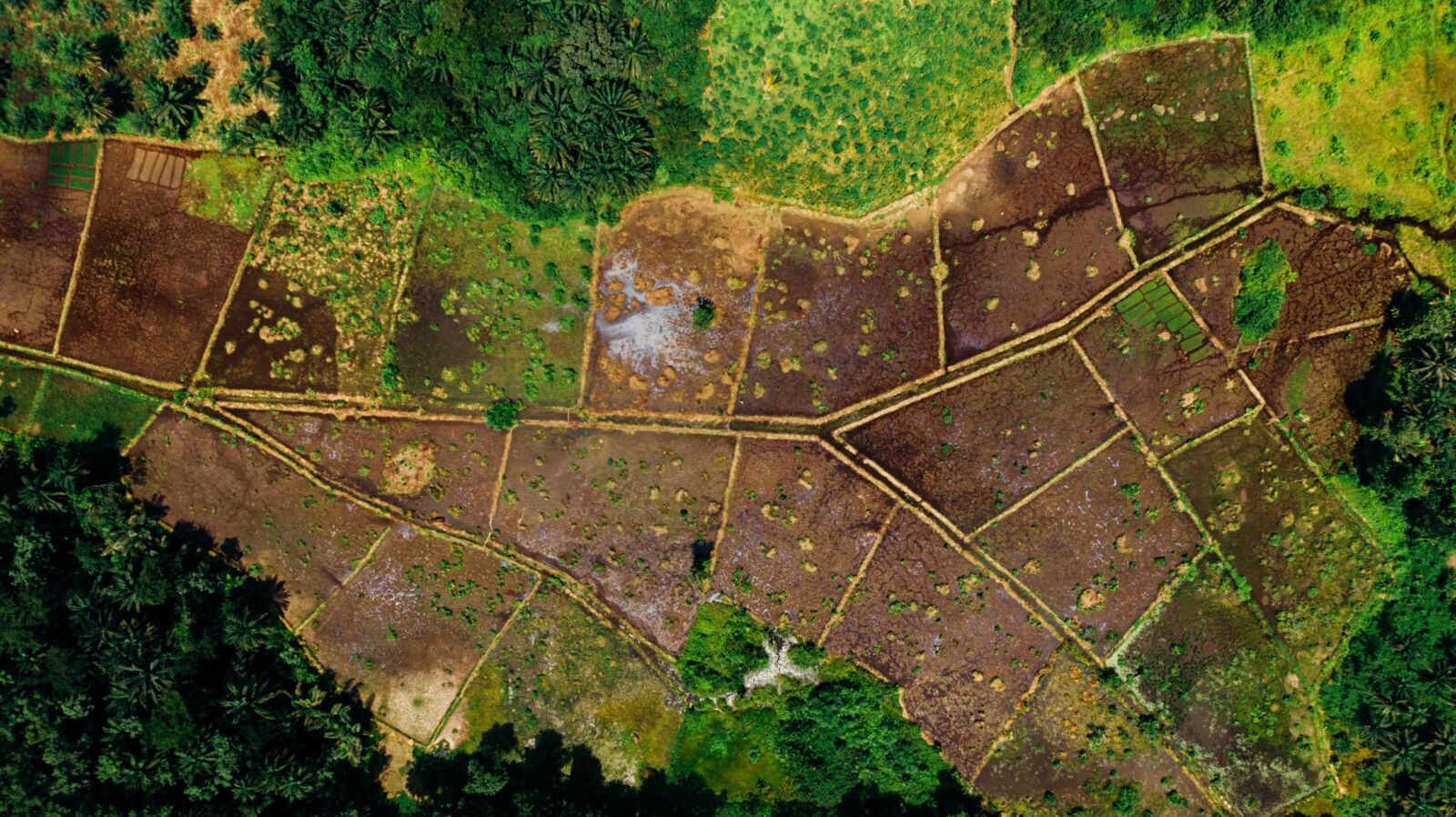
FAO estimates that more than 1.6 billion hectares of land—over 10% of the world’s land area—has been degraded by unsustainable land-use and management practices. More than 60% of that degradation occurs on agricultural lands, including cropland and pastureland.
The pressure is not only on land. Agriculture accounts for about 72% of global freshwater withdrawals, while 1.2 billion people live in agricultural areas with severe water constraints.
This is the hard development reality: food systems depend on the same natural resources they help exhaust.
Expansion Cannot Carry The Future
Between 1964 and 2023, agricultural production rose mainly through intensification, rather than land expansion. Agricultural land expanded by only 8%, while cereal production increased by 213%, largely because of higher yields.
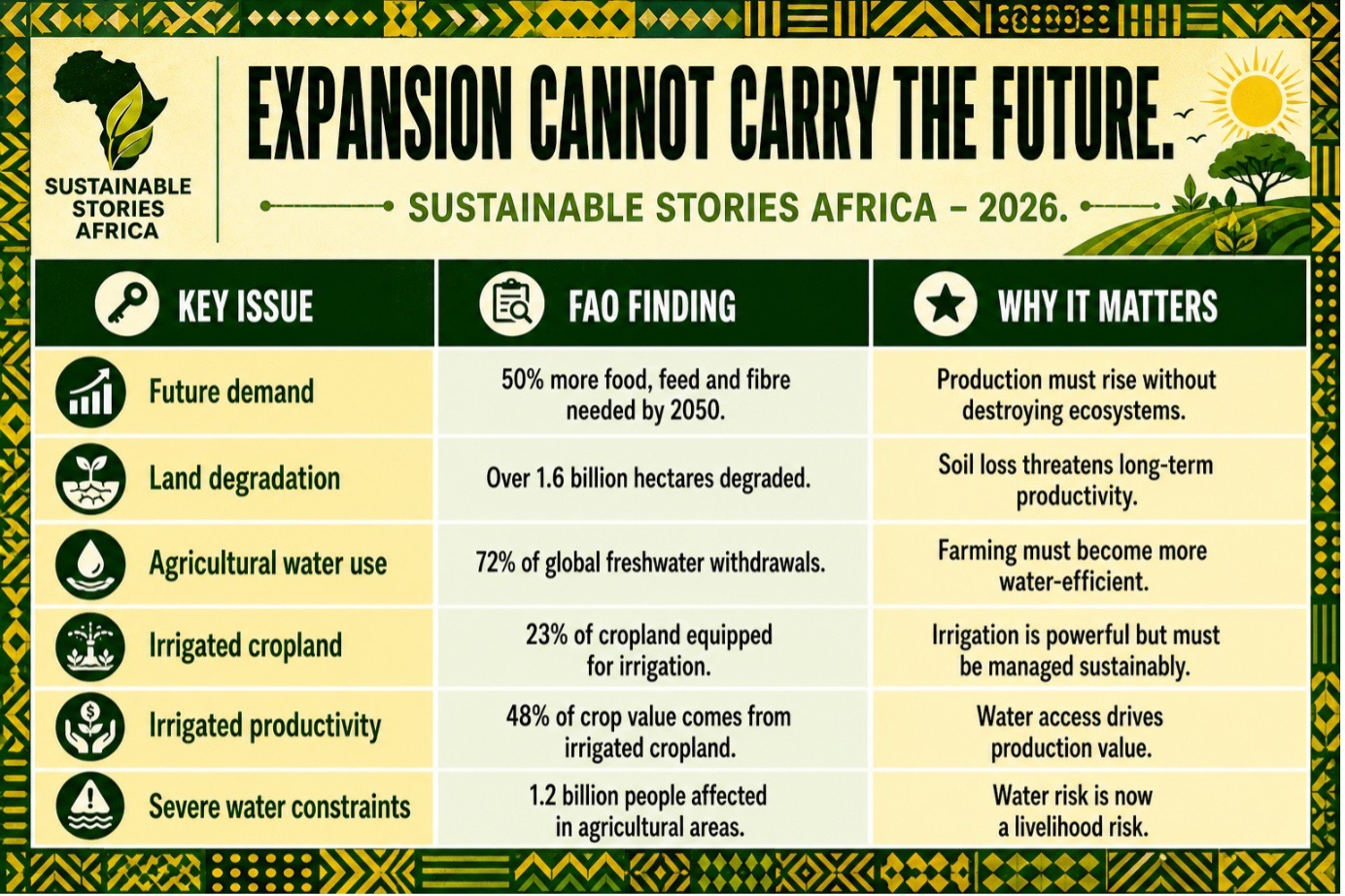
The report is careful not to present farmland expansion as an easy answer. While there is theoretical land potential globally, converting more forests, grasslands and wetlands would damage ecosystems that regulate climate, protect biodiversity and support water cycles.
For African countries, the trade-off is urgent. Expanding cultivation may appear necessary, but unmanaged expansion can lock in future vulnerability.
The greater opportunity lies in closing yield gaps on existing farmland, restoring degraded land, improving soil health and using water more efficiently.
Producing More Can Mean Better
The most hopeful message in the FAO report is that the world has the potential to produce more and better. However, that potential depends on better choices.
In sub-Saharan Africa, the report notes that rainfed crop yields are only about 24% of the potential yield under appropriate management practices.
That gap is not just a statistic; it is the difference between a farmer harvesting barely enough and a community building food resilience.
Closing yield gaps could support food security without pushing agriculture deeper into forests, wetlands or fragile lands. It could also reduce import dependence, strengthen rural incomes and improve resilience to climate shocks.
The report points to practical solutions: conservation agriculture, drought-tolerant crop varieties, soil moisture conservation, crop diversification, organic composting, agroforestry, improved grazing systems, irrigation modernisation, and integrated land-use planning.
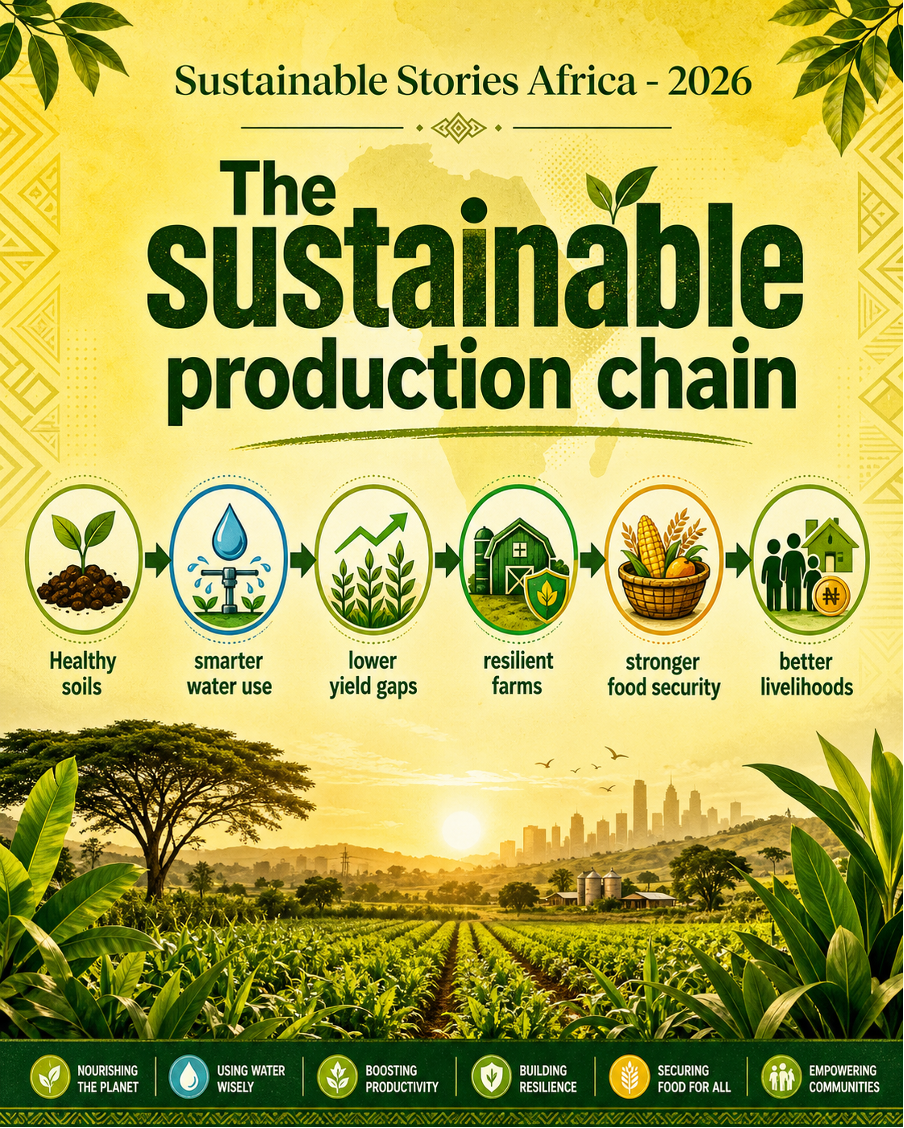
These solutions are especially relevant for smallholders. A farmer using compost, improved seeds, water harvesting and drought-tolerant crops is not only increasing output, but also protecting the natural capital that future harvests depend on.
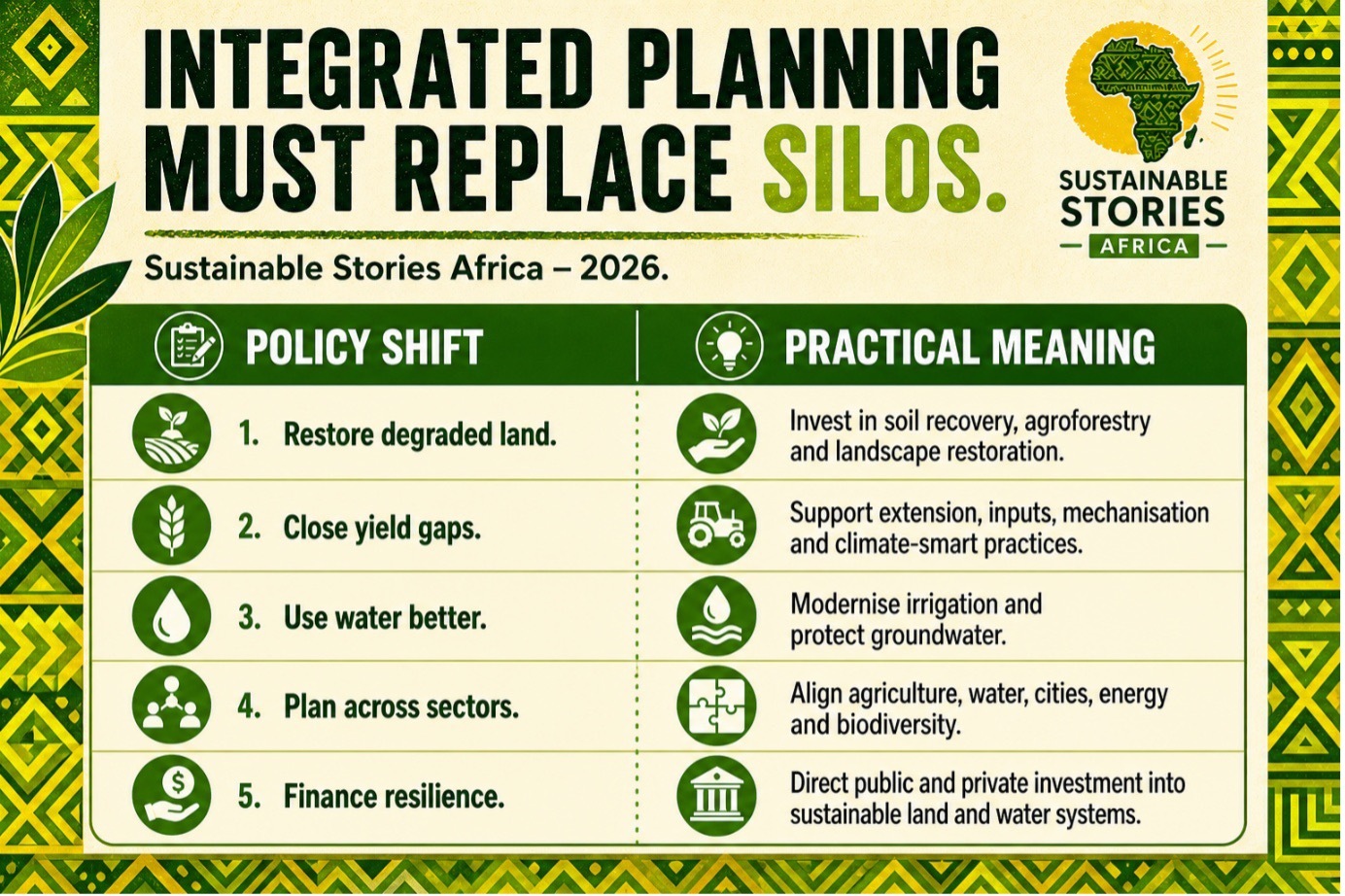
Integrated Planning Must Replace Silos
FAO argues that there is no single pathway and no one-size-fits-all solution. The right approach depends on local land, soil, water, climate and social conditions.
That means governments need integrated planning, not fragmented programmes. Agriculture ministries cannot plan independently of water agencies, urban authorities, energy planners, climate institutions and finance ministries.
The report highlights integrated land-use planning, integrated water resources management, landscape management, agroecology and the Water–Energy–Food–Ecosystems nexus as key approaches for managing trade-offs.
For Africa, this means five shifts are critical:
The report also stresses the importance of data and technology. Remote sensing, early warning systems, land monitoring platforms and water productivity tools can help governments and farmers make better decisions.
However, technology alone is not enough. Farmers need access, training, finance and secure rights to land and water.
Path Forward – Natural Capital Must Lead
Africa’s food security strategy must begin with the resource base: land, soil and water. Raising production while degrading these systems yields short-term gains with long-term costs.
The priority is clear: close yield gaps, restore degraded land, modernise water use and plan across sectors. Sustainable agriculture is no longer optional; it is the foundation for food security, climate resilience and inclusive growth.