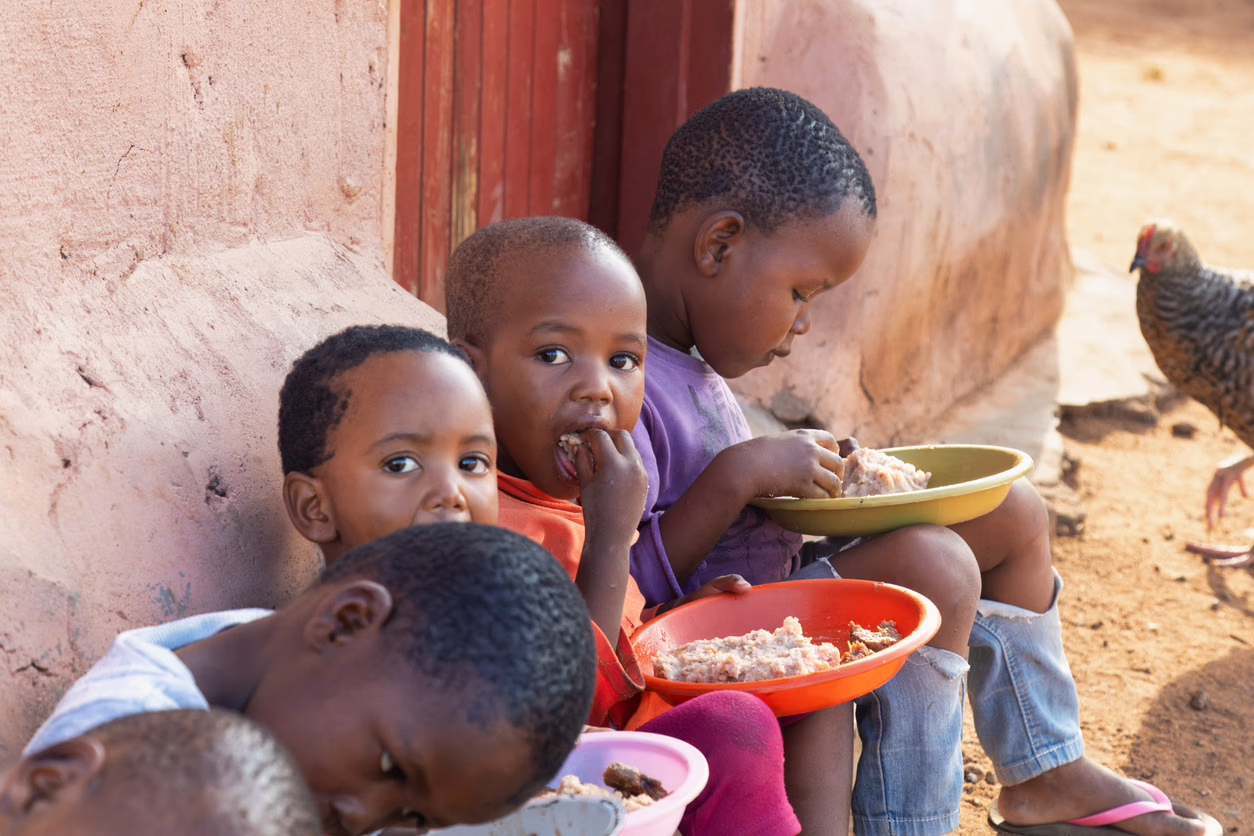
Global hunger is easing slightly, but Africa is moving in the opposite direction. The 2025 State of Food Security and Nutrition in the World warns that food price inflation is keeping healthy diets out of reach.
The report’s central question is urgent: can governments protect households now while rebuilding food systems strong enough to withstand the next price shock?
Food Prices Are Rewriting Hunger
The world produces enough food, yet hundreds of millions remain hungry because nutritious food is too expensive, too unstable or too far from household income realities.
The 2025 State of Food Security and Nutrition in the World, produced by FAO, IFAD, UNICEF, WFP and WHO, places food price inflation at the centre of the global food security debate.
It shows that hunger has eased globally since the pandemic peak, but Africa continues to face rising pressure.
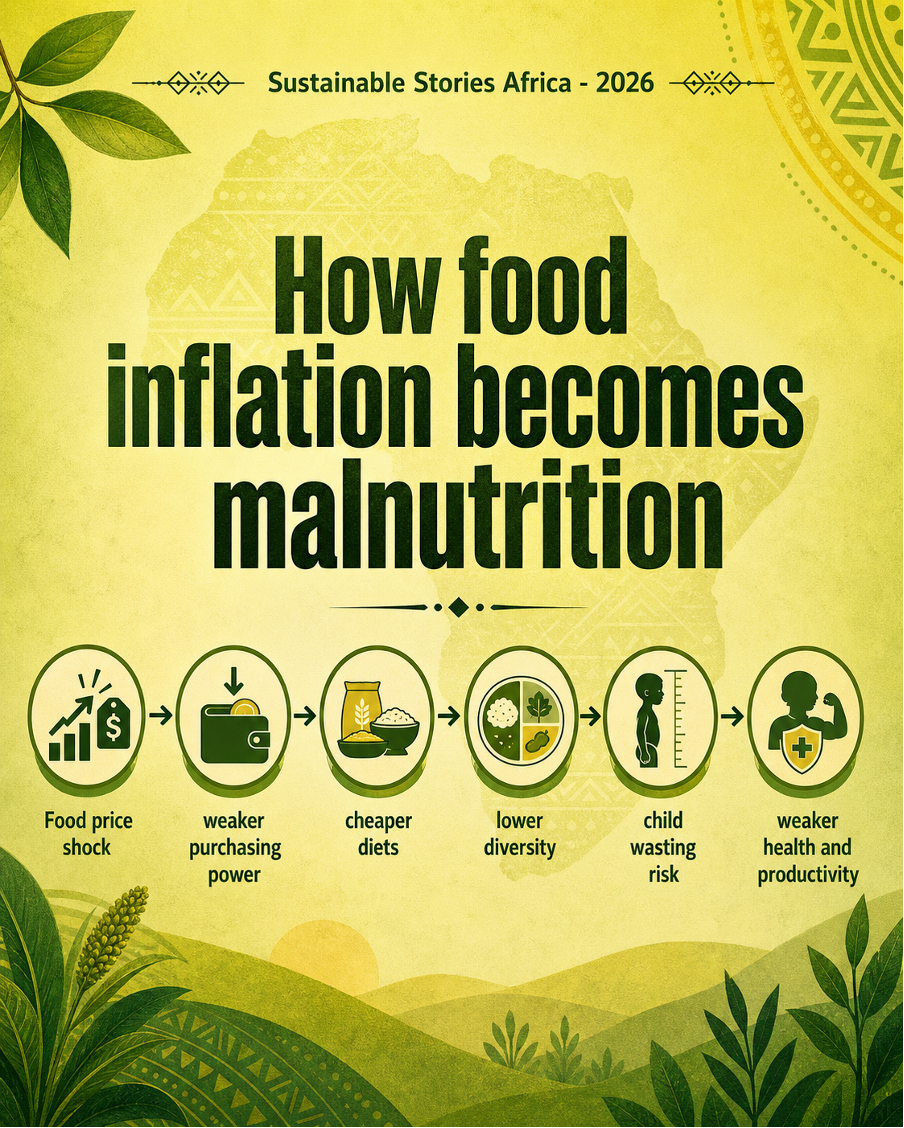
For African households, the story is familiar. A bag of rice rises. Cooking oil rises. Transport costs rise. Wages do not keep pace.
Families then shift from diverse meals to cheaper staples, reducing nutrition even when calories remain available.
Africa Bears The Heaviest Burden
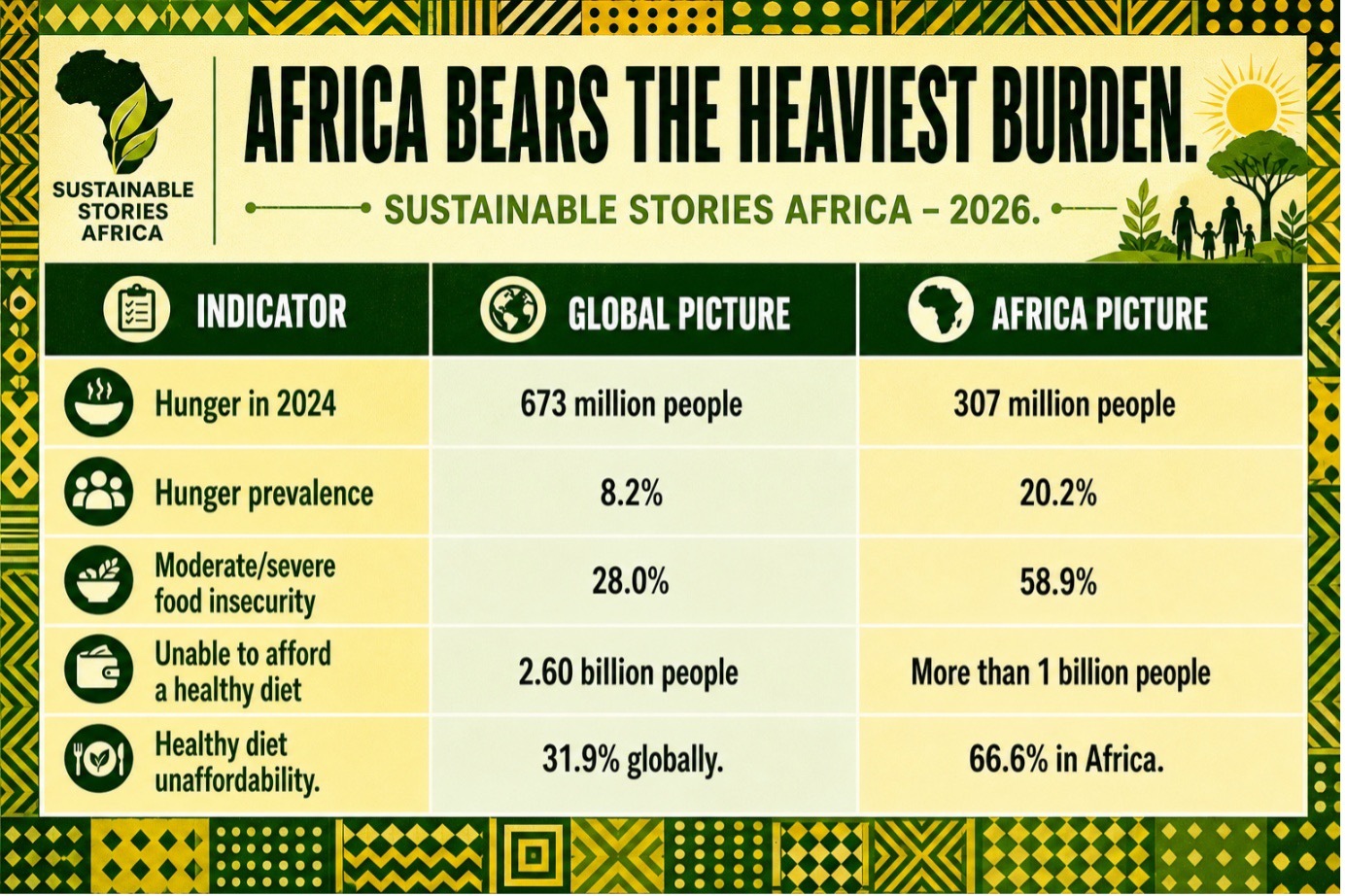
An estimated 673 million people faced hunger globally in 2024, down from 2022 levels.
However, Africa accounted for about 307 million of them, with hunger affecting 20.2% of the continent’s population. By 2030, nearly 60% of the world’s chronically undernourished people are projected to be in Africa.
That is the report’s sharpest warning. Global recovery is not reaching everyone equally.
Food insecurity also remains extreme. About 2.3 billion people were moderately or severely food insecure in 2024. Africa’s rate stood at 58.9%, more than double the global average of 28%.
Inflation Is Changing Diets
The report explains that food price inflation surged after 2020, driven by pandemic disruptions, the war in Ukraine, energy costs, fertiliser shocks, exchange-rate pressures and wider macroeconomic stress.
Median global food price inflation rose from 2.3% in December 2020 to 13.6% in January 2023. In low-income countries, it peaked at 30% in May 2023.
This matters because poor households spend a larger share of their income on food. When prices rise, families cannot easily absorb the shock. They reduce meal quality, cut protein amount, delay healthcare, pull children out of school or rely on cheaper, less nutritious foods.
The cost of a healthy diet reached 4.46 purchasing power parity dollars per person per day in 2024, up from 4.01 in 2022. Africa recorded the greatest regional increase between 2023 and 2024.
The crisis is not only about food quantity. It is about dietary diversity. Globally, only about one-third of children aged 6 to 23 months achieved minimum dietary diversity, while about two-thirds of women aged 15 to 49 did so.
Better Food Systems Can Protect Families
The positive story is that progress is possible. Global hunger has declined from recent peaks, and some regions have improved food security through recovery, income growth and policy support.
The report also notes gains in child stunting, which fell from 26.4% in 2012 to 23.2% in 2024, while exclusive breastfeeding rose from 37.0% in 2012 to 47.8% in 2023.
For Africa, the opportunity is to treat food affordability as an economic resilience issue, not only a welfare concern.
If food systems are strengthened, families gain more than meals. Children learn better. Women face less nutritional stress. Farmers receive better market signals. Governments reduce emergency spending. Local food value chains become more stable.
The report is clear that nutrient-dense foods remain more expensive per calorie than staples. Ultra-processed foods are often cheaper than less processed alternatives, creating a dangerous affordability trap.
What Governments Must Do Now
The report argues for a policy mix that balances immediate relief with long-term agrifood resilience.
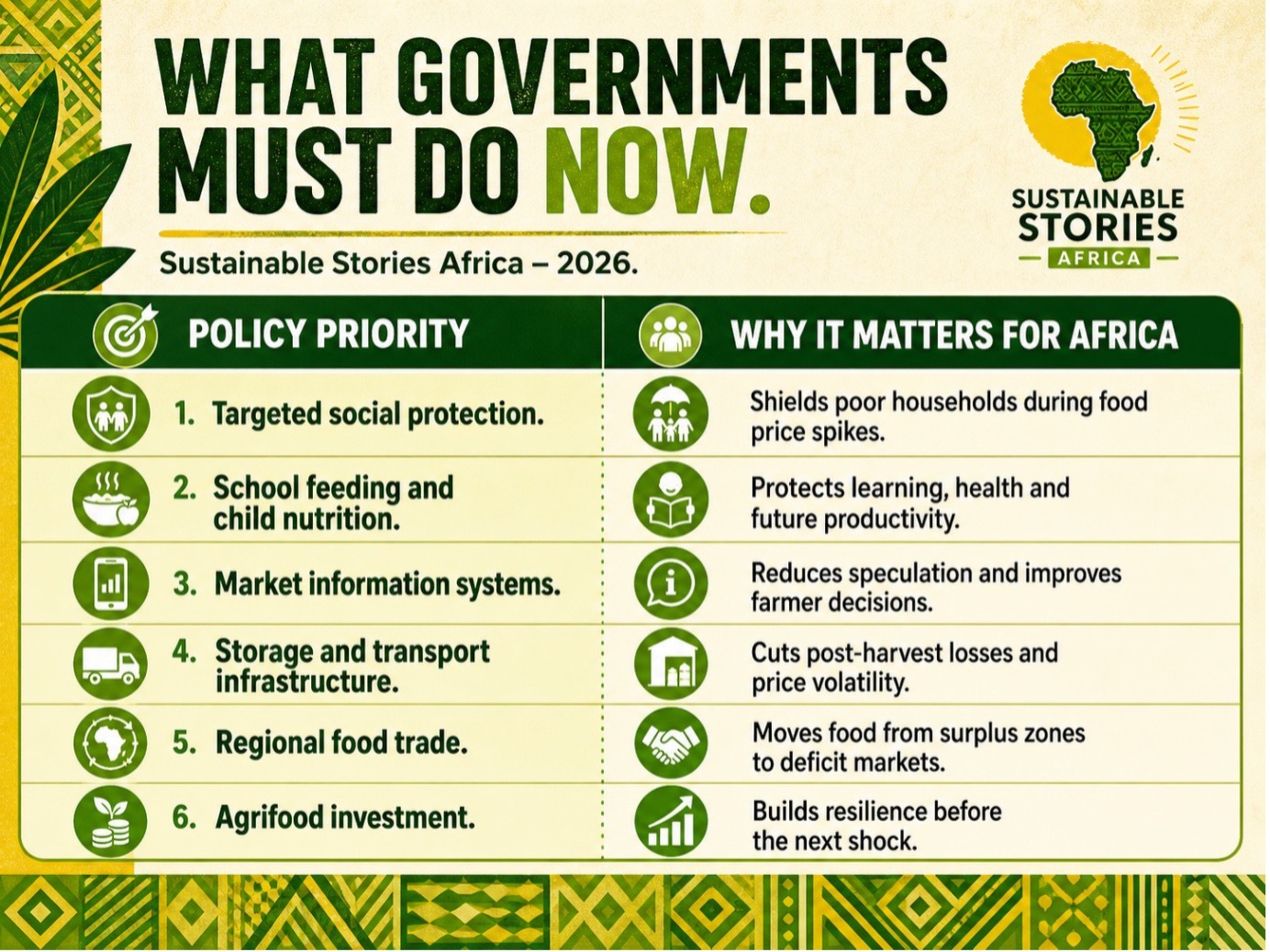
- First, governments should protect vulnerable households with targeted, time-bound fiscal measures. These can include temporary tax relief on essential foods, cash transfers, school feeding, nutrition support, and carefully monitored social protection.
- Second, fiscal and monetary policies must work together. Poorly coordinated spending and inflation control can worsen instability. Credible policy, realistic budgets and targeted food security investment help anchor expectations and protect households.
- Third, countries should avoid relying too heavily on blunt price controls. They may offer short-term relief, but can distort markets, weaken producer incentives and reduce long-term supply.
- Fourth, African governments should invest in storage, transport, irrigation, research, market information systems and local processing. These investments reduce losses, improve supply stability and help smallholder farmers respond to demand.
- Fifth, trade policy must be predictable. Export bans and sudden restrictions can worsen regional shortages. Transparent reserves, regional trade corridors and better market data can reduce panic and speculation.
Path Forward – Affordability Must Drive Policy
Africa’s food security challenge is now an affordability test. Governments, investors and development partners must make healthy diets central to economic planning, climate adaptation and social protection.
The priority is simple: protect households now, then rebuild food systems for resilience.
Without that shift, food inflation will keep turning market shocks into hunger, malnutrition and lost development potential.