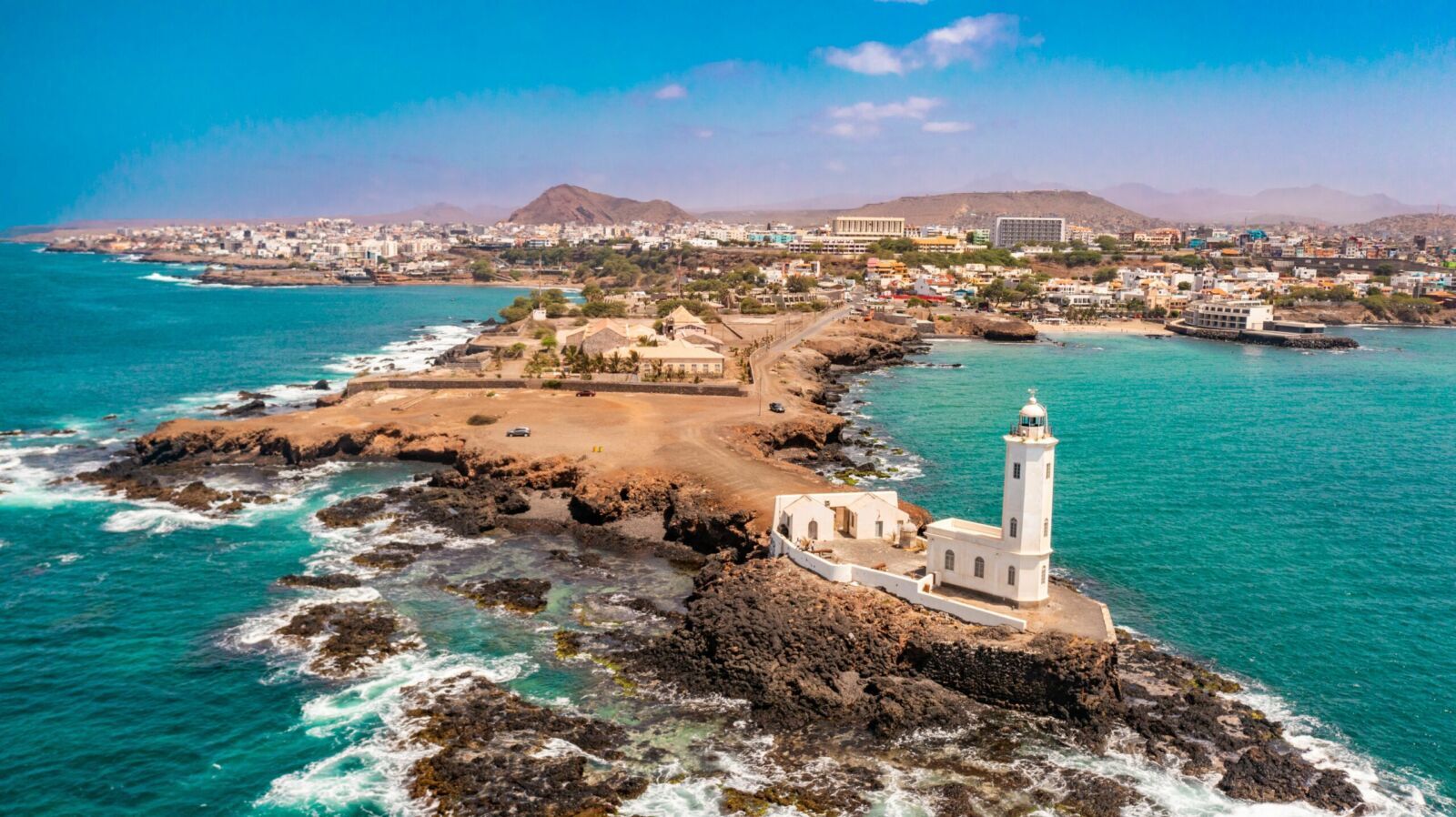
Cabo Verde needs about $842 million for climate mitigation and adaptation between 2024 and 2030, but public finance and traditional aid cannot close the gap.
A new UNECA-backed financial strategy says the island state must combine climate funds, green and blue bonds, debt swaps and stronger institutions to protect development gains while managing debt risk.
Island Risk Needs Smarter Finance
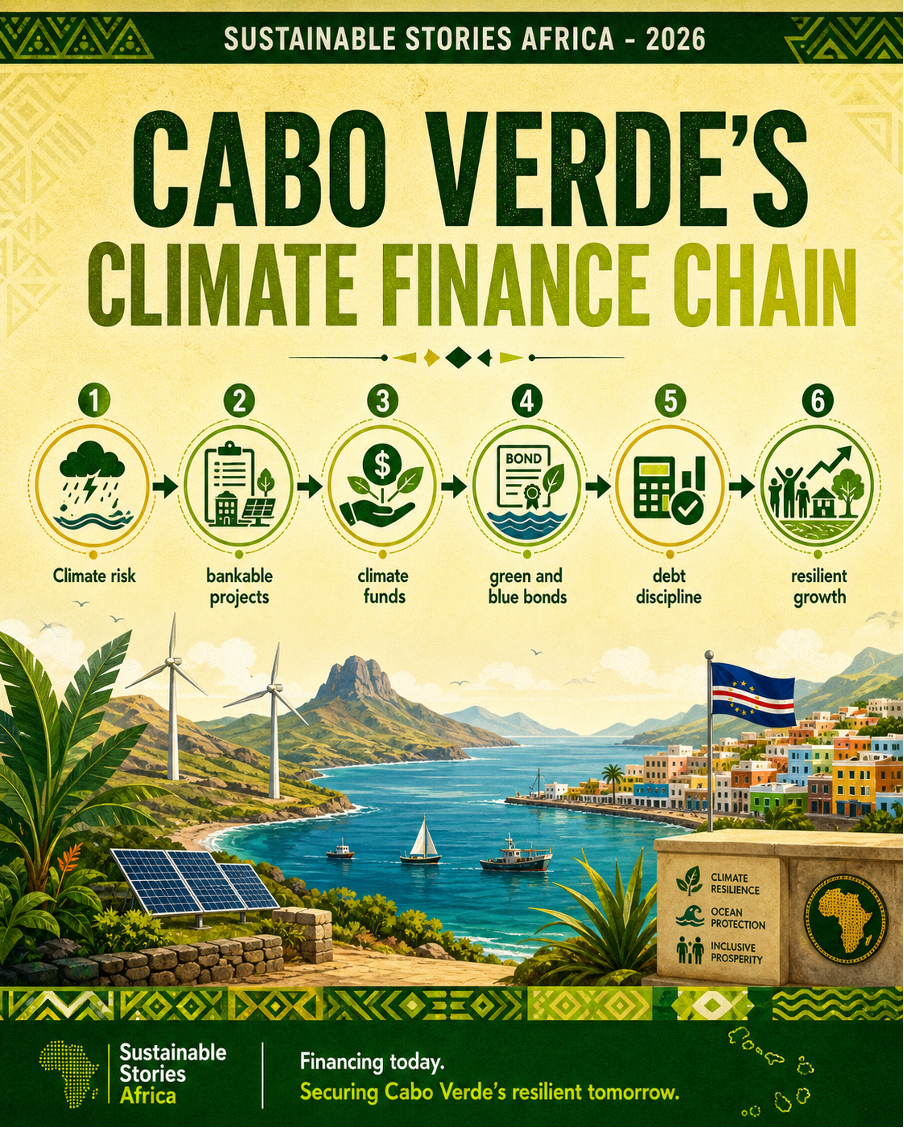
Cabo Verde is trying to solve one of the toughest questions facing small island developing states: how does a climate-vulnerable country pay for resilience without worsening debt?
The answer, according to A Financial Strategy for Cabo Verde, lies in building a more sophisticated climate finance system.
The report, prepared with support from UNCTAD and UNECA, proposes innovative finance, stronger institutions and better regulation to help the country mobilise resources for climate-related Sustainable Development Goals.
For Cabo Verde, this is not abstract finance. It is about tourism jobs, coastal protection, water security, renewable energy, public debt, investor confidence and the ability of families to withstand shocks in an island economy exposed to climate and global market volatility.
The Financing Gap Is Immediate
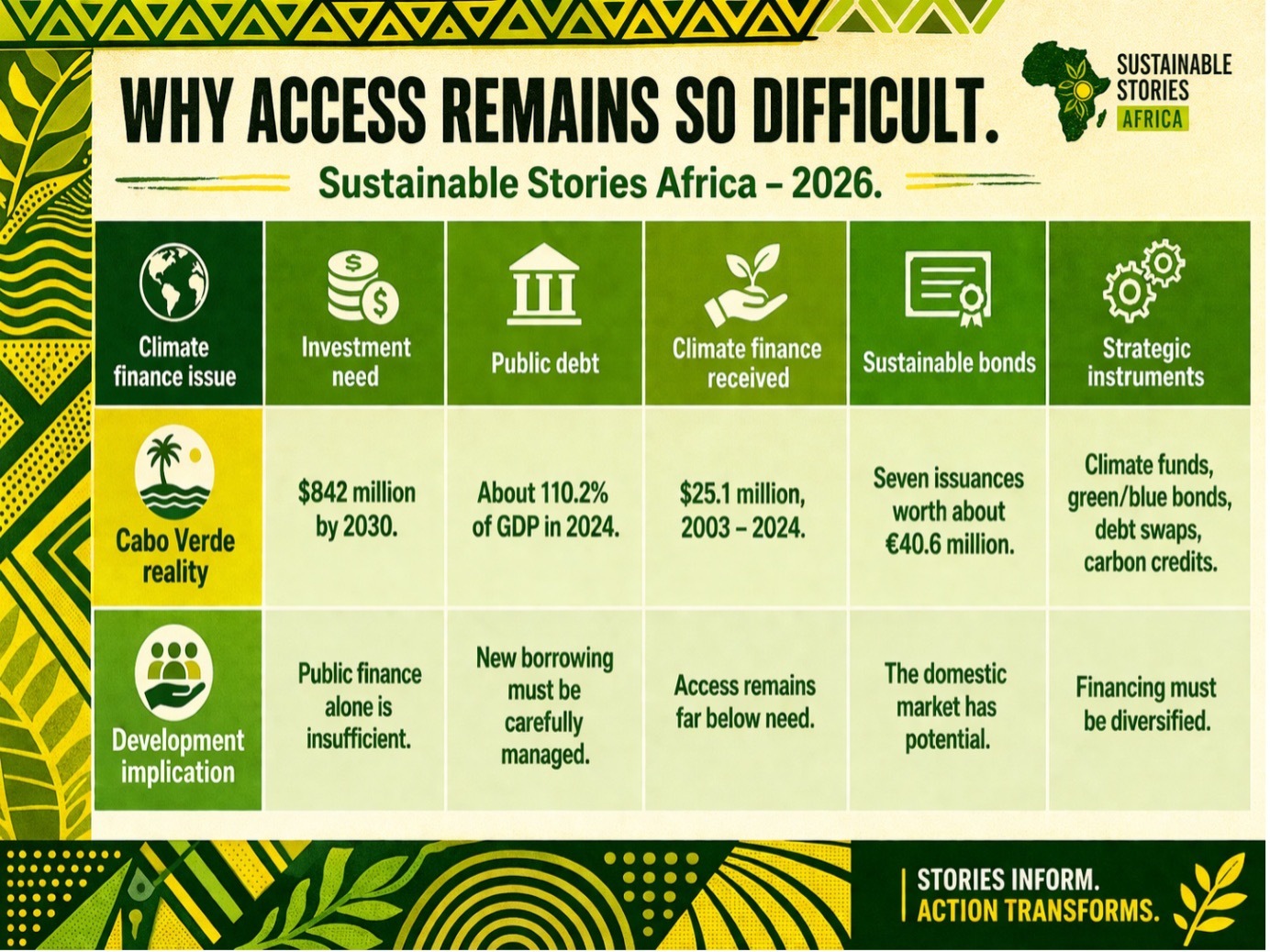
Cabo Verde’s climate bill is already visible. The World Bank estimates the country will need about $842 million, or $140 million annually, for climate adaptation and mitigation investment between 2024 and 2030. That is nearly 6% of cumulative GDP over the period.
However, the country’s public debt was estimated at 110.2% of GDP in 2024, limiting fiscal space for renewable energy, resilient infrastructure and digital transformation.
Tourism, which accounts for between 23% and 25% of GDP, also leaves the economy highly exposed to external shocks.
The message is clear: Cabo Verde cannot fund climate resilience through public budgets alone.
Why Access Remains So Difficult
The report identifies a paradox. Global climate finance exists, but small island states often struggle to reach it.
Cabo Verde received only $25.1 million in climate finance between 2003 and 2024, compared with $187.8 million for the Maldives over a comparable period.
The country also had only 11 approved projects, totalling $23.3 million, from major climate funds.
Several barriers explain the gap: weak or moderate institutional capacity, fragmented coordination, limited technical capacity for project preparation, complex fund procedures, underdeveloped secondary markets and weak transparency systems.
Stakeholder findings cited in the report show 96% rated local sustainable finance capacity as weak or moderate, while 69.7% identified insufficient information on international funds as a key barrier.
What Smarter Finance Could Unlock
The opportunity is that Cabo Verde is not starting from zero.
The country has already built an early sustainable finance infrastructure through the Blu-X platform, launched in 2021 to support green, blue, social and sustainability-linked instruments.
Between 2021 and 2024, seven private-sector sustainable bonds were issued, totalling about €40.6 million, including social, blue, green and sustainability bonds.
If scaled properly, these tools could finance practical development outcomes: solar energy, climate-resilient agriculture, water security, coastal protection, sustainable tourism and municipal infrastructure.
The larger benefit is strategic. Cabo Verde could use climate finance not only to respond to risk, but to reposition itself as a sustainable finance hub for small island and West African markets.
Build The System, Then Mobilise
The report proposes four core outcomes.
- First, Cabo Verde should strengthen institutional capacity and public awareness, including a climate finance technical unit in the Ministry of Finance and a stronger role for the National Secretariat for Climate Action.
- Second, it should expand access to global climate funds by accrediting direct access entities, creating a technical assistance facility for funding proposals and building co-financing mechanisms.
- Third, it should deepen sustainable financial market development by strengthening the green and blue bond market, improving the Blu-X platform and widening financial literacy.
- Fourth, it should strengthen regulation through ESG guidelines, a green bond framework aligned with international standards and climate-risk integration into public debt management.
The strategy also calls for phased implementation:
- Short-term action on international funds and regulation
- Medium-term expansion of sustainable financial markets
- Long-term positioning of Cabo Verde as a sustainable finance hub.
Path Forward – Finance Must Protect Resilience
Cabo Verde’s next task is to turn strategy into execution: stronger institutions, better project pipelines, climate-smart regulation and transparent monitoring.
The goal is not more debt. It is smarter finance that mobilises climate capital, protects fiscal sustainability and helps communities withstand the risks already shaping island life.