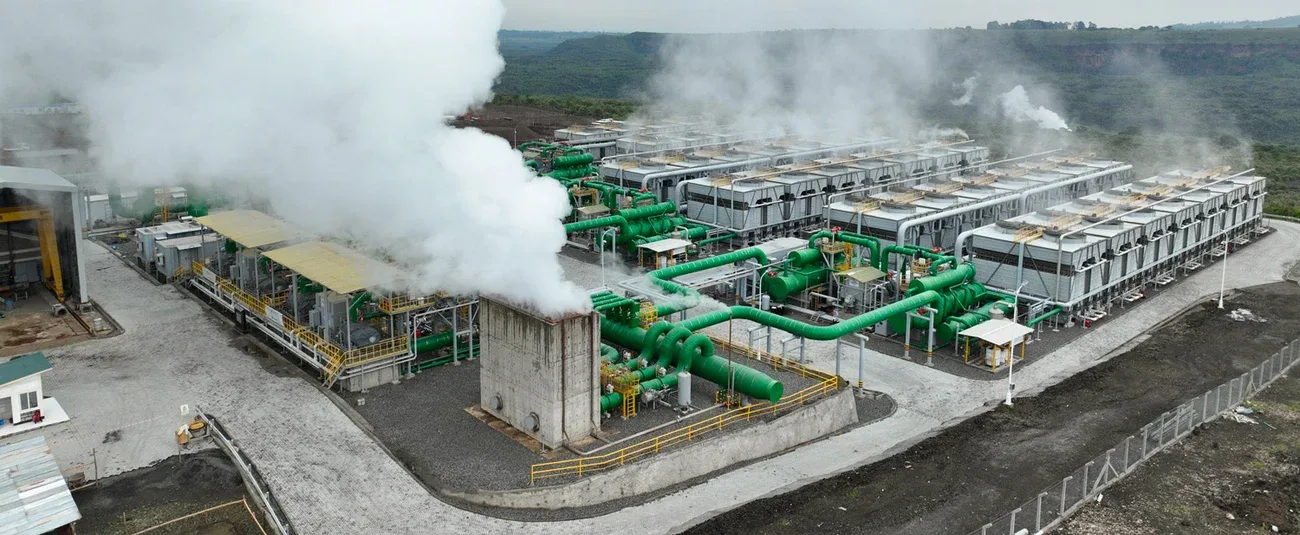
The African Development Bank and Green Climate Fund have deepened cooperation following high-level meetings in Abidjan.
The focus is on faster disbursement, stronger implementation and better access to climate finance.
For African communities, the issue is practical: finance must reach farms, cities, grids and households before climate losses deepen.
Climate Finance Must Move Faster Now
The African Development Bank and the Green Climate Fund have moved to deepen their climate finance partnership after high-level meetings in Abidjan from April 13 to 15, 2026, focused on improving implementation, accelerating disbursement and strengthening the delivery of climate projects across Africa.
The GCF delegation was led by Catherine Koffman, Director of the Fund’s Department of Africa Region, and met with AfDB officials to review ongoing projects, identify bottlenecks and improve coordination between the two institutions.
The engagement also followed the GCF Board’s March 2026 decision to establish regional offices in Nairobi and Abidjan, its first physical presence in Africa.
For a continent facing droughts, floods, heat stress, food insecurity and infrastructure losses, the announcement matters because climate finance often fails at the final mile: projects are approved, but communities wait for delivery.
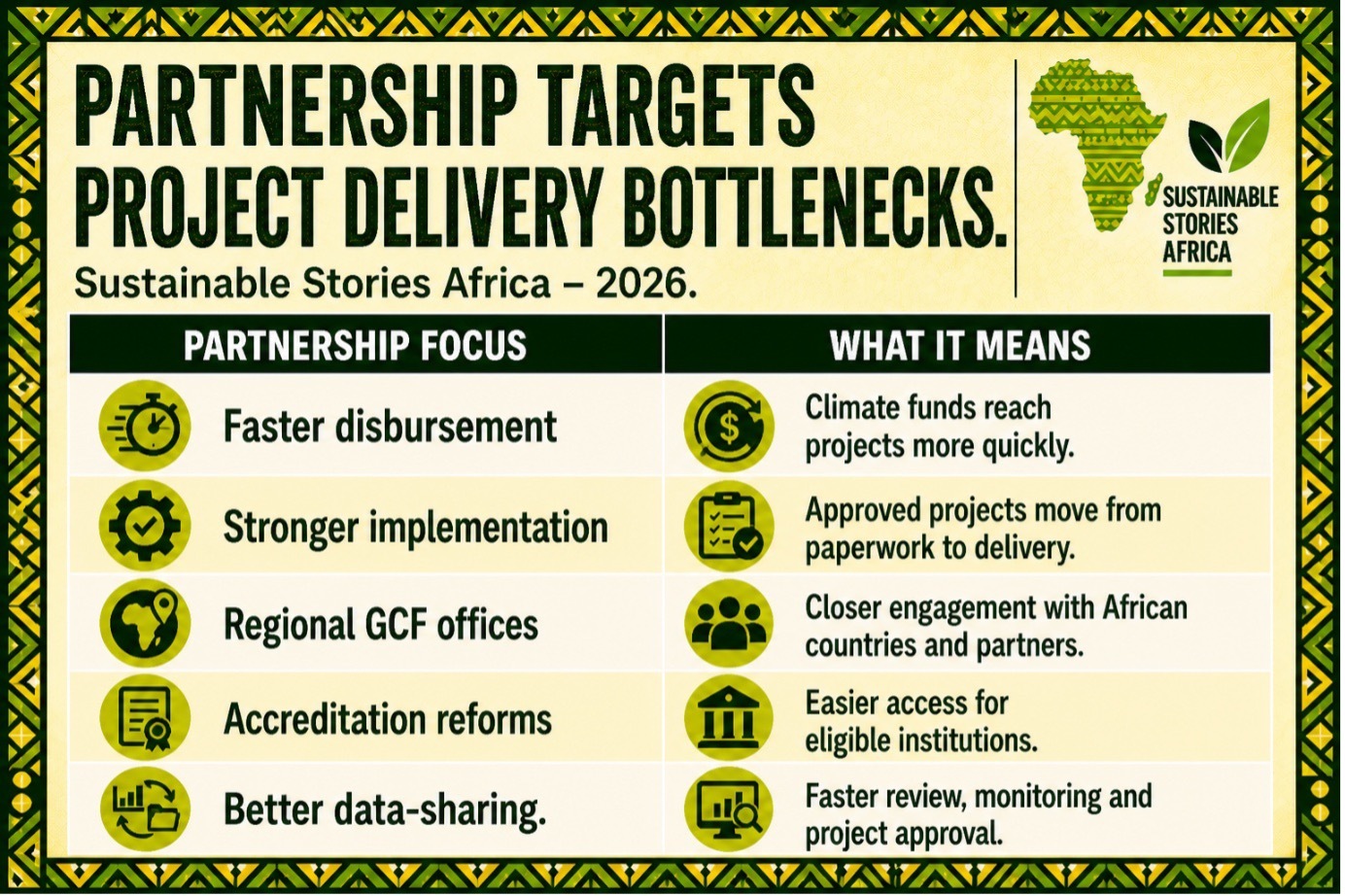
Partnership Targets Project Delivery Bottlenecks
The Abidjan meetings focused on the performance of GCF-funded projects managed by the AfDB, with both institutions examining implementation challenges, project delays and practical ways to improve development impact.
Africa Needs Finance That Reaches People
The case for faster climate finance is human before it is institutional.
- A farmer facing failed rains does not experience climate finance as board approvals.
- A coastal community facing erosion does not measure resilience in communiqués.
- A city trying to manage flooding needs drainage, early warning systems and resilient infrastructure before the next rainy season.
That is why AfDB-GCF cooperation matters. Climate finance must become less bureaucratic and more bankable, traceable and locally useful.
The partnership is expected to support climate action aligned with African countries’ Paris Agreement commitments and national development plans.
The wider context is difficult. Africa’s climate needs are rising while concessional finance remains constrained.
Reuters reported in 2026 that the African Development Fund’s latest replenishment secured $11 billion against a $25 billion target, underscoring the pressure on African development finance as donor priorities shift.
Access Reforms Could Unlock More Projects
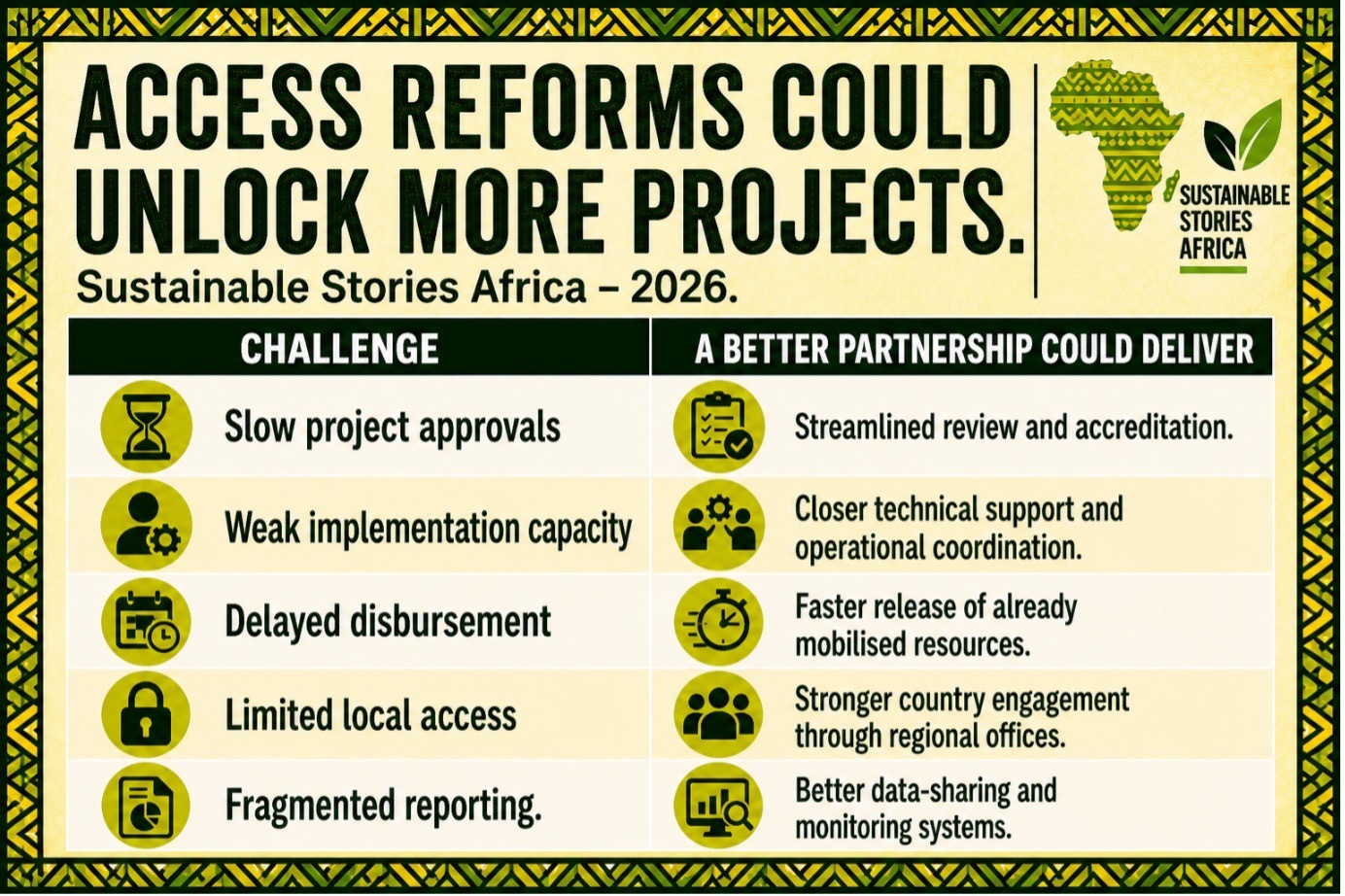
The positive opportunity is clear: if the AfDB and GCF reduce duplication, speed up accreditation, and improve project monitoring, more African countries could move climate ideas into funded programmes faster.
The GCF has been working on reforms, including fast-track accreditation, allowing it to rely on assessments by trusted multilateral development banks to reduce repeated due diligence and accelerate approvals.
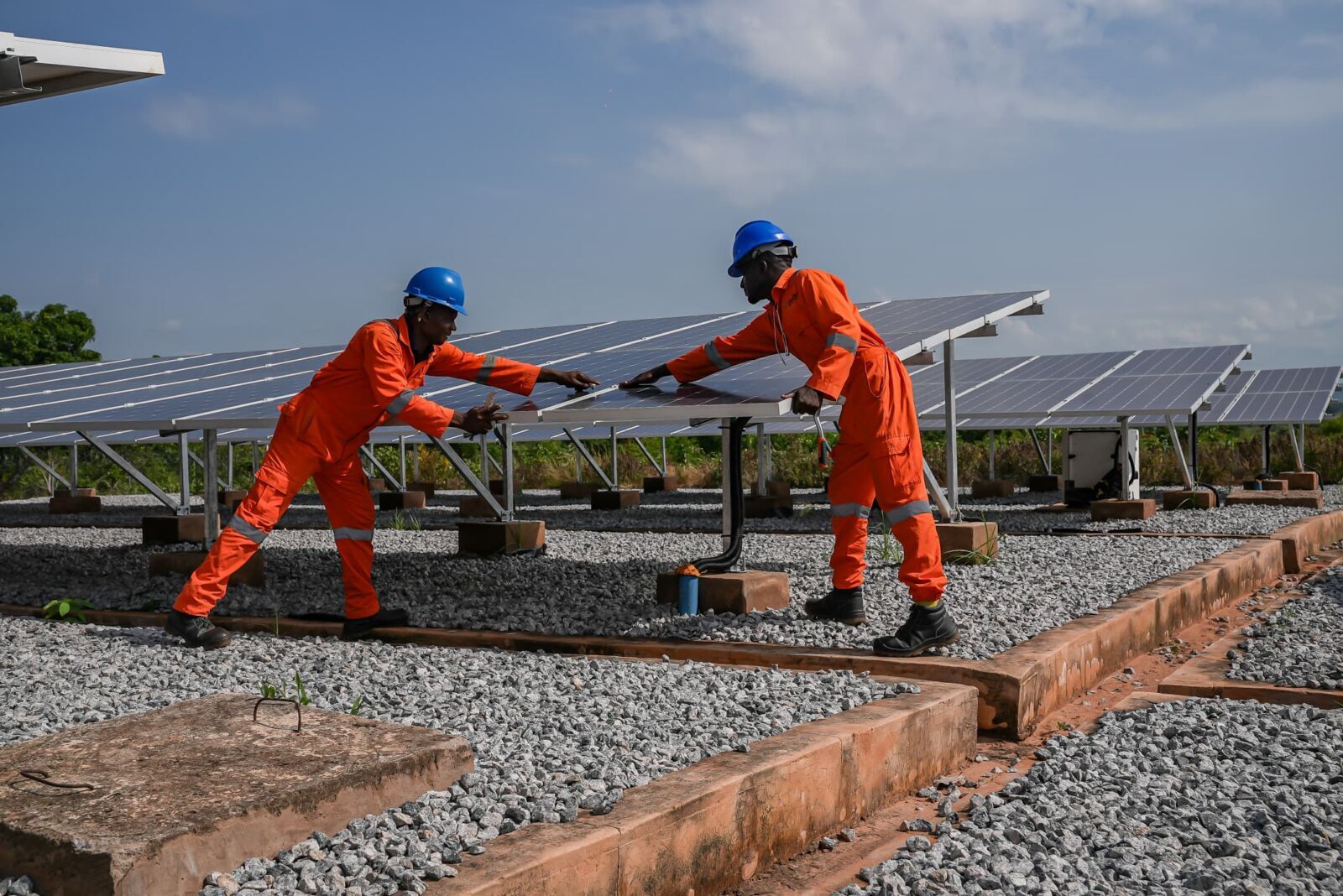
For African markets, this could strengthen ESG-linked investment pipelines in renewable energy, climate-smart agriculture, resilient cities, water security and adaptation infrastructure.
Institutions Must Prove Delivery Gains
The next test is measurable delivery. The AfDB and GCF should publish clear progress indicators on disbursement speed, project timelines, implementation delays, country access and community-level impact.
Climate finance partnerships should be judged by whether they reduce risk for vulnerable people and unlock investment at scale.
That requires fewer procedural delays, stronger safeguards, credible monitoring and more support for African institutions seeking direct access to funds.
Path Forward – Finance Faster, Track Better, Deliver Locally
The path forward is to turn institutional cooperation into faster project delivery.
Regional offices in Abidjan and Nairobi should shorten feedback loops, improve country engagement and support stronger African climate finance pipelines.
For ESG and sustainability goals, the promise is practical: climate finance that moves faster, reaches communities earlier and helps African economies adapt before losses become more expensive.
Culled From: Abidjan: African Development Bank, Green Climate Fund Deepen Climate Finance Partnership