South Africa’s electricity crisis has taken an unexpected turn: Eskom now says it has surplus power.
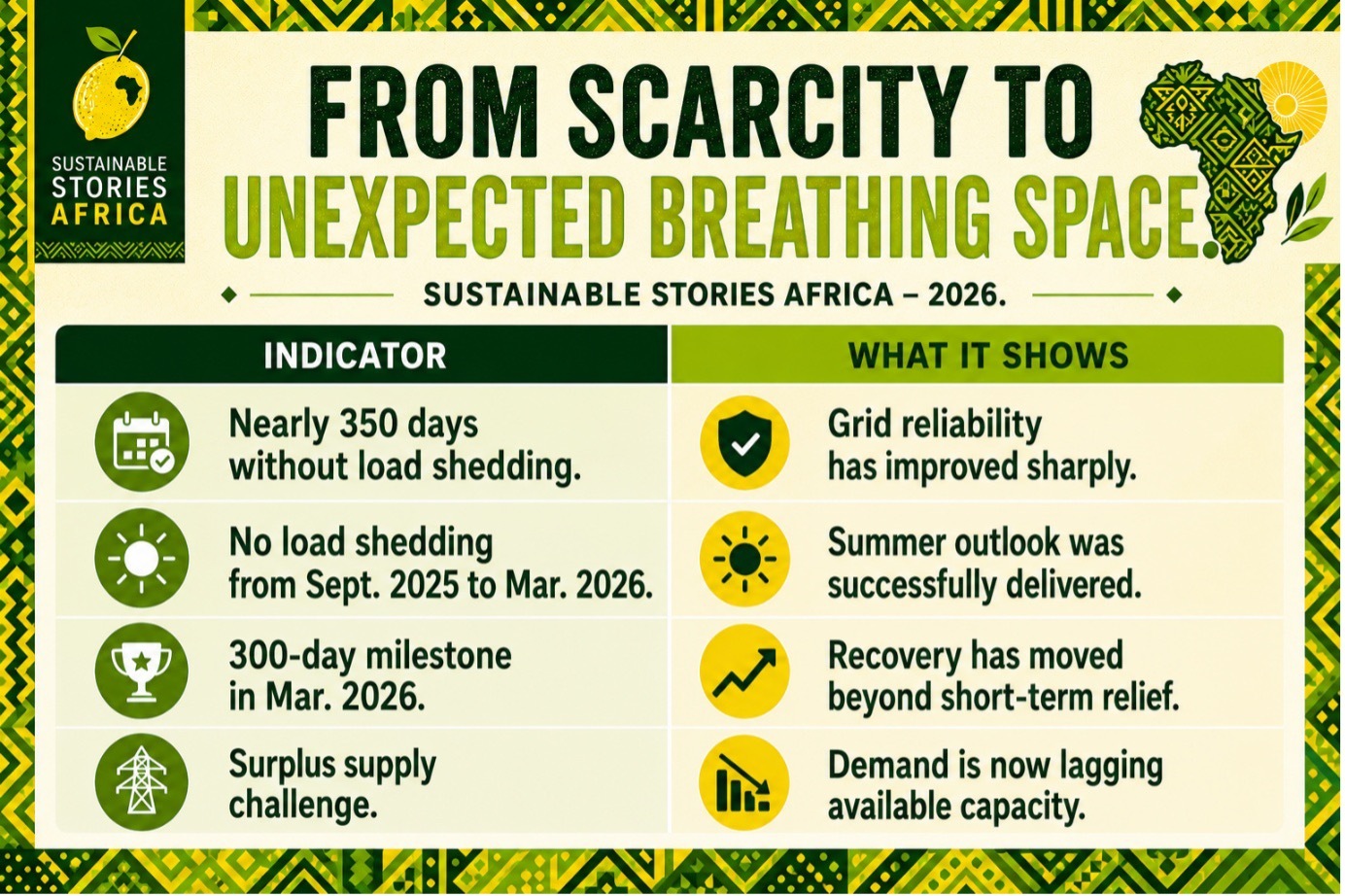
After years of rolling blackouts, the utility has gone close to 350 days without load shedding and is looking for ways to stimulate demand.
The shift could unlock industry, jobs and cleaner growth, if grid investment, pricing and demand planning catch up.
Surplus Power Changes South Africa’s Story
South Africa, once defined by rolling blackouts, is now confronting a very different electricity problem: more available power than immediate demand.
Eskom chief executive Dan Marokane said the utility must now think creatively about stimulating demand after an operational turnaround stabilised the grid.
The change follows years in which load shedding disrupted homes, factories, mines, hospitals and small businesses across Africa’s most industrialised economy.
Eskom has projected no load shedding for winter 2026, after nearly 350 days without power cuts, according to EyeWitness News.
From Scarcity To Unexpected Breathing Space
The turnaround is rooted in stronger plant performance, better operational discipline and reduced dependence on emergency diesel generation. Eskom said South Africa experienced no load shedding from September 1, 2025, to March 31, 2026, reflecting improvements under its Generation Recovery Plan.
The government also reported that South Africa reached 300 consecutive days without load shedding at midnight on March 12, 2026.
- For households, this means fewer ruined evenings, fewer generator bills and more predictable routines.
- For businesses, it means production planning can begin to recover.
However, for Eskom, surplus power is not automatically good news. Electricity that cannot be sold weakens revenue, complicates tariff debates and raises questions about how quickly the economy can absorb a reliable supply.
Reliable Power Can Restart Growth
The positive opportunity is significant. If South Africa uses this surplus well, it can support industrial recovery, electric transport, green hydrogen, mining expansion, digital infrastructure and regional power trade.
A stable grid can also reduce the hidden tax of energy insecurity. For years, companies expended capital on diesel generators, batteries and backup systems instead of hiring workers or expanding production.
Families spent their income on candles, fuel and repairs. Schools and clinics worked around uncertainty.
Now the country has a chance to convert reliability into growth.
However, the surplus also exposes a planning gap. South Africa still needs transmission expansion, better municipal payment discipline, cleaner generation investment and demand-side reform.
Without those, today’s surplus could become tomorrow’s stranded capacity.
Demand Must Match New Supply
The next phase is not just about producing electricity. It is about using it productively.
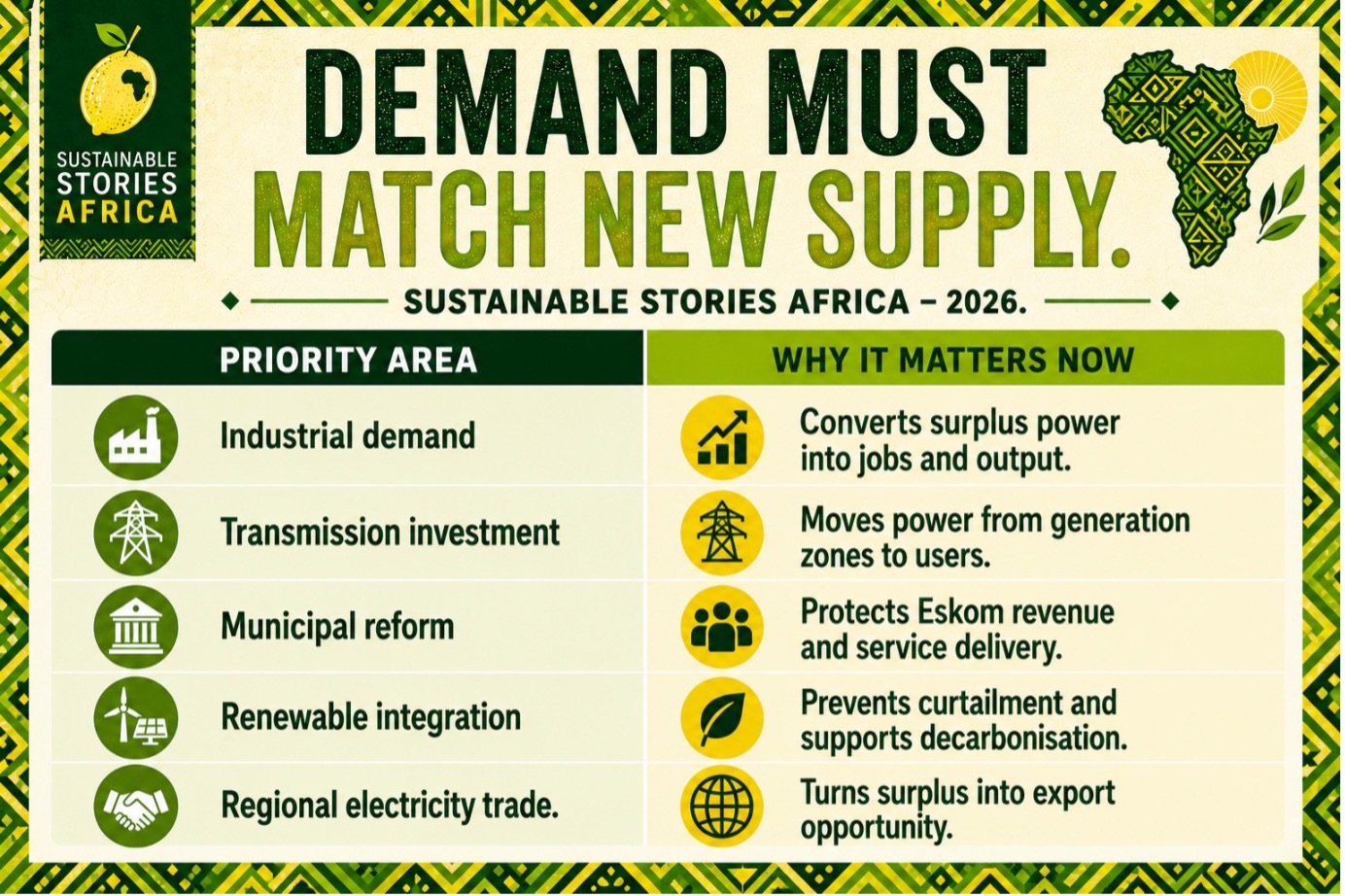
- Energy planners should treat this moment as a reset.
- Government, Eskom, municipalities and private investors need coordinated policies that encourage productive consumption while protecting affordability.
That means supporting energy-intensive manufacturing, accelerating grid connections, expanding storage, improving wheeling rules and helping municipalities become financially credible electricity distributors.
Path Forward – Turn Reliability Into Shared Growth
South Africa’s new power story should not end with surplus electricity sitting unused.
It should become a platform for jobs, investment, a cleaner industry and stronger public confidence.
The path forward is simple: stimulate productive demand, modernise the grid, protect revenue and accelerate clean-energy integration. If managed well, South Africa’s surplus can become a development asset—not another electricity planning failure.
Culled From: South Africa now struggles with a power surplus