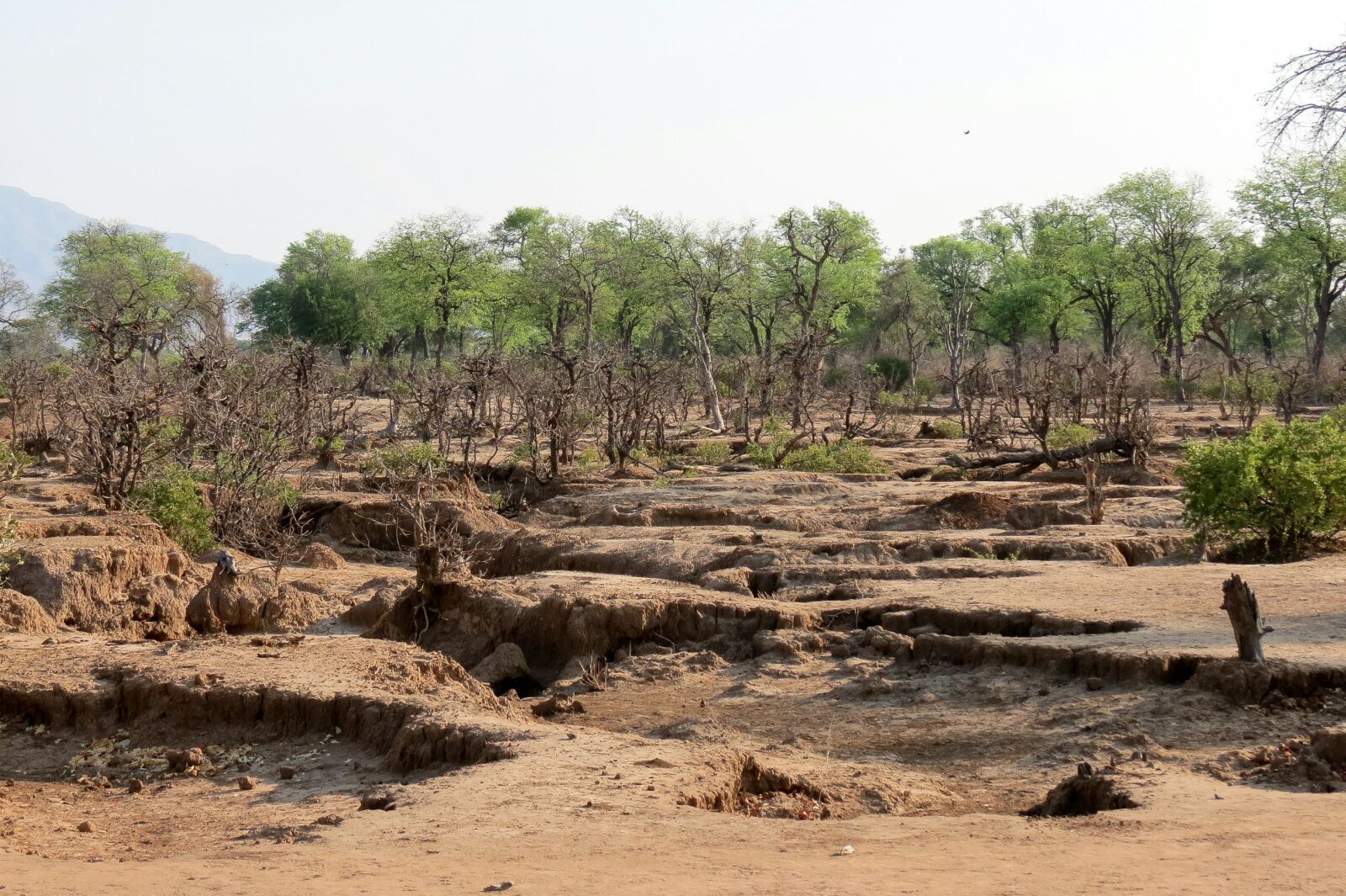
Land is feeding the world, but it is also quietly losing strength. FAO’s The State of Food and Agriculture 2025 warns that land degradation is now eroding productivity, food security and ecosystem resilience.
For Africa, the report’s message is urgent: degraded soils, shrinking farm sizes and weakened access to finance, inputs and markets could deepen hunger, unless governments make land restoration a core development strategy.
Land Pressure Is Reshaping Food Security
Land degradation is becoming one of the most important food security risks of the decade, with the Food and Agriculture Organisation of the United Nations warning that nearly 1.7 billion people live in areas where degraded land contributes to crop yield losses and food insecurity.
In its 2025 flagship report, The State of Food and Agriculture: Addressing Land Degradation Across Landholding Scales, FAO argues that the world’s agrifood systems are now caught between competing pressures: feeding a growing population, protecting forests, supporting rural livelihoods and responding to climate change.
For Africa and other emerging markets, the issue is not only environmental. It is economic, social and deeply human.
When soil loses fertility, yields fall. When yields fall, food prices rise, farmers earn less, and families become more exposed to hunger, malnutrition and poverty.
Degraded Land Now Carries Human Costs
The central warning from FAO is sharp: land degradation is neither inevitable nor irreversible; however, the costs of delay are rising.
The report says land is a finite, essential and non-substitutable resource that underpins food security, livelihoods, biodiversity and climate resilience.
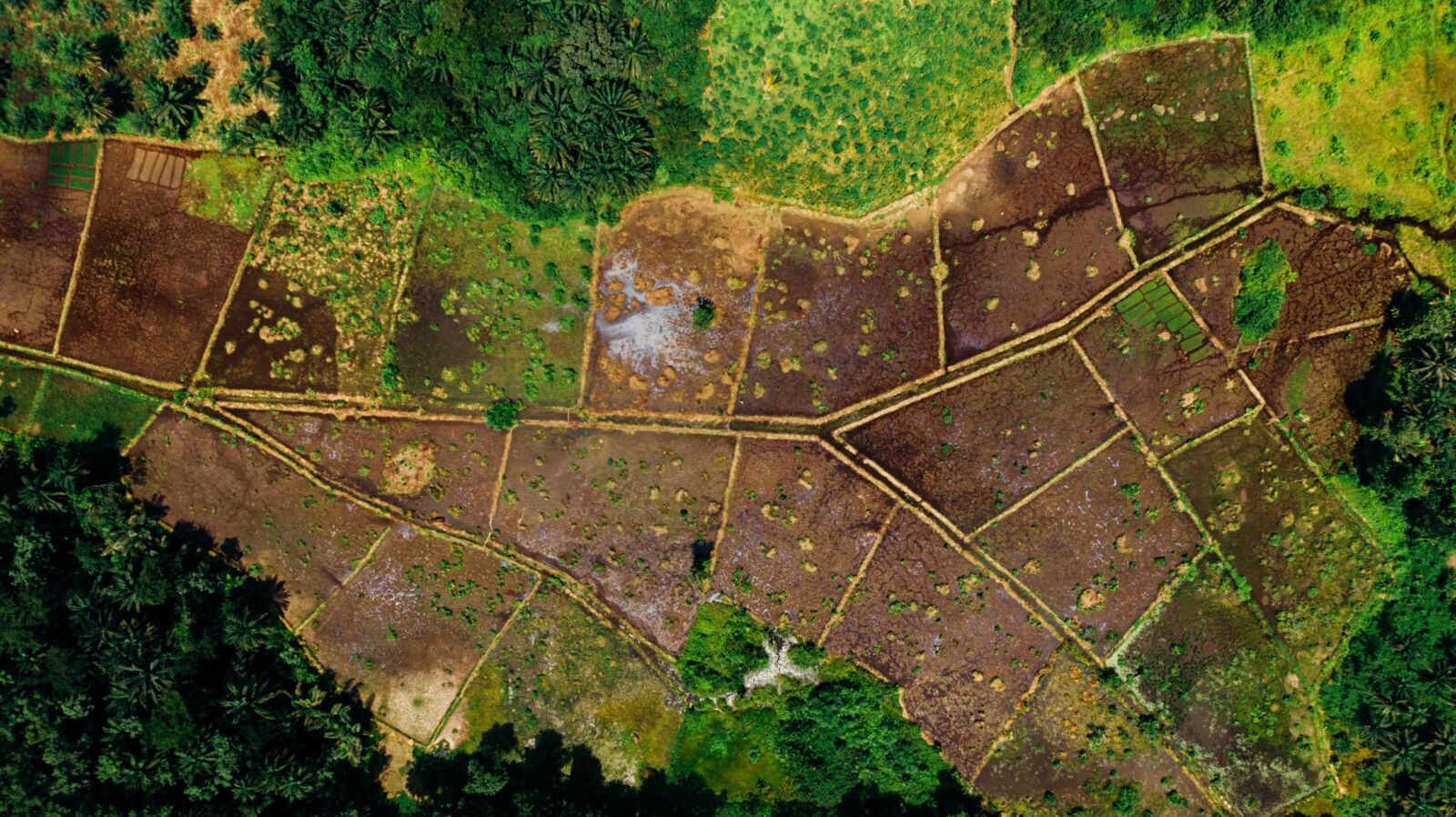
However, human activities, including deforestation, overgrazing and unsustainable farming, are reducing the land’s capacity to provide ecosystem services.
The numbers show the scale of the challenge.
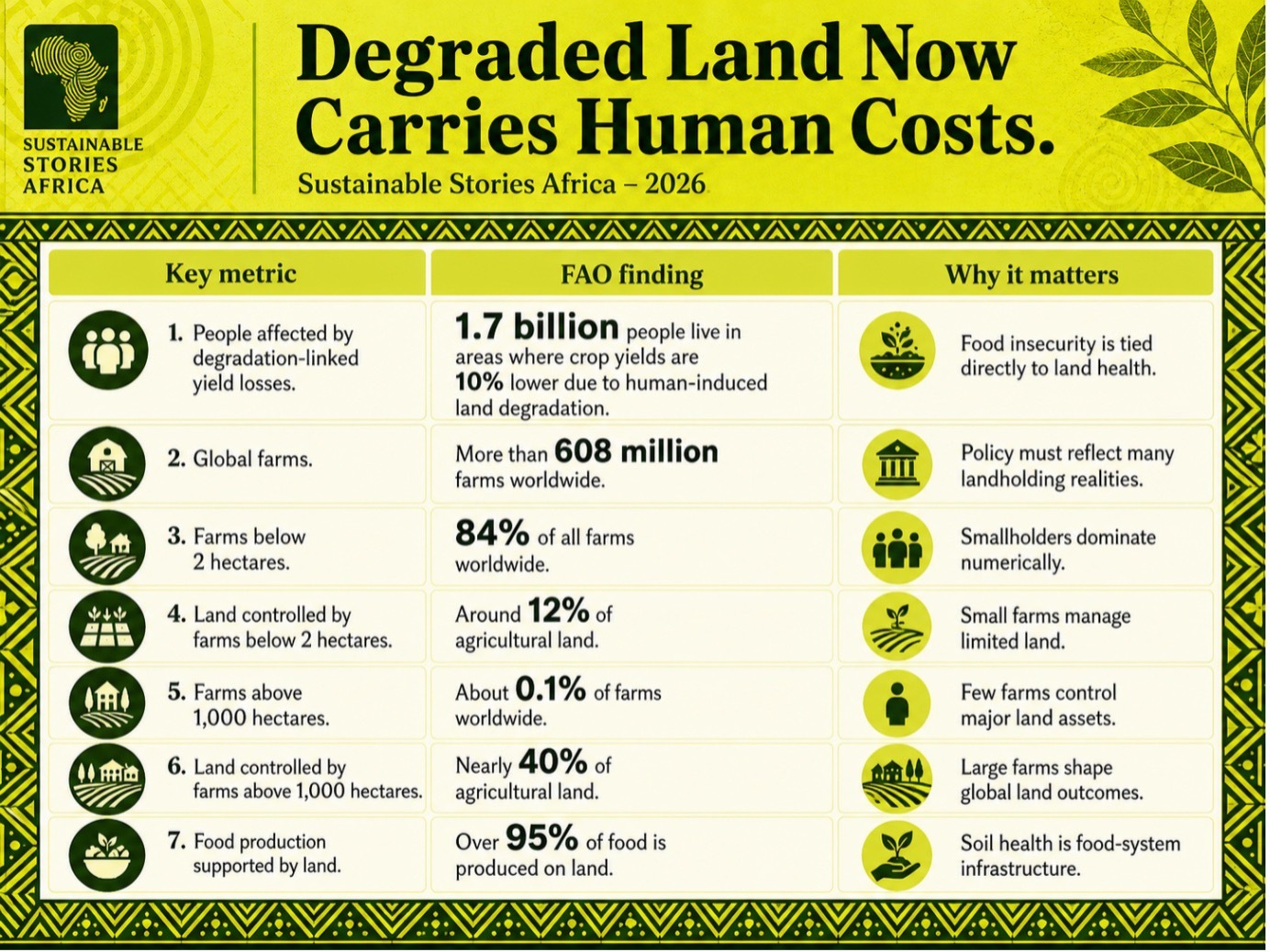
FAO Director-General Qu Dongyu frames the challenge: “The land has sustained us for millennia. Now, it is our turn to care for it.”
That statement captures the report’s deeper message. Land is not just an input in agriculture. It is the natural balance sheet behind food, water, jobs, biodiversity and climate resilience.
Farm Size Shapes The Food Equation
One of the report’s most important insights is that farm size shapes both the problem and the solution.
Smallholders are central to rural livelihoods, especially in Africa and Asia, and they often operate under tight constraints: limited land and soil fertility, low mechanisation, reduced access to finance and unstable market linkages.
FAO notes that smallholders make up most farms globally, yet larger farms control most agricultural land and produce a large share of crop-derived dietary energy.
- Farms above 50 hectares account for around 75% of agricultural land and more than 55% of crop-derived dietary energy globally.
- Farms above 1,000 hectares alone manage more than half of agricultural land and produce about 18% of dietary energy from crops.
For sub-Saharan Africa, the story is more complicated.
The region has large yield gaps and a high share of smallholders. However, much agricultural land is managed by medium-sized farms.
FAO’s analysis says Africa’s smallholder systems often face yield gaps driven less by accumulated degradation alone and more by resource constraints, including limited inputs, mechanisation, credit and market access.
That distinction matters for policy. In high-income countries, heavy fertiliser and input use may delay the damage of soil degradation.
In many African systems, the bigger immediate challenge is helping farmers produce more without locking them into the costly, input-intensive models that have degraded land elsewhere.
Restoration Can Feed More People Sustainably
The report is not only a warning. It is also a development opportunity.
FAO estimates that reversing just 10% of human-induced degradation on current croplands could restore enough production to feed an additional 154 million people each year.
Restoring abandoned croplands could potentially feed between 292 million and 476 million more people.
For African countries facing food inflation, climate shocks and import dependence, that finding is powerful.
Restoring land is not a luxury environmental project. It is food policy, jobs policy, health policy and climate adaptation policy in one.
The benefits can be tangible. Healthier soils retain water better. Better water retention improves resilience in dry seasons. Higher productivity can raise farmer incomes. More diverse farming systems can improve diets.
Stronger land governance can also reduce land conflict, especially where population growth, urban expansion and climate stress are increasing pressure on rural landscapes.
Policy Must Match Farm And Land Realities
FAO’s policy message is clear: governments should avoid one-size-fits-all approaches. The report supports the “avoid, reduce, reverse” hierarchy promoted under land degradation neutrality: avoid new degradation, reduce ongoing degradation and reverse severe damage where recovery is needed.
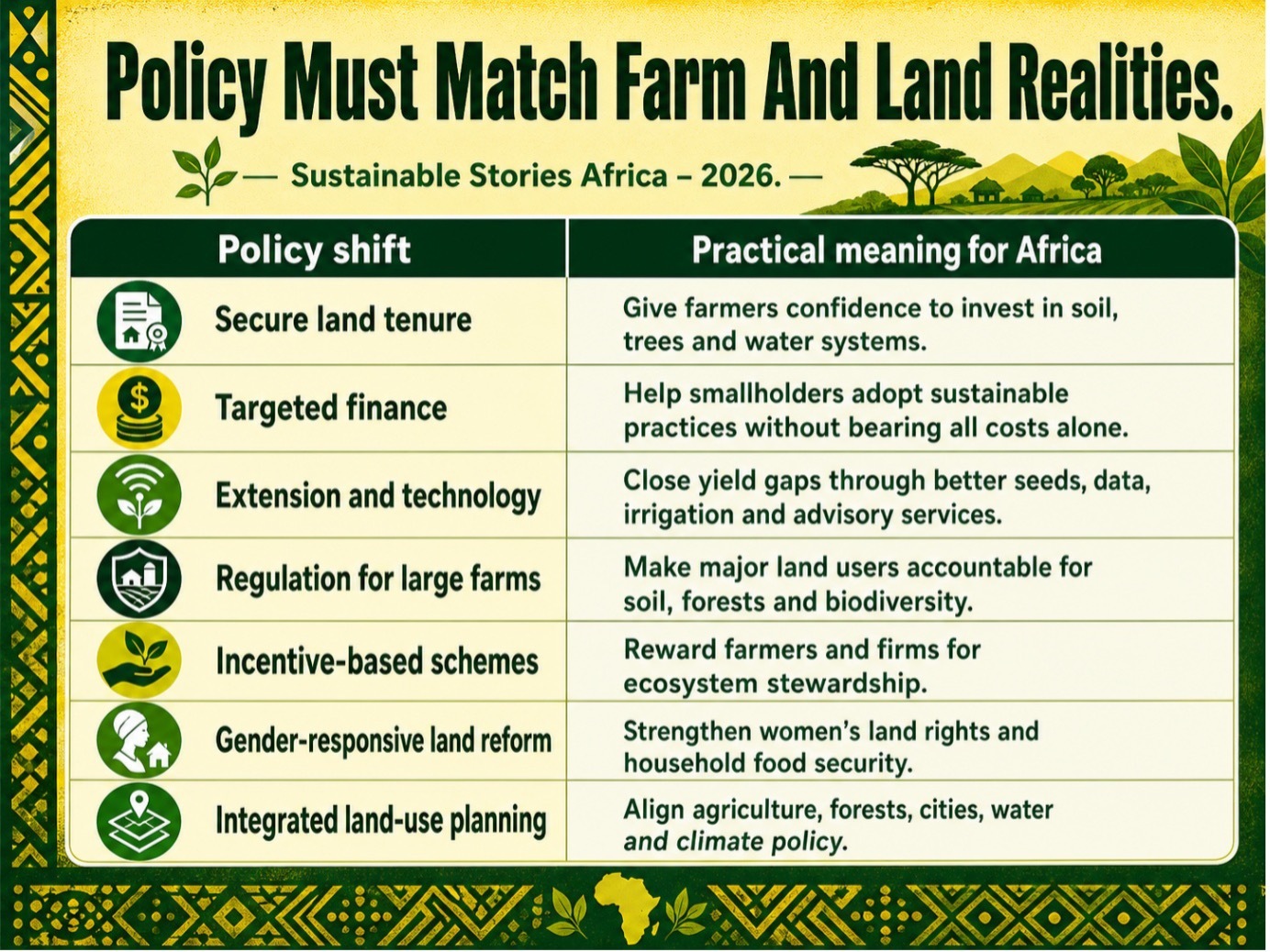
The gender dimension is especially important. FAO notes that women remain less likely than men to own or hold secure rights to agricultural land in many countries, even though secure land rights can encourage investment in soil conservation, crop diversity and household food security.
- For policymakers, the implication is direct. Soil recovery cannot be separated from land rights, rural credit, extension services, climate finance, women’s empowerment and market access.
- Farmers cannot be expected to deliver public environmental benefits while carrying private costs alone.
- The private sector also has a major role. Large commercial farms, food processors, commodity traders, banks and insurers all depend on long-term land productivity.
- Their supply chains can either accelerate degradation or help reverse it through compliance standards, regenerative sourcing, farmer support and landscape-level investments.
Path Forward – For Regenerative Farming
Africa’s land agenda must move from crisis response to prevention. Governments should protect healthy land, restore degraded land, support smallholders and hold large land users accountable.
The practical route is clear: secure tenure, better finance, stronger extension, gender-responsive reforms, climate-smart production and policies that reward stewardship.
If land is treated as infrastructure, agriculture can shift from degrading nature to regenerating food systems.