Schneider Electric has used EAIF 2026 to promote mini-grids, solar systems and decentralised power for underserved African communities.
The announcement matters because grid expansion alone remains too slow for many rural and peri-urban areas.
For homes, clinics, schools and small businesses, reliable electricity can mean safety, productivity and income.
Mini-Grids Move From Pilot To Priority
Schneider Electric has reaffirmed its commitment to expanding clean and reliable electricity access across Sub-Saharan Africa, using the ARE Energy Access Investment Forum 2026 to highlight mini-grids, off-grid solar systems and decentralised power models for communities beyond the reach of conventional grids.
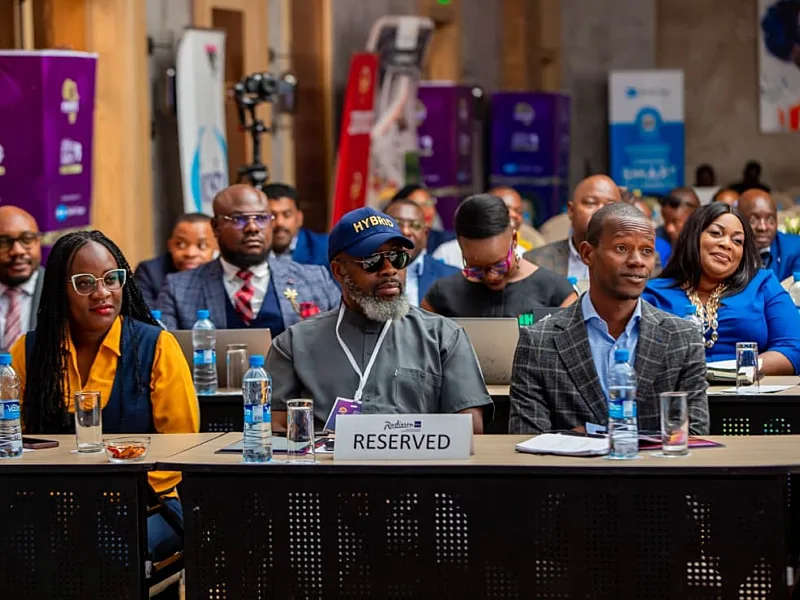
The company presented its energy access solutions at EAIF 2026, held from April 21 to 24, as investors, governments and developers discussed how to accelerate renewable electrification, productive energy use, commercial and industrial power, and the wider green energy transition.
The forum was expected to convene more than 1,500 participants, including 500 in person and 1,000 online.
Schneider Electric’s announcement follows International Energy Agency data showing that more than 666 million people globally still lack access to electricity, with most located in Sub-Saharan Africa.
The company said distributed renewable systems, including mini-grids and off-grid solar, are critical for reaching remote and underserved communities where grid expansion remains limited.
Energy Access Needs More Than Wires
The press release positions decentralised power as both infrastructure and development strategy.
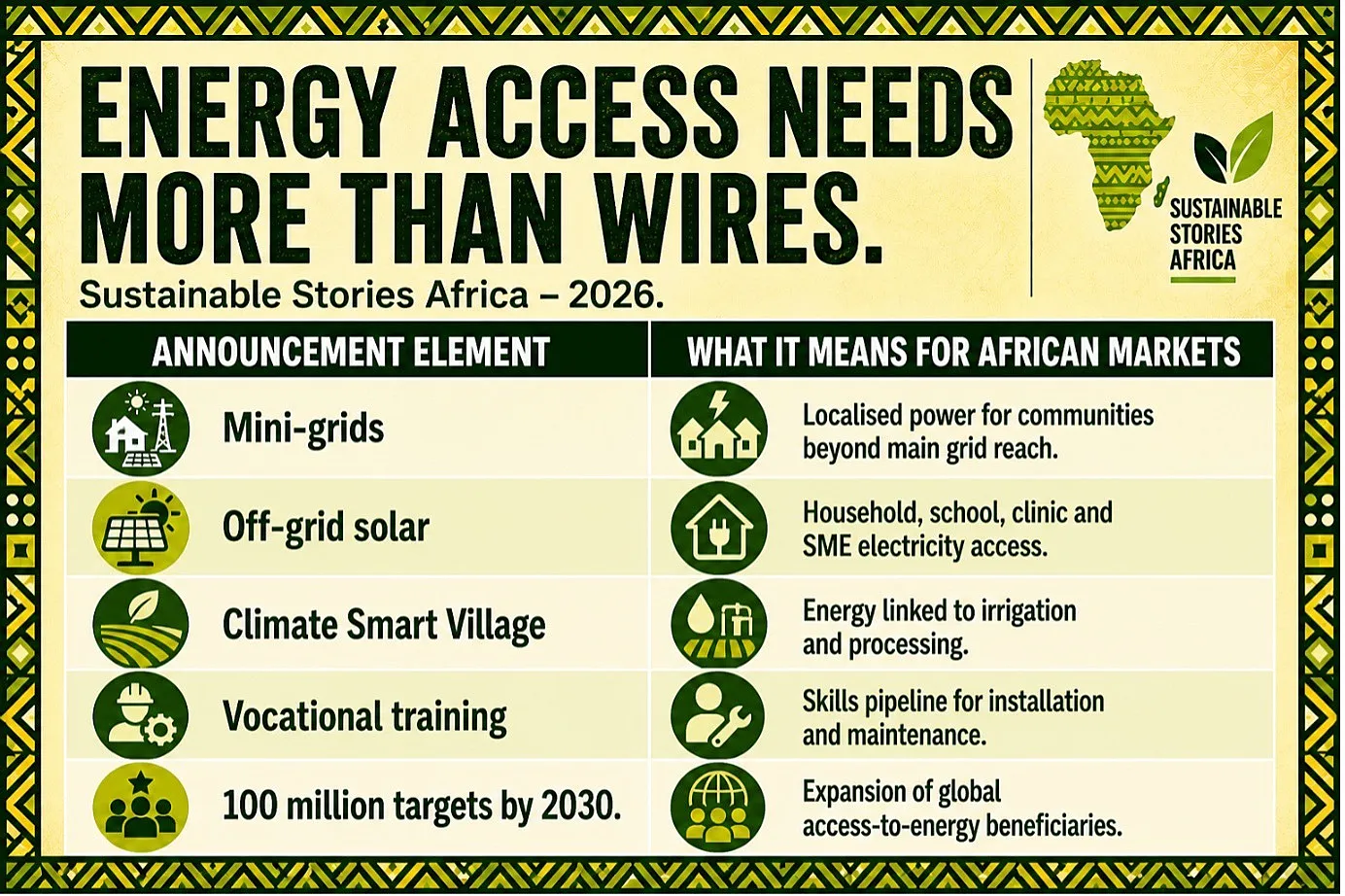
Schneider Electric said it showcased solar-powered technologies for households, healthcare facilities, schools and small enterprises in off-grid areas, while also introducing its Climate Smart Village model, which links renewable energy to local economic activity such as irrigation and small-scale processing.
Ayush Gupta said energy access must go beyond infrastructure, noting that Schneider Electric combines electrification with vocational training and support for small businesses.
Ifeanyi Odoh also highlighted that reliable electricity can unlock economic opportunities and strengthen community resilience.
Reliable Power Can Unlock Local Growth
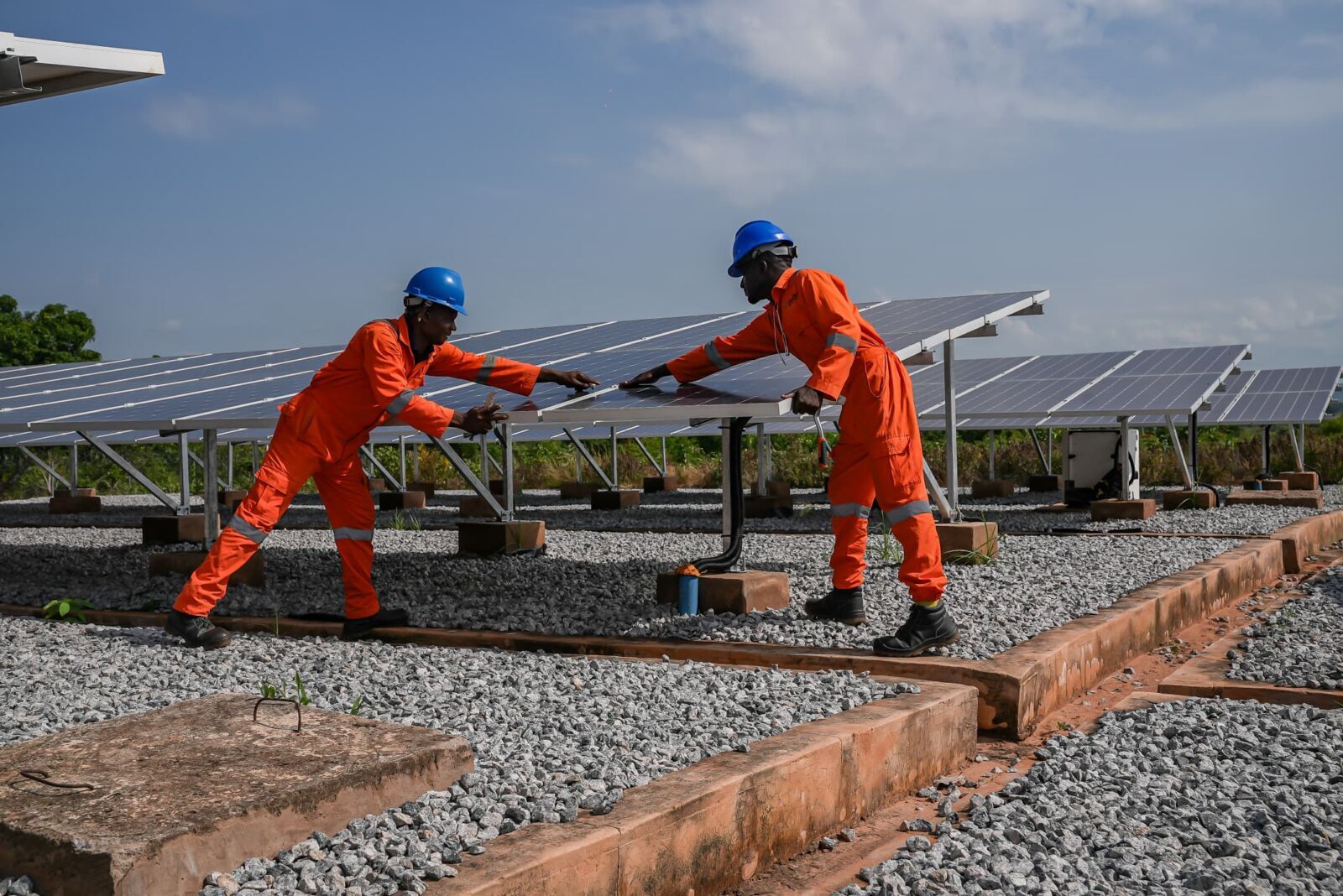
The strongest case for mini-grids is practical. In a rural clinic, solar power can keep vaccines cold.
- In a school, it can support lighting, devices and evening study.
- In a small processing business, electricity can turn raw farm produce into higher-value goods.
- In a market, it can extend trading hours and reduce dependence on diesel.
Schneider Electric says its Access to Energy programme, which provides clean and reliable energy to underserved areas, has impacted more than 60 million people, supported more than 10,000 entrepreneurs and trained 1 million people in energy management. Its listed solutions include solar home systems, connected solar systems for off-grid homes and businesses, solar water pumping and tools that monitor pre-payment, usage, CO₂ savings and local energy performance.
That combination is important because Africa’s power gap is not only a generation problem. It is also a last-mile delivery problem, a financing problem and a skills problem. Mini-grids work best when they power livelihoods, not just lightbulbs.
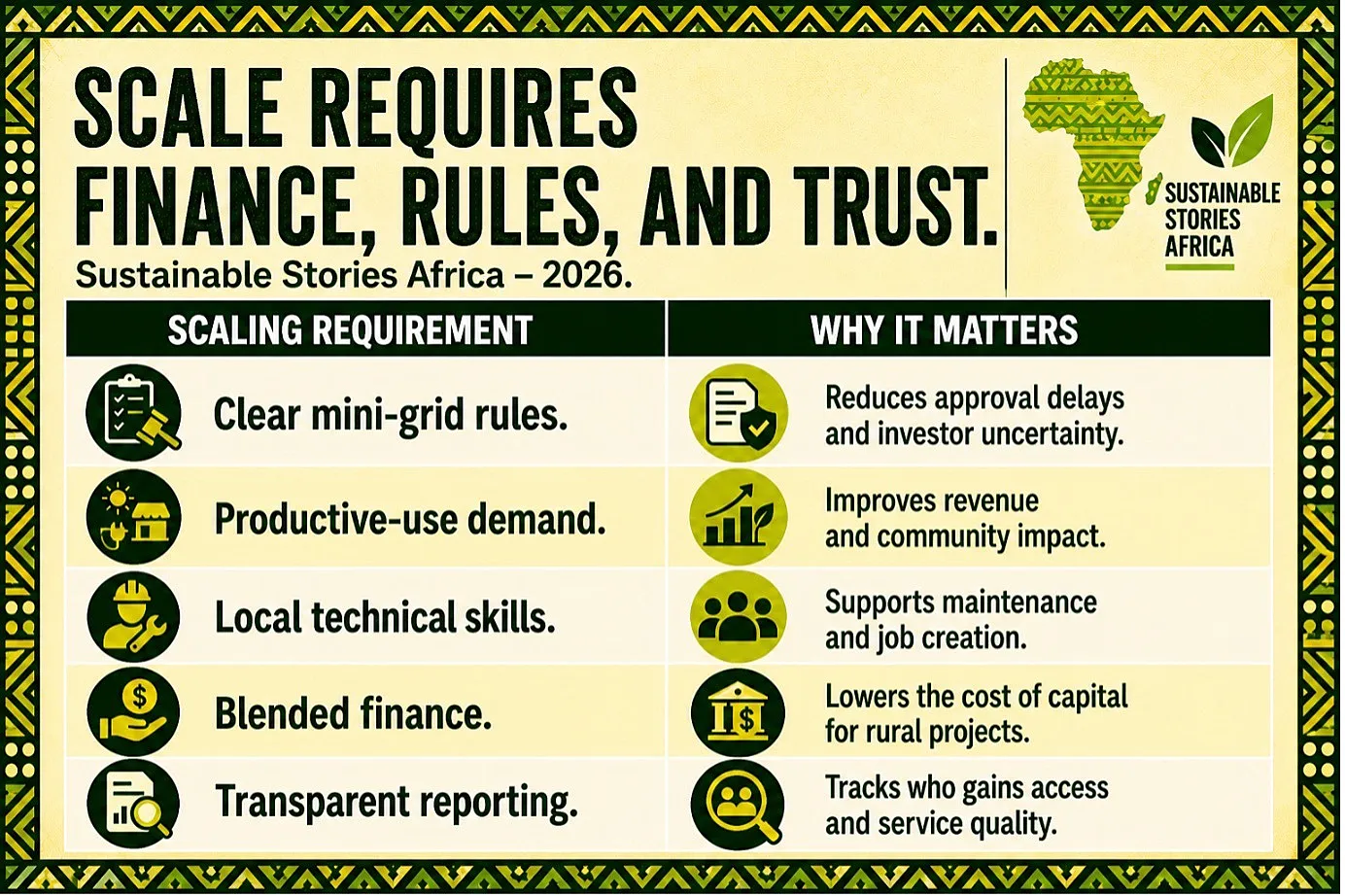
Scale Requires Finance, Rules, and Trust
For decentralised power to move from pilots to scale, African governments and financiers must address the bankability gap.
Developers need clearer licensing, viable tariffs, standardised contracts, currency-risk solutions, and better demand planning.
Communities need fair pricing, reliable service and local maintenance capacity.
Schneider Electric reported that its initiatives have already reached more than 61 million people globally and said it is working toward 100 million beneficiaries by 2030.
However, the bigger test is whether corporate access programmes can align with national electrification plans, public finance, local developers and productive-use demand.
Path Forward – Build Power Around People’s Livelihoods
Africa’s decentralised energy push should prioritise clinics, schools, farms, SMEs and communities where electricity can quickly improve welfare and income. Mini-grids must be planned around productive use, not installed as isolated assets.
The path forward is practical: stronger regulation, patient finance, local skills and transparent delivery data.
That is how solar and mini-grids can advance ESG goals while turning electricity access into jobs, resilience and inclusive growth.
Culled From: Schneider Electric Highlights Mini-Grids, Solar at EAIF 2026 | Africa Energy Portal