The African Development Bank and partners are funding durable solutions in Somalia’s Gedo region.
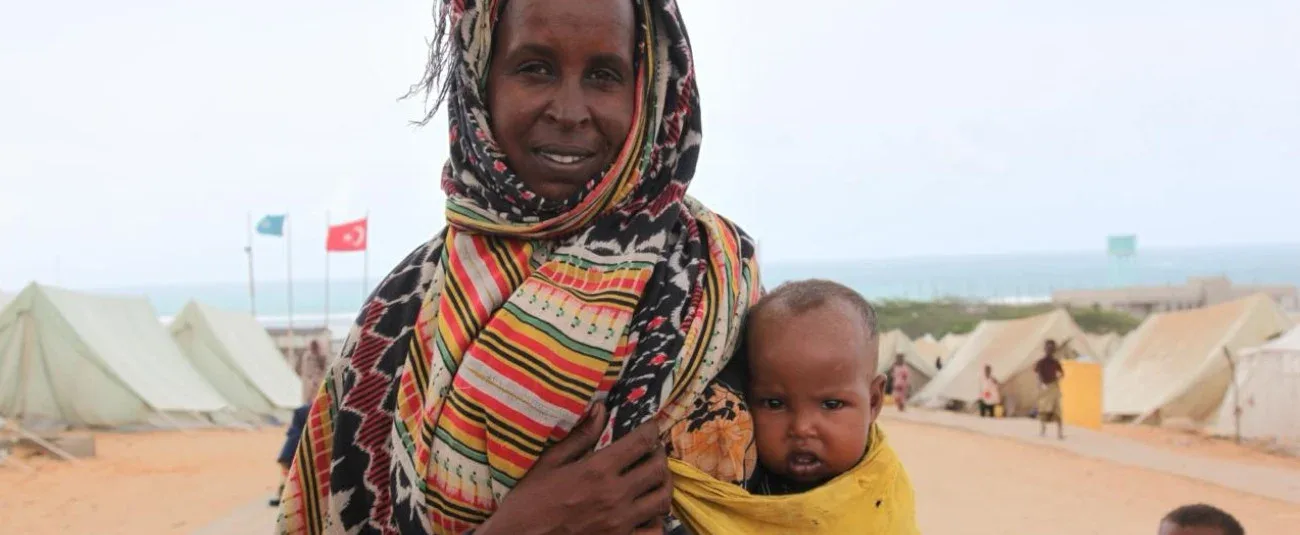
The project targets internally displaced people and host communities in Dollow.
For families, the support could mean safer housing, water, sanitation and stronger livelihoods.
Displacement Support Moves Beyond Emergency Relief
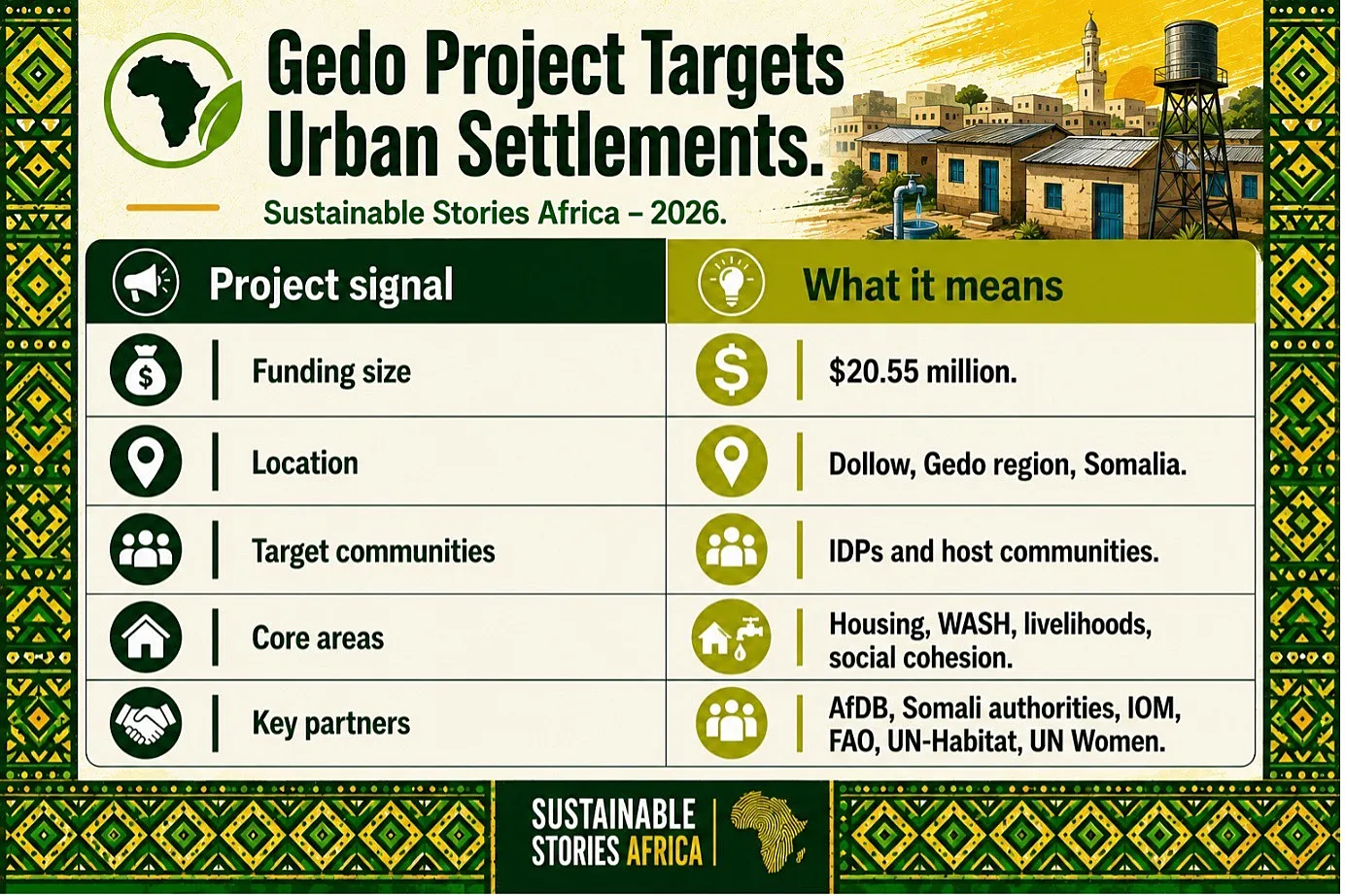
The African Development Bank Group, working with partners, is supporting a $20.55 million project in Dollow, Somalia, to improve living conditions for internally displaced people and host communities in the Gedo region.
The Strengthening Urban Resilience of Displaced and Host Communities in Dollow project, known as SURDHT, will focus on housing, water, sanitation and livelihood opportunities in four urban IDP settlements.
The intervention comes as Somalia continues to face displacement pressures linked to conflict, climate shocks and weak basic infrastructure. More than 3.9 million Somalis are internally displaced, making the country one of the largest displacement crises in eastern and southern Africa.
For families in Dollow, the announcement is not just about funding. It is about whether temporary survival can become a pathway to safer homes, cleaner water, stronger livelihoods and more stable community life.
Gedo Project Targets Urban Settlements
The SURDHT project is designed to support displaced and host communities in Dollow by improving access to climate-resilient housing, water, sanitation and livelihood services.
It also aims to facilitate the integration of internally displaced people into host communities, rather than treating displacement as a short-term humanitarian condition.
Implementation is expected to involve Somalia’s National Centre for Rural Development and Durable Solutions, with partners including IOM, FAO, UN-Habitat and UN Women.
The programme also aligns with the AfDB’s Transition Support Facility, which focuses on fragile and transition contexts.
Durable Solutions Can Restore Stability
The value of the project lies in its shift from emergency response to durable solutions.
In practical terms, that means families are not only receiving support to survive the next crisis; they are being helped to rebuild daily life around land, shelter, livelihoods and social inclusion.
- For a displaced mother, durable solutions may mean a safer place for children to sleep.
- For a young person, it may mean skills or entrepreneurship support.
- For host communities, it may mean less pressure on already limited water, sanitation and public services.
Delivery Must Protect Host Communities
The strongest durable-solutions projects succeed when they serve both displaced people and the communities hosting them.
That matters in Gedo, where scarce water, land and livelihood opportunities can easily become sources of tension if support appears uneven.
AfDB and partners should therefore prioritise transparent beneficiary targeting, women’s participation, youth livelihoods, climate-resilient infrastructure and local conflict-mitigation systems.
The project’s emphasis on land administration, social cohesion and government capacity is critical because housing support without secure tenure can leave families exposed to renewed displacement.
However, the real development question is whether climate and displacement finance can protect dignity, reduce vulnerability and strengthen local systems.
Path Forward – Turn Shelter Into Stability
The priority is to convert funding into secure housing, reliable water, sanitation, livelihoods and stronger local governance.
If implemented transparently, the Gedo project can advance ESG goals by linking social protection, climate resilience, gender inclusion and community stability in one of Somalia’s most displacement-affected regions.