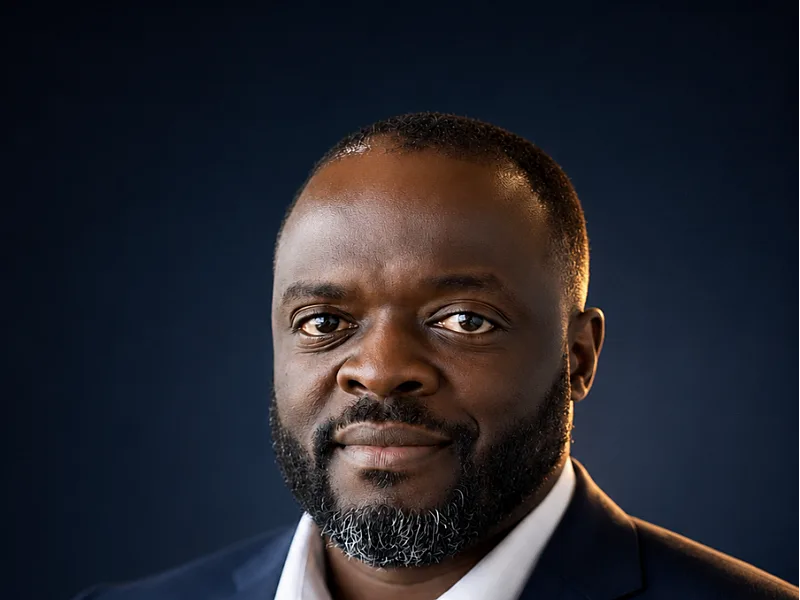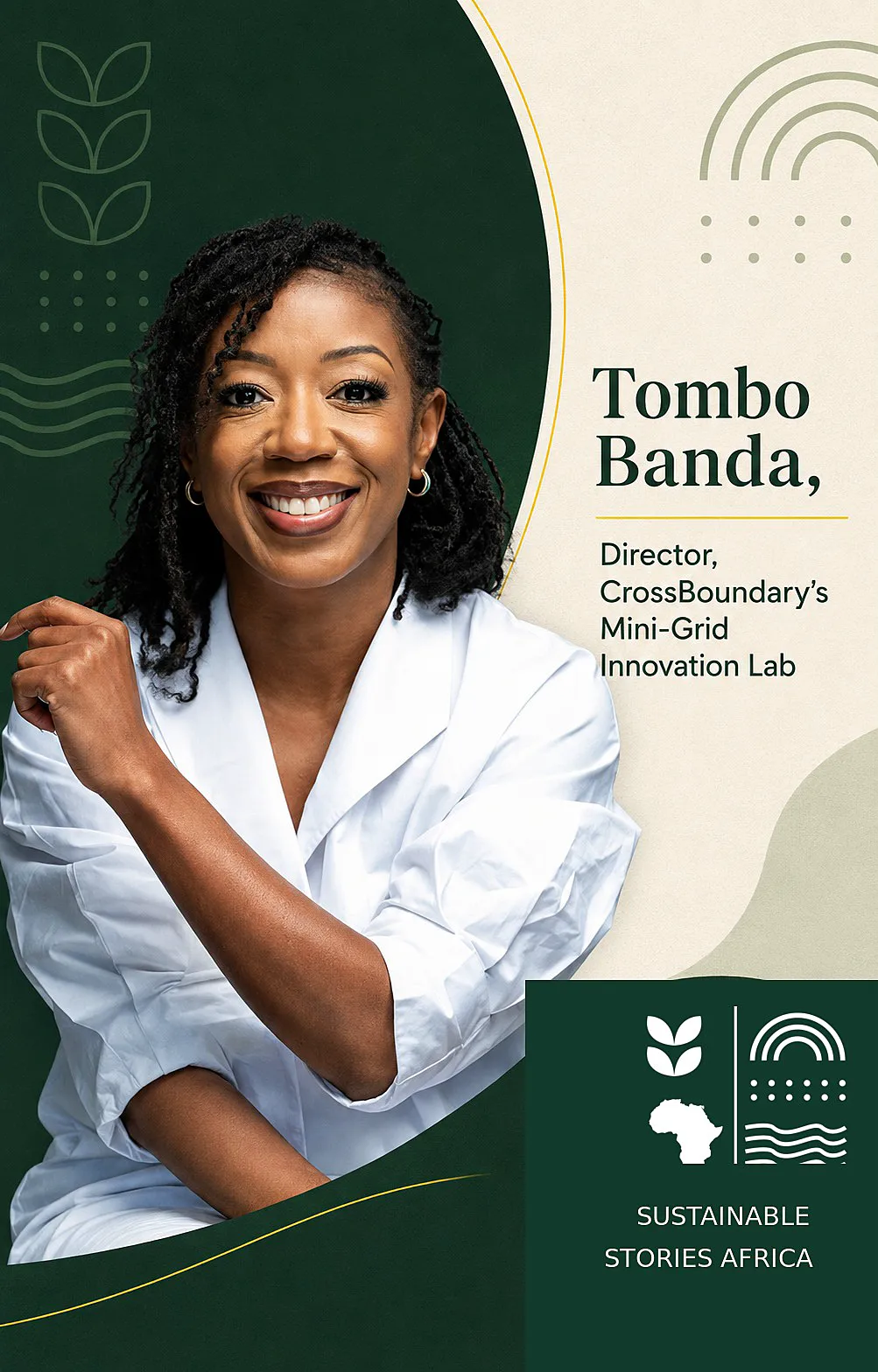
Tombo Banda, Managing Director of CrossBoundary's Mini-Grid Innovation Lab, is turning solar-powered mini-grids into Africa's fastest route to universal electricity access.
Written By Eyikojoka Diboku
She grew up riding along on her father's inspections of water plants in Blantyre, absorbing an early lesson: infrastructure is never abstract; it is someone's daily dignity.
Two decades later, Tombo Banda leads CrossBoundary's Mini-Grid Innovation Lab, testing the business models that could finally make solar mini-grids the answer for the 600 million Africans still living without reliable power.
Lights Over Salima
The mango-processing factory in Salima hummed at eight tonnes an hour, machinery she had helped bring to life, powering more than 100 local jobs in a corner of central Malawi that had rarely seen this much industry.
Tombo Banda stood in the noise of it, a young, chartered engineer watching foreign exchange and livelihoods flow from something she had helped design.
She had come to this moment through her father, a mechanical engineer who ran Blantyre's water board before starting his own firm, and who spotted her aptitude for maths and physics early.
He took his children on weekend rounds of treatment plants and worksites, quietly seeding the belief that engineering was simply the art of solving problems that mattered.
What she felt in Salima was not pride alone. It was the recognition that a factory, a pump, a grid connection could change whether a family cooked with firewood or light, whether a child studied after dark or not. That feeling would not leave her.
A Career Built On Watts
"Energy, to me, is the enabler of everything," Banda has said, naming health, education and business as the things that cannot simply happen without it.
She stands today as one of the sharpest voices in Africa's decentralised energy movement, leading a research fund built specifically to make mini-grids commercially viable on a large scale.
Picture her in the Nairobi office, reviewing site data from nine countries, deciding which cost-saving innovation gets tested next on a rural grid a continent away.
"It's not rocket science. It just needs rolling out." – Tombo Banda
Her authority comes from having built things with her own hands long before she financed them, dual fluency, engineer and investor, is rare in a sector often split between technologists and capital allocators.
From Blantyre To Cambridge
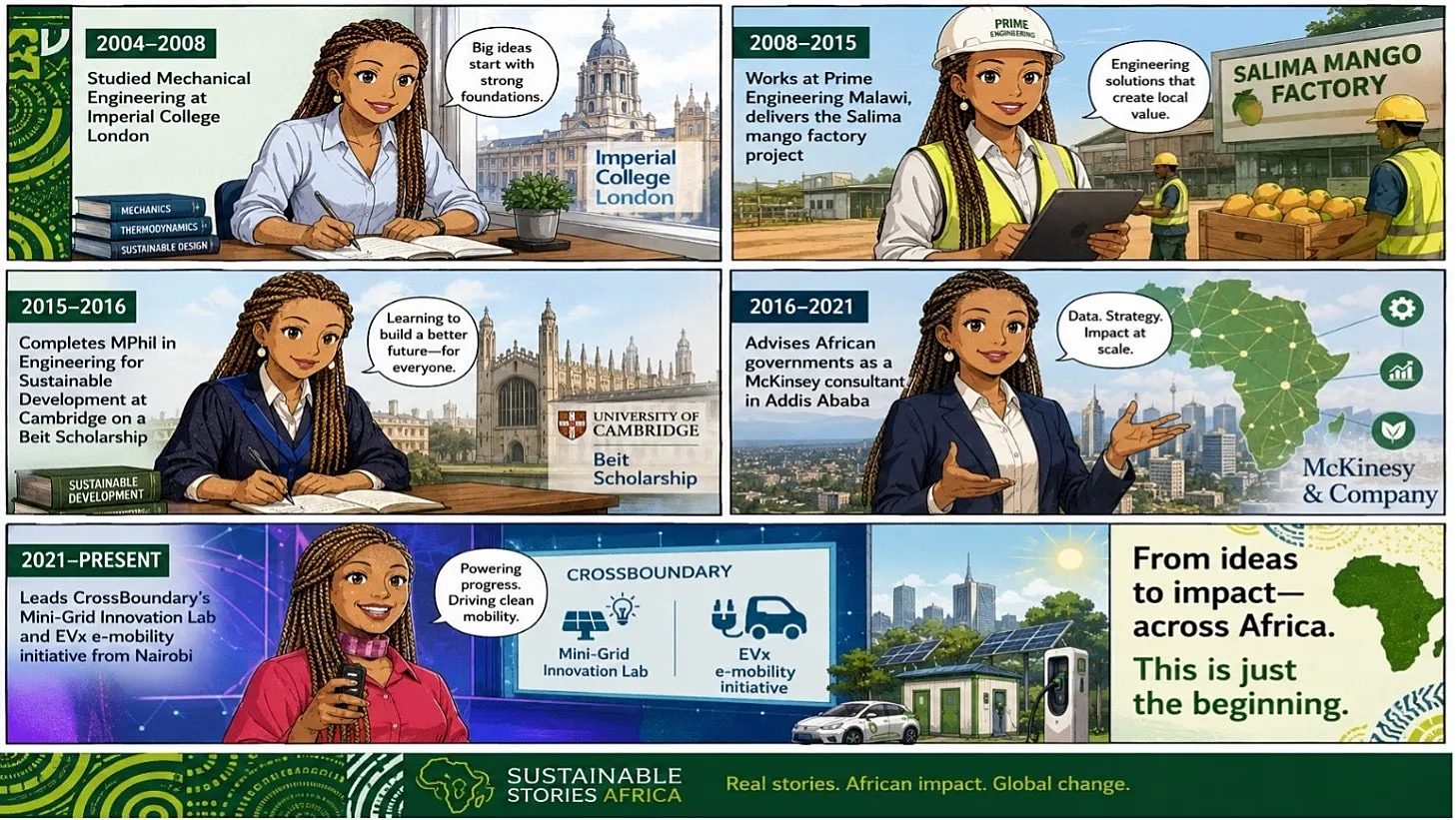
Banda studied Mechanical Engineering at Imperial College London, then returned to Malawi to work for seven years inside her father's firm, Prime Engineering, on infrastructure projects across the country and into West Africa.
The Salima factory was her proof of concept that engineering moves lives; however, it also planted a harder question: could that same development come at an unsustainable environmental cost down the road?
That question sent her to the University of Cambridge for an MPhil in Engineering for Sustainable Development on a Beit Scholarship, where a course on balancing economic, environmental and social outcomes reshaped how she saw every project she would touch afterwards.
"Cambridge was 11 months of pure fun for me," she recalls, describing a bubble of academic rigour, new skills like rowing, and the kind of intellectual company that clarifies purpose.
From Cambridge, she joined McKinsey & Company's Africa Delivery Hub in Addis Ababa, advising governments across Ethiopia, Kenya, Nigeria, South Africa, Zambia, Malawi and Uganda on multi-billion-dollar public investment decisions.
The stakes, she says, were higher than anything in Malawi, and dealing with disgruntled communities in a Cambridge case-study role-play turned out to be more instructive than any spreadsheet.
It was there, moving between energy access projects and public holding companies, that she settled on the conviction that energy is not one sector among many but the precondition for all the others.
What The Innovation Lab Is Proving
Since 2021, Banda has led CrossBoundary's Mini-Grid Innovation Lab from Nairobi, Africa's first R&D fund built solely to test new mini-grid business models with developers and utilities.
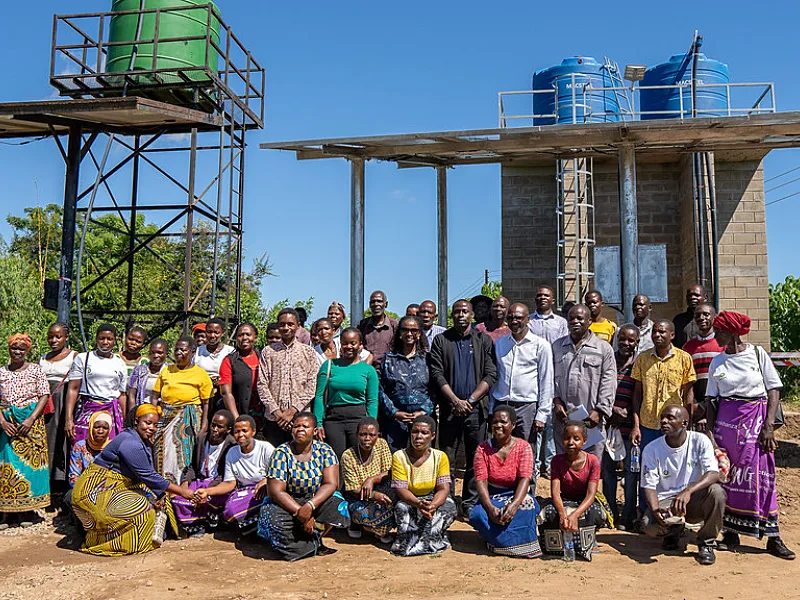
A typical mini-grid delivers roughly 50 kilowatts of clean power to around 200 households and 20 businesses, arriving faster and cheaper than extending a national grid line that may never come.
Community by community, that is what changes first: a shop that stays open after sunset, a clinic that keeps vaccines cold, a household no longer breathing diesel fumes.
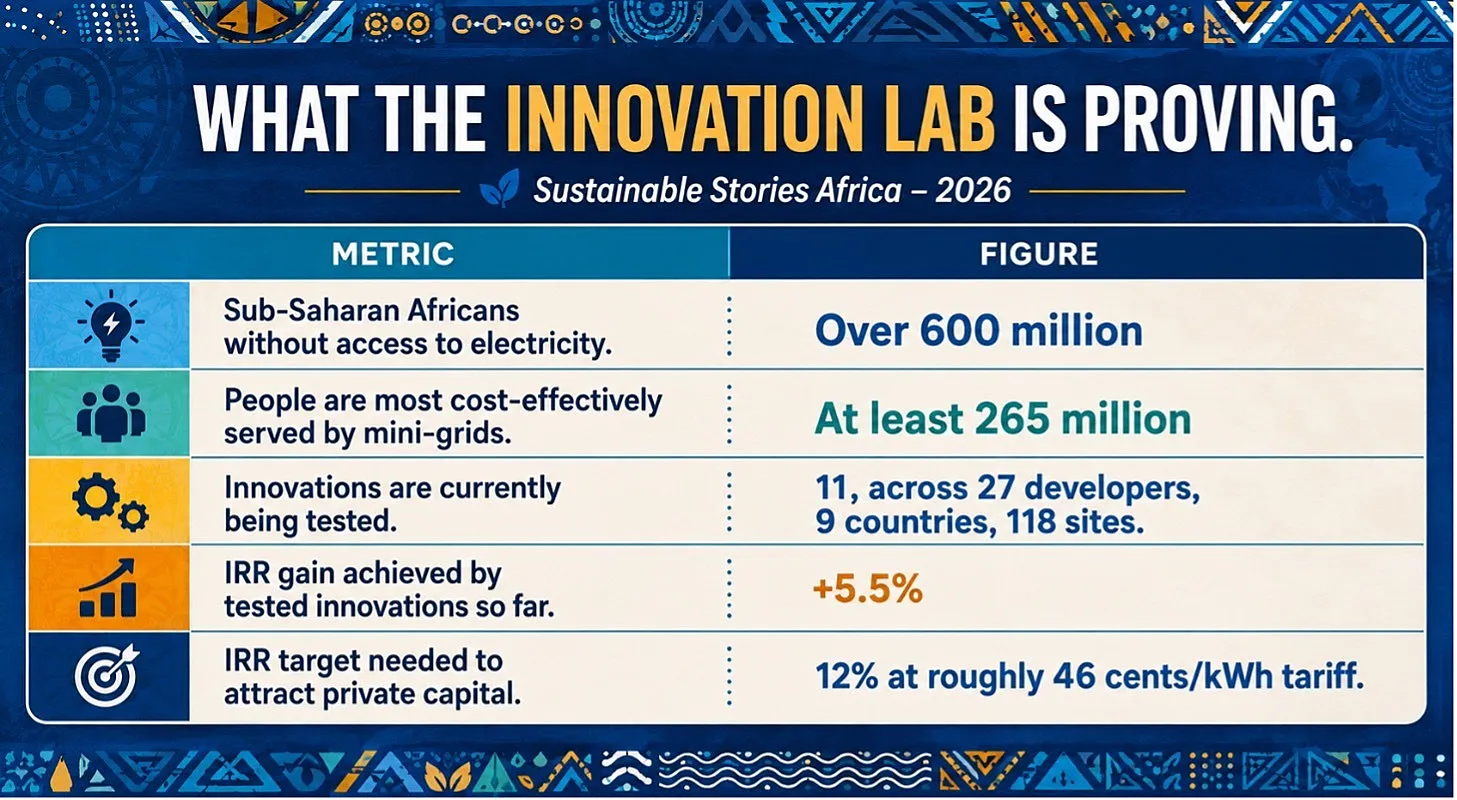
Scaling from a household to a continental target requires that final 6.5 percentage-point jump in returns, achieved by cutting capital costs by about 2,300 dollars per kilowatt and lifting average consumption to 95 kilowatt-hours a month.
If that gap closes, Banda argues, mini-grids stop being a development-subsidy story and become an investable asset class in their own right.
Financing The Last Mile
For Banda, the next frontier is not only technical innovation but the mobilisation of local capital. Africa’s pension funds, she argues, should be encouraged to invest more decisively in development infrastructure, including mini-grids, rather than concentrating too heavily on assets with limited development utility, such as high-end apartment complexes.
That shift would put long-term domestic savings behind the energy systems that expand access, support productive enterprise and make rural growth more durable. It would also help move mini-grids from a promising asset class to infrastructure that African institutions can help build, own and scale.
Her case for this approach reaches beyond the boardroom. In her TED Talk, “Meet Mini-Grids - the Clean Energy Solution Bringing Power to Millions,” Banda explains why decentralised power can deliver faster, cleaner electricity access for communities still beyond the reach of national grids.
Wiring Electric Mobility Next
Banda is now extending her work into e-mobility, building a financing platform to help scale electric vehicles across a continent where charging infrastructure barely exists yet, and therefore never has to be retrofitted.
"If we get it right, they'll think of internal combustion engines as being like landlines," she says of Africa's young population, imagining a generational leapfrog rather than an incremental upgrade.
She is inviting developers, utilities and public-private partners to treat mini-grids and EV charging as one interconnected system, in which each new vehicle on a mini-grid boosts local income generation.
A Grid Still Being Built
Banda expects the Innovation Lab's core testing work could conclude near its target timeline, with its lessons absorbed into standard mini-grid financing across the continent.
Her longer ambition folds energy access and electric mobility into one continuous project: infrastructure built, from the start, with responsibility and sustainability at its centre.