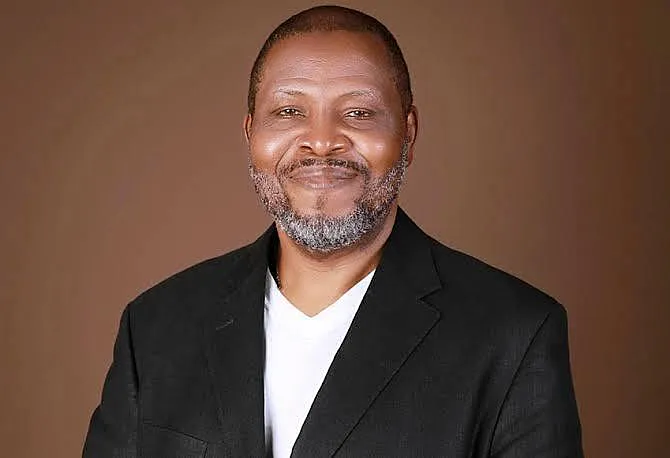
"Once I drove that first EV, it was obvious to me these things would change the world."
Written By Eyikojoka Diboku
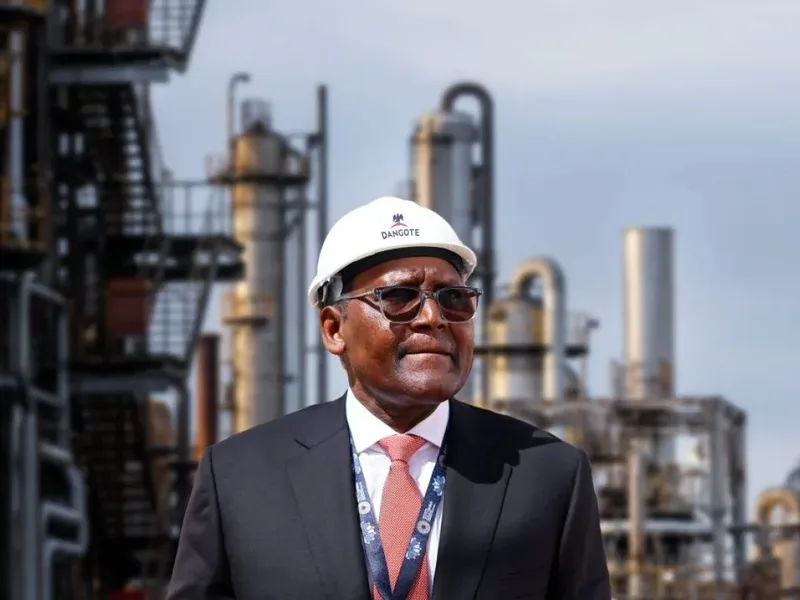
For nearly three decades, Dr Sam Faleye healed patients in Memphis exam rooms. Then Nigeria's fuel subsidy collapsed, and the physician who once diagnosed illness turned his attention to a different ailment: a continent's dependence on combustion engines.
Today, his company assembles Nigeria’s first electric-only vehicles in a retrofitted Lagos beverage factory.
His story matters now because Africa's energy transition needs builders, not just believers.
Where the Engine Stopped
The morning petrol prices in Nigeria crossed N500 a litre, Sam Faleye already knew what would happen next.
He had modelled this exact moment years earlier, calculating that once pump prices passed N400, the economics of electric vehicles would overtake petrol for good.
What others read as crisis, he read as confirmation.
He is not, by training, an automotive man. Dr Olugbenga Samuel Faleye earned his MD from the University of Ilorin, completed an Internal Medicine residency at Howard University Hospital in Washington, D.C., and has practised as a Board-Certified Internist since 1998, later becoming a Fellow of the American College of Physicians.
Somewhere between exam rooms and dissertation drafts on clinical informatics, a second obsession took root.
It began, quietly, with a car. In 2012, he bought his first Tesla, and something in him shifted permanently. "Once I drove that first EV, it was obvious to me these things would change the world," he recalls.
That private conviction would eventually reshape an industry an ocean away.
A Doctor Who Chose Engines
"The EV play in Africa is an employment opportunity play," Faleye says. "The economics are too compelling to ignore".
It is a striking claim from a man whose professional life was built on stethoscopes, not supply chains, and it captures exactly why his story belongs in the current conversation about Africa's energy transition.
He stands today as Chairman and CEO of SAGLEV INC, a company incorporated in Delaware that now operates the first automotive assembly plant in sub-Saharan Africa built solely to produce electric vehicles.
The contrast is the story: a man who spent thirty years treating the human body now treats a continent's transport system as the patient in need of intervention.
The Long Road to Imota
SAGLEV was founded in 2017, and the original plan pointed to Ghana, not Nigeria.
Ghana's power surplus and early electric mobility pilots made it the logical first market, until political pushback from the country's used-car lobby stalled the regulatory path forward.
Faleye, watching Nigeria's finances from a U.S. Department of Commerce export program, concluded the country was heading toward an inevitable subsidy removal, and he positioned SAGLEV to be ready.
When the subsidy fell in 2023, Faleye moved fast. Equipment once destined for Accra was redirected to Lagos, and SAGLEV discovered and acquired an abandoned beverage factory in Imota, Ikorodu, saving what could have been hundreds of millions of naira in construction costs.
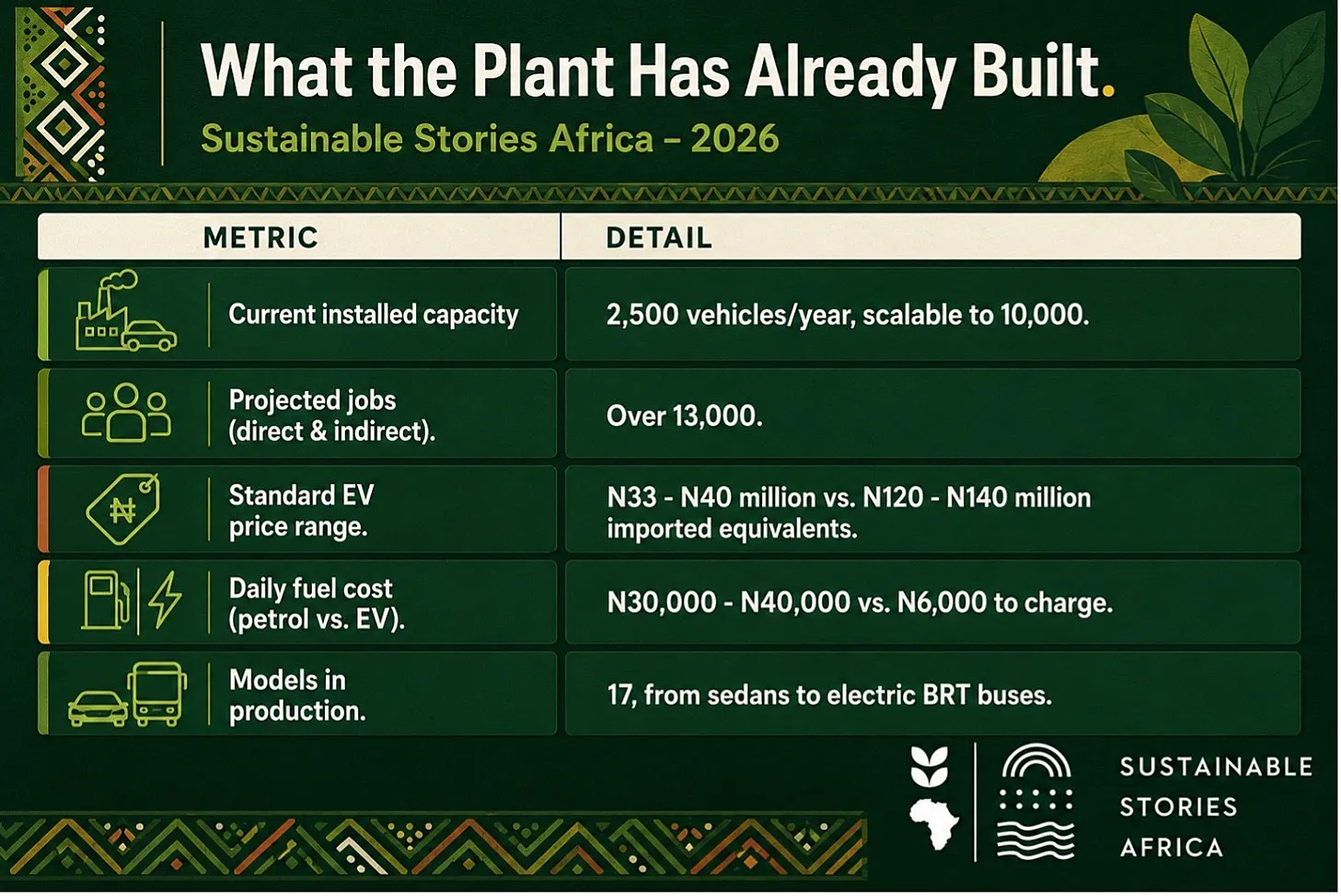
The 5,000-square-metre facility began operations in June 2025, backed by encouragement from Nigeria's National Automotive Design and Development Council.
The human texture behind the numbers is what makes the story land. In Lagos, ride-hailing drivers were burning between N30,000 and N40,000 in petrol daily; the same distance in an electric vehicle cost roughly N6,000 to charge.
For a driver scraping by on thin margins, that difference is not abstract policy; it is dinner on the table.
"The EV play in Africa is an employment opportunity play. The economics are too compelling to ignore." Dr Sam Faleye
What the Plant Has Already Built
SAGLEV has assembled 55 vehicles and sold 40 almost immediately, with around 140 ride-hailing drivers already signed to purchase EVs once financing clears.
One Nigerian bank has signed a financing MOU, and five more are in advanced talks, a reversal from two years ago when banks would not discuss electric vehicles at all.
DrIf a repurposed beverage factory in Ikorodu can put affordable, locally assembled EVs into the hands of Lagos drivers, the case for continent-wide leapfrogging past the combustion engine stops feeling theoretical.
Scaling Past One Factory
Faleye's near-term focus is credit, not manufacturing. "It's not an affordability problem," he says. "It's a credit problem".
He is pushing banks toward longer loan terms, arguing that EV batteries can last twenty years before efficiency drops, giving lenders room to underwrite seven- to eight-year auto loans.
He is also courting an unlikely ally: Nigeria's data-centre operators, whose surplus generation capacity, up to 20 megawatts by his estimate, could power distributed EV charging without leaning on the national grid.
By 2030, SAGLEV aims to put 10,000 EVs on Nigerian roads annually and grow its workforce to more than 120 people, with expansion plans reaching Ghana, Côte d'Ivoire, and one market outside Africa.
A Legacy Still Charging
Faleye's ambition is not just an assembly plant; it is proof that African markets can bypass the combustion engine on economics alone, without waiting for government mandates.
"If you can cut your power cost by 70% and your maintenance by 50%, Nigerians will figure it out," he says. "The demand will be exponential. It has already started".
That conviction, forged first behind a stethoscope and later behind the wheel of a Tesla, now drives a factory floor in Ikorodu and a continent's quiet argument that its energy future can be built, not imported.