African governments seeking solar manufacturing jobs face a policy choice over how to support domestic production while keeping equipment affordable.
Renewables Rising reports that Nigeria intends to build production capacity before considering import restrictions.
The challenge is to develop industrial capability without making reliable clean energy harder for households and businesses to obtain.
Nigeria clarification highlights a wider tradeoff
Nigeria plans to prioritise domestic solar manufacturing capacity before considering restrictions on imported panels, according to Renewables Rising’s 13 October briefing.
The reported position highlights the sequencing of industrial policy:
- Factories need a viable market, while electricity users need access to competitively priced equipment.
The issue reaches beyond manufacturers and importers.
- For a small business considering solar, changes in equipment prices can affect whether the investment is feasible.
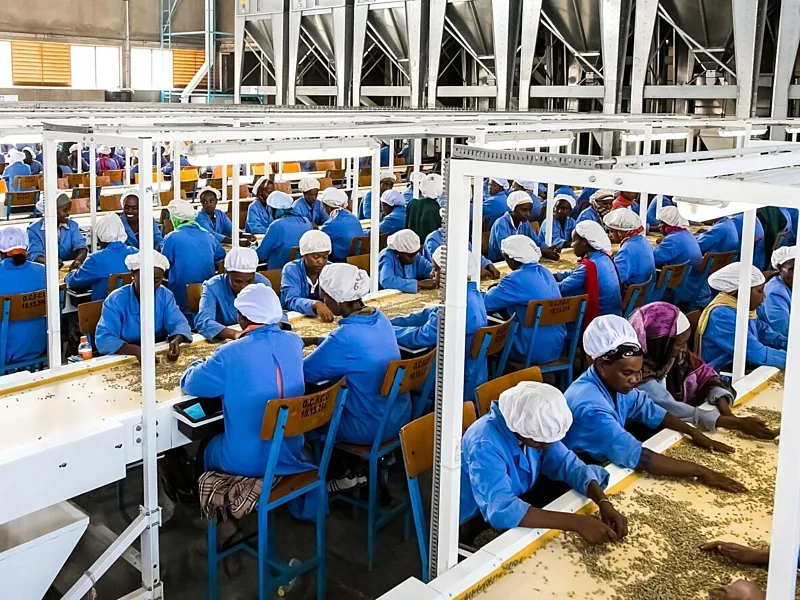
- For a prospective factory worker, domestic production represents an opportunity to participate in the transition through employment.
Policy design must account for both interests.
- Supporting one without examining effects on the other could weaken the development benefits that governments seek.
Manufacturing involves more than panel assembly
The briefing points to Egypt and Ethiopia as countries pursuing local solar production while continuing to import equipment.
- It does not establish a comprehensive inventory of every country’s trade policy, and its accessible text should not be read as one.
The International Energy Agency’s 2022 supply-chain study offers useful structural context.
- Solar manufacturing encompasses polysilicon, ingots, wafers, cells and modules.
- The study describes the benefits of scale and specialised production, alongside the vulnerabilities created by geographic concentration.
These are historically useful findings, not a new measurement of Africa’s 2026 manufacturing base.
The distinction between assembly and deeper production matters.
- A plant may assemble modules using imported cells and other components.
- That can create jobs and capabilities, but the local value retained depends on what is actually made, sourced and serviced domestically.
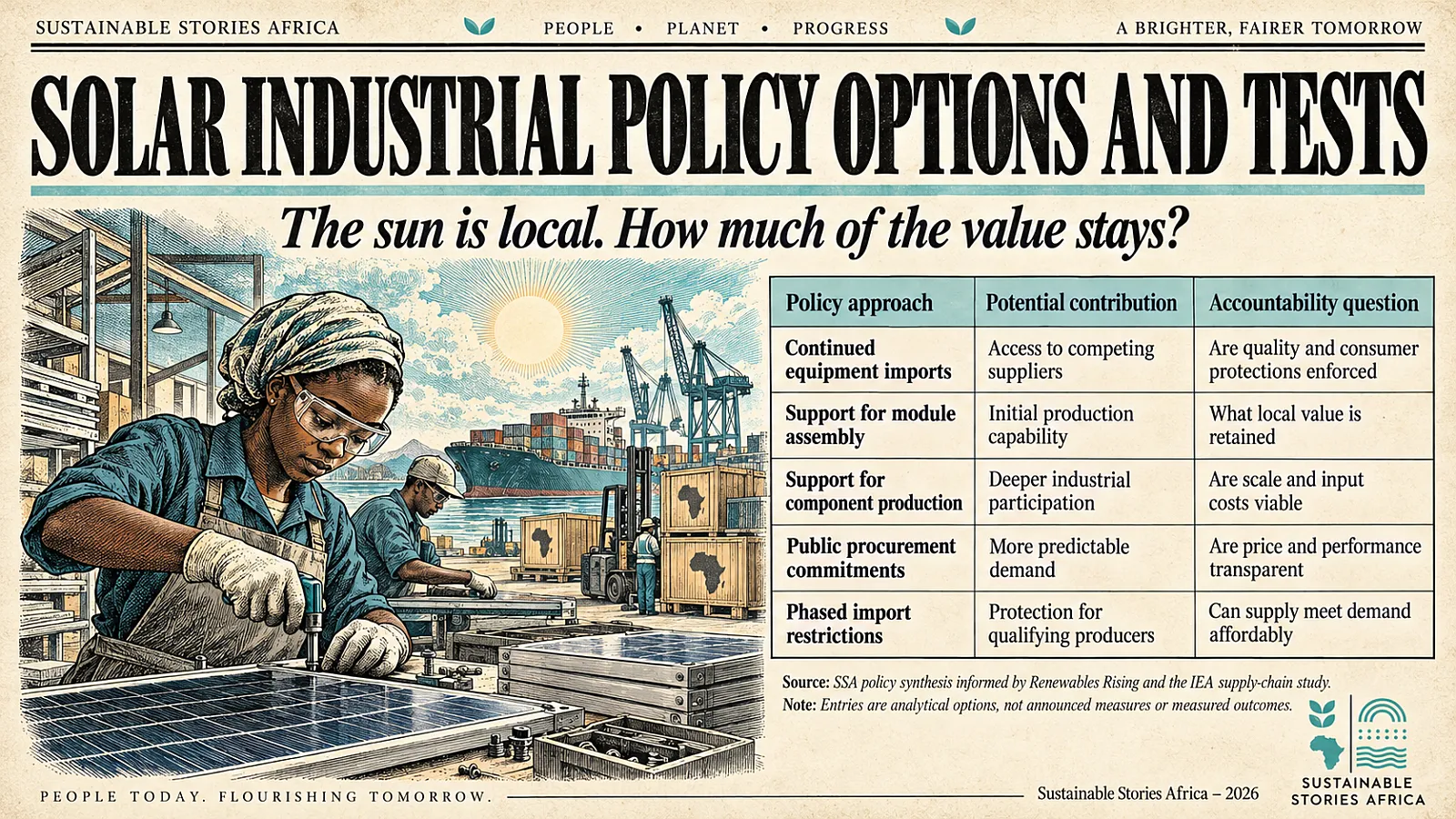
Local value can grow across services
SSA assesses that industrial ambition should include more than the factory gate.
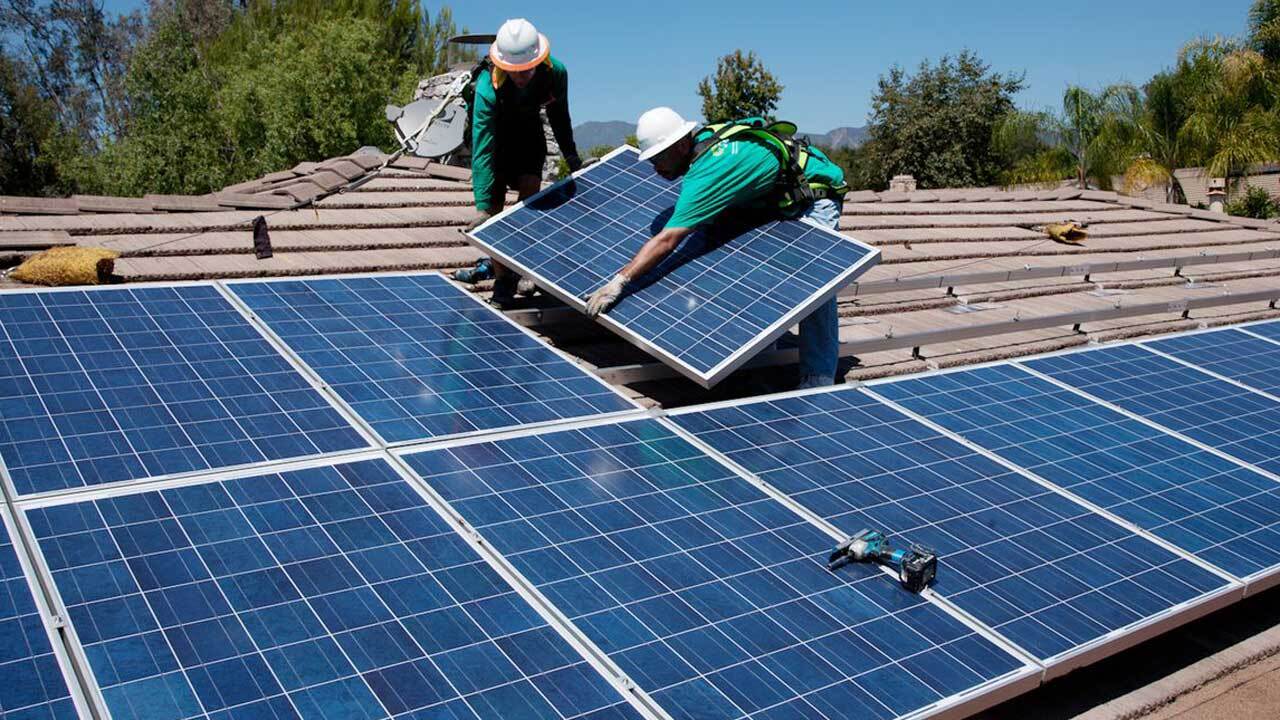
- Installation, maintenance, testing, logistics and eventual equipment recovery can also create useful work and improve the quality of deployed systems.
This broader view would let governments identify capabilities to develop now while evaluating more demanding manufacturing stages.
- It would also make it easier to distinguish realistic investment opportunities from announcements unsupported by demand, finance or reliable inputs.
Consumers have an interest in this approach.
- A low purchase price offers limited value if a system fails, a warranty cannot be enforced or replacement parts are unavailable.
- Quality standards and service capacity should therefore advance alongside efforts to expand production.
The IEA’s study identifies affordable electricity and competitive operating conditions as key for manufacturing.
- These findings reinforce the need to address the business environment rather than assuming that import protection alone can create a sustainable industry.
Set measurable conditions before restricting choice
SSA recommends publishing evidence on verified production, utilisation, product certification and delivered prices before introducing any restriction.
- Distinguish installed factory capacity from actual output available to buyers.
A phased approach could make support conditional on performance while preserving a route to review measures that raise costs without delivering the intended capabilities.
- Clear review dates would help investors and customers plan.
Governments should also examine who bears transition costs.
- A policy that benefits a small group of producers could still impose substantial burdens on schools, clinics and businesses that purchase the systems.
- Those effects are part of the decision, even where industrial objectives are justified.
The immediate task is to define success openly:
- Competitive products, credible jobs, stronger skills and continued clean-energy deployment.
- That would give domestic manufacturing a development purpose that can be measured.
Manufacturers themselves would benefit from a predictable timetable and clearly defined support.
- Uncertainty about future restrictions can complicate investment decisions just as much as uncertain demand.
- A published policy sequence would let producers plan facilities while allowing installers and buyers to understand how access to equipment may change.
Path Forward – Build Domestic Capacity While Protecting Access
The reported Nigerian position places production readiness before restrictions.
Policymakers should make the evidence supporting that sequence public.
Industrial support should be tied to quality, output, skills and affordability.
A stronger solar industry would help African economies retain more value while continuing to expand access to useful clean electricity.
Sources: Why many countries are reluctant to ban solar imports, International Energy Agency Solar PV Global Supply Chains executive summary