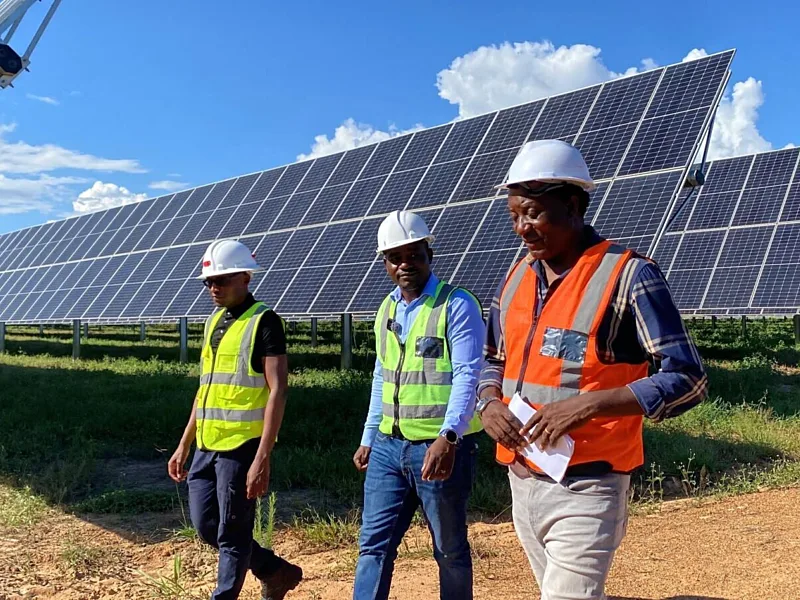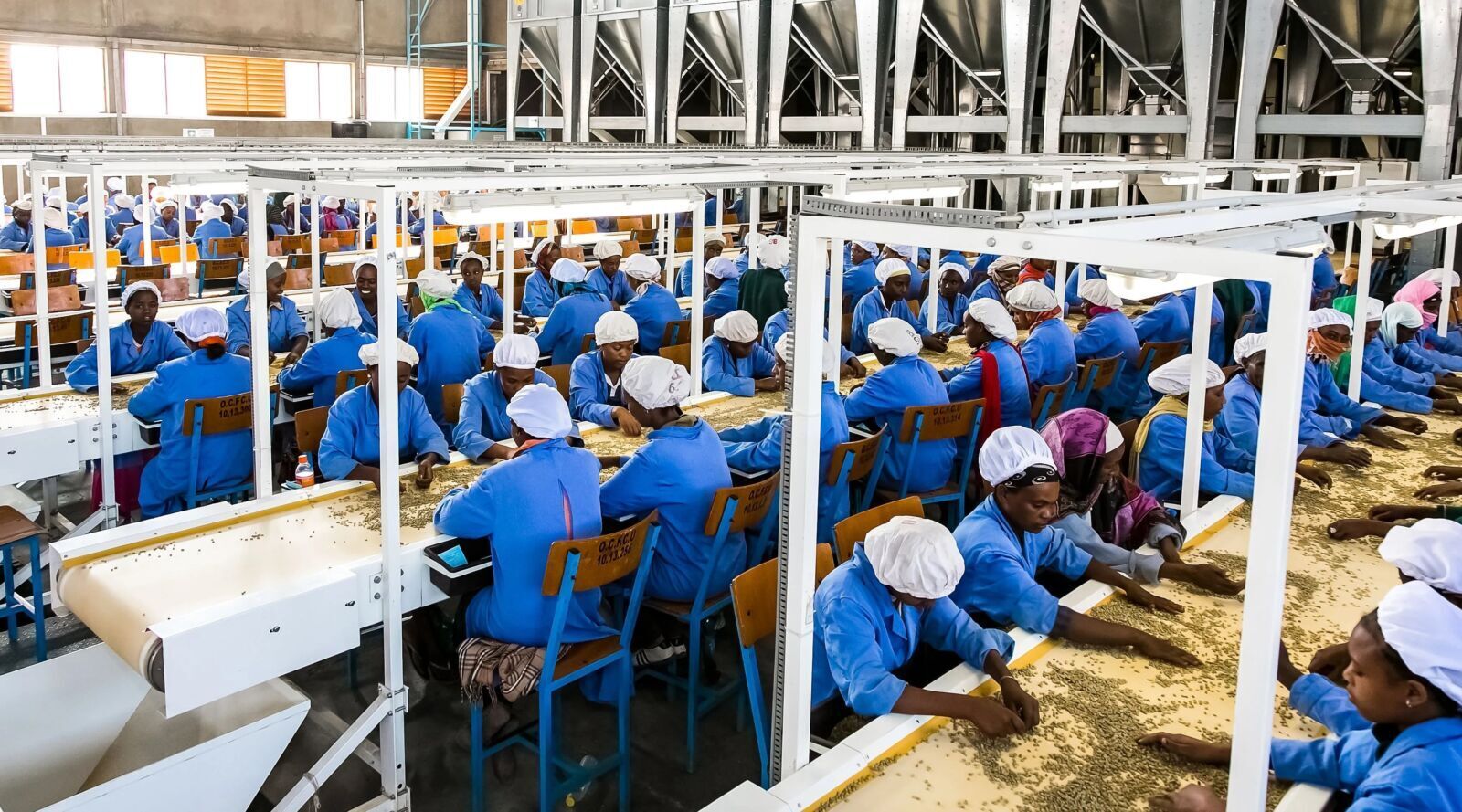
Tanzania is seeking more private investment to support industrialisation and create work for its growing young population.
Prime Minister Mwigulu Nchemba has linked that ambition to infrastructure, domestic processing and a stronger business environment.
The development test is whether investment commitments become productive businesses offering accessible, decent jobs and opportunities for local suppliers.
Investment drive puts employment under scrutiny
Tanzania is seeking increased investment and industrialisation to create employment for its young population, Prime Minister Mwigulu Nchemba said in remarks reported by Semafor on 12 October.
- The government is targeting $15 billion in annual foreign direct investment, roughly three times the previous year’s figure cited in the report.
Speaking at an investment forum in London, Nchemba linked the strategy to infrastructure development, lower business costs and stronger supply chains.
- He argued that private businesses must play a central role in absorbing new entrants to the labour market.
For young people completing school or training, the significance lies in the route from national ambition to a first opportunity.
Investment totals tell only part of that story.
Industrial growth needs a workforce connection
Semafor reports that about 42% of Tanzania’s population is aged 14 or under, citing United Nations data.
- That is a demographic indicator, not a measure of unemployment.
- It points to the scale of future demand for education, skills and livelihoods.
Nchemba’s emphasis on local processing also raises a practical question: which skills will firms require, and how will workers acquire them?
- A processing facility creates different needs from an extraction site, a transport terminal or a tourism business.
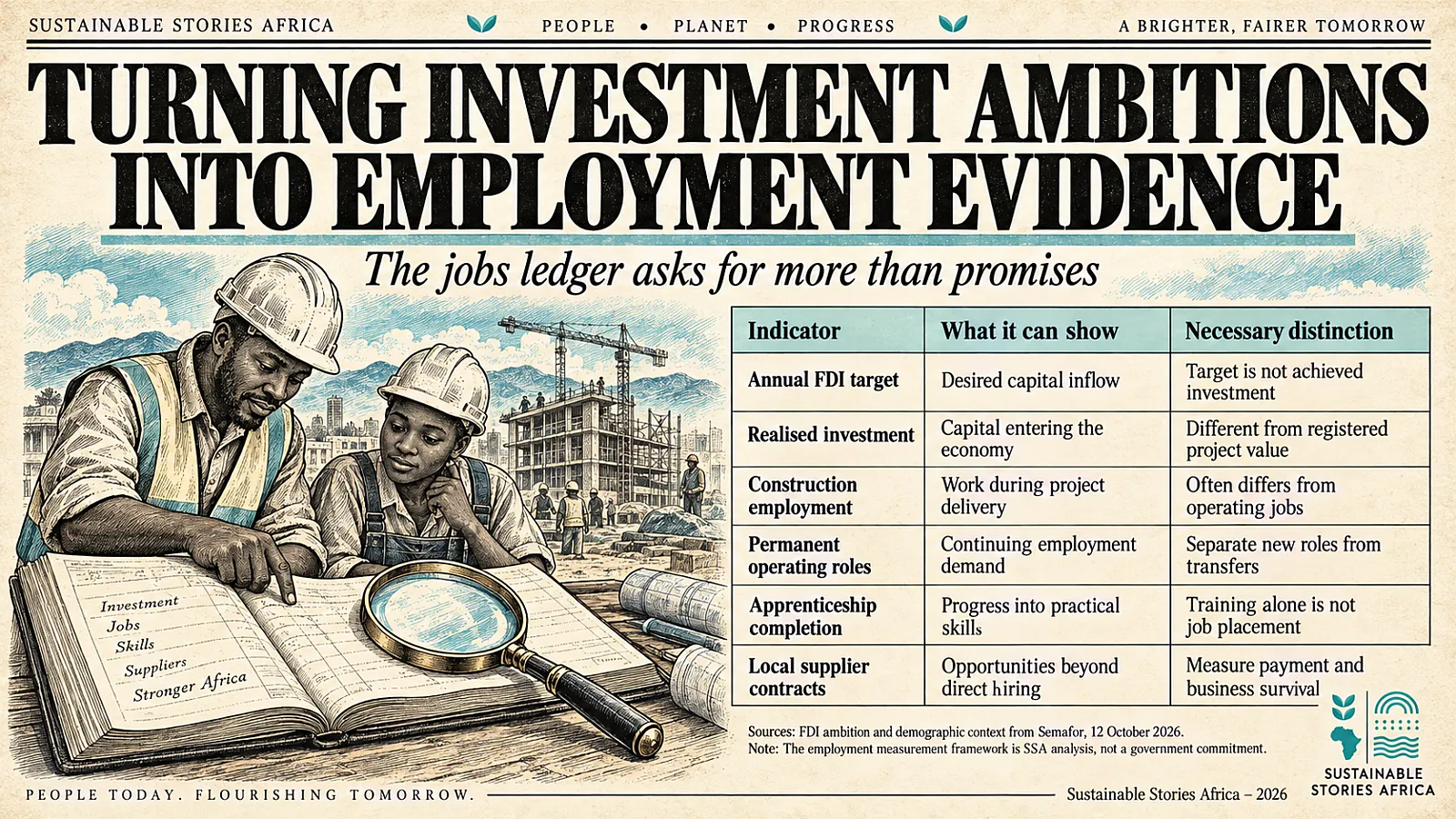
SSA assesses that employment planning should begin before investment agreements are celebrated.
- Developers, training institutions and public agencies would benefit from a shared understanding of occupations, entry requirements and recruitment schedules.
- Otherwise, a new facility could open while nearby applicants remain unable to meet its needs.
Better jobs require more than capital
The potential gains from industrial investment extend beyond direct hiring.
- A productive enterprise can buy services, create demand for transport and support other businesses.
- Whether these opportunities reach local firms depends on purchasing practices, standards and the capacity of suppliers to deliver.
An employment strategy should therefore consider the barriers smaller companies and jobseekers face.
- Clear procurement information, realistic payment terms and opportunities to build capability could help them compete for contracts.
For workers, job quality matters as well as job numbers.
- Pay, safety, training and opportunities to progress shape whether employment provides a durable livelihood.
- A headline promising thousands of opportunities does not answer those questions.
The distribution of access also deserves scrutiny.
- Young women, people with disabilities and applicants outside major urban centres may face different obstacles to recruitment.
- Identifying these barriers would make employment planning more useful than assuming that a growing economy reaches everyone in the same way.
Match investment promotion with public reporting
SSA recommends tracking projects from announcement through financing, construction and operations, with employment claims updated at each stage.
- Forecast jobs should remain clearly labelled until recruitment has occurred.
Public reporting could show the share of roles filled locally, the number of jobs under apprenticeships and the proportion of suppliers paid within agreed terms.
- These are suggested accountability measures, not reported features of the government’s programme.
Environmental assessment should also remain part of investment quality.
- Projects that depend on land, water or substantial energy inputs need to explain their impacts and how communities can raise concerns.
The next task is to link promotion with delivery institutions.
- Investors need predictable processes, while young people need practical access to the opportunities being promoted.
- Both would benefit from a timetable that identifies who is responsible for the next step.
Young applicants would benefit from specific information for their use;
- The location of vacancies, recruitment dates, required qualifications and whether paid training is available.
- Linking these details with project milestones would make the employment promise easier to act on while giving the public a clearer way to track progress.
Path Forward – Make Industrial Investment Deliver Decent Work
Tanzania’s investment ambition makes employment a key part of its industrial strategy.
The priority is to translate that ambition into financed projects and accessible recruitment pathways.
Transparent delivery data, relevant training and fair supplier opportunities would help show whether growth is creating durable livelihoods.
The strongest evidence will be work secured and sustained.
Source: Tanzania seeks investment to tackle youth job pressure | Semafor