Zambia is developing a framework intended to help local creators earn through major digital platforms.
Officials are engaging technology companies on the arrangements needed for monetisation, according to reporting published on 12 October.
For creators, the next test is whether discussions produce accessible programmes, clear eligibility rules and dependable payments rather than expectations of automatic income.
Government engagement targets creator revenue barriers
Zambia is developing a framework to help content creators earn from digital platforms, with government engagement involving Meta, TikTok and Google, according to ITWeb Africa’s 12 October report.
Ministries responsible for technology and science, and youth, sport and arts are leading the call.
The report says the effort follows President Hakainde Hichilema’s call to support the creative economy.
- Its significance lies in a familiar gap: attracting an audience does not necessarily provide access to a platform’s revenue programmes.
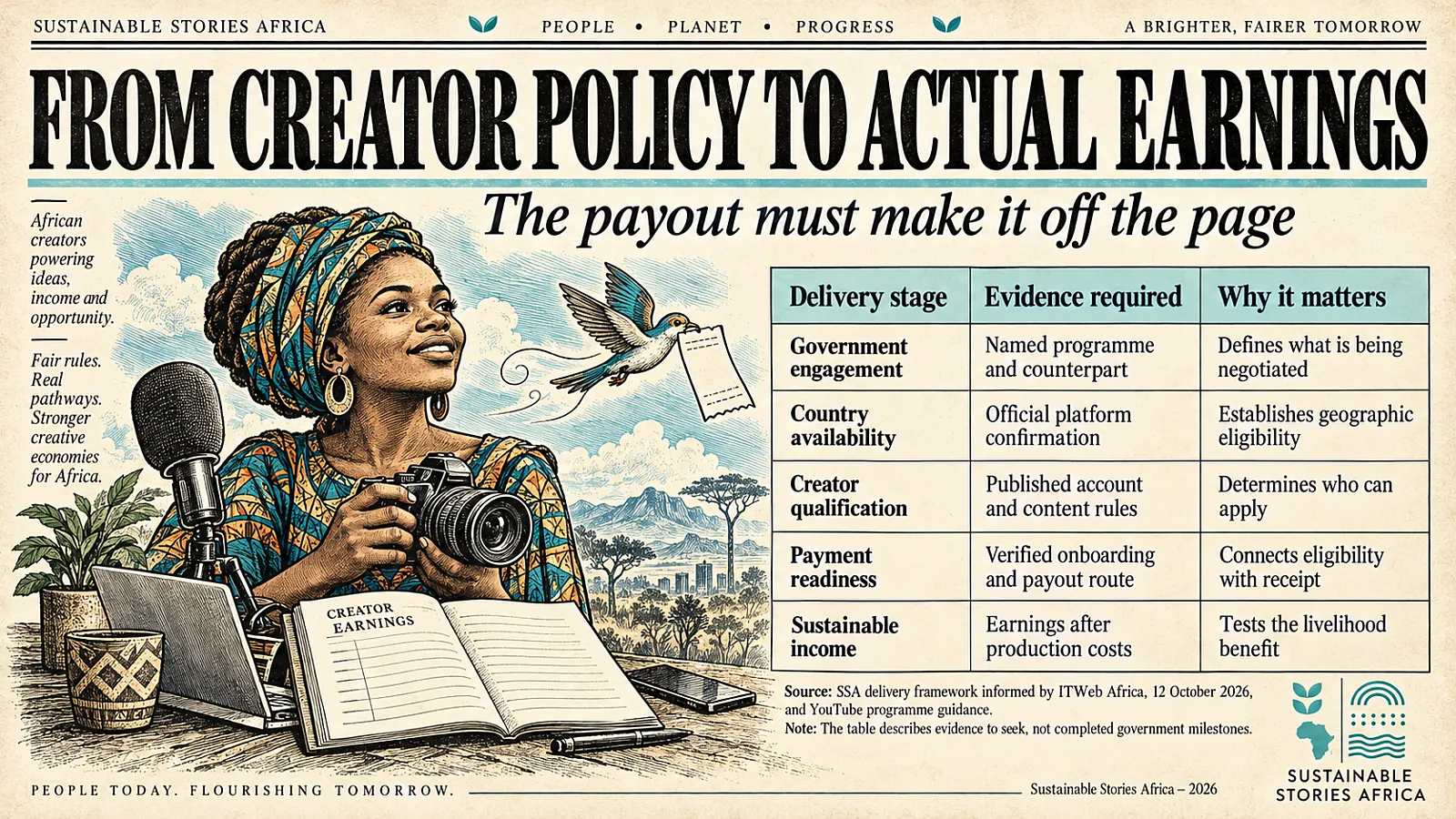
As of 13 October, the available evidence describes a framework under development and discussions with companies.
It does not establish that every programme has launched or that all Zambian creators can now receive platform payments.
Platform access requires more than views
ITWeb Africa reports that Zambia is also compiling information on its creator community.
- That could help identify barriers, and the usefulness will depend on what is collected and how it informs policy.
Platform programmes have their own conditions.
- YouTube’s published guidance, for example, distinguishes eligibility requirements from acceptance: a channel must satisfy relevant conditions and undergo review.
- Country availability, account standing and compliance with monetisation policies all matter.
The example shows why a government announcement cannot stand in for platform-specific confirmation.
- Advertising, subscriptions and other features may have different rules, and access to one does not imply access to every form of monetisation.
Creative enterprise needs dependable commercial foundations
SSA assesses that better programme access could create opportunities for artists, educators and other producers.
- However, commercial value depends on actual earnings, payment reliability and content creation costs.
A creator can spend time and money on equipment, data, editing and distribution before receiving any revenue.
- Audience growth therefore needs to be evaluated alongside costs, rather than being treated as a livelihood measure in its own right.
Business support could help creators understand contracts, intellectual property and financial records. It could also make sponsored content arrangements more transparent for audiences.
- These are suggested areas for support, not announced features of Zambia’s framework.
The social case also depends on who can participate.
- People outside major cities or with limited connectivity may face different costs and barriers.
- A programme designed around already successful personalities could miss emerging talent that needs practical support to enter the market.
Publish programme terms and protect independence
SSA recommends that officials and platform partners publish the scope of any agreement, the launch timetable and the eligibility conditions.
- Communications should identify which features are available and which remain under discussion.
A creator database should have a clear purpose and proportionate data requirements.
- Participation in a support programme should not become an unnecessary condition for lawful creative expression, and applicants should understand how their information will be used.
Creators would also benefit from guidance that encourages several revenue streams.
- Sponsorships, services, subscriptions and direct customer relationships can complement platform income, subject to the rules and opportunities available to each business.
The development objective should be a resilient creative enterprise.
- This means helping people retain rights, understand commercial choices and use them for legitimate work.
- Success would show up in viable businesses and reliable earnings, not the size of an announcement or a registration list.
A practical pilot could reveal obstacles before a wider rollout:
- Whether eligible applicants complete onboarding, receive support and obtain payments without avoidable delay.
- Publishing aggregate results would help separate technical access from commercial success.
Such a pilot is an SSA recommendation, not a programme confirmed in the available reporting.
Path Forward – Turn Digital Reach Into Sustainable Livelihoods
The next milestone is confirmation of specific programmes and workable payment arrangements.
Government discussions should remain clearly distinguished from live platform access.
Transparent eligibility, business support and responsible data handling can help creators participate on fair terms.
Measuring progress is whether creative work becomes a more dependable source of income.
Culled from: Zambia pushes for Facebook, TikTok and YouTube monetisation – Techjaja