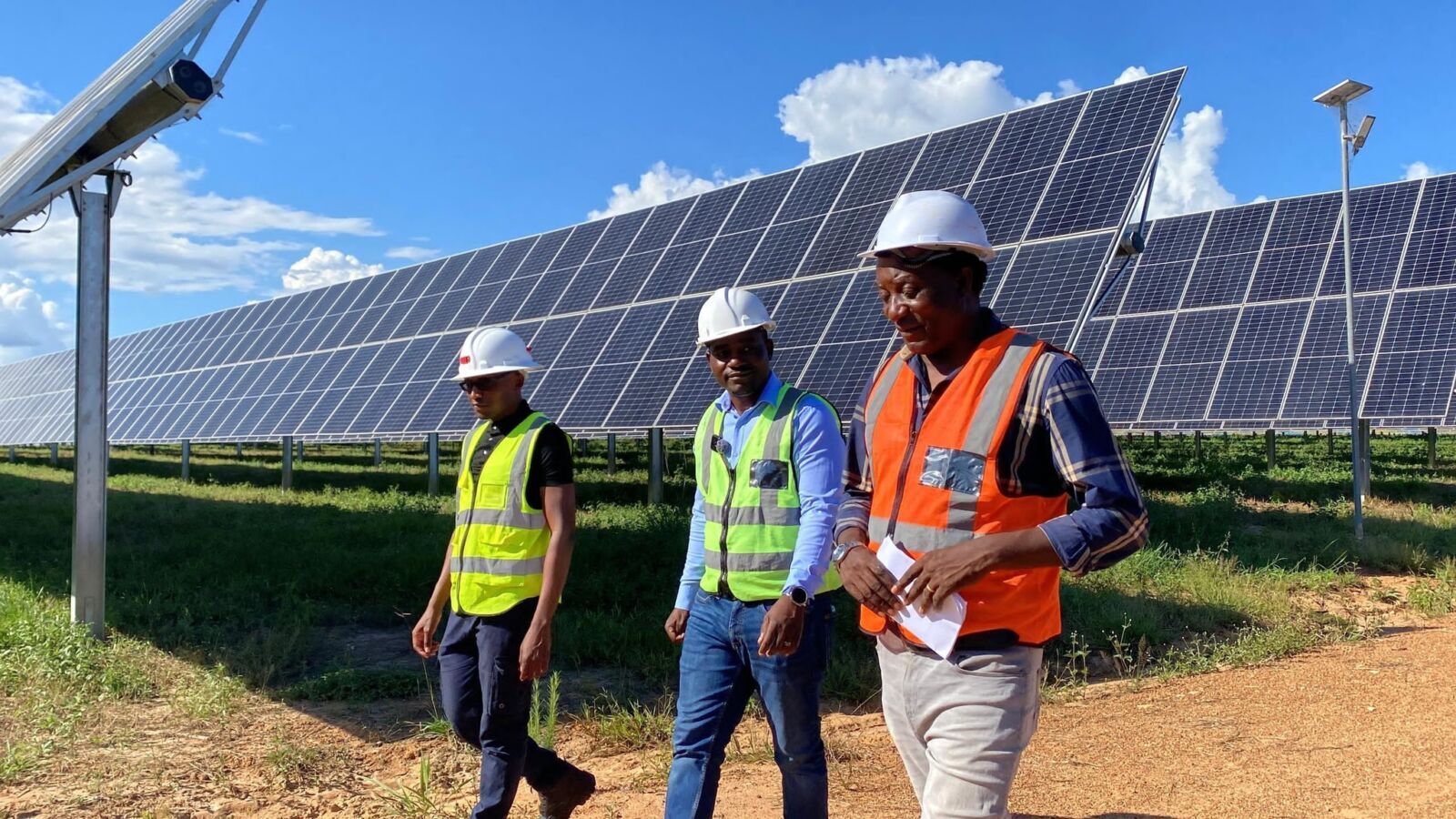
Zambia’s installed solar capacity has reportedly reached 1,028 megawatts after a sixfold increase over two years.
The expansion strengthens efforts to reduce exposure to drought-sensitive hydropower.
Its value will depend on transmission, storage and whether more reliable electricity reaches smaller businesses and households as well as mines.
Solar growth responds to drought exposure
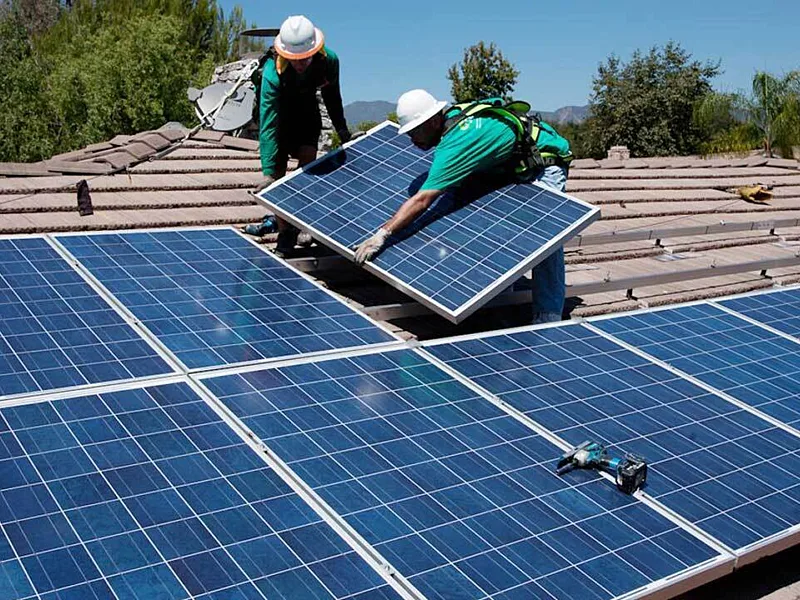
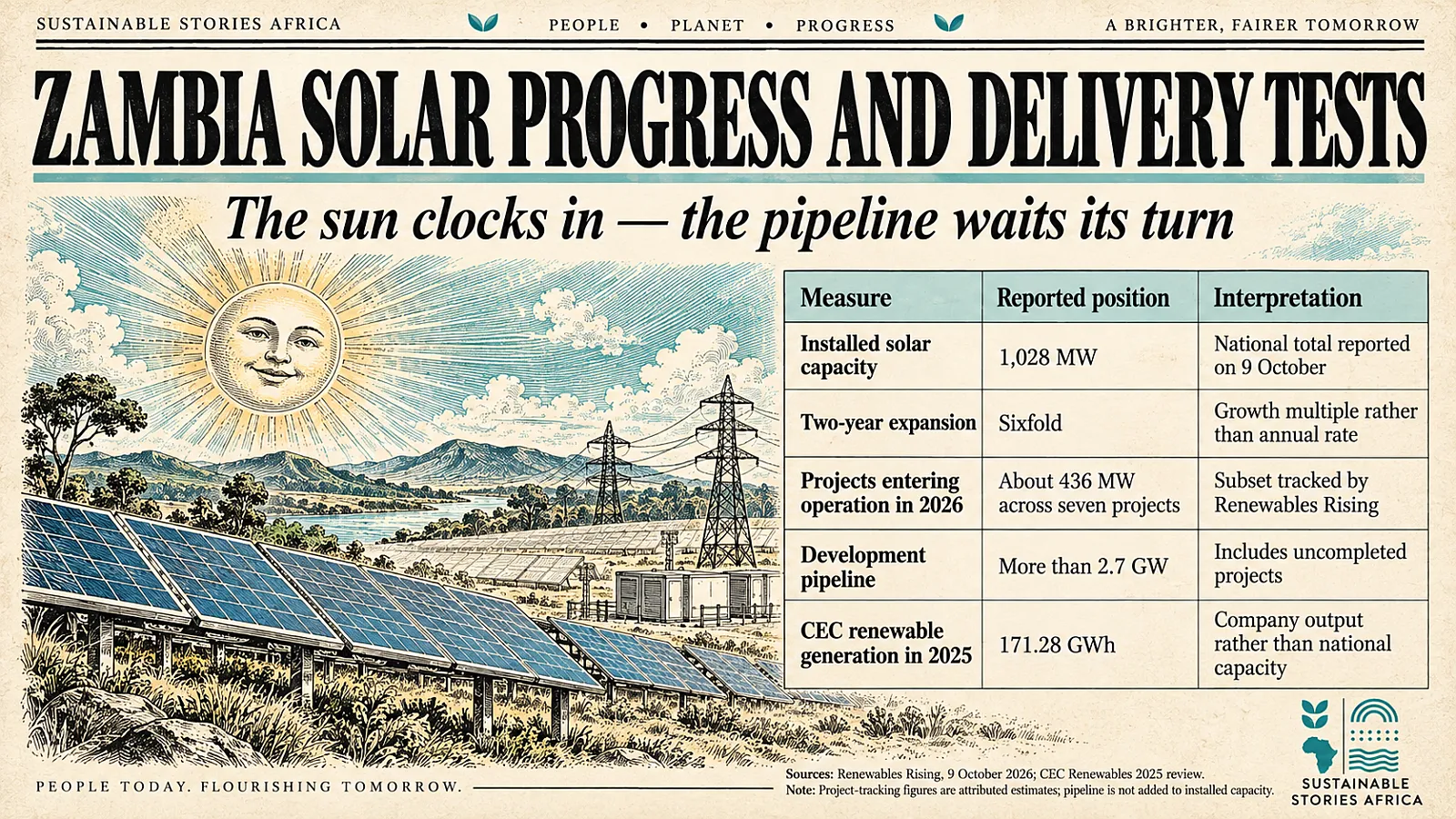
Zambia’s installed solar capacity has risen sixfold in two years to 1,028 megawatts, according to Renewables Rising’s 9 October report.
- The reported total exceeds a 1,000-megawatt target and signals an accelerating effort to diversify a drought-exposed power system.
The milestone matters because an energy transition can also be an adaptation response.
- Diversifying generation can reduce reliance on a single weather-sensitive source, although the resilience gained depends on how different technologies operate together.
For a workshop or food retailer, the relevant outcome is usable electricity during working hours.
- A larger national capacity total creates that possibility; it does not establish how much dependable supply an individual customer receives.
New projects need stronger delivery infrastructure
Renewables Rising attributes the expansion partly to reforms enabling private participation.
- It reports 7 solar projects totalling about 436 megawatts entering operation in 2026 and a further pipeline exceeding 2.7 gigawatts across pre-construction and construction stages.
- These categories should remain separate: planned capacity is not operating supply.
Company reporting provides a more specific view of project development.
- CEC Renewables’ 2025 review records 171.28 gigawatt-hours of renewable generation, compared with 154 gigawatt-hours in 2024.
- It also describes construction progress on the 136-megawatt Itimpi second phase and pre-feasibility work on co-located battery storage.
These disclosures illustrate why capacity, generation and development status need different labels.
- Megawatts describe plant capacity; gigawatt-hours describe electricity generated over a period.
- Neither measure alone tells the whole reliability story.
Reliable supply could widen economic benefits
SSA assesses that Zambia now faces a delivery challenge extending beyond new panels.
- Transmission capacity, operating coordination and demand timing will determine how much additional generation becomes useful power.
Solar output can help during daylight hours, while evening demand requires complementary resources.
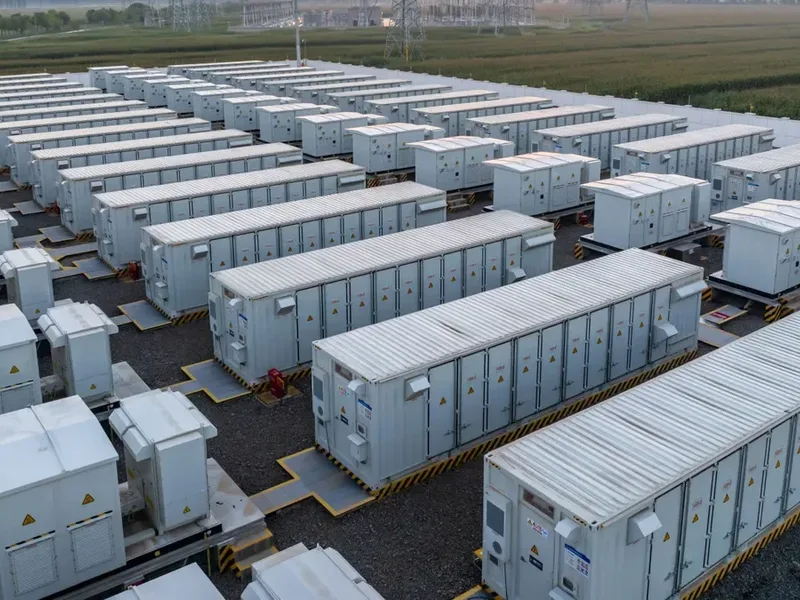
- Storage is one possible response, but its usefulness depends on duration, charging opportunities and the services required.
- It should be assessed against the actual problem rather than added as a symbol of modernisation.
The distribution of benefits also deserves attention.
- Large customers can structure dedicated supply arrangements and finance infrastructure in ways that smaller users may struggle to match.
- Household connections, local distribution upgrades and affordable tariffs therefore require explicit consideration.
The potential gains are concrete:
- Longer productive hours, fewer interruptions to essential services and greater confidence for investment.
- These are possible outcomes of a better-functioning system, not results established by the capacity announcement.
Report electricity outcomes alongside construction milestones
SSA recommends a public delivery dashboard distinguishing commissioned plants, projects under construction and earlier proposals.
- It should also show energy delivered, connection constraints and service quality for different customer groups.
Such reporting would help prevent a large pipeline from obscuring delays.
- It would also make it easier to identify whether financing, grid connections or procurement are holding projects back.
Environmental accountability should accompany delivery.
- Developers should explain land requirements, community engagement, maintenance responsibilities and arrangements for equipment at the end of its useful life.
- Renewable generation can advance climate objectives while still requiring careful management of local impacts.
For financiers, the useful question is whether the full system can deliver the benefits assumed in project forecasts.
- A completed solar plant has greater value when its connection, customers and operating arrangements are ready too.
- A useful household measure would be whether interruptions become shorter or less frequent
For businesses, the comparable question is whether dependable supply allows more production without additional backup expenditure.
Publishing such indicators would connect national infrastructure statistics with the practical economic reasons for expanding solar in the first place.
Path Forward – Connect Solar Growth To Everyday Reliability
The reported expansion marks progress towards a more diversified electricity system.
The next priority is to connect generation growth with dependable delivery.
Grid upgrades, well-designed storage and transparent reporting should help show who benefits.
Zambia’s resilience story will be stronger when businesses and households can measure improvements in the electricity they actually receive.
Sources: Zambia’s solar capacity grows sixfold in two years, CEC Renewables 2025 Integrated Annual Report overview