Tanzania is seeking international partners across five strategic investment areas. They include Bagamoyo, mineral processing, tourism, agriculture and nuclear energy.
Institutional reforms aim to make investment processes easier to navigate.
The next test is whether streamlined administration produces viable projects with transparent financing, credible safeguards and benefits that reach workers, communities and local businesses.
Five priorities frame the investment pitch
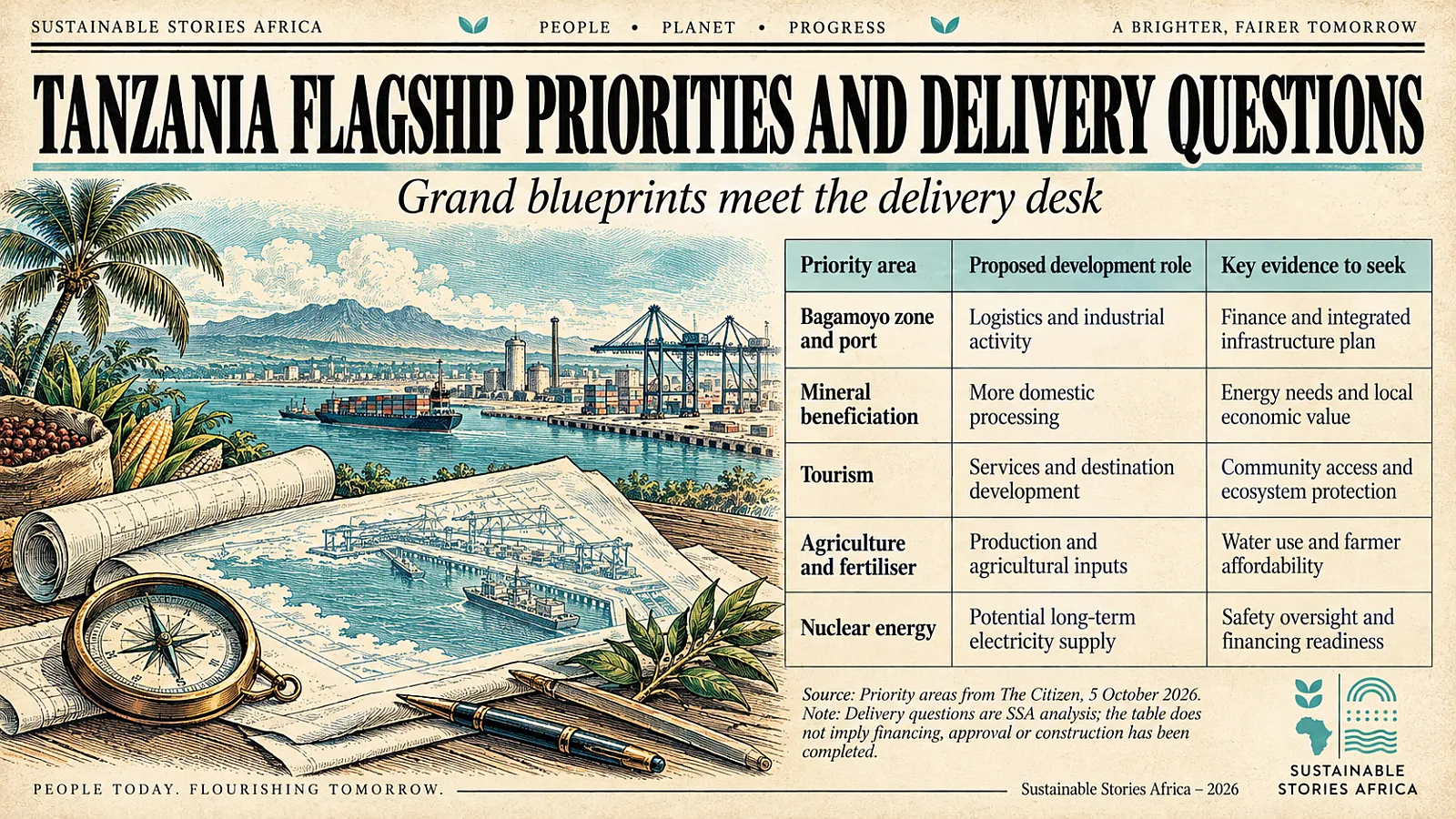
Tanzania is promoting five flagship investment areas as part of its long-term economic transformation agenda, according to The Citizen’s 5 October report.
They span the Bagamoyo economic zone and port, mineral beneficiation, tourism, agriculture and fertiliser manufacturing, and nuclear energy.
The portfolio combines infrastructure, production and services. It should be understood as a set of priorities seeking partnerships, rather than five completed or fully financed assets.
For communities, the implications vary sharply between sectors.
- A tourism development, an industrial zone and an energy programme each bring different land requirements, employment opportunities and environmental questions.
- A common investment headline should not obscure those differences.
Institutional reform seeks to reduce delays
The Citizen links the investment push to the Tanzania Investment and Special Economic Zones Authority, or TISEZA, which became operational in July 2025 after combining predecessor functions.
- The report describes a single point of contact intended to reduce the friction investors encounter across public institutions.
TISEZA’s official guidance confirms that it grants incentive certificates and licences under the 2025 investment and special economic zones legislation.
- Its application requirements include a business plan, evidence of finance and evidence of the project location.
That documentation is important because facilitation and viability are different tasks.
- A more efficient process can help an investor navigate government.
- It cannot, by itself, establish that demand exists, financing is secure or environmental risks are manageable.
Faster administration can support stronger accountability
SSA assesses that a single coordination point could make responsibilities easier to identify.
- Investors would know where to raise delays, while public authorities could develop a clearer view of projects moving through the system.
The benefit would be greater with public visibility of administrative progress.
- Published milestones could show when a project moves from registration to land arrangements, permits, financing and construction.
- That would help distinguish investment interest from delivery.
The same discipline should apply to promised benefits.
- A projected employment figure should specify the period, the types of jobs and the assumptions behind it.
- Local procurement commitments should describe what firms can supply and how they can qualify.
For households near proposed projects, the useful information is often more immediate:
- Whether access to land or water will change, where concerns can be raised and which institution is accountable for responding.
Investment facilitation should make those questions easier to answer too.
Sector safeguards must keep their substance
The five priorities require different forms of scrutiny.
- Port development needs attention to coastal and transport impacts.
- Processing facilities need credible energy and waste arrangements.
- Agricultural projects should explain resource use and their relationship with existing producers.
Nuclear energy requires a particularly long planning horizon.
- Its inclusion among investment priorities does not establish that Tanzania has reached a construction decision.
- Safety institutions, financing, operational capability and long-term responsibilities would all need careful consideration.
SSA recommends maintaining the substance of those assessments while improving process predictability.
- Clear requirements and coordinated decisions can reduce and remove avoidable delays without treating safeguards as obstacles.
For international partners, the opportunity is to present projects that can withstand public examination.
- A credible proposal should explain not only what it intends to build, but how benefits and risks will be managed over time.
A shared reporting framework could improve comparability without pretending the sectors are identical.
- It could record the project sponsor, stage, expected benefits and outstanding decisions, then link to detailed sector assessments.
This would allow the public to see both the overall investment agenda and the evidence supporting each proposal.
Path Forward – Move Flagship Ambitions Towards Accountable Delivery
Tanzania’s reforms and investment priorities establish an agenda for partnership.
The next step is project-specific evidence of readiness and responsibility.
Transparent milestones, sector safeguards and measurable local benefits would help connect long-term transformation goals with everyday outcomes.
Success should be judged by viable operations and public value, alongside the speed of approvals.
Sources: Investment reforms pave way for five flagship projects | The Citizen, TISEZA | Certificate of Incentives