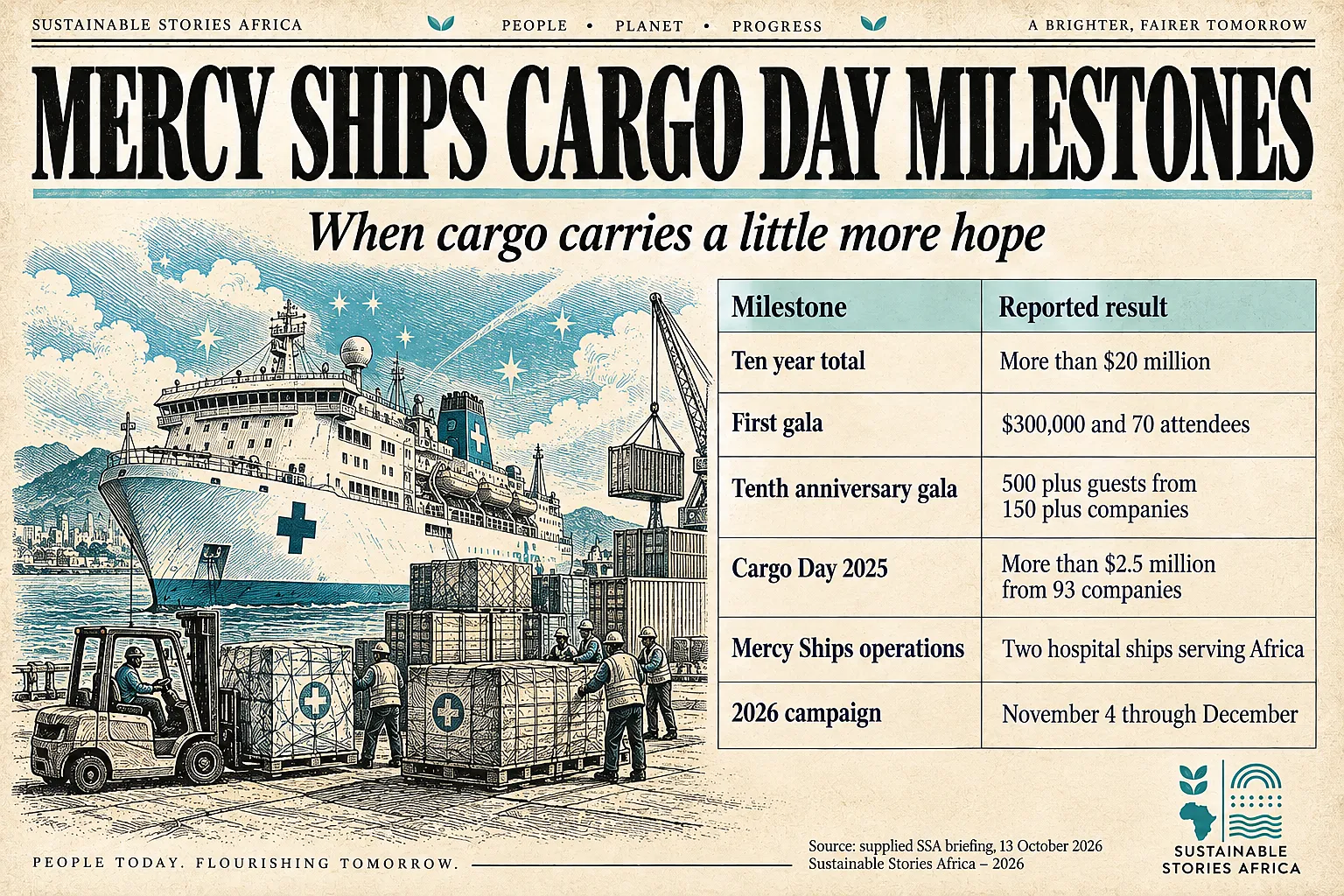
Mercy Ships Cargo Day has raised more than $20 million over a decade by mobilising shipping and trading companies around healthcare in Africa.
More than 500 guests from over 150 companies marked the initiative's tenth anniversary in Geneva.
The 2026 campaign begins November 4, offering a model for turning routine commercial transactions into sustained social investment.
Shipping Collaboration Crosses Major Healthcare Milestone
Mercy Ships Cargo Day has exceeded $20 million in funds raised over ten years, showing how a commercial network can turn routine shipping activity into healthcare support across Africa.
More than 500 guests from over 150 shipping and trading companies gathered in Geneva for the initiative's tenth anniversary gala.
Sahara Energy Geneva, whose head of chartering, David Walker, chairs the Geneva committee, highlighted the collective contribution of charterers, shipowners, brokers, sponsors and committees in Geneva, London, Houston, Dubai and Singapore.
The money supports Mercy Ships’ hospital vessel operations that provide free surgery and clinical training.
Cargo Transactions Sustain Surgeries and Training
Cargo Day enables companies and professionals to contribute through cargo pledges, commissions and address commissions linked to shipping transactions.
- Walker said the first gala ten years ago raised $300,000 and attracted 70 people.
- The 2025 campaign raised more than $2.5 million with participation from 93 companies.
Mercy Ships currently operates two hospital ships serving patients in Africa while training and mentoring local health professionals.
The 2026 campaign will begin on November 4 and run through November and December.
Sahara Geneva director Kola Motajo described the $20 million milestone as evidence of what coordinated enterprise can deliver beyond normal business activity.
Hospital Ships Complement Stronger Health Systems
The Cargo Day model sits alongside, rather than inside, national health financing
- Hospital ships can address conditions that have left patients waiting for specialist surgery and can provide concentrated training opportunities.
- They cannot replace resilient hospitals, referral systems, public budgets or a sufficient health workforce.
The strongest partnerships will therefore connect ship-based care with local clinical teams and continuity after treatment.
- Transparent outcome reporting can show how many procedures were completed, what training was provided and whether local capacity improved.
- This keeps the story centred on patients and health systems while recognising the shipping industry's distinctive fundraising contribution.
Patient safety and referral continuity should remain central measures of success.
Repeatable Giving Can Build Lasting Capacity
The initiative's strength is its repeatable mechanism.
- It does not rely only on a single donor or annual gala; it gives companies several ways to direct value from ordinary transactions toward a shared health objective.
- Free surgery can change the life of an individual patient, while training and mentoring can leave longer-term capacity in local health systems.
The model can also deepen accountability by presenting partners with reports on how funds are used, which countries and services benefit, and how training strengthens local institutions after a ship leaves port.
Partners Must Report Outcomes Alongside Donations
The shipping industry should widen participation in the 2026 campaign and publish clear guidance so smaller firms can contribute alongside global companies.
- Mercy Ships and Cargo Day committees should continue reporting fundraising totals, programme spending, patient outcomes and training results.
- Corporate partners can also link financial support with employee skills, logistics expertise and long-term health partnerships where appropriate.
Sahara and other committee members should use the anniversary to strengthen governance and measurement as the initiative grows.
Durable collaboration requires evidence of both funds raised and healthcare value delivered.
Path Forward – What Collaborative Healthcare Funding Should Prove
The 2026 campaign should convert anniversary visibility into broader participation and transparent reporting on surgeries, training and operating support.
Companies need simple contribution routes and credible evidence of impact.
Over the longer term, Cargo Day can show how sector-specific giving complements African health systems by supporting local professionals and accountable services.
The next milestone should measure lives improved, and capacity strengthened alongside dollars raised.