The Chartered Institute of Stockbrokers outlined a proposed N5 billion endowment in Lagos.
The fund would support research, scholarships, youth investment literacy and professional training.
The Institute’s president also called for the market to be judged by the businesses it helps grow, the jobs it supports and the investors it protects.
A proposed endowment for research and training
The Chartered Institute of Stockbrokers (CIS) outlined a proposed N5 billion endowment to support capital market research and professional education.
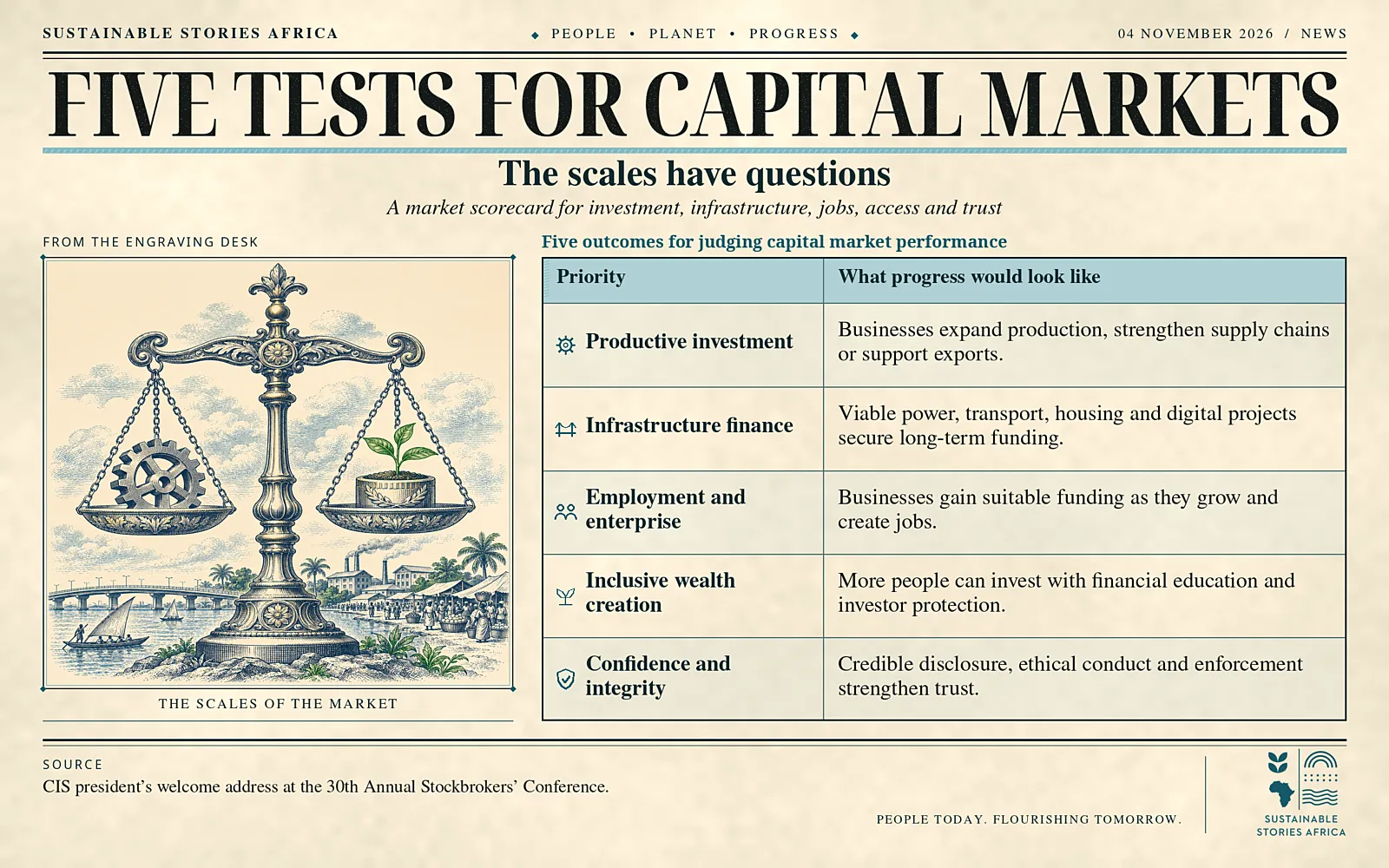
In her welcome address on 4 November at Harbour Point in Victoria Island, Lagos, Fiona Ahmed Ahimie, the Institute’s president and chair of its Governing Council, said the fund would also finance scholarships for candidates with financial need, promote investment literacy among young people and establish a university chair in Capital Market Studies.
- The announcement came at the opening of the Institute’s 30th Annual Stockbrokers’ Conference, which runs from 4 to 5 November.
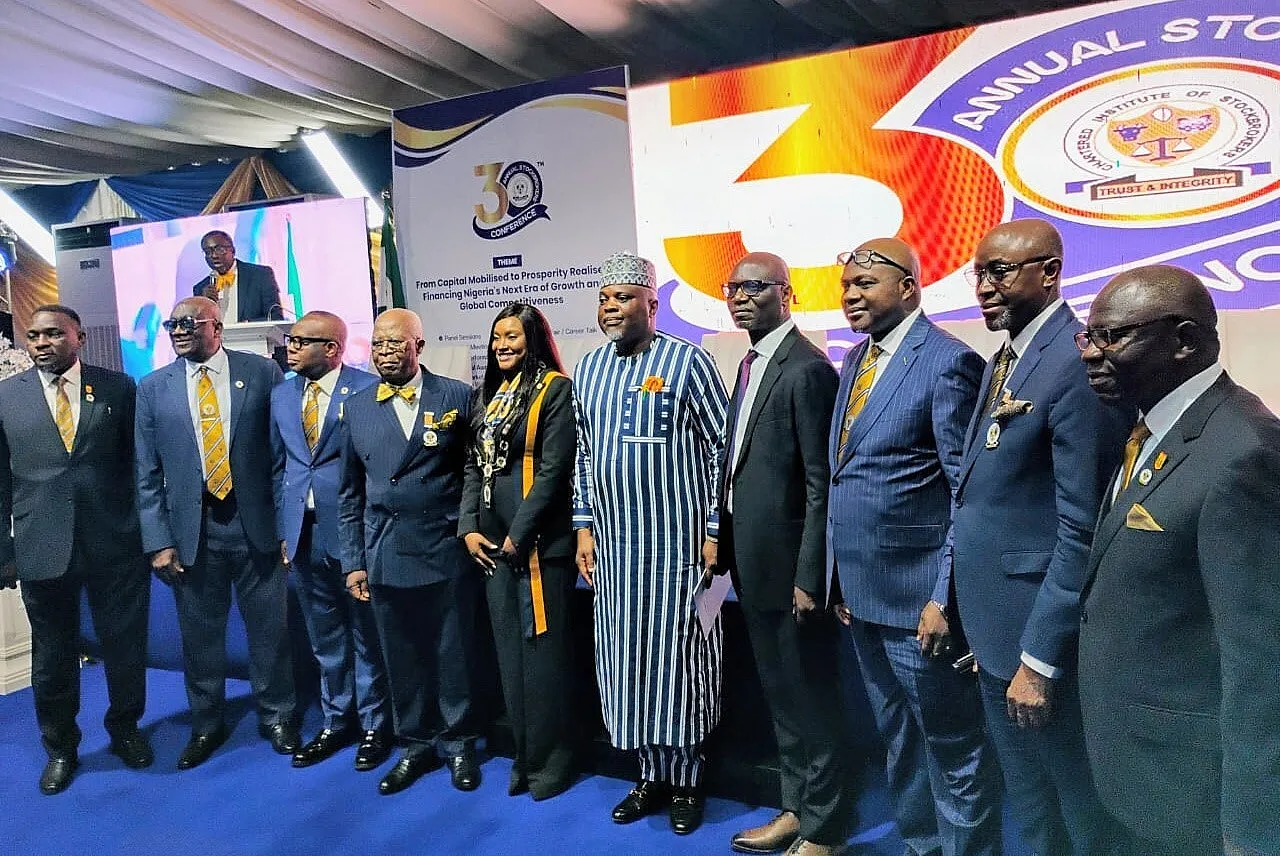
The president also said that 63 associates would become fellows and 509 young professionals would be inducted as associates at the conference.
These are announcements about the Institute’s membership.
She also announced a presidential awards ceremony to recognise professional and academic achievement, among other contributions.
How the Institute would measure market impact
“We must look beyond capital raised, transactions executed and market capitalisation,” Ahmed Ahimie said.
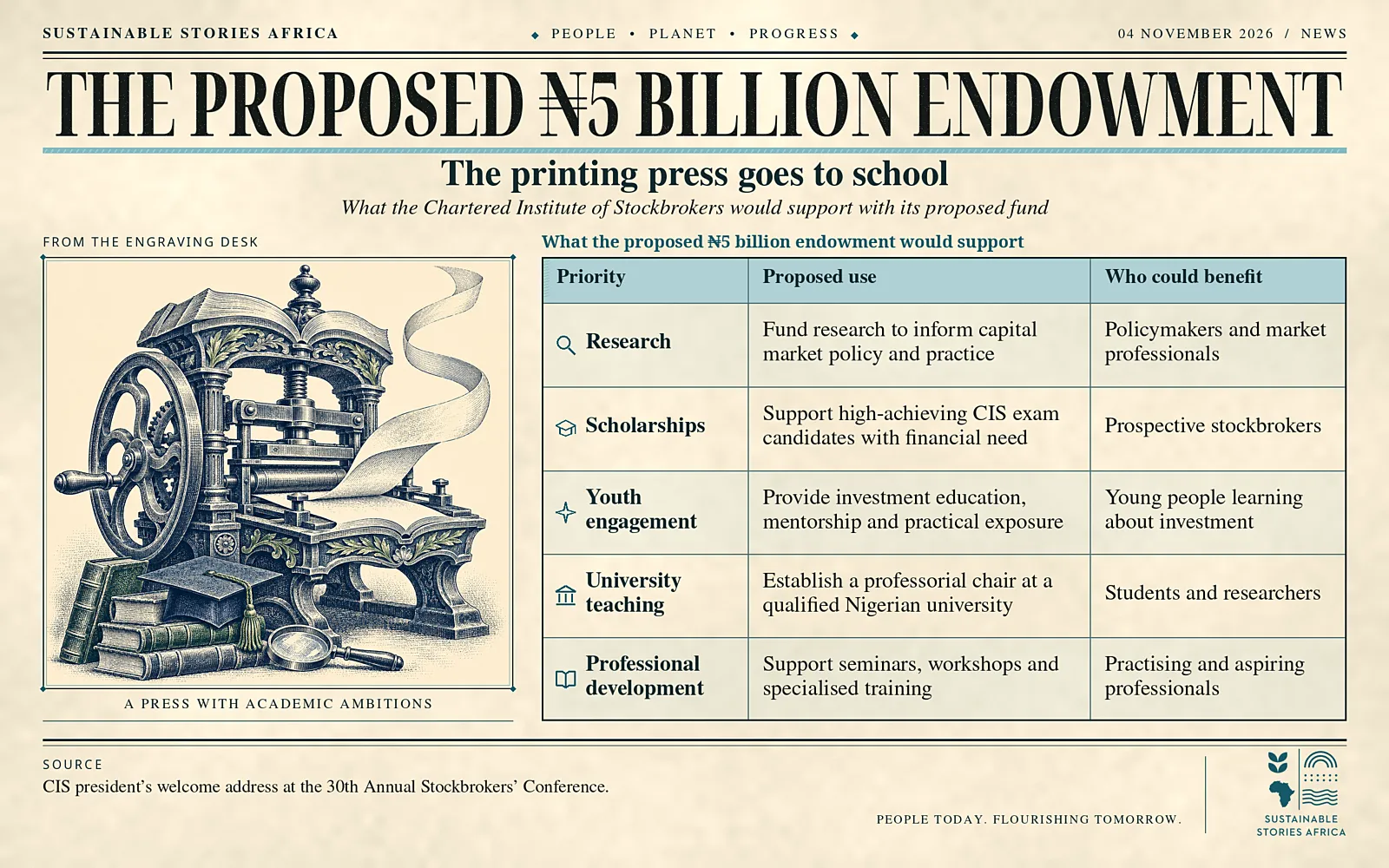
- Her message called for judging the market by whether it helps businesses expand, finances infrastructure, supports jobs, gives households opportunities to build wealth, and protects investors.
Ahmed Ahimie said the market connects savers with businesses and institutions that need funding.
- It also helps investors assess prices and manage risk.
- These functions depend on conditions including stable economic policy, reliable infrastructure and confidence in market institutions.
For infrastructure, Ahmed Ahimie cited bonds, project finance instruments, infrastructure funds and public-private partnerships as possible sources of capital for power, transport, housing and digital connectivity.
- Projects would need to be commercially viable, procured transparently and backed by credible revenue and governance arrangements.
- These conditions would help investors assess whether a project could meet its obligations.
What long-term financing could support
Ahmed Ahimie distinguished between businesses raising equity for expansion and those seeking longer-term debt for equipment or working capital.
- She also called for a route from early-stage finance to institutional funding and, where appropriate, a public listing.
- That would give businesses different ways to raise capital as their financing needs change.
In agriculture, Ahmed Ahimie pointed to storage, processing, logistics and mechanisation as areas where investment could strengthen supply chains.
- She also identified technology and creative businesses as potential sources of jobs and exports, with sound disclosure, careful valuation and investor protection needed to support financing.
Ahmed Ahimie linked these priorities to the African Continental Free Trade Area.
- Nigerian companies seeking customers in other African markets would need capital to increase productivity and meet international standards.
- At home, the Institute wants young people, women and underserved communities to have better access to credible investment opportunities, supported by financial education and investor protection.
Ahmed Ahimie cited the United Kingdom and South Africa as examples of markets with established institutions and participation from large investors.
- She called for Nigeria to adapt those lessons to its own financing needs while upholding standards for disclosure and investor protection.
Who would turn the proposals into practice?
Ahmed Ahimie called on;
- The government to provide predictable policies and consider market financing where fiscally sustainable.
- Regulators were urged to enforce timely disclosure and protect investors while allowing responsible innovation.
- Businesses seeking public or institutional investment were asked to improve financial reporting and governance.
- Institutional investors were urged to assess productive investments in line with their duties to clients and beneficiaries.
Her address also set out a broader role for stockbrokers.
- Alongside arranging trades, Ahmed Ahimie said they should help companies raise capital, explain risks to investors and use their valuation and portfolio-construction skills to provide sound advice.
The Institute’s own role includes examinations, continuing education and ethical standards.
- The proposed fund would support research that informs policy and training that connects research with market practice.
Ahmed Ahimie asked conference participants to identify practical reforms to support longer-term finance, wider retail participation and stronger investor confidence.
- Her message called for clear priorities, areas for collaboration and recommendations that policymakers and market operators could act on after the conference.
From conference proposals to measurable outcomes
The Institute wants the conference to yield practical recommendations on infrastructure finance, wider investor access and market integrity.
The proposed endowment would support the research and professional education behind that agenda.
Ahmed Ahimie’s test is whether capital reaches viable businesses and infrastructure projects, creates jobs and gives more people opportunities to invest with credible information and safeguards.