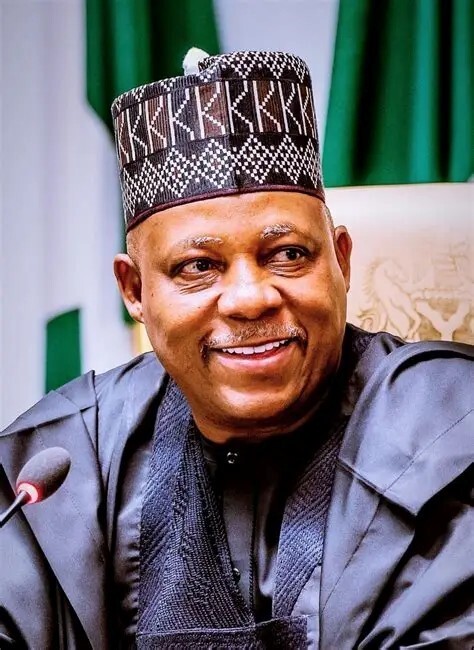
Vice-President Kashim Shettima urged Nigeria to consider listing more public enterprises alongside its planned NNPC listing.
He said any listing must meet legal, regulatory and commercial requirements.
He linked citizen ownership through the exchange to better governance and argued that domestic savings could finance more businesses and infrastructure.
Shettima sets conditions for public listings
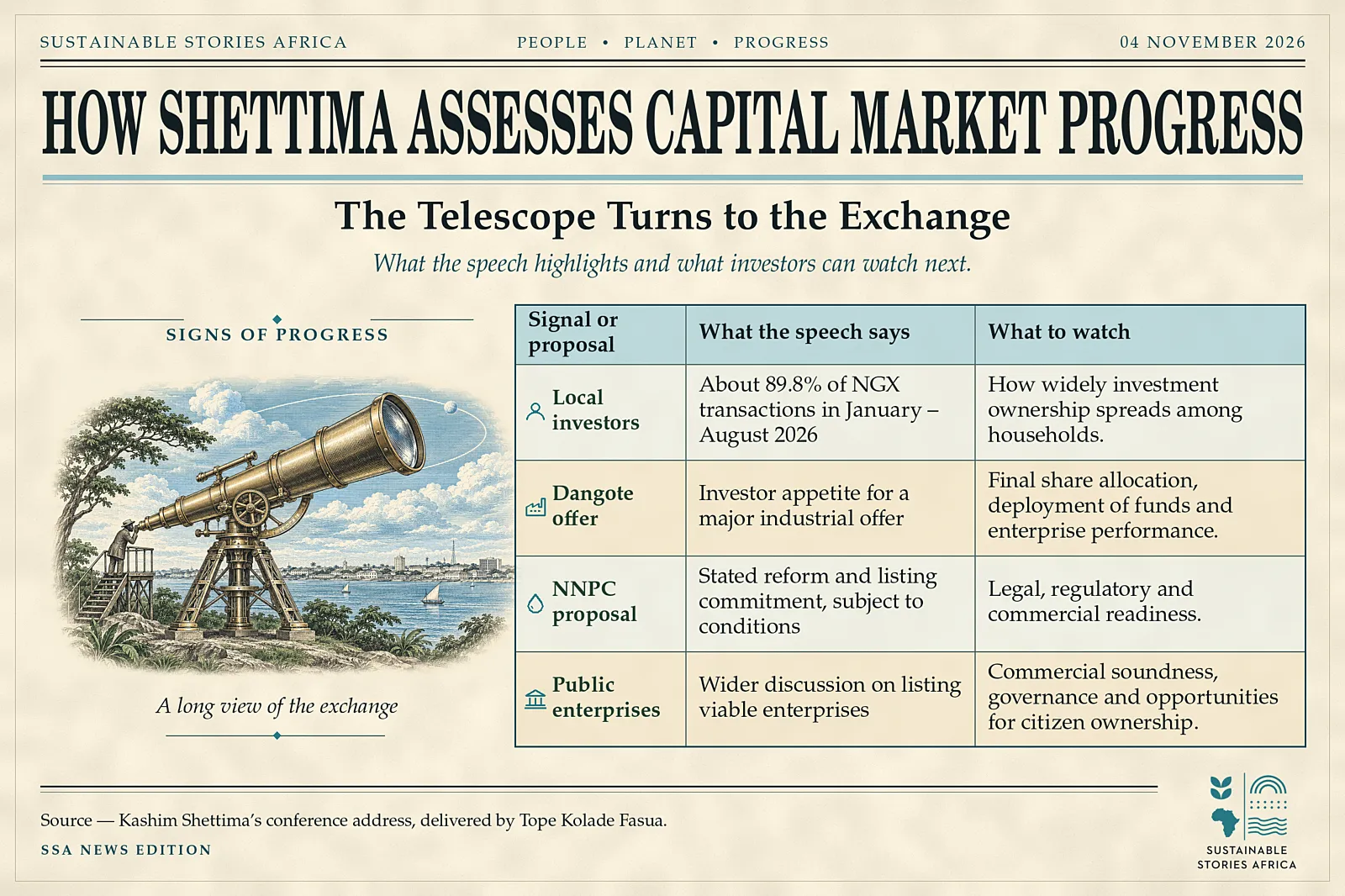
Vice-President Kashim Shettima called on Wednesday for Nigeria to consider listing more viable public enterprises on the stock exchange, building on President Bola Tinubu’s stated commitment to reform and list Nigerian National Petroleum Company Limited (NNPC).
He said potential listings would depend on legal, regulatory and commercial considerations.
Tope Kolade Fasua, a presidential adviser on economic matters, delivered the address on Shettima’s behalf at the opening of the Chartered Institute of Stockbrokers’ 30th Annual Conference “Themed From Capital Mobilised to Prosperity Financed: Financing Nigeria’s Next Era of Growth and Global Competitiveness” at Harbour Point in Lagos.
Shettima said well-structured listings could give citizens a stake in strategic assets, improve corporate governance and let the market value those businesses.

Domestic investors account for most trading
Shettima cited domestic investors’ approximately 89.8% share of Nigerian Exchange transactions in the first eight months of 2026 as evidence of the role local capital already plays.
- He pointed to households, pension funds and investment institutions as sources of savings that could support more Nigerian businesses.
- A high domestic share of trading says little about how widely ownership is spread among households.
He linked the market’s rise to policy reforms, stronger company earnings, bank recapitalisation and higher domestic participation.
He also acknowledged the pressure households and businesses faced during the transition, including the removal of petroleum subsidies and foreign exchange market unification.
- He said rising equity valuations measure changes in the value of listed businesses.
- Fresh investment in businesses is a separate measure.
Shettima also cited public revenue reforms and recapitalisation in banking and insurance.
- He said a stronger market could help companies access investment.
- Whether that investment lifts output and incomes depends on where businesses put the money.
Longer funding could help businesses expand
Shettima pointed to the Dangote Petroleum Refinery and Petrochemicals public offer as evidence of appetite for large industrial investments.
The private investment and the subsequent public offer illustrated how different sources of finance can support a business at different stages, he said.
- He distinguished demand for shares from their eventual allocation and the later deployment of funds.
- He said the offer’s success would ultimately depend on the refinery’s performance, the protection of investors and the economic value it generates.
The vice-president called for more opportunities to raise long-term funds in manufacturing, agriculture, energy, technology, healthcare, transport and infrastructure.
- He said greater access to market funding could reduce businesses’ dependence on short-term bank credit, help smaller companies grow and give Nigerians more places to invest their savings at home.
- He also said pension assets could support productive investment within prudent risk limits.
The public-enterprise proposals carry a related test.
- A listing can create a publicly observable price and open ownership to more investors.
- Whether it also brings in fresh funds for the enterprise depends on how the offer is structured, a distinction that matters when the goal is to finance expansion.
Government and market operators have separate jobs
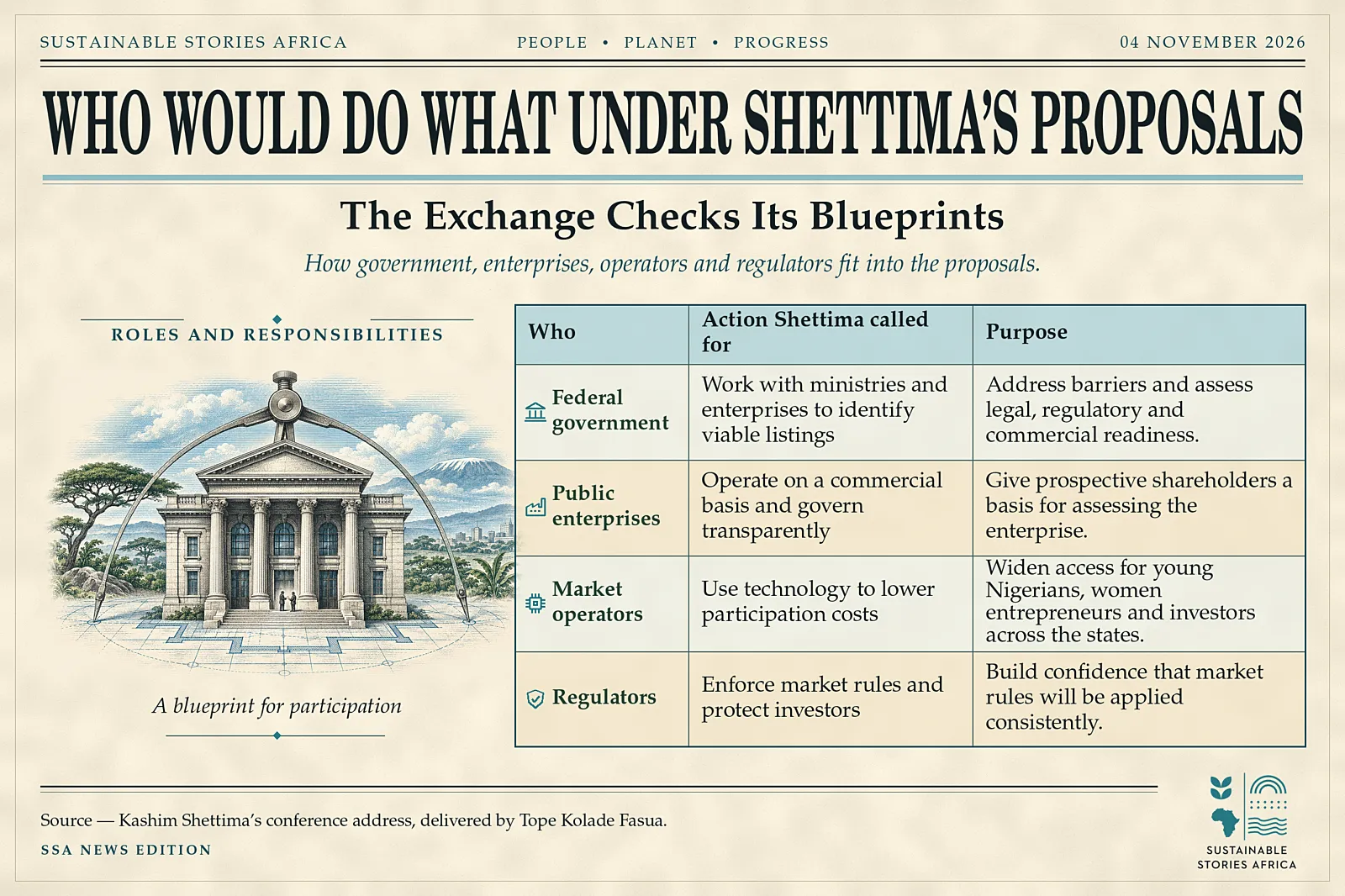
Shettima said the government would work with ministries, public enterprises and market institutions to identify credible listing opportunities, remove barriers and prepare enterprises to raise capital responsibly.
- He set out a standard for the businesses involved.
- They should be commercially sound and transparently governed, able to deliver value to Nigerians and attract investors willing to commit for the long term.
He asked brokers, investment advisers, fund managers, exchanges and regulators to improve liquidity, financial literacy and corporate governance.
- He called for technology that lowers participation costs for young Nigerians, women entrepreneurs and investors across the states.
- He urged credible financial reporting, investor protection and consistent enforcement to give people more reason to commit their savings. “Capital is mobile, but confidence is earned,” he said.
Shettima tied the agenda to Nigeria’s ambition to become a $1 trillion economy.
- He said public spending would need to be complemented by private enterprise, long-term domestic capital and international partnerships.
- He pointed to business expansion, infrastructure, exports, jobs and household income as measures of what market financing delivers.
Path Forward – Preparing Public Enterprises for Market Scrutiny
The government’s next stated step is to work with ministries, enterprises and market institutions to identify credible listing candidates and address barriers.
Any NNPC listing remains subject to legal, regulatory and commercial considerations.
Shettima’s proposed test for public listings is whether they improve governance, widen ownership and attract long-term capital.
For businesses that raise funds, the further test is how that money translates into productive capacity and jobs.