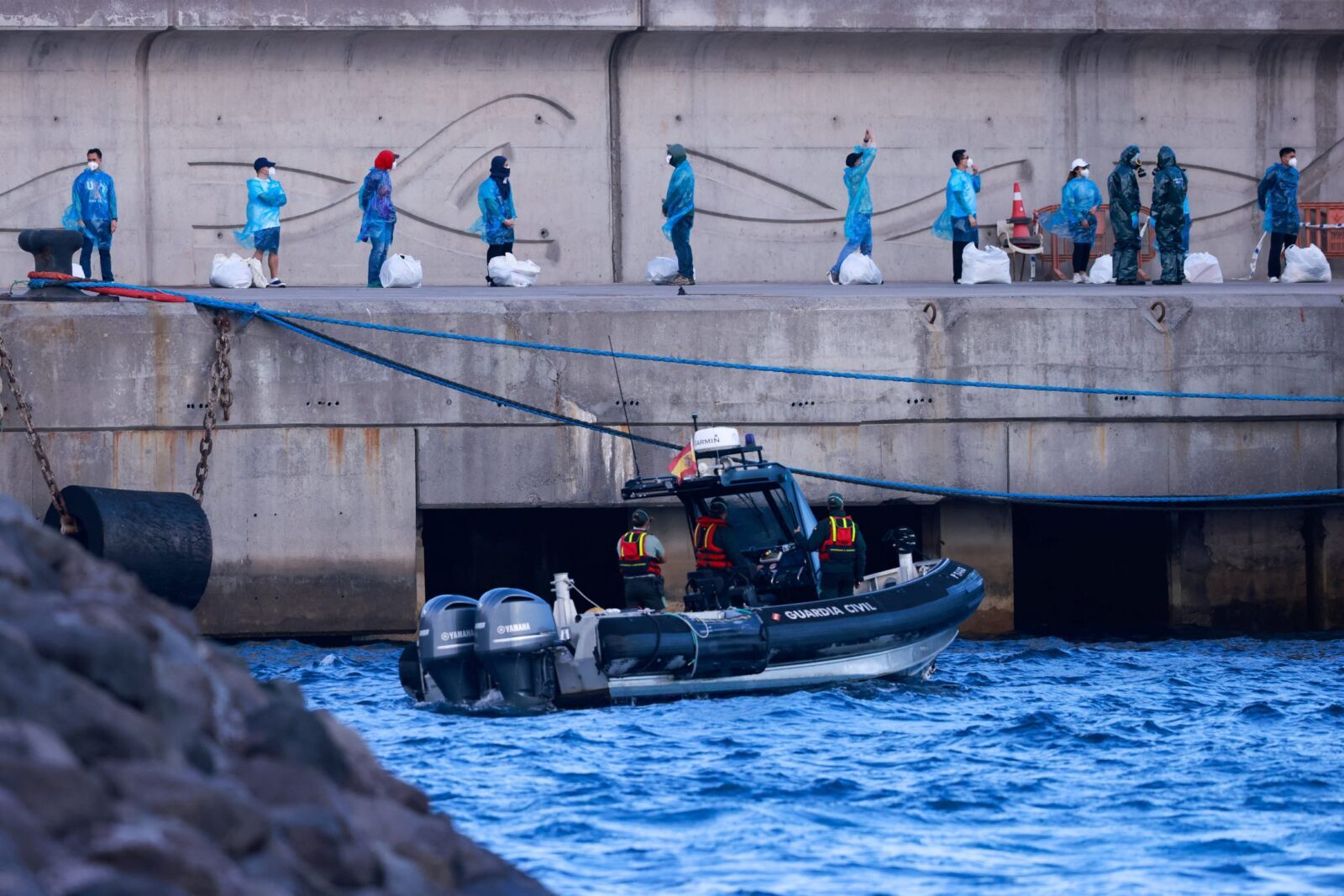
A hantavirus outbreak linked to the MV Hondius has resulted in deaths and triggered multi-country health coordination.
The case shows how ecological exposure can travel quickly through tourism, aviation and maritime systems.
For Africa and the Global South, the warning is clear: disease prevention must start before hospital wards fill.
A Cruise Outbreak Becomes Global Warning
A hantavirus outbreak linked to the MV Hondius cruise ship has exposed a difficult truth for global health systems: ecological risk no longer stays local once modern mobility enters the chain.
Down To Earth reported that the outbreak was linked to a Dutch couple who visited a landfill near Ushuaia, Argentina, before boarding the vessel on April 1, 2026.
By early May, confirmed and suspected cases had spread across passengers from multiple countries, with three deaths reported.
WHO said a cluster of severe respiratory illness aboard the cruise ship was reported on May 2, with 147 passengers and crew still on board and 34 others already disembarked.
Why Hondius Was Not A Surprise
The causative pathogen has been identified as Andes virus, a hantavirus associated with South America.
WHO says Andes virus can cause limited human-to-human transmission through close prolonged contact, unlike most hantaviruses.
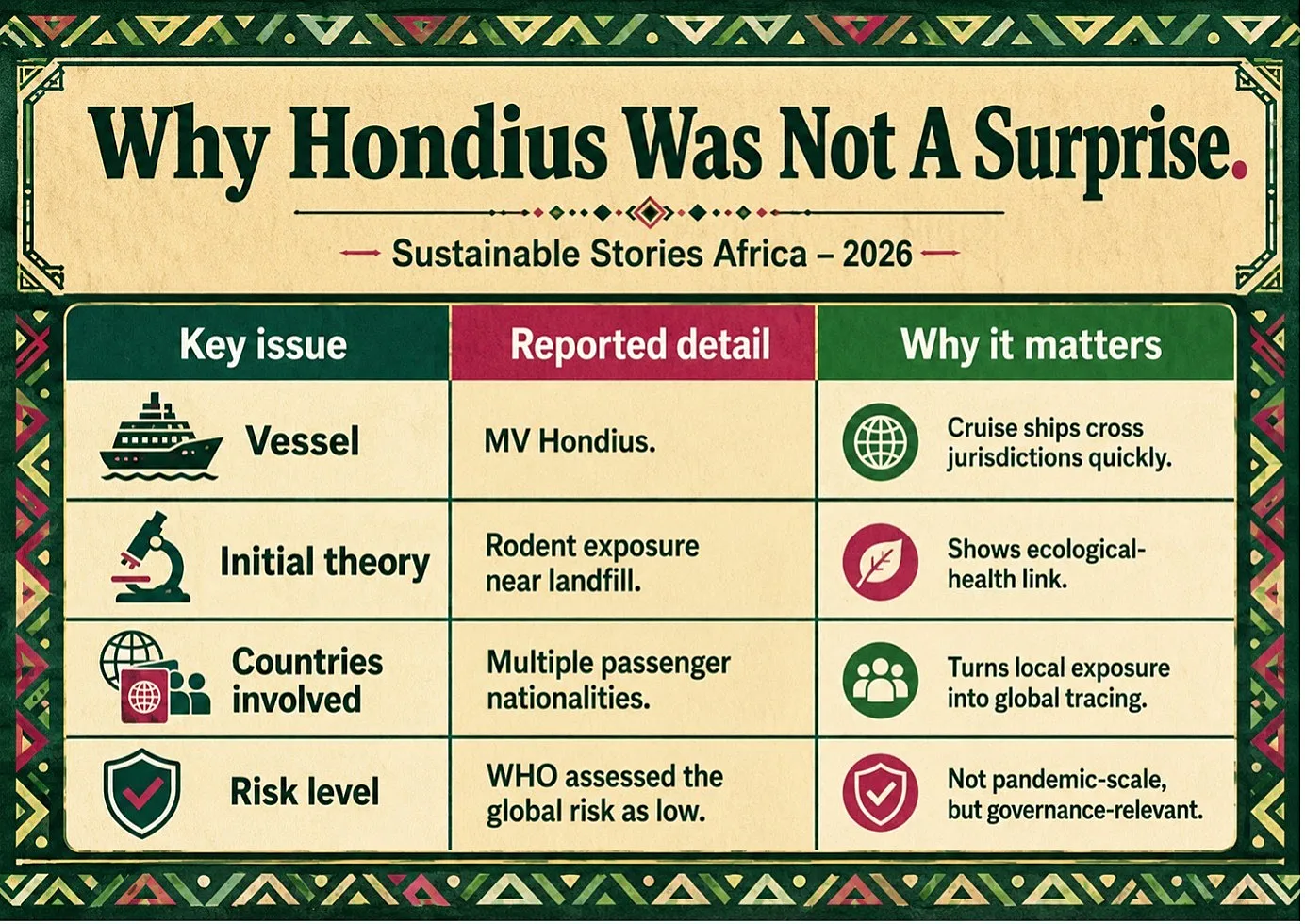
Down To Earth’s central argument is that the outbreak was predictable because public health systems still treat ecological risk and human mobility as separate problems.
Africa Should Read This Carefully
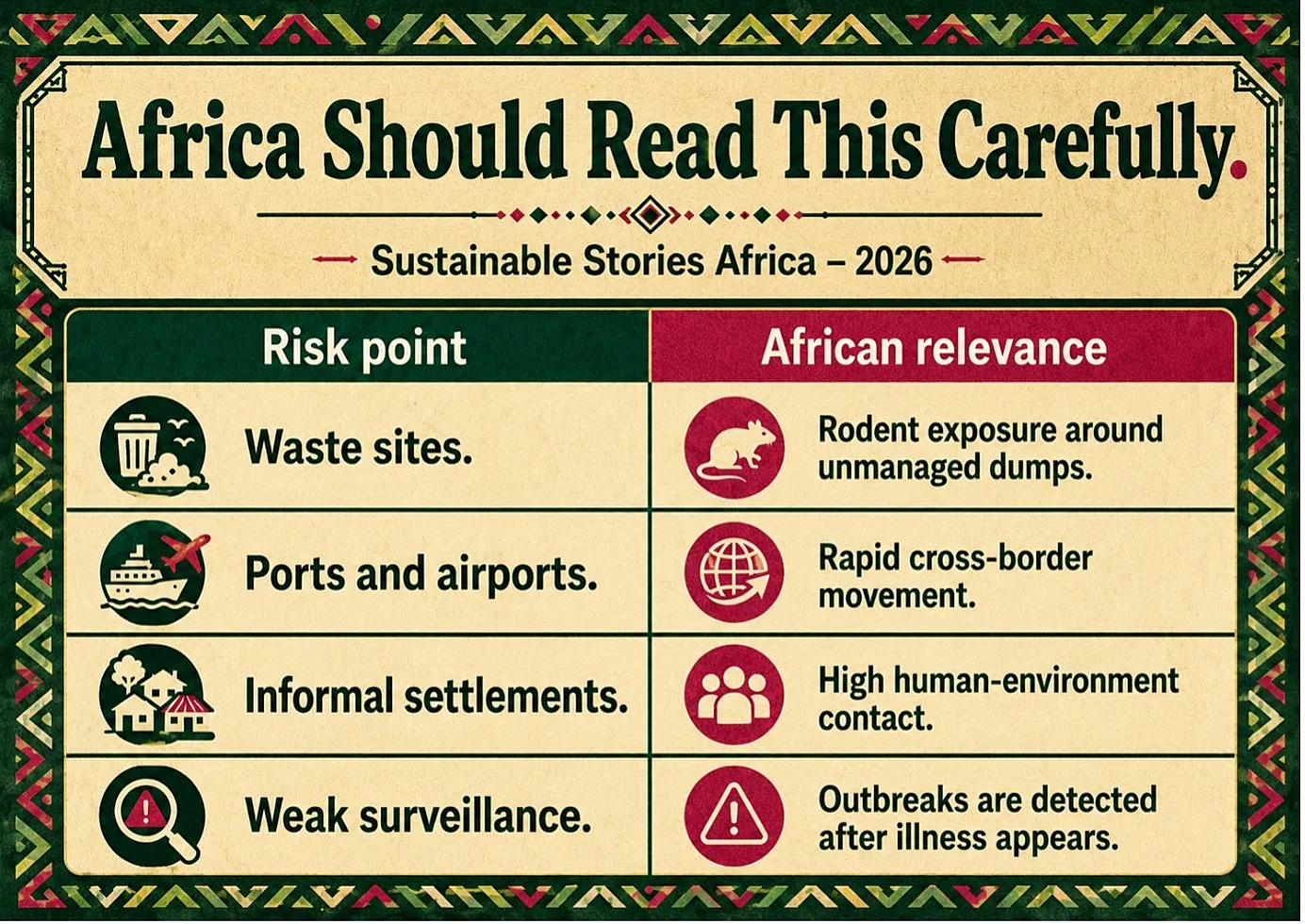
For African cities, ports and tourism corridors, the lesson is immediate. Poor drainage, informal waste sites, flood-prone settlements and expanding travel networks can create similar risk pathways.
The danger is not only the pathogen. It is the governance gap. When outbreaks emerge, ministries of health, port authorities, airlines, local governments and private operators often respond under different rules.
Prevention Is Cheaper Than Panic
The Hondius episode shows that better surveillance must begin in ecosystems, not only hospitals.
Rodent monitoring, waste governance, climate-risk mapping and One Health coordination can reduce spillover risks before they become international alerts.
This is where climate adaptation and health security meet. As rainfall, heat and land-use change alter animal habitats, disease risk can move with people, goods and tourism.
Governments Must Integrate Health Systems
African governments should strengthen One Health systems that connect public health, environment, transport, tourism and local government data.
Cruise ships may not define Africa’s core mobility risk, but buses, markets, mines, farms, ports and airports do.
The principle is the same: health security must follow the routes people actually use.
Path Forward – Build One Health Before Outbreaks
Africa needs surveillance that tracks ecological risk before disease becomes visible.
The priority is integrated One Health planning, stronger waste management, port health readiness and climate-informed disease surveillance.
The MV Hondius outbreak may be contained, but the systems lesson should not be ignored.