The world is moving towards a period above the Paris Agreement's 1.5°C temperature goal, UNEP says, making climate overshoot a practical policy risk rather than a distant scenario.
How high temperatures peak and how long they remain elevated will shape losses, adaptation limits and recovery costs.
For African countries, the warning strengthens the case for faster emissions cuts, resilient infrastructure and fair finance.
Crossing the threshold changes the risk
The United Nations Environment Programme has warned that the world should prepare for global warming to exceed 1.5°C while still treating that limit as a goal to regain.
- Its new Limiting Overshoot report says governments must keep the peak as low and the period above the threshold as short as possible, then work to bring temperatures down.
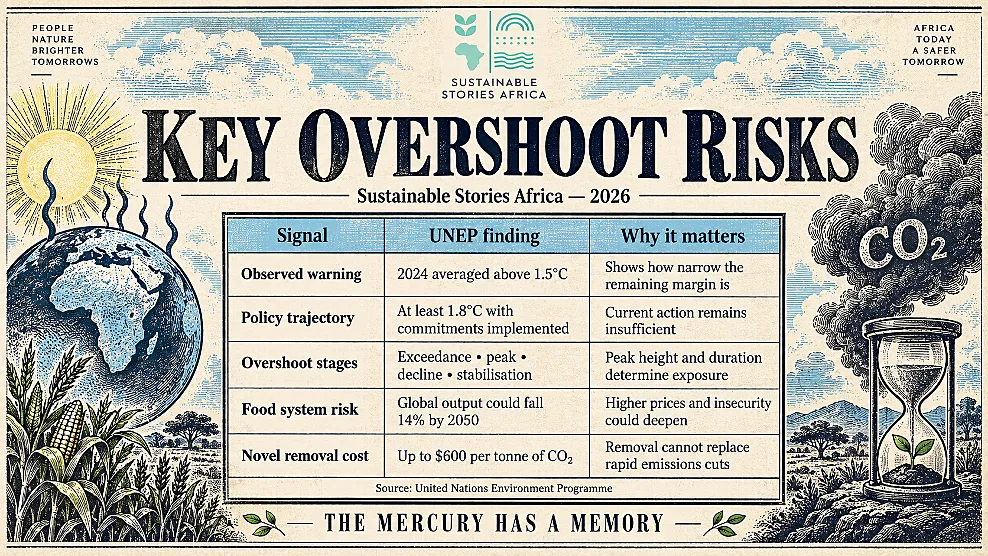
The warning follows 2024, the first calendar year in which average global temperature exceeded 1.5°C above pre-industrial levels.
- Scientists judge long-term climate change across decades, so one year does not by itself mean the Paris threshold has been permanently breached.
- It does, however, show how narrow the remaining margin has become.
UNEP says full implementation of existing commitments and policies would still leave projected warming at a minimum of 1.8°C.
An overshoot pathway has four stages
UNEP describes overshoot as a pathway rather than a single date.
- It begins when warming exceeds 1.5°C, reaches a peak, declines and eventually stabilises.
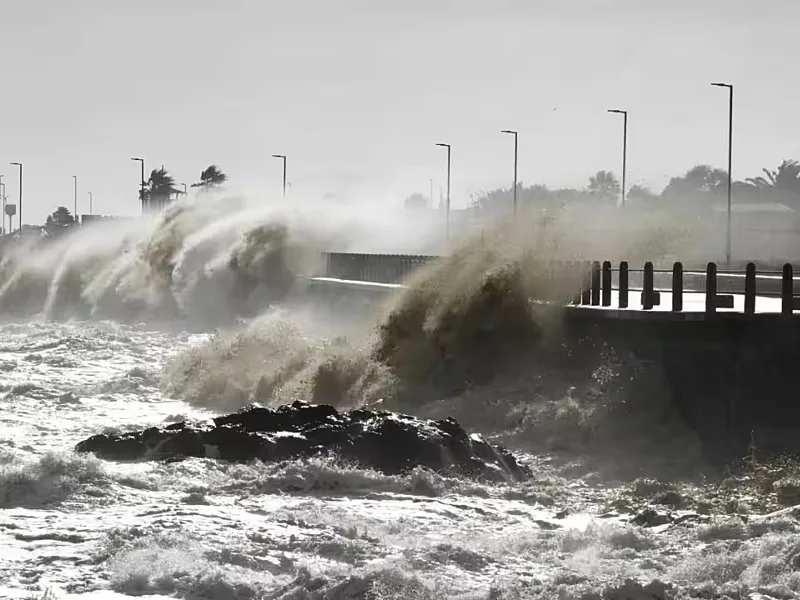
- Each stage matters because both the height of the peak and the duration of exceedance determine the severity of heat, drought, flooding, ecosystem loss and pressure on livelihoods.
The risks are not evenly shared.
- African economies have contributed relatively little to historic emissions but face high exposure through rain-fed agriculture, climate-sensitive jobs, weak infrastructure and limited fiscal space.
UNEP notes that global food production could decline by 14% by 2050 under worsening climate conditions.
- For households already managing food-price shocks, the distinction between a short, low overshoot and a prolonged, high one is immediate.
Lower peaks preserve more human options
The report rejects the idea that passing 1.5°C makes mitigation futile.
- Climate impacts intensify as temperatures rise, and every fraction of a degree avoided reduces risk.
- Rapid emissions cuts must therefore proceed alongside investment in adaptation, including heat-health systems, drought-resilient agriculture, stronger drainage, early-warning services and social protection.
Carbon dioxide removal will also be needed, but its limits are substantial.
- UNEP says novel removal technologies can cost up to $600 for each tonne of carbon dioxide stored, while current removal would need to triple or quadruple by 2050 to matter at scale.
Ecological approaches such as afforestation and soil management are more feasible, yet compete for land and can lose stored carbon to drought and wildfire.
Governments must cut emissions much faster
African governments and their development partners now face a dual obligation.
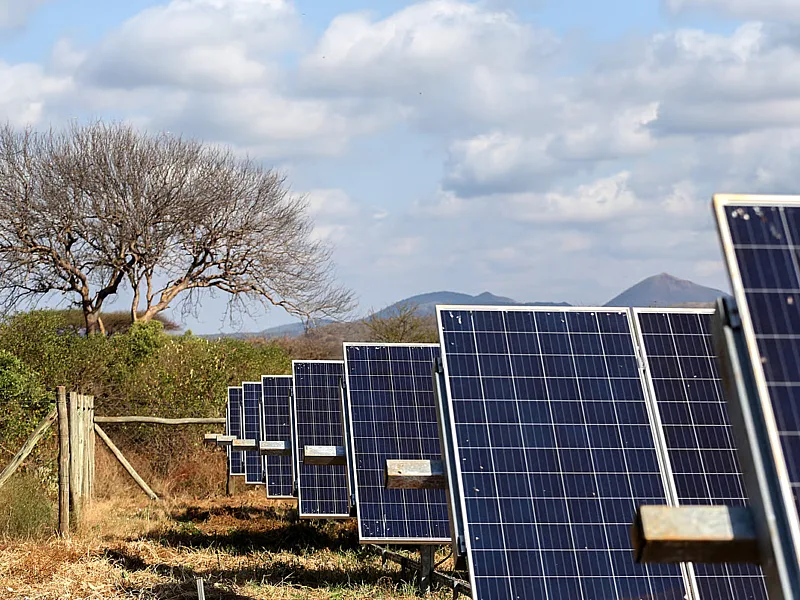
- They must accelerate clean energy and low-carbon development without neglecting adaptation for communities already facing damage.
- Climate plans should identify which assets and populations become exposed at different temperature levels, then connect those risks to budgets, investment pipelines and loss-and-damage finance.
High-emitting economies carry the larger mitigation burden.
- They also need to provide predictable finance and technology so developing countries can protect lives without deepening debt.
- Overshoot planning cannot become permission for delayed emissions cuts or speculative dependence on future carbon removal.
The report also warns that falling temperatures would not restore the world to its previous condition.
- Oceans, ice sheets and ecosystems respond at different speeds, while sea-level rise and species loss may continue after atmospheric warming peaks.
- That uncertainty increases the value of precaution.
Decisions taken now determine how much land, infrastructure and cultural heritage remain protectable during the decline phase.
Path Forward – Keeping the overshoot curve short matters
Governments should strengthen 2035 climate commitments, fund national adaptation plans and disclose how public investments perform under warming above 1.5°C.
For Africa, success means pairing resilient development with a fair global transition. The objective remains clear: reduce the peak, shorten the exceedance and preserve as many future choices as possible.
Culled from: Overshoot explained: 5 things to understand about a world beyond 1.5°C