Olam Agri sustainability finance leader Nikita Asthana argues that resilience depends on changing how agricultural risks and transition costs are shared.
Her October 27 interview offers lessons for African food systems, where the practical question is whether investment reaches the people expected to change production practices.
The opportunity is to connect soil health, supply security and farmer economics with everyday business decisions.
Start with the economics facing farmers
Africa’s food businesses should judge resilience finance by whether it makes adaptation workable for farmers, rather than by the scale of corporate sustainability commitments alone.
- This is the central lesson for the continent from an October 27 OneStop ESG interview with Nikita Asthana, Olam Agri’s global head of sustainability finance.
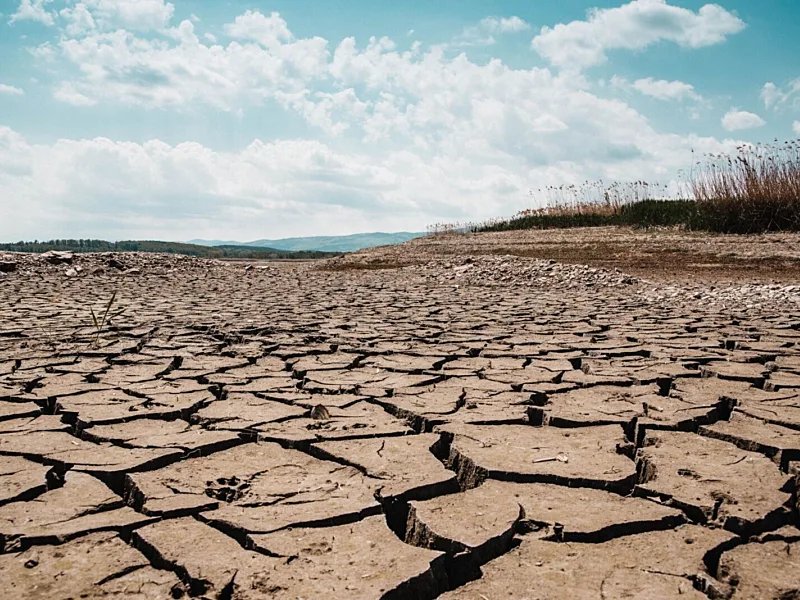
Asthana describes agriculture as a sector already exposed to weather, disease, commodity cycles and geopolitics, now facing additional structural pressures of climate change and ecosystem degradation.
- She argues that known technical solutions cannot scale unless economics and incentives across the value chain support adoption.
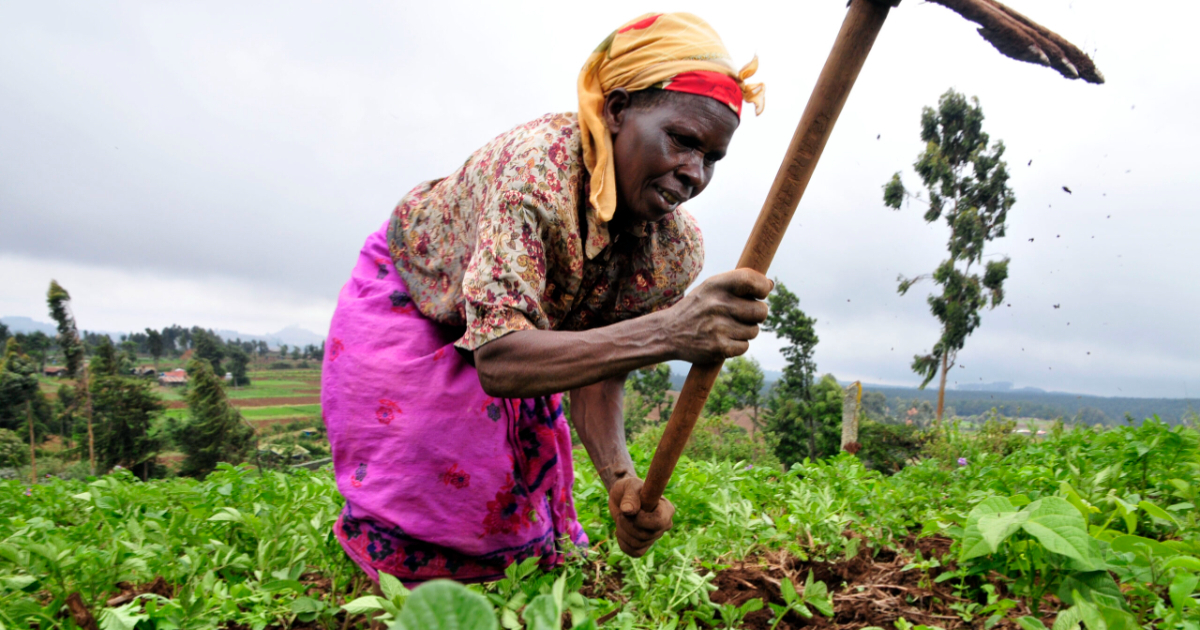
“Farmers are often among the most exposed to climate and nature-related risks, while having relatively limited capacity to finance the changes needed to build resilience,” she said.
- The interview expresses her professional views and explicitly states that they do not necessarily represent her employer or affiliated organisations.
Resilience must enter commercial decisions
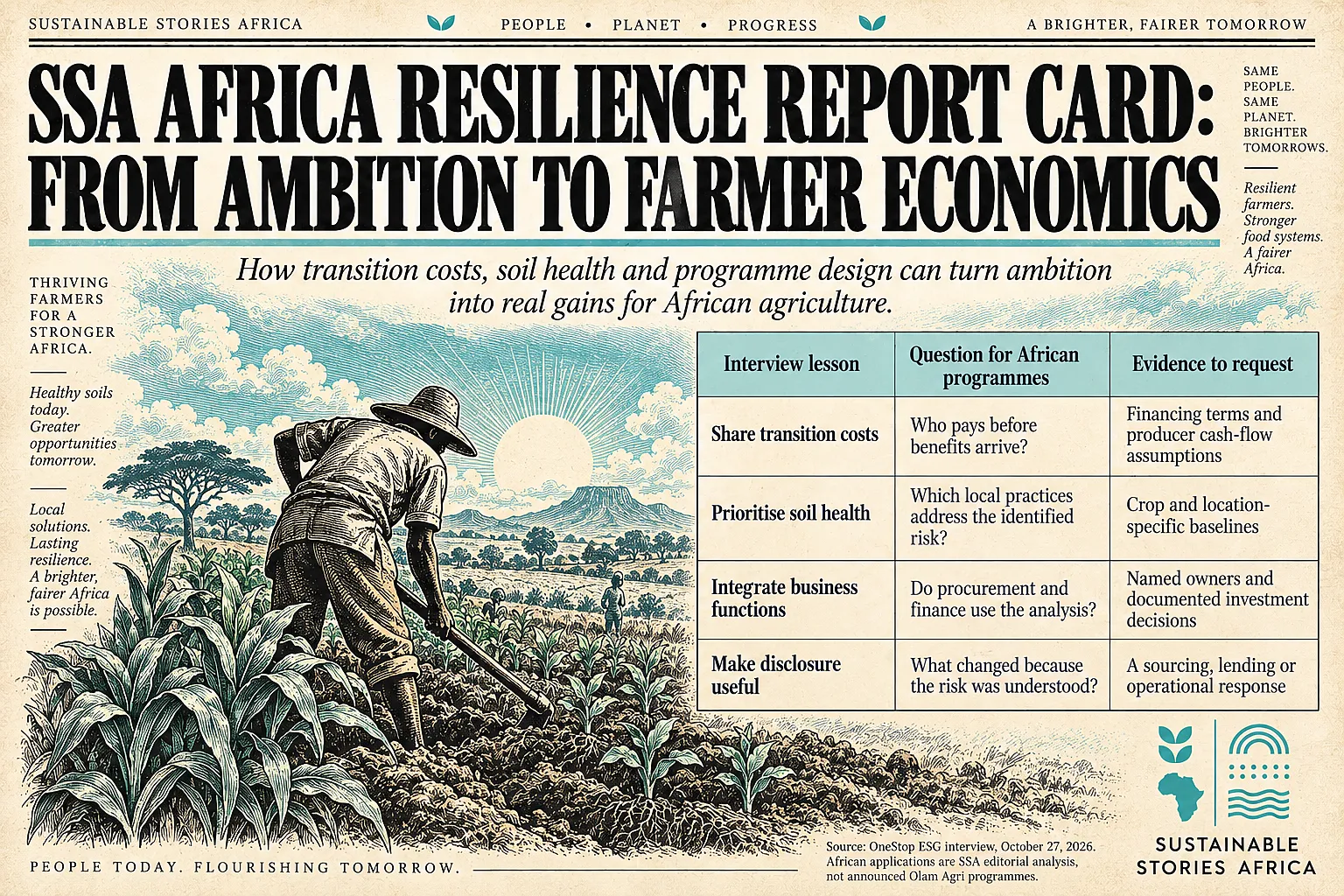
Asthana places soil health at the centre of the response.
- Better management can support productivity and resilience while limiting soil and water loss, improving nutrient retention and storing carbon.
- However, she stresses that the value chain must share finance transition costs and risks across, rather than farmers absorbing them.
She identifies carbon finance, blended finance and supply-chain investment as possible tools.
- These are options within her argument, not evidence that any particular financing instrument will automatically deliver a positive result in an African farming system.
- Their usefulness depends on design, costs and the circumstances of participating producers.
The second lesson concerns corporate organisation.
- Sustainability becomes consequential when climate, nature and social considerations align with strategy, risk management, capital allocation and operations.
- Asthana describes integrating natural, social and financial capital, embedding ESG in investment due diligence, and examining how environmental change affects crop yields, sourcing and supply continuity.
Her reporting argument follows the same logic.
- The useful question is not only how much water a company uses, but how changes in water availability or cost could affect its operations.
- Disclosure becomes strategic intelligence when analysis informs decisions within the business.
Share the transition rather than export it
For African agribusinesses, the practical implication is to begin with a specific crop, location and commercial relationship.
- A buyer seeking a different farming practice should ask what the producer must invest, when any benefits are likely to arrive and who bears losses if the transition underperforms.
This creates a different conversation from one focused only on compliance.
- A resilience programme could combine technical support with a purchasing arrangement or financing structure that recognises the producer’s cash-flow needs.
The interview does not establish which combination works best for a particular African market; it establishes why the cost allocations and risks deserve attention.
The potential benefit is alignment.
- Farmers need viable livelihoods, buyers need dependable supply and lenders need a credible repayment case.
- A programme that explains how those interests fit together is more persuasive than one that measures corporate ambition while leaving producer economics unclear.
Generalisation also creates limits.
- Asthana emphasises that relationships between climate, nature and yields are crop/location-specific.
African adaptation plans should therefore test their assumptions locally rather than copy a template built for another geography.
Make reporting useful at the farm gate
Boards, lenders and development partners should ask resilience programmes to show how funds reach producers, which costs they cover and how benefits will be assessed.
- A clear baseline and transparent assumptions can help distinguish a plausible investment case from a promise that depends on untested outcomes.
Asthana recommends prioritising analysis where business models and supply chains are most exposed, acknowledging limitations and using the best available information without waiting for perfect models.
- This offers a disciplined route between inaction and false precision.
For African companies, finance and procurement teams should own the resulting decisions alongside sustainability staff.
- A report becomes more useful when it changes a sourcing plan, investment budget or risk response.
The relevant measure is not merely whether information was disclosed, but whether the business acted on what it learned.
Path Forward – Finance Resilience Where Farmers Make Decisions
The priority is to connect adaptation finance with workable producer economics, local evidence and shared responsibility across agricultural value chains.
African businesses can apply Asthana’s argument by linking sustainability intelligence to procurement, lending and investment.
The goal is not a larger reporting exercise, but decisions that strengthen supply continuity while making change affordable for the farmers expected to deliver it.
Culled from: Nikita Asthana on Building Resilience in Food and Agriculture | OneStop ESG