
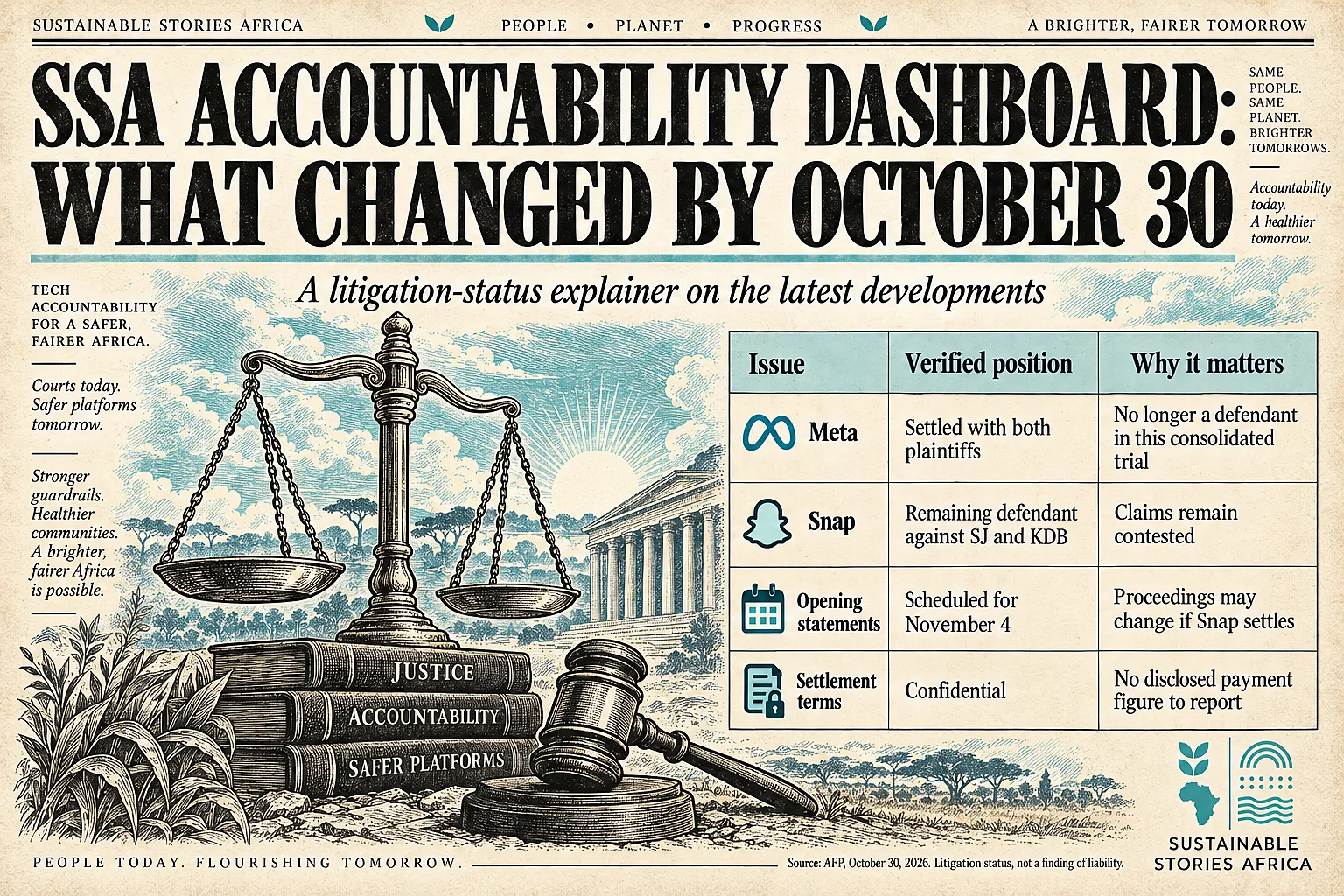
Meta has settled with a second young plaintiff, leaving Snap as the remaining defendant in a Los Angeles trial over alleged social media harms.
The October 30 development changes the position reported earlier in the week, when both companies were preparing for trial.
For African policymakers and digital businesses, the dispute raises questions about child safety, product design and corporate accountability.
Settlement changes to the courtroom stakes
Meta has settled the remaining claim against it in a Los Angeles test case over alleged harm to young social media users, leaving Snapchat parent Snap facing a trial whose opening statements are scheduled for November 4, unless another settlement intervenes.
The plaintiffs’ lawyers disclosed the agreement on October 30; its terms are confidential.
The development supersedes the October 28 report that Meta and Snap were both heading towards trial.
- Meta had already settled with one plaintiff, identified as SJ.
- Its subsequent agreement with KDB removes it from the consolidated proceedings, while Snap continues to face both plaintiffs’ claims.
- Jury selection began on October 28.
For readers following corporate responsibility, the distinction matters.
- A settlement resolves a claim without a verdict establishing the contested allegations.
- Snap’s potential liability in this case remains for the court process to determine.
Product design moves into focus
The plaintiffs allege that compulsive use of social media contributed to serious mental and physical health problems.
Their lawyers’ case centres on allegedly harmful product design and experience during adolescence, rather than a general proposition that every young person suffers the same effects from using an app.
These remain allegations, which the companies have disputed.
Earlier in the week, Snap said the claims misrepresented both the plaintiffs’ experiences and its platform’s design.
- The company has sought to distinguish Snapchat from traditional social media by emphasising messaging.
- AFP reported that Snap did not immediately respond to a fresh request for comment after Meta’s settlement.
“Trials, dismissals and settlements are all common in the bellwether process, and this litigation is no exception,” a Meta spokesperson told AFP.
- Bellwether cases are selected to test arguments within a much larger body of litigation; their outcomes can inform subsequent negotiations, but do not decide every other claimant’s case.
TikTok and YouTube had already settled with the two plaintiffs.
- Snap chief executive Evan Spiegel is expected to testify if the trial proceeds.
- Meta chief executive Mark Zuckerberg and Instagram head Adam Mosseri were expected witnesses before Meta’s latest agreement.
Safety becomes a governance question
For Africa, the useful lesson is not to import a US lawsuit as a ready-made regulatory answer.
- Asking how digital businesses demonstrate that growth objectives, engagement features and safeguards for younger users have been assessed together.
- The case provides a governance lens, not evidence about the prevalence of harm among African users.
Boards can apply that lens by requesting documented assessments of child-facing features, clear escalation routes for safety concerns and measures of how protective tools work in practice.
- Such scrutiny should distinguish the existence of a control from evidence that it reduces an identified risk.
The potential benefit is a more credible relationship between platform innovation and public trust.
- A business that can explain its safety decisions is better positioned to engage constructively with families, schools, advertisers and regulators.
- This is an editorial implication of the dispute, not a finding that the proceedings have established.
Test safeguards before defending them
African digital companies and organisations serving young audiences should treat safety reviews as a continuing management responsibility.
- A practical starting point is to identify which features children encounter, who approves changes and what evidence triggers intervention.
Regulators considering the case should separate claims, settlements and judicial findings.
- They should also assess local legal powers and implementation capacity rather than assuming that a California proceeding creates obligations elsewhere.
For investors and advertisers, the immediate task is to ask for evidence behind safety assurances.
- Policies, staffing and reporting processes deserve examination alongside engagement and revenue targets.
- The accountability question is concrete: who can require a design change when commercial incentives conflict with a documented concern?
The broader governance task is to preserve a reliable record of why decisions were made.
- This lets a company distinguish a safeguard supported by testing from one justified mainly by intention, and gives oversight bodies a clearer basis for challenging management.
Path Forward – Put Young Users Before Engagement Targets
Snap’s next milestone is the scheduled November 4 opening, subject to further settlement.
The allegations remain contested, and Meta’s confidential agreement should not be described as a verdict.
For African stakeholders, the priority is evidence-led product governance: assess risks to children, document decisions and test whether safeguards work.
Local action should follow local law and credible research, not assumptions drawn from a foreign dispute.