The Private Infrastructure Development Group plans to invest at least $1 billion annually until 2030 across markets in Africa and Asia.
Renewable energy will be a principal focus, alongside infrastructure supporting mobility, agriculture, connectivity and other services.
The announcement sets an investment ambition, not a record of completed disbursements and its significance will depend on projects reaching delivery and providing measurable benefits.
A billion-dollar annual investment ambition
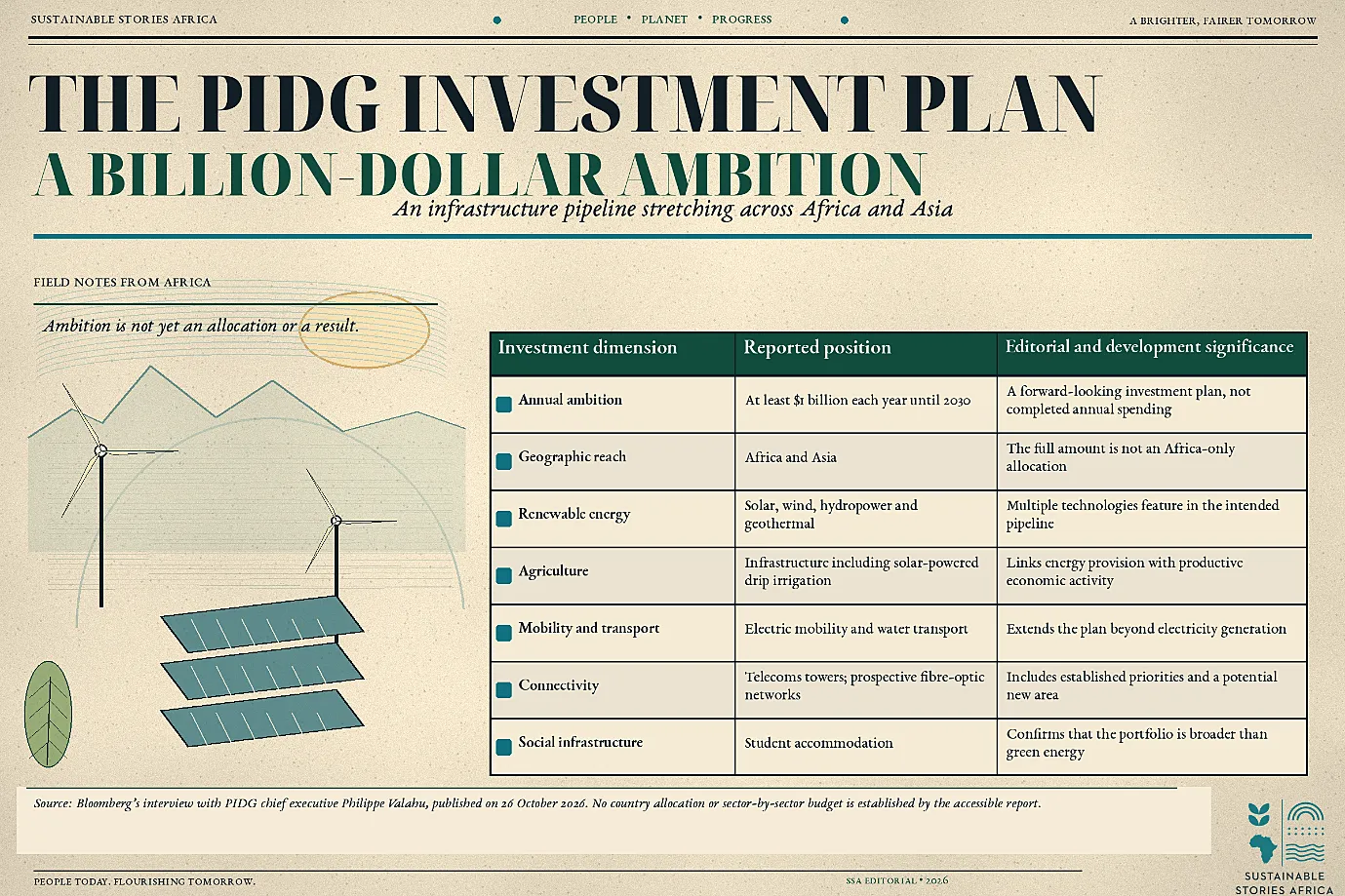
The Private Infrastructure Development Group (PIDG) plans to invest at least $1 billion each year until 2030, with renewable energy featuring prominently in a broader infrastructure pipeline spanning Africa and Asia, chief executive Philippe Valahu told Bloomberg in an interview published on 26 October.
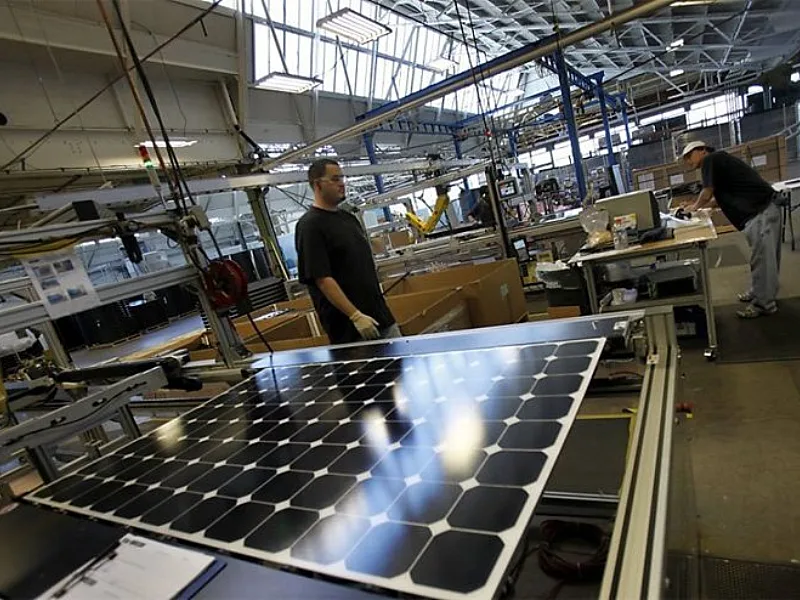
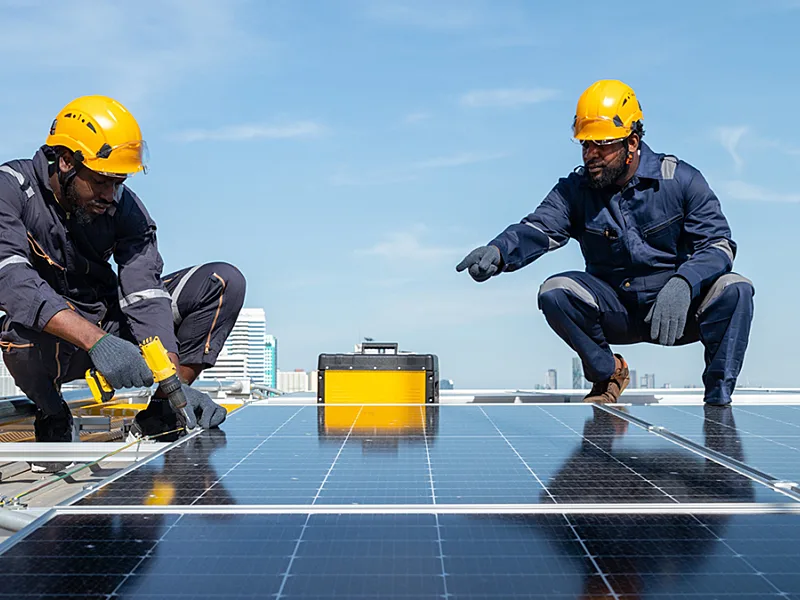
The intended investments include solar, wind, hydropower and geothermal projects.
- Other planned areas encompass electric mobility, telecommunications towers, agricultural infrastructure, student accommodation and water transport, with fibre-optic networks also under consideration.
The breadth of that pipeline matters. Although renewable energy is central to the announcement, the annual figure should not be presented as exclusively earmarked for green power.
Nor does the interview establish that the full amount has already been committed or disbursed. It describes PIDG’s intended investment pace through 2030.
For African economies seeking reliable infrastructure, the immediate question is how that ambition translates into financeable projects, construction and functioning services.
Financing systems, not isolated assets
PIDG’s approach spans project development, finance and credit enhancement.
- In an interview published by BusinessDay on 27 October, Valahu described the roles of InfraCo, GuarantCo and the Emerging Africa & Asia Infrastructure Fund in developing and financing infrastructure.
That combination addresses different stages of the investment challenge.
- Developing a project, arranging suitable finance and managing risks for investors are related tasks, but they are not interchangeable.
The planned sector mix also points towards connections between infrastructure systems.
- Solar-powered drip irrigation links energy investment with agricultural production.
- Telecommunications towers and prospective fibre networks connect physical infrastructure with digital access.
- Electric mobility requires coordination between transport services and electricity supply.
These are areas named in the investment pipeline, not evidence that every proposed project has reached financial close.
What the funding could unlock
Valahu told BusinessDay that PIDG had committed $1 billion to 33 infrastructure projects over the preceding year.
- He said this supported total project investment of $4.1 billion, including $2.9 billion mobilised directly from the private sector.
- These figures describe related but different measures; they should not be combined into a larger headline investment total.
The distinction is important to understanding development finance.
- PIDG’s own commitments are one contribution, while total project investment and private finance mobilised capture broader financing associated with the projects.
The same interview cited support for the Walo solar-and-storage facility in Senegal and an equity investment in Côte d’Ivoire’s Kong Solaire project.
- These examples place the new annual ambition within an existing West African investment footprint rather than an entirely untested regional strategy.
The development opportunity lies in what functioning infrastructure enables:
- Energy for productive activity, better connectivity and improved access to essential services.
However, the announced dollar figure alone cannot establish affordability, reliability, employment effects or environmental performance.
These outcomes require project-level evidence.
Converting ambition into accountable delivery
The financing environment presents constraints. Semafor reported that several PIDG funding countries were trimming aid budgets, raising questions about sustaining investment momentum.
- That context makes the mobilisation of additional capital especially significant, without establishing that any particular project will be delayed or cancelled.
Valahu has also highlighted efforts with the African Development Bank to unlock long-term local-currency investment from domestic capital pools.
- For infrastructure developers, the relevant issue is not simply attracting more money, but securing financing suited to the project’s revenue profile and operating environment.
Governments, financiers and developers therefore need to assess the pipeline project by project.
- Reporting should distinguish investment intentions, signed commitments, capital mobilised, construction progress and operational results.
This is how an ambitious annual target becomes a credible account of infrastructure delivery rather than a repeated financing headline.
Path Forward – Financing Infrastructure That Delivers
PIDG’s next test is translating its annual investment ambition into projects that reach financial close, construction and operation.
The announced pipeline spans renewable energy and wider infrastructure across Africa and Asia.
For African markets, progress should be judged through both financing and service outcomes:
- How much capital is committed and mobilised, which projects are delivered, and whether their benefits meet the needs of the people and businesses they serve.