Major Norwegian media organisations have initiated legal action against Meta over revised platform terms that they say could weaken publishers' control over journalistic material.
The dispute concerns the potential use of articles, photographs and videos in artificial intelligence development.
For African publishers, the case highlights growing questions about digital ownership, intellectual property, platform dependence and the economic sustainability of independent journalism.
Norwegian Publishers Challenge Meta’s Content Terms
Ten Norwegian media organisations have initiated legal proceedings against Meta, seeking to prevent the implementation of revised platform terms that they believe could allow the technology company to use journalistic content for artificial intelligence development.
- The legal action, reported on October 27, 2026, concerns changes scheduled to take effect on November 20.
The publishers argue that the revised terms could give Meta access to articles, photographs and videos, including material distributed behind subscription paywalls.
- Their concern is that content developed through substantial editorial investment could contribute to competing commercial AI products without sufficient protection for publishers' intellectual property.
The organisations sought a provisional injunction from the Oslo District Court to prevent the disputed terms from taking effect while the underlying dispute is considered.
- The plaintiffs include public broadcaster NRK, Norwegian news agency NTB and major publishing groups Schibsted, Amedia, Polaris and Aller.
Meta said it had delayed implementation of the revised terms until November 20 to provide additional time to explain the changes.
The allegations remain contested, and the court proceedings do not establish that Meta has unlawfully acquired publishers' rights.
Platform Dependence Creates New Ownership Tensions
The dispute exposes a structural challenge facing digital media businesses.
- Publishing organisations depend on social platforms to reach audiences, distribute stories and attract subscribers or advertisers.
However, the same platforms increasingly invest in artificial intelligence technologies that require extensive quantities of text, images and audiovisual content.
- This creates potential tension between content creators and technology companies regarding licensing arrangements, commercial value and editorial control.
Norway's media organisations contend that affected professional account holders would have no meaningful alternative to accepting the revised conditions except deleting their accounts.
- For publishers heavily reliant on Facebook and Instagram distribution, that choice could carry substantial commercial consequences.
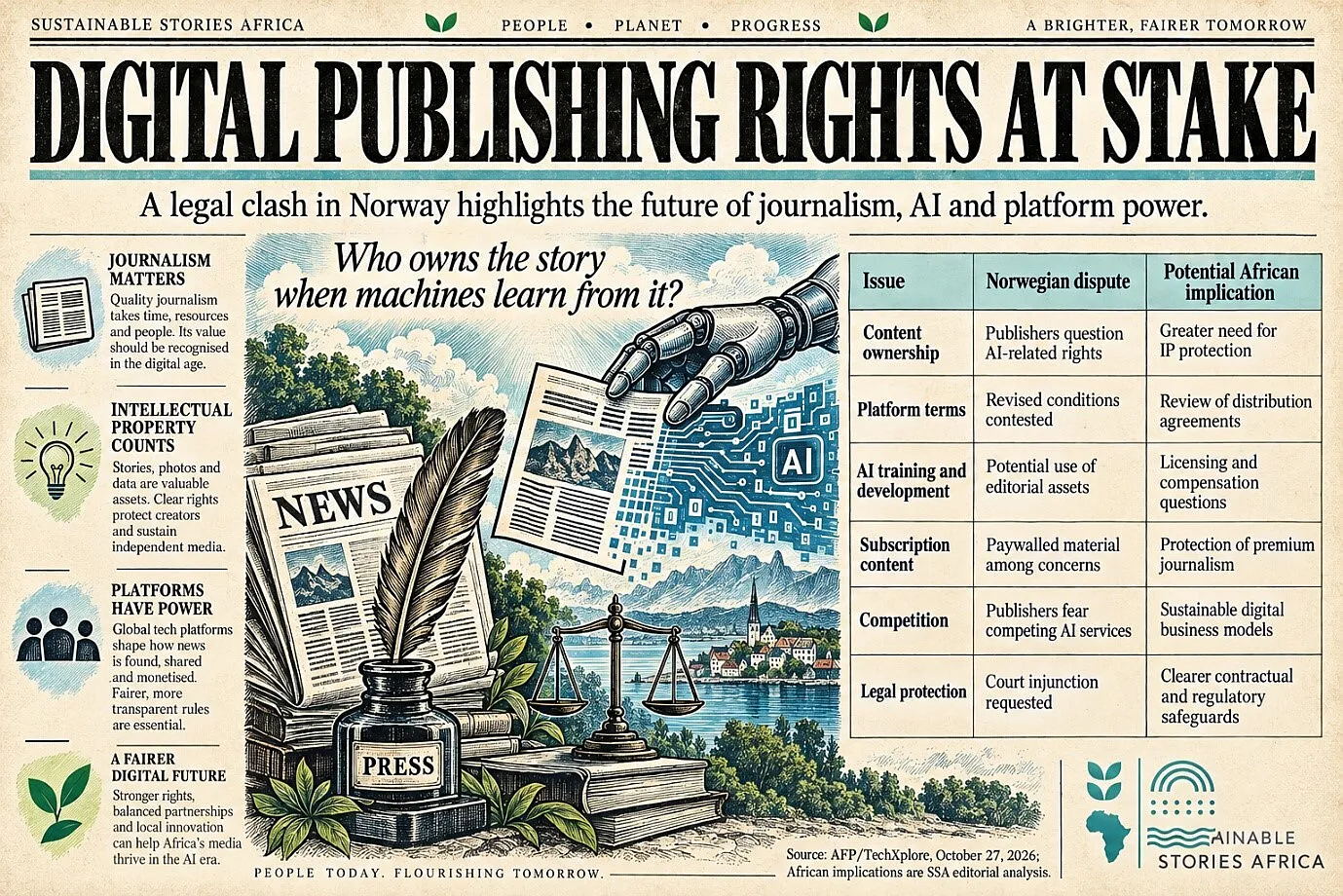
The dispute is particularly relevant to African media organisations, many of which operate within challenging advertising environments and rely on global technology platforms for audience growth.
Fairer Agreements Could Strengthen Independent Journalism
Independent journalism performs important public-interest functions, including investigation, accountability reporting and scrutiny of environmental and social risks.
- These functions require professional expertise, editorial systems, verification procedures and sustained financial investment.
- If publishers lose control over the commercial use of their material, their capacity to fund original reporting could come under additional pressure.
For African publishers, clearer licensing agreements could support new revenue opportunities while preserving audience access through digital platforms.
- Media organisations may also benefit from strengthening owned distribution channels, including websites, newsletters, subscription services and audience databases.
These approaches would not eliminate dependence on technology platforms, but could improve negotiating positions.
African Media Must Review Digital Agreements
Publishers, press associations and policymakers should examine the implications of artificial intelligence for intellectual property, competition and digital market governance.
- Contracts governing distribution and content reuse require particular scrutiny.
Media companies should clarify which rights they grant platforms, whether those rights extend to emerging AI applications and how commercial value is allocated.
Regulators should consider transparent procedures for resolving disputes, while avoiding measures that unnecessarily restrict technological innovation.
Industry-level collaboration may be especially useful for smaller African publishers that lack the financial resources to negotiate individually with major technology companies.
Path Forward – Protect Journalism Through Fair Digital Governance
The Norwegian dispute reinforces the need for transparent technology agreements that recognise the value of professional journalism.
African media organisations should strengthen intellectual-property governance, diversify distribution and pursue fair licensing frameworks.
Protecting original reporting is essential not only for media revenues but also for public accountability, informed citizenship and sustainable digital economies.