Research examining the definition of dyslexia has highlighted growing agreement about its core characteristics and the factors influencing reading and spelling difficulties.
A multidisciplinary expert study identified important areas of consensus, including the significance of reading fluency, spelling and co-occurring developmental difficulties.
The findings offer relevant lessons for African education systems seeking to improve early identification and provide more equitable learning support.
Researchers Advance Consensus On Dyslexia Definition
Researchers have advanced efforts to establish a clearer scientific understanding of dyslexia, potentially improving how educators, clinicians and policymakers identify and support children with persistent reading and spelling difficulties.
A study published in the Journal of Child Psychology and Psychiatry in 2025, titled Toward a Consensus on Dyslexia: Findings from a Delphi Study, brought together a multidisciplinary panel of specialists to identify areas of agreement.
The research was led by Julia M. Carroll and colleagues, including Margaret J. Snowling.
- Using a Delphi process involving repeated expert consultation, the researchers ultimately accepted 42 statements concerning dyslexia.
- The study found substantial agreement that dyslexia involves reading and spelling difficulties, can reflect multiple contributing factors and frequently co-occurs with other developmental disorders.
- Experts also identified difficulties with reading fluency and spelling as important markers across languages and age groups.
These findings build on earlier scholarship examining the historical evolution and limitations of dyslexia definitions.
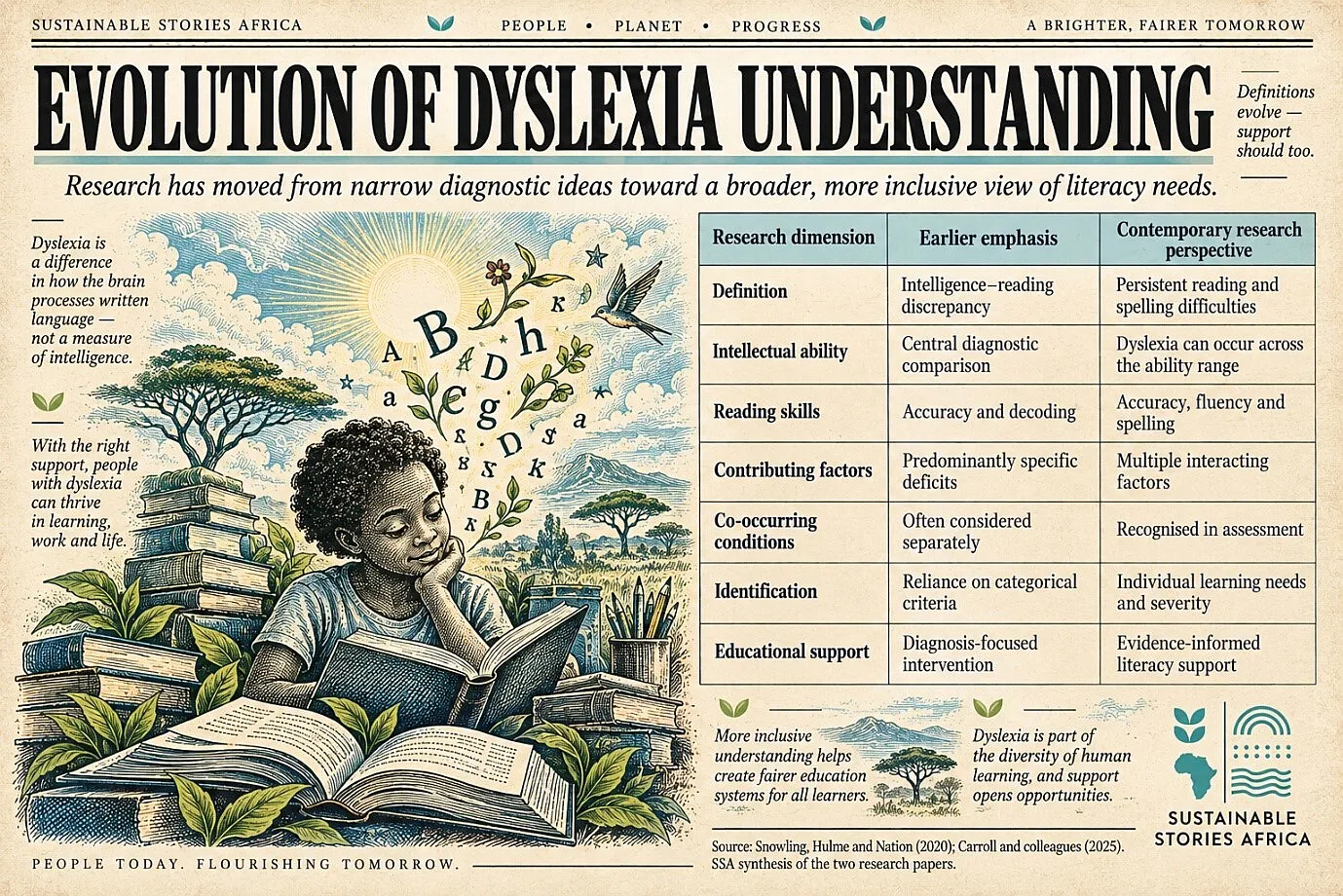
- In their 2020 article Defining and Understanding Dyslexia: Past, Present and Future, Margaret J. Snowling, Charles Hulme and Kate Nation explained how scientific understanding had shifted away from defining dyslexia through differences between intelligence-test performance and reading attainment.
Together, the two studies highlight the importance of identifying children's actual learning needs rather than depending on narrow assumptions about intellectual ability.
Dyslexia Understanding Moves Beyond Intelligence Differences
Historically, dyslexia was often defined through a discrepancy between a child's intellectual ability and reading performance.
- Under this approach, difficulties with reading and spelling were considered particularly significant when they appeared unexpected relative to general cognitive ability.
- However, subsequent research challenged the assumption that children with different intelligence-test scores necessarily experienced fundamentally different reading difficulties.
The 2020 review explains that children with dyslexia and other struggling readers can demonstrate similar difficulties in phonological processing.
- Phonological processing involves recognising and working with the speech sounds that contribute to spoken and written language.
- The review also argues that dyslexia has an early developmental onset and can persist over time.
The 2025 Delphi study extends this discussion by highlighting the complexity of the condition.
- It recognises that dyslexia may involve combinations of biological, cognitive and environmental factors.
Co-occurring developmental difficulties are also relevant when assessing individual learning needs.
African Schools Need Inclusive Literacy Support
The implications for African education systems are significant.
- Children experiencing persistent reading difficulties may be misunderstood as lacking motivation, intelligence or discipline.
- Without appropriate assessment and educational support, these difficulties can affect learning, classroom participation and longer-term educational opportunities.
- The research reinforces the importance of recognising that reading difficulties do not necessarily reflect a child's overall intellectual potential.
African education systems face additional complexities because many learners encounter multiple languages during their schooling.
- Children may learn to read in a home language, an official language or both.
- Effective literacy assessment must therefore account for language exposure, instructional quality and opportunities to learn.
- A child struggling with reading because of inadequate instruction or limited familiarity with the language of teaching should not automatically be identified as dyslexic.
Similarly, a learner with persistent dyslexia should not be denied support because of assumptions about intelligence or educational background.
The distinction requires trained teachers, culturally appropriate assessment tools and access to specialist support where needed.
Early Screening Can Strengthen Learning Outcomes
Education ministries, school administrators and teacher-training institutions should strengthen systems for identifying and responding to reading difficulties.
- Early screening can help educators recognise children who may require additional support.
- However, screening results should not be treated as definitive diagnoses without appropriate assessment.
Teachers need practical training in phonological awareness, decoding instruction, spelling development and structured literacy interventions.
- Schools should also adopt flexible instructional approaches that accommodate differences in learning pace and educational needs.
Families can contribute by encouraging reading, engaging with teachers and seeking support when difficulties persist.
Public awareness campaigns could help reduce stigma and challenge misconceptions that associate dyslexia with laziness or low intelligence.
For policymakers, inclusive education requires adequate funding, qualified professionals and reliable monitoring of literacy outcomes.
Path Forward – Make Inclusive Literacy Education Universal
African education systems should strengthen early identification, teacher preparation and evidence-informed support for learners with persistent reading and spelling difficulties.
The emerging scientific consensus provides a stronger foundation for inclusive literacy policy.
Effective implementation must reflect local languages, educational conditions and individual needs while ensuring that children are supported without stigma or unnecessary barriers.