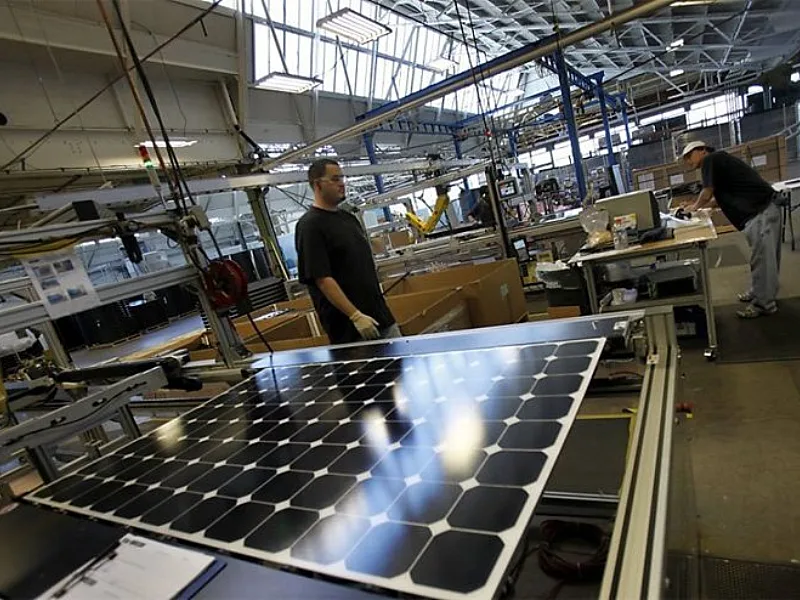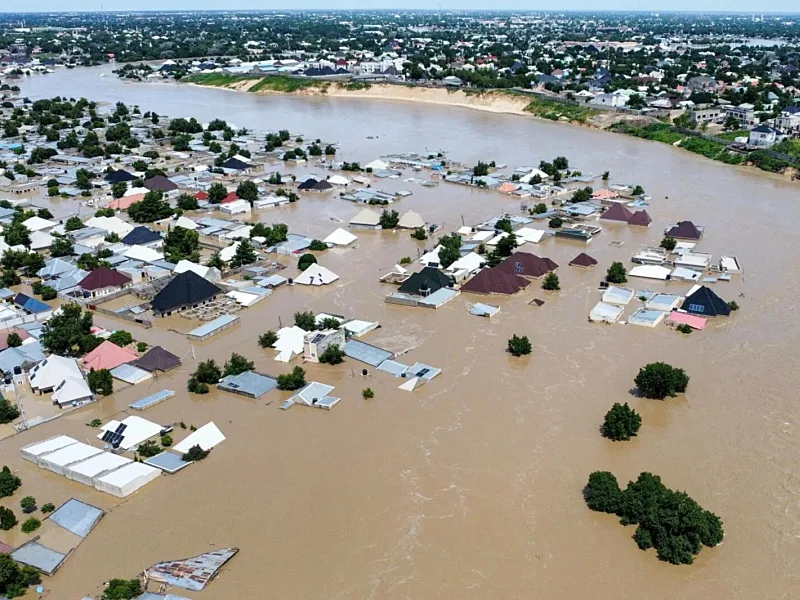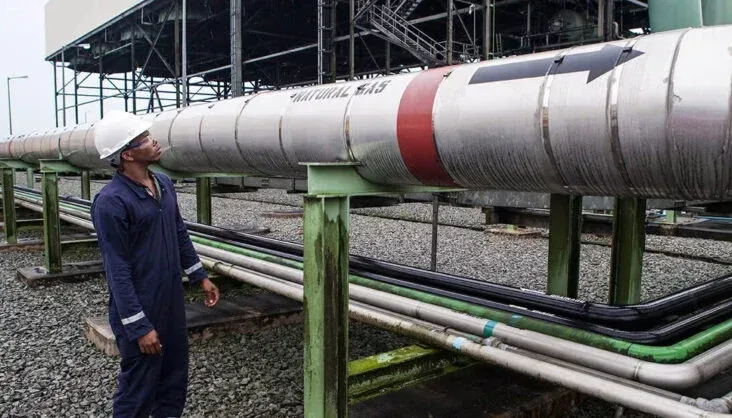
Africa’s gas ambitions will depend on commercially viable domestic markets and stronger environmental accountability, according to Ejiro Gray, Sahara Group’s Executive Director, Governance and Sustainability.
Speaking on Channels Television, Gray argued that expanding energy access and reducing emissions should reinforce, not undermine each other.
Her message puts payment reliability, industrial demand and methane reduction at the centre of a transition intended to serve businesses, households and future generations.
Energy access and decarbonisation must advance together
African governments and energy companies must make domestic gas supply commercially attractive while cutting methane leaks and eliminating routine flaring, Ejiro Gray, Executive Director, Governance and Sustainability at Sahara Group, has said.
In a Channels Television interview published on October 22, Gray argued that natural gas could support Africa’s industrial development without displacing the need to prepare for a cleaner energy future.
“I actually don’t see them as competing goals or objectives,” she said of energy reliability, affordability and decarbonisation. “I actually think they’re complementary.”
Her position challenges the idea that Africa must choose between expanding energy access and improving environmental performance.
Instead, she advocated strengthening existing energy systems while preparing for their evolution.
Building a transition around African realities
For Gray, the starting point is the continent’s development needs
- Africa requires energy to expand industry, and its transition cannot simply reproduce the approach taken by economies with different infrastructure and energy-access conditions.
“What it would look like for the African continent might be different from what it looks like for Europe. And that’s okay,” she said. “We don’t have to go with their own script.”
She described the required approach as “ambidexterity”: protecting and improving today’s energy systems while positioning for tomorrows.
- “Protect the energy systems of today. Leverage gas to drive that,” Gray said, calling for cleaner production alongside preparations for future change.
She also argued that revenues from existing resources would help finance the transition.
- That makes the management of today’s assets part of the transition challenge, rather than a separate conversation.
Making domestic supply worth the investment
However, resource availability alone will not deliver reliable energy.
- Gray identified the strength of the domestic market and customers’ ability to pay as critical conditions for attracting supply.
“Gas goes where it gets paid like most resources anyway,”she said.
She acknowledged the commercial appeal of exports and their foreign-exchange contribution, while stressing the need to develop local economies.
- The task, she argued, is not simply to force a choice between export earnings and domestic consumption.
Instead, governments should help create conditions in which local buyers can meet payment obligations fully and on time.
- “What you want to do is create a local market that makes domestic supply attractive to the producer,” Gray said, adding that supply should become a viable commercial option, not merely a regulatory obligation.
She identified gas-fired power plants, fertiliser manufacturing, transport and other industrial users as potential sources of demand.
For these sectors, a functioning gas market could connect energy production more directly with domestic economic activity.
Environmental credibility requires measurable action
Gray’s support for gas came with explicit environmental conditions.
- Its credibility as a transition or, in her description, “transformation” fuel depends on tackling methane leakage and routine flaring.
- “Number one is to cut the methane,” she said, identifying the elimination of routine gas flaring as the other priority.
For companies, that begins with understanding and disclosing their environmental impact.
- “First of all, you need to measure,” Gray said. “Know it, understand it, report it transparently.”
She urged operators to exclude routine flaring from new projects and expansion plans, linking investment decisions made today with the goal of eliminating the practice before 2030.
- Her argument places responsibility on producers to demonstrate environmental progress, rather than relying on gas’s proposed development benefits alone.
Turning resources into reliable energy delivery
Capturing gas that would otherwise be flared also raises a practical question: how does it reach customers?
- Gray acknowledged an infrastructure gap between available gas and those who need it.
- Addressing that gap, she said, requires government involvement and collaboration among producers.
The interview connected three challenges often discussed separately:
- Environmental performance
- Infrastructure development
- Customer demand.
Captured gas needs a route to market; infrastructure needs commercially credible users; and domestic buyers need operating conditions that support reliable payments.
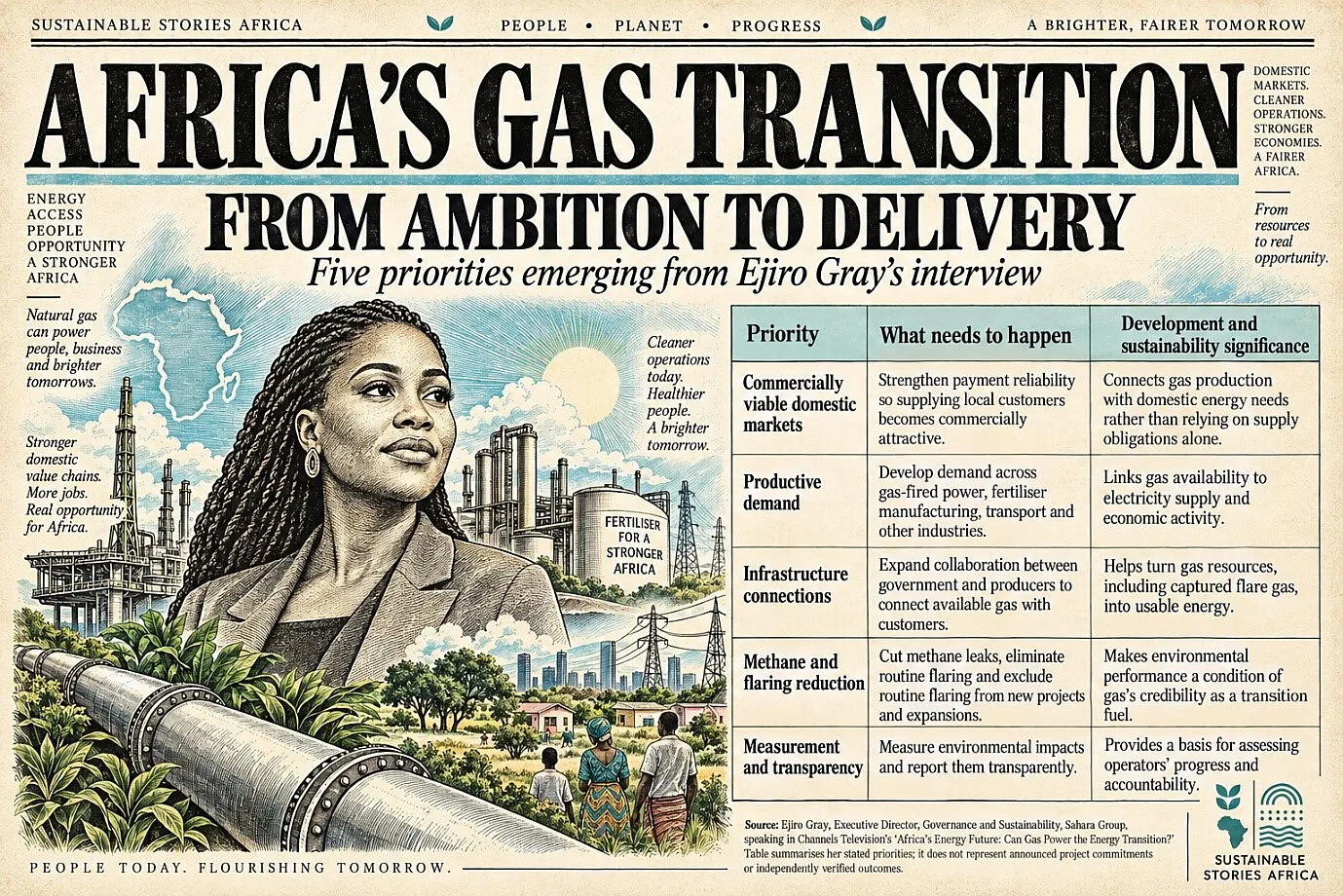
Source: Ejiro Gray, Executive Director, Governance and Sustainability, Sahara Group, speaking in Channels Television’s “Africa’s Energy Future: Can Gas Power the Energy Transition?” Table summarises her stated priorities; it does not represent announced project commitments or independently verified outcomes.
For policymakers and businesses, the implication is that supply obligations cannot substitute for a functioning market.
- Delivery requires coordinated action across the chain, from production and emissions management to transportation and consumption.
Path Forward - Linking gas delivery with credible transition
Gray’s priorities point towards a transition judged by results: stronger domestic demand, dependable payments, infrastructure connections and transparent environmental reporting.
Government and industry collaboration would be central to connecting those objectives.
The test is whether gas can support development while operators reduce its environmental impact.
As Gray put it: “Delivery, delivery, delivery—that’s what we should be looking at right now.”