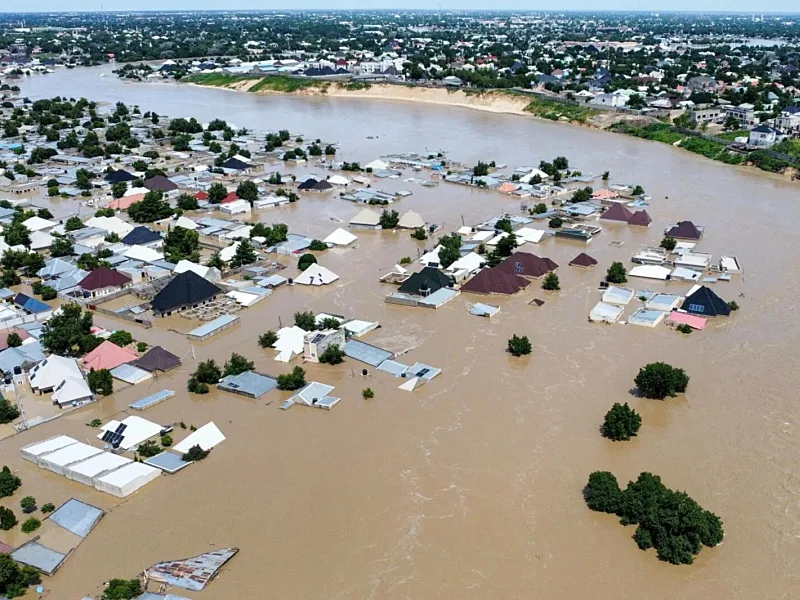
The International Sustainability Standards Board has proposed guidance for nature-related financial disclosures, opening a consultation scheduled to close in February 2027.
The proposed framework draws extensively on the Taskforce on Nature-related Financial Disclosures and emphasises financially material environmental dependencies and risks.
African companies could face growing expectations to explain how biodiversity, water availability and ecosystem conditions affect business performance.
ISSB Advances Nature Related Financial Reporting
The International Sustainability Standards Board (ISSB) has published proposed guidance for nature-related financial disclosures, marking a further step towards integrating biodiversity and ecosystem risks into corporate sustainability reporting.
The proposal, described in an October 22, 2026 OneStop ESG report, draws extensively on the Taskforce on Nature-related Financial Disclosures (TNFD).
- It seeks to improve how companies identify, assess and communicate financially material risks and opportunities arising from their dependencies and impacts on nature.
- The consultation is scheduled to close on February 19, 2027.
The proposed document, IFRS Sustainability Disclosure Practice Statement 1: Nature-related Disclosures, is intended to complement IFRS S1 and IFRS S2.
Importantly, the proposal is not presented as a new mandatory sustainability disclosure standard.
Instead, it would provide additional guidance for organisations seeking to improve their assessment and disclosure of financially relevant nature-related matters.
Nature Risks Demand More Detailed Assessment
Natural ecosystems support economic activities through water supplies, fertile soils, pollination, timber, fisheries and other essential services.
- Their deterioration can affect business costs, operational continuity, investment returns and access to finance.
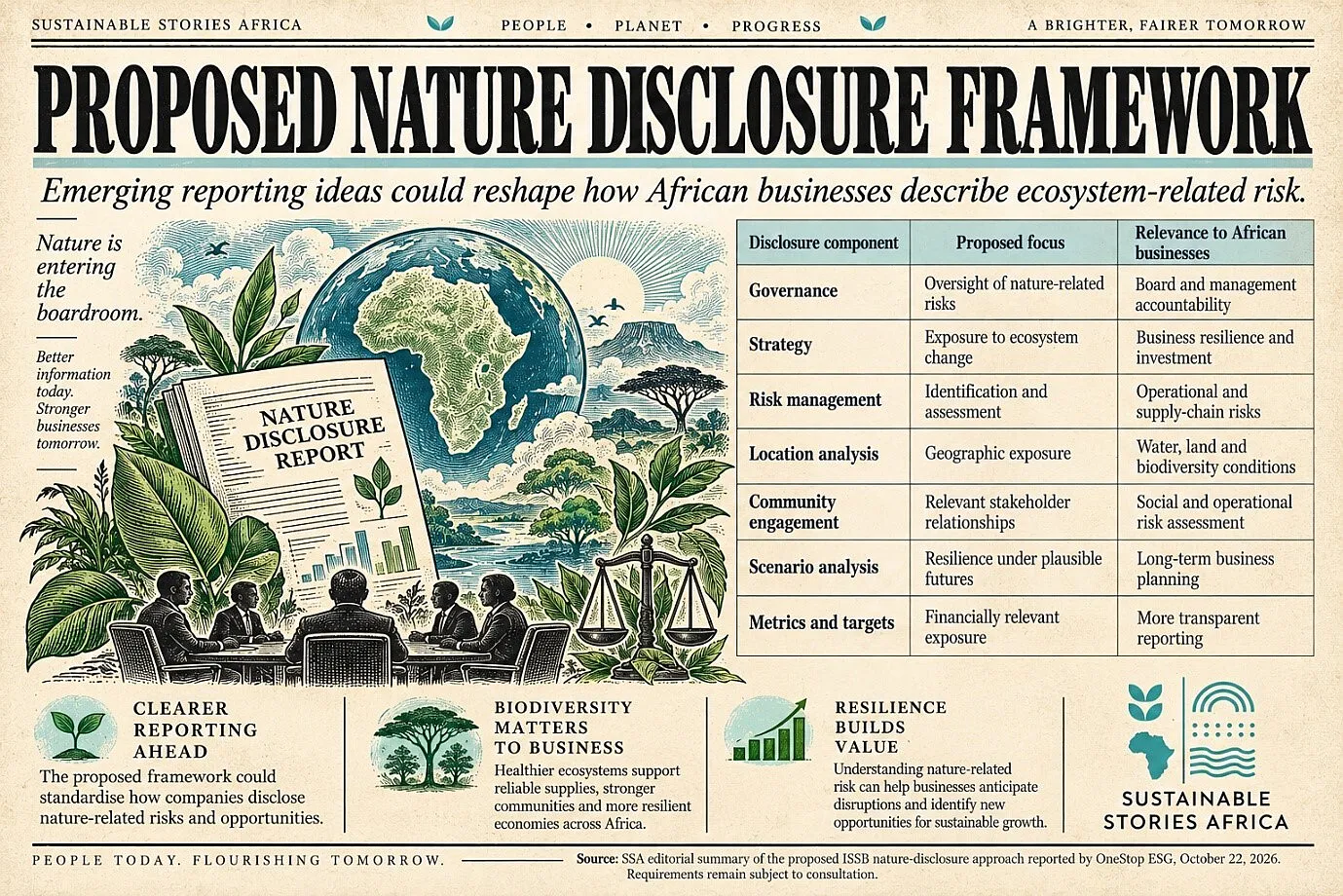
- Under the proposed guidance, companies would place greater emphasis on the geographical locations of operations and supply chains.
This location-specific approach is important because environmental risks vary across ecosystems.
- A farming business operating in a drought-prone area may face different exposure from a food-processing company located near a flood-prone river.
- Similarly, a mining operation's dependence on local water resources may create material operational and community risks.
- The proposals also address engagement with Indigenous Peoples, local communities and other affected stakeholders where those relationships are relevant to financial risks and opportunities.
They include expectations concerning scenario analysis and information about assets or business activities exposed to nature-related risks.
African Economies Face Significant Nature Dependencies
The implications for African economies are substantial.
- Agriculture, fisheries, forestry, tourism, mining and hydropower depend on natural systems whose deterioration can affect economic productivity.
- Companies operating in these sectors may increasingly need to demonstrate an understanding of ecosystem-related financial risks.
- For banks and investors, more consistent disclosures could improve assessments of exposure to water stress, land degradation and biodiversity loss.
- The proposed guidance could also encourage stronger links between environmental management and financial decision-making.
However, implementation may be challenging.
- Many companies lack reliable ecological datasets, specialised assessment capabilities or the financial resources to undertake detailed location-based analysis.
- Smaller suppliers may face particular constraints when responding to environmental information requests from larger corporate customers.
African Stakeholders Should Shape Global Guidance
African reporting bodies, financial institutions, businesses, academics and environmental organisations should consider participating in the consultation.
- Feedback should address the availability of environmental data, proportionality of reporting requirements, implementation costs and the practical needs of developing economies.
- National authorities could strengthen collaboration between financial regulators, environmental agencies and geological or meteorological institutions.
- Companies can begin by identifying material nature dependencies, mapping operational locations and assessing the reliability of existing environmental information.
Importantly, the proposed Practice Statement would be voluntary under the ISSB framework unless jurisdictions adopt different requirements.
Stakeholders should avoid presenting the consultation draft as an already binding obligation.
Path Forward – Prepare Businesses For Nature Accountability
African businesses should strengthen their understanding of biodiversity dependencies, ecosystem degradation and associated financial risks.
The ISSB consultation offers an opportunity to advocate practical, internationally comparable guidance that reflects African environmental realities.
Improved nature-related reporting could support responsible investment, risk management and more credible sustainability communication across the continent.
Culled from: ISSB Proposes TNFD-Based Nature Disclosures, Opens Consultation Until February 2027 | OneStop ESG