The Democratic Republic of Congo's Ebola outbreak has exceeded 10,000 confirmed infections, becoming a major public-health emergency affecting multiple countries.
Health workers face insecurity, limited resources, delayed case detection and widespread community mistrust.
With cases reported in Nigeria and Kenya, the outbreak highlights the urgency of coordinated disease surveillance, adequate health financing and stronger public-health systems across Africa.
Congo Faces Rapidly Escalating Ebola Emergency
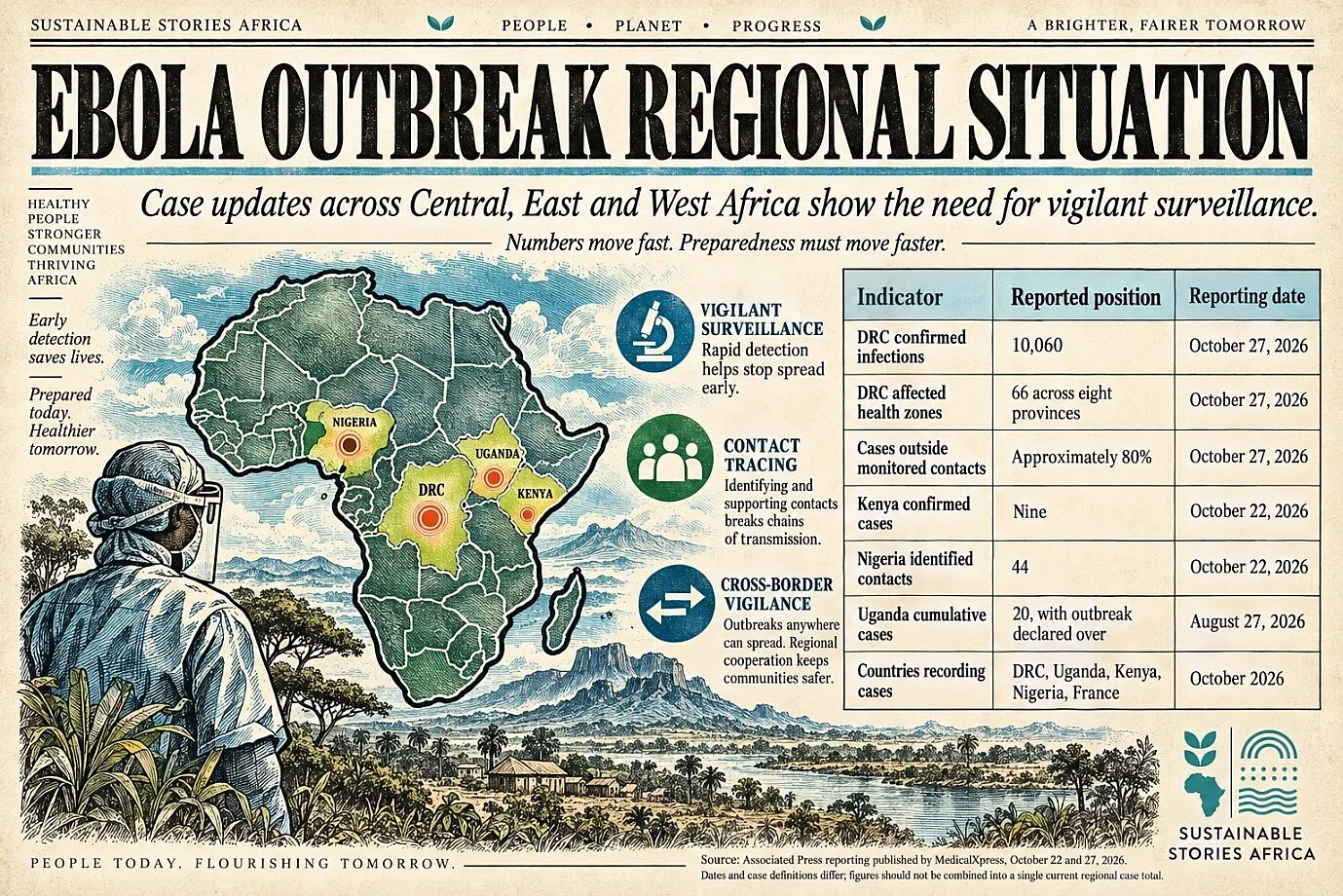
The Democratic Republic of Congo's Ebola outbreak has reached 10,060 confirmed cases, with nearly half of infected patients reported dead, according to government figures published on October 27, 2026.
- The outbreak, first declared in May, has become the country's deadliest recorded Ebola emergency, according to the latest Associated Press reporting.
Its rapid expansion has heightened concerns about regional health security following cases in Kenya and Nigeria.
- The outbreak involves the Bundibugyo species of Ebola virus, for which no approved vaccine or specific treatment was available at the time of reporting.
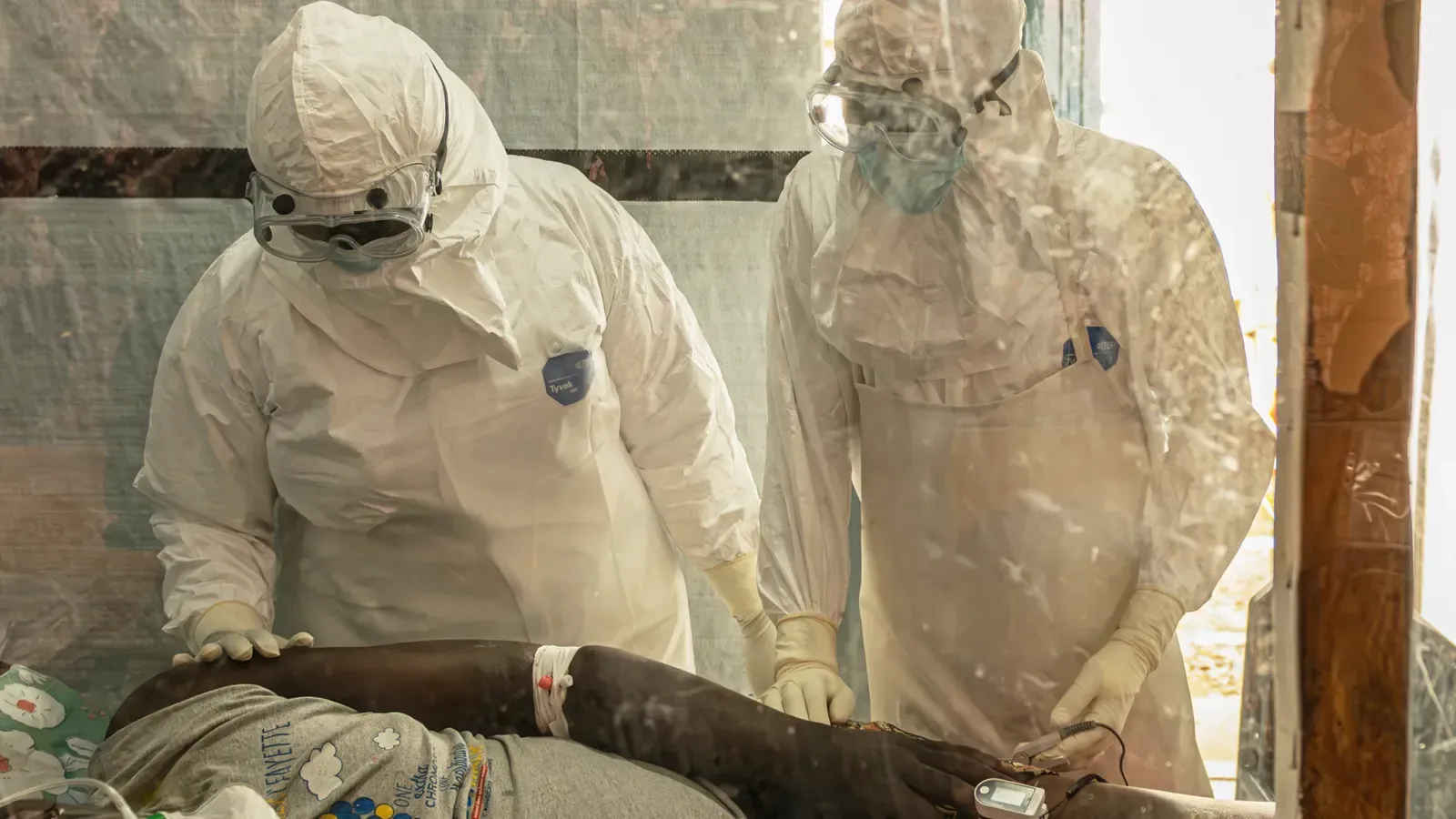
Health authorities face significant operational difficulties, including armed insecurity, poorly maintained roads, insufficient equipment and growing mistrust between communities and response teams.
- These challenges have complicated efforts to identify infections, isolate patients, trace contacts and provide safe medical care.
- The reported outbreak has reached 66 health zones across 8 Congolese provinces, compared with three health zones when the emergency was first declared.
The disease has also been recorded in Uganda and France, although neither country had active cases at the time of the latest report.
Surveillance Gaps Complicate Regional Disease Containment
A major concern is the number of cases identified outside established contact-tracing networks.
- According to the October 27 report, approximately 80% of recorded cases arose among people who were not previously monitored contacts.
- Africa CDC has indicated that a substantially higher proportion of cases must arise among known contacts before officials can consider transmission largely controlled.
The situation suggests that important infection chains remain unidentified.
Nigeria reported an Ebola infection in Abuja involving a woman who had travelled from Uganda.
- Authorities initially identified 44 contacts for follow-up, this number has increased to 55.
- Kenya also reported infections following the arrival of a traveller who had passed through Uganda from Congo.
By October 22, the country had confirmed 9 cases, including infections among healthcare workers.
- Uganda's earlier outbreak had been declared over on August 27 following 20 confirmed cases.
These developments demonstrate how travel, delayed diagnoses and surveillance gaps can complicate containment across national borders.
Stronger Health Systems Could Prevent Losses
Beyond the immediate deaths and infections, the outbreak is disrupting essential healthcare services.
- Medical facilities are experiencing additional pressure as staff and resources are redirected towards emergency response.
- The reporting also describes interruptions to childhood vaccination programmes, schooling and maternal healthcare.
- Fear of infection and isolation has discouraged some patients from seeking medical attention.
Consequently, the consequences of the outbreak extend beyond Ebola itself.
- Communities may face increased exposure to other preventable illnesses, reduced healthcare access and worsening household economic insecurity.
- Improving the response therefore requires more than expanding isolation facilities.
It also demands reliable primary healthcare, trained personnel, effective communication and the continued delivery of essential services.
African Governments Must Coordinate Emergency Responses
National health ministries, Africa CDC, the World Health Organization and regional partners should strengthen cross-border surveillance and information exchange.
- Contact tracing requires timely reporting, properly equipped laboratory networks and trained healthcare workers.
- Response personnel must receive adequate payment, protective equipment and security.
Community engagement is equally important.
- Trusted local leaders and health professionals can help counter misinformation and encourage early treatment.
- Disease-control measures should respect community concerns and human dignity while maintaining necessary infection-prevention procedures.
African governments must also prioritise sustainable health financing, recognising that underfunded systems struggle to respond effectively when outbreaks expand rapidly.
Path Forward – Build Trust And Regional Preparedness
Containing the Ebola outbreak requires faster detection, dependable financing, stronger health-worker protection and coordinated cross-border surveillance.
African countries must also protect routine health services throughout emergency responses.
Sustainable health security depends on public trust, functioning institutions and the capacity to identify and interrupt transmission before local outbreaks become regional crises.
Culled from: What to know about the Ebola outbreak that has spread from Congo to 4 other countries and Congo's Ebola outbreak tops 10,000 cases as authorities race to slow the spread in African countries