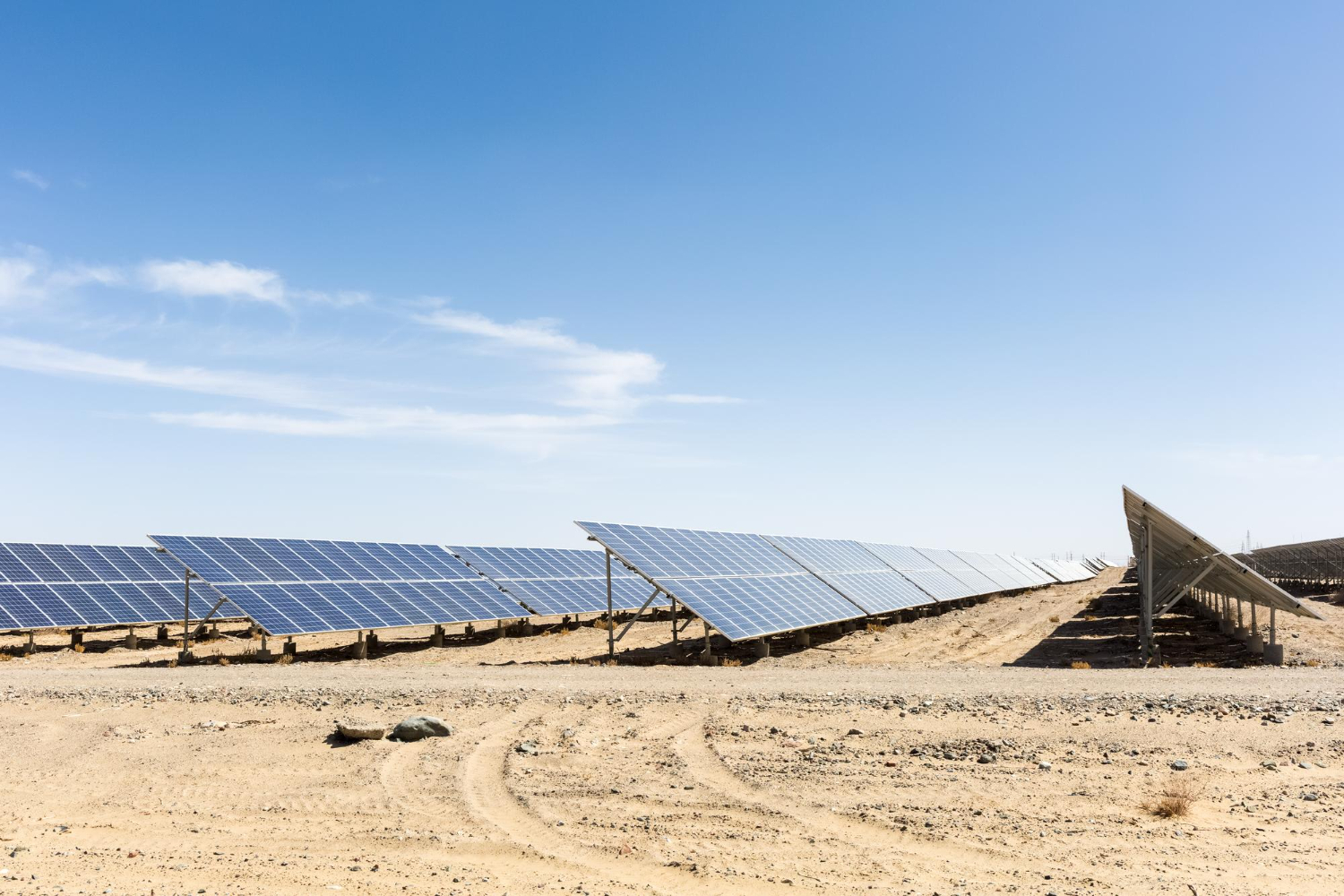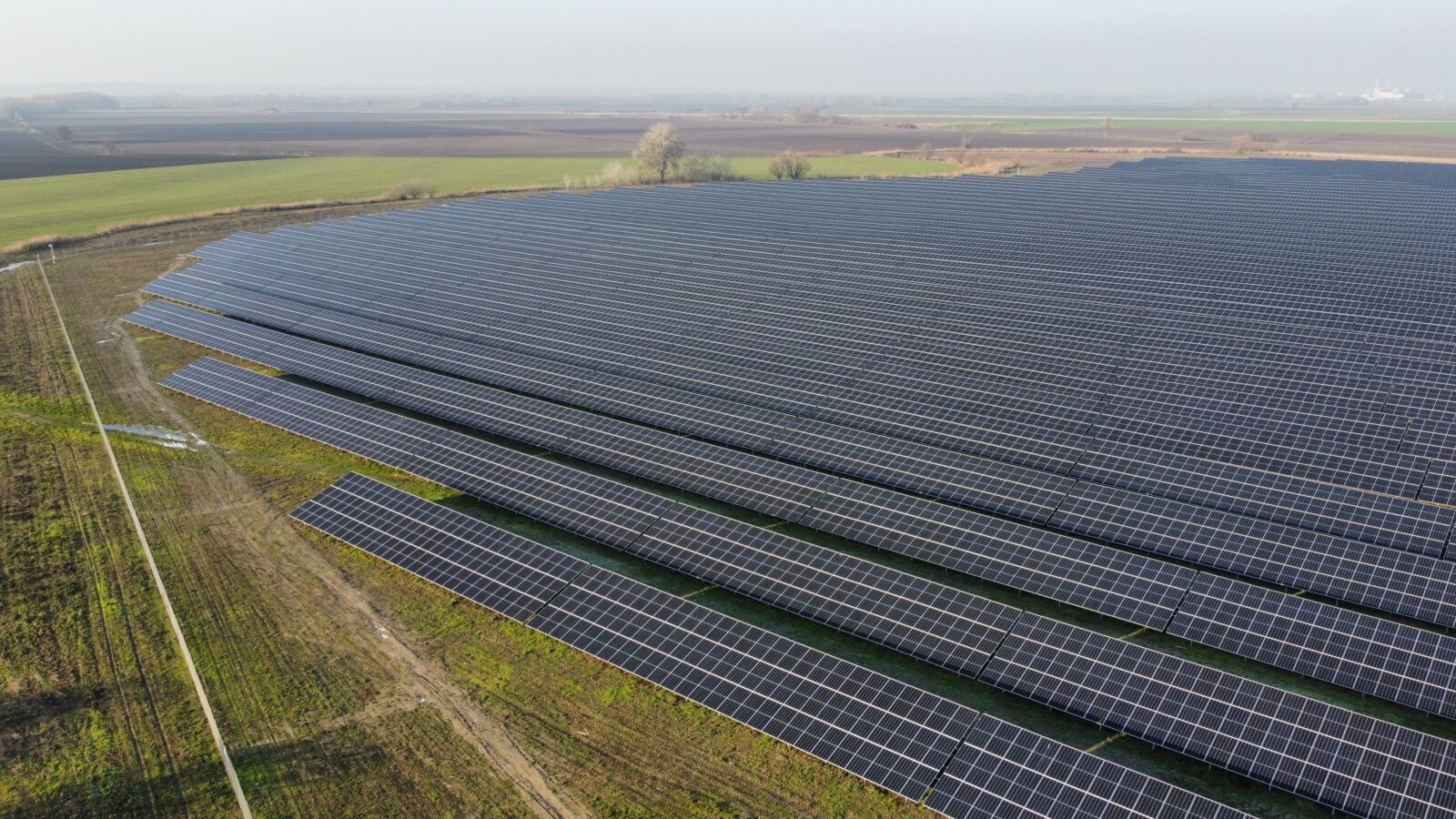
The global private equity market is not waiting for Africa to prepare. KPMG’s data shows capital moving toward energy, infrastructure and AI-enabling systems, even in a selective deal environment.
Africa’s policy choice is urgent: fix energy market credibility now or remain a price-taker while others shape the next infrastructure cycle.
Reform Must Precede The Capital
The most expensive energy policy is not a high tariff. It is an unreliable market. When prices do not reflect costs, contracts are not honoured, and utilities cannot invest; the real bill appears in factory downtime, lost jobs, weak digital infrastructure, and investor hesitation.
Private equity’s renewed focus on energy and infrastructure should be a wake-up call for African policymakers.
The world’s largest financial sponsors are not just chasing returns; they are repositioning around the systems that will power AI, electrification, logistics and industrial growth.
Africa should not approach this moment as a passive recipient of capital. It should use it to fix market rules, package assets, and define the terms on which long-term private capital enters its energy transition.
The Money Has Become More Demanding
KPMG’s latest PE reports show a market with money, but not patience. At the end of 2025, global PE assets under management had surpassed $6 trillion, while dry powder reached a record $1.7 trillion.
However, fundraising remained soft and concentrated. LPs want distributions, managers want exits and investors are rewarding quality over quantity.
That is the central point for Africa. Capital availability is not the same as capital access. Investors can deploy billions into energy infrastructure globally and still ignore African projects if the risk-return story is unclear. The continent’s challenge is not to beg for capital; it is becoming impossible to ignore.
Weak Price Signals Create Hidden Poverty
Energy pricing is often treated as a political problem because households are rightly sensitive to bills.
However, poor pricing also creates social harm. When utilities cannot maintain networks, the poorest consumers rely on expensive alternatives: diesel generators, kerosene, charcoal, informal charging, spoiled food and lost working hours.
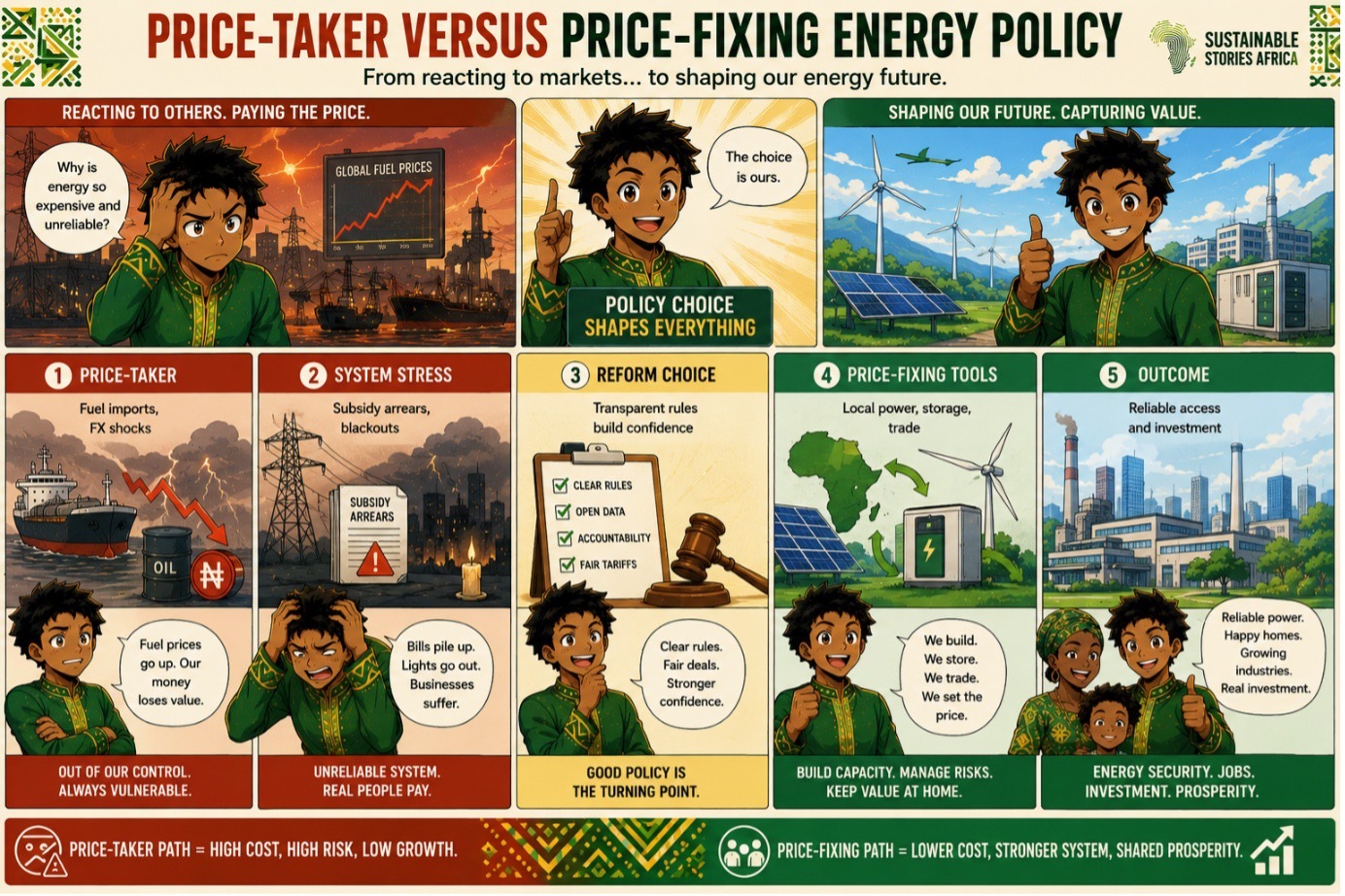
A price-taker economy pays whatever volatility sends its way. Import costs rise, currencies weaken, subsidies balloon, and public budgets absorb shocks.
A price-fixing economy does something different: it builds local generation, contracts flexible demand, invests in storage, strengthens cross-border trade and uses targeted support instead of blanket distortion.
This is not an argument for removing protection. It is an argument for making protection smarter. Lifeline tariffs, cash transfers, social registries and energy-efficiency support can protect households while allowing investment-grade assets to recover costs.
Reform Can Create African Champions
If Africa gets the rules right, private equity can help scale local energy champions rather than merely acquire scarce assets. Commercial and industrial power platforms can serve manufacturers.
Mini-grid and embedded generation companies can deepen productive use. Transmission and distribution services can reduce losses. Data-centre energy partnerships can connect digital growth with clean power procurement.
The future is not foreign capital owning Africa’s energy destiny. It is African institutions, DFIs, pension funds, utilities, developers and communities using private capital as one tool in a disciplined national strategy.
That requires governments to stop treating every investor question as suspicious. Good investors ask hard questions because infrastructure must survive politics, weather, currency cycles and technology shifts.
The Reform Agenda Is Practical
- First, publish tariff methodologies and update them transparently.
- Second, separate social protection from utility solvency: protect people directly instead of hiding costs inside broken balance sheets.
- Third, make PPAs credible by standardising terms, clarifying termination rules and enforcing payment obligations.
- Fourth, create local-currency instruments for energy infrastructure through pension-fund participation, credit enhancement and infrastructure debt vehicles.
- Fifth, strengthen regional power pools so power trade becomes a commercial hedge against domestic scarcity.
- Sixth, require project-level disclosure on uptime, losses, emissions, local content and community benefits.
Private equity should also be held to a development standard. Energy deals should include measurable outcomes: new capacity, service quality, emissions reduction, local employment, skills transfer and affordability protections.
Capital should not be celebrated merely because it arrives.
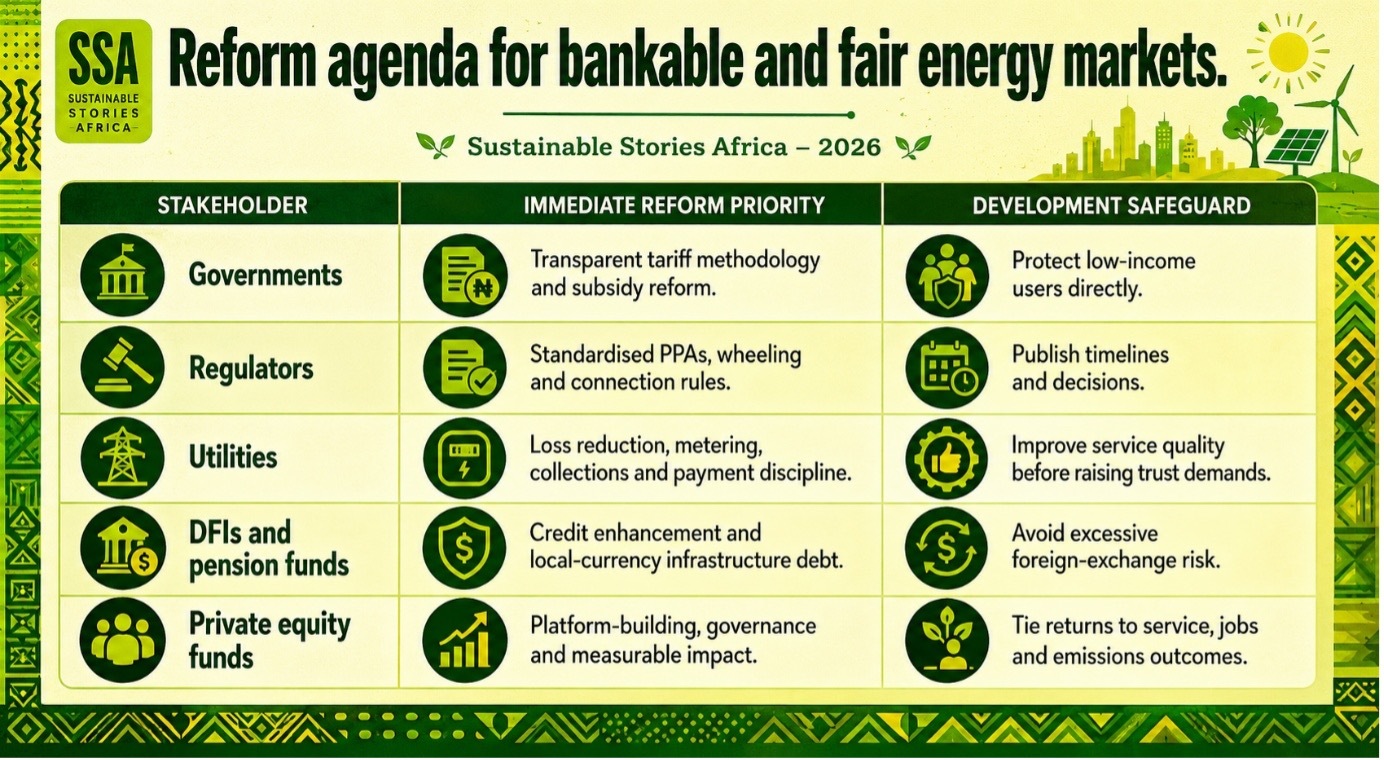
Path Forward – Reform Before The Cheque
Africa should negotiate from a point of readiness, not desperation. Stronger price signals, contracts and utility governance will bring better capital on better terms.
The continent’s energy future will be shaped by countries that make reliability investable while making access fair.