Positioning Africa among the world's leading destinations for responsible investment."
Written By Eyikojoka Diboku
In a Fitzrovia boardroom and across five African capitals, one man has spent thirty years learning that governance is never abstract; it is the difference between a community that thrives and one left waiting.
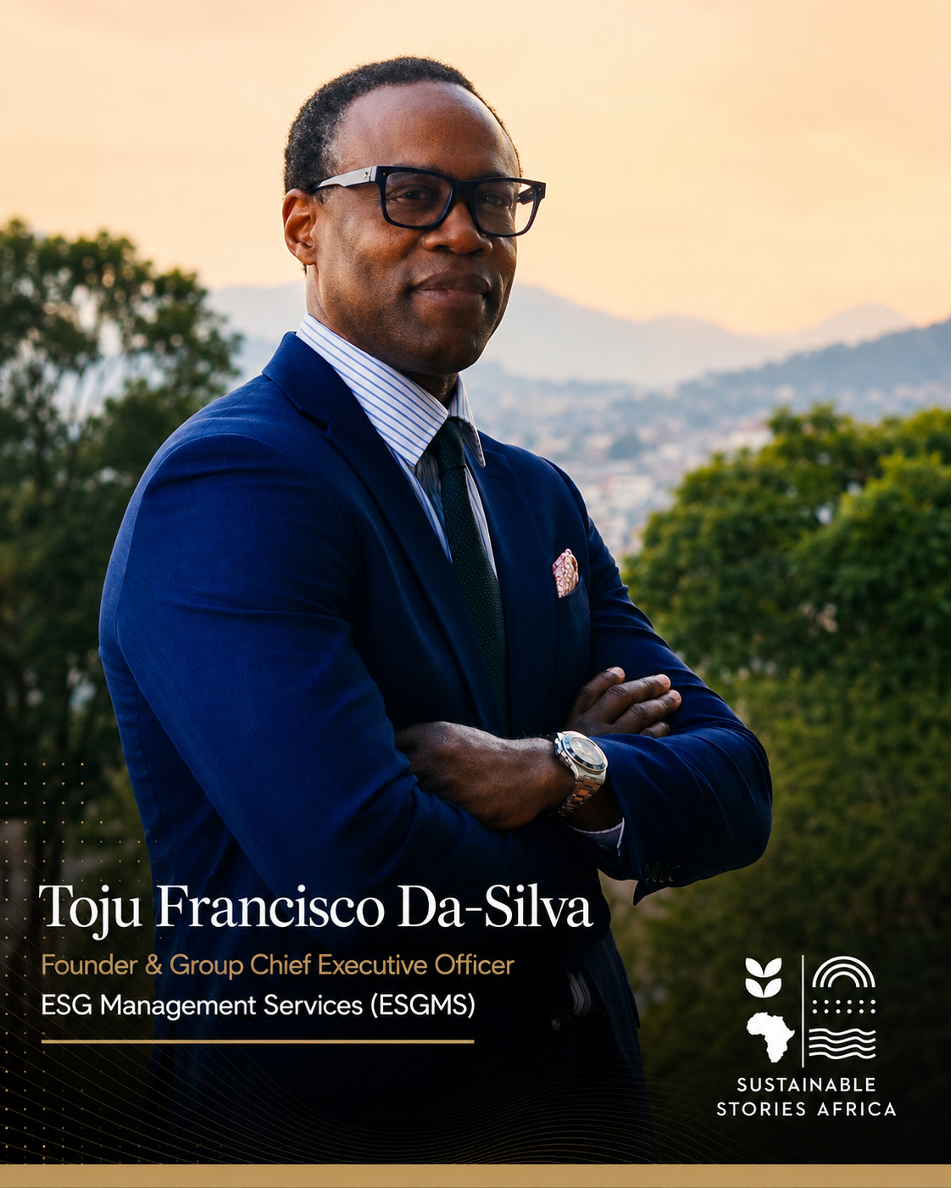
Today, Toju Francisco Da-Silva leads ESG Management Services (ESGMS), architecting the frameworks quietly reshaping how Africa talks to global capital.
His story matters now because the continent's next decade of growth depends on the very trust he has built, a career translating into policy.
Boardroom Becomes A Bridge
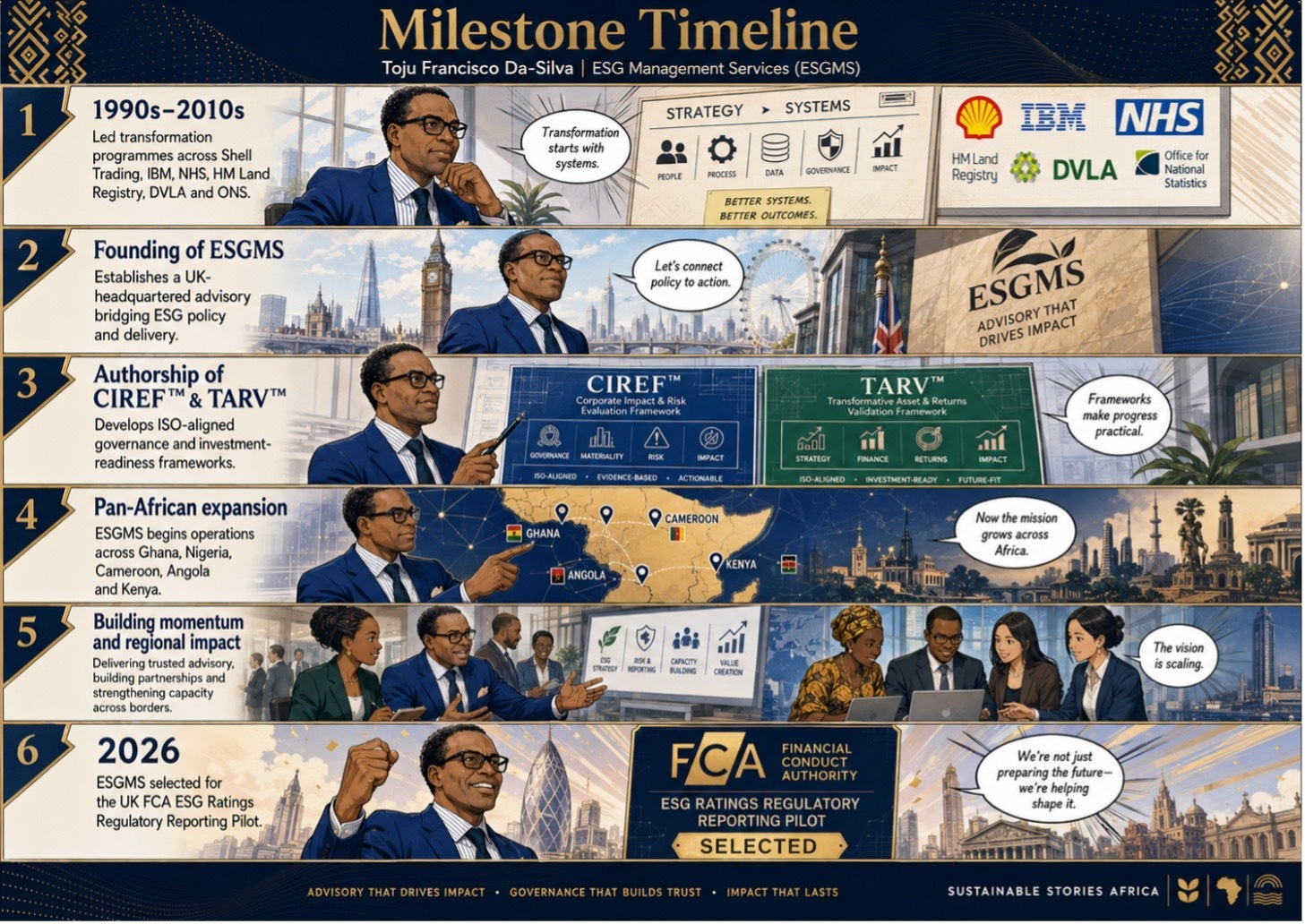
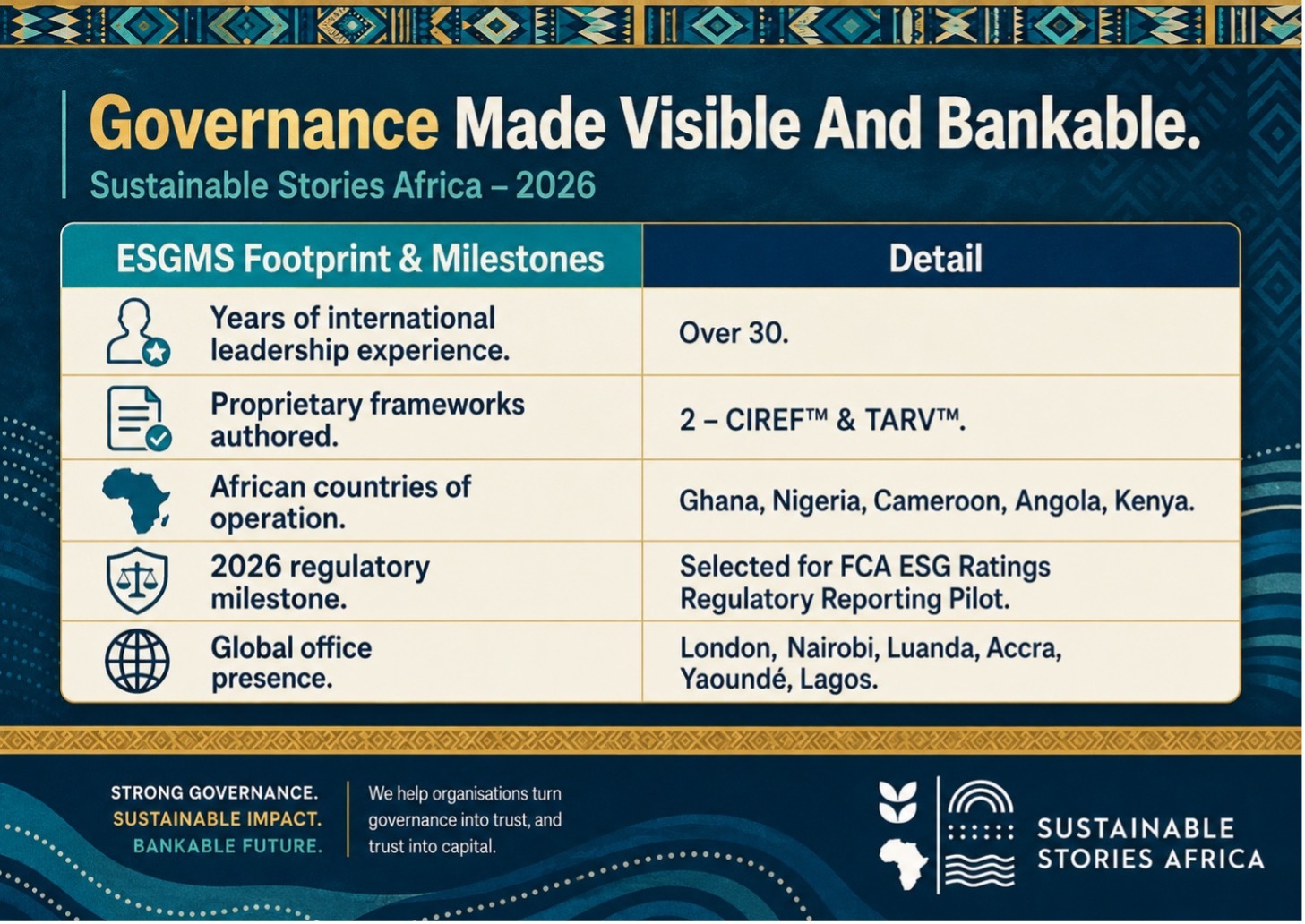
The call comes through on a grey London morning: ESGMS has been selected for the UK Financial Conduct Authority's ESG Ratings Regulatory Reporting Pilot.
For most executives, this would be a headline moment. For Toju Francisco Da-Silva, it is simply the latest proof of a conviction he has carried since his earliest years in corporate transformation: that credibility, once built, travels.
Francisco is the Founder and Group Chief Executive Officer of ESGMS, a UK-headquartered advisory firm working with governments, regulators, financial institutions and multinationals to accelerate ESG implementation and unlock sustainable investment.
Before ESGMS, he spent over three decades leading strategic transformation programmes for organisations including Shell Trading, IBM, the NHS, HM Land Registry and the UK's Office for National Statistics.
However, behind the client logos is something simpler: a belief that institutions, however large or under-resourced, deserve the tools to be trusted.
That belief is what carried him from public sector transformation in Britain to boardrooms and ministries across Ghana, Nigeria, Cameroon, Angola and Kenya.
A Career Built On Trust
"Translating ESG ambition into measurable institutional capability, regulatory excellence and long-term economic competitiveness" is how Francisco describes his life's work.
It is a sentence built like a bridge, from ambition to capability, from paper commitments to lived outcomes, and it captures precisely why his story belongs at the centre of Africa's sustainability conversation right now.
For years, African institutions have carried the weight of good intentions without always having the technical scaffolding to convert them into investable, bankable governance.
Francisco has spent his career building that scaffolding, one framework, one regulator, one boardroom at a time.
Three Decades Behind The Vision
Francisco's path did not begin in Africa. It began in some of the UK's most demanding institutional environments, pharmaceutical giants like MSD and Amgen, energy majors like Shell Trading, and government bodies like the DVLA and ONS, where transformation had to survive the scrutiny of audit and public accountability all at once.
That discipline became the seed of two proprietary frameworks: CIREF™ (Compliance & Investment Readiness Evaluation Framework) and TARV™ (Transparency, Accountability, Regulatory Alignment & Visibility), both ISO-aligned tools designed to strengthen governance, improve resilience and widen access to sustainable finance.
Where many consultants offer diagnostics, Francisco built instruments: repeatable, defensible, and exportable across borders.
It is this portability that allows ESGMS to take root simultaneously across five African markets, each with different regulators, different risk appetites, and different histories with foreign capital.
Governance Made Visible And Bankable
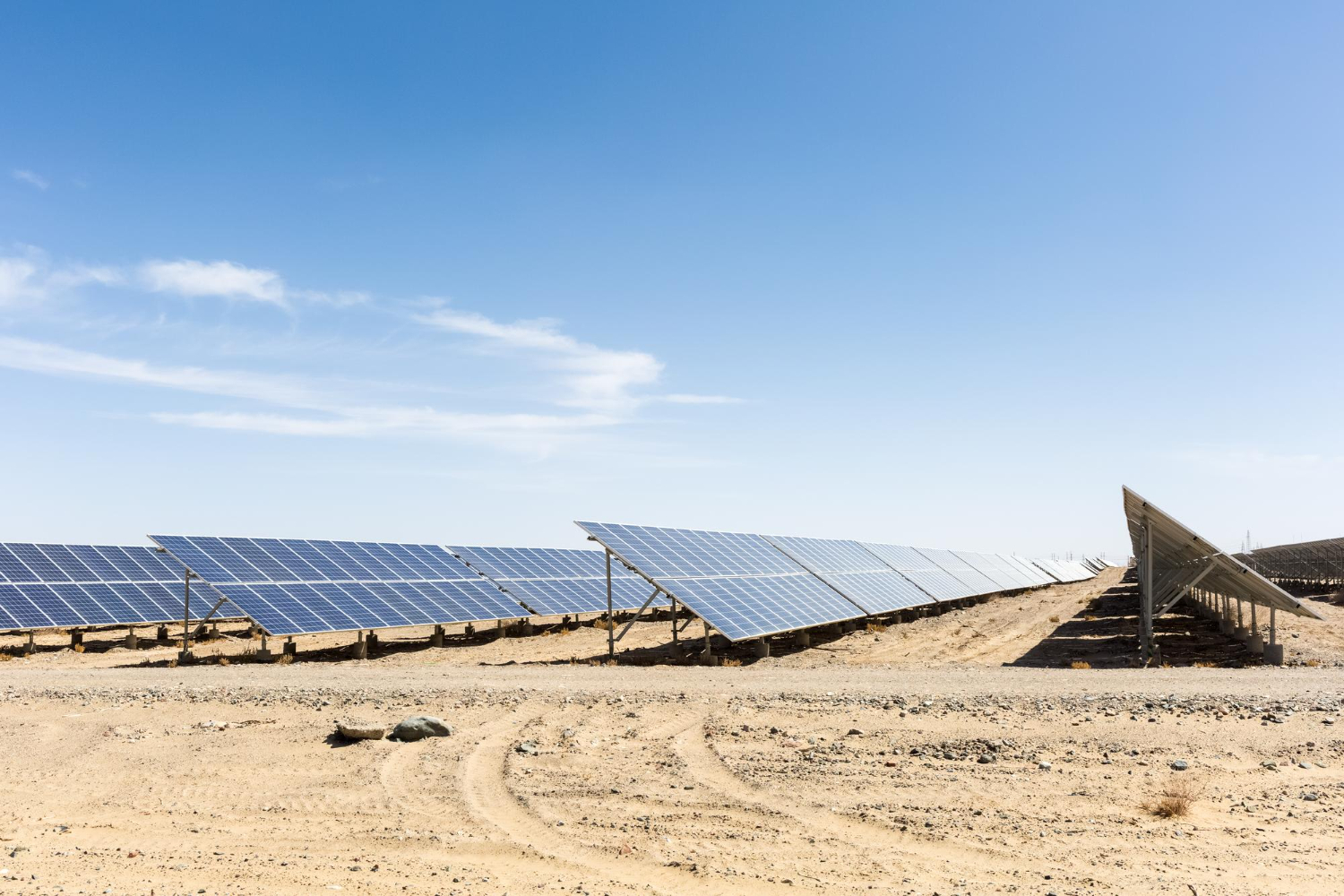
Under Francisco's leadership, ESGMS now champions governance and monitoring of the West, Central and East Africa Trading Corridor, aligned with African Continental Free Trade Area (AfCFTA) commitments.
That is not a small claim; it means the frameworks he authored in London boardrooms are now shaping how trade moves across an entire continental corridor.
Picture a port authority in Accra or a regulator in Nairobi, newly equipped not just with policy documents but with a measurable pathway toward investment readiness.
That is the human translation of institutional capacity: fewer stalled projects, more capital finding its way to communities that were previously invisible to global investors.
Building What Comes Next
Francisco is not treating the FCA pilot as a finish line but as leverage, a credential he is actively converting into deeper partnerships with development finance institutions, ports and financial regulators across his five-country footprint.
He is inviting governments and regulators who are still hesitant about ESG compliance to see it not as a burden but as a potential for bankability.
The invitation extends further: to investors watching Africa cautiously, to policymakers drafting the next wave of AfCFTA-aligned trade governance, and to the next generation of African ESG practitioners who will need frameworks like CIREF™ and TARV™ as fluently as their predecessors knew the balance sheets.
Path Forward: A Framework Still Expanding
Francisco's legacy is still being written across five countries and counting, each new regulator adopting his frameworks, a small vindication of the belief that governance and growth are not opposites.
What began as institutional transformation inside British public bodies has become, three decades later, a template for how Africa proves itself investable, measured, credible, and ready.