Global finance has found a new metric, avoided emissions, to price the value of decarbonization technologies as real options rather than sunk costs.
For Africa, where climate finance meets barely a quarter of stated need, this could be the difference between being a case study and being a capital destination.
Africa's Trillion-Dollar Blind Spot
Africa emits less than 4% of global greenhouse gases; however, it needs $2.8 trillion by 2030 to deliver on its climate pledges, and a new global framework on avoided emissions could finally give the continent the investment language it has lacked.
A World Business Council for Sustainable Development (WBCSD) paper released this year makes the case for treating investments in low-carbon solutions as "real options", staged bets that let companies scale, pause or exit as policy and market signals evolve, rather than all-or-nothing commitments.
For African markets starved of patient capital, this reframing matters enormously, and it is time the continent claimed a seat at the table where this methodology is being written.
A Framework Built Elsewhere, Urgently Needed Here
The WBCSD paper's central claim is blunt: avoided emissions, the systemic emissions reductions enabled by a product or service compared with a fossil-fuel counterfactual, should be treated as an "options-like" signal that de-risks staged capital allocation, not a standalone investment thesis.
That distinction, borrowed from options theory, separates flexible, milestone-gated bets from rigid, irreversible "futures-like" commitments that punish investors when policy or demand shifts.
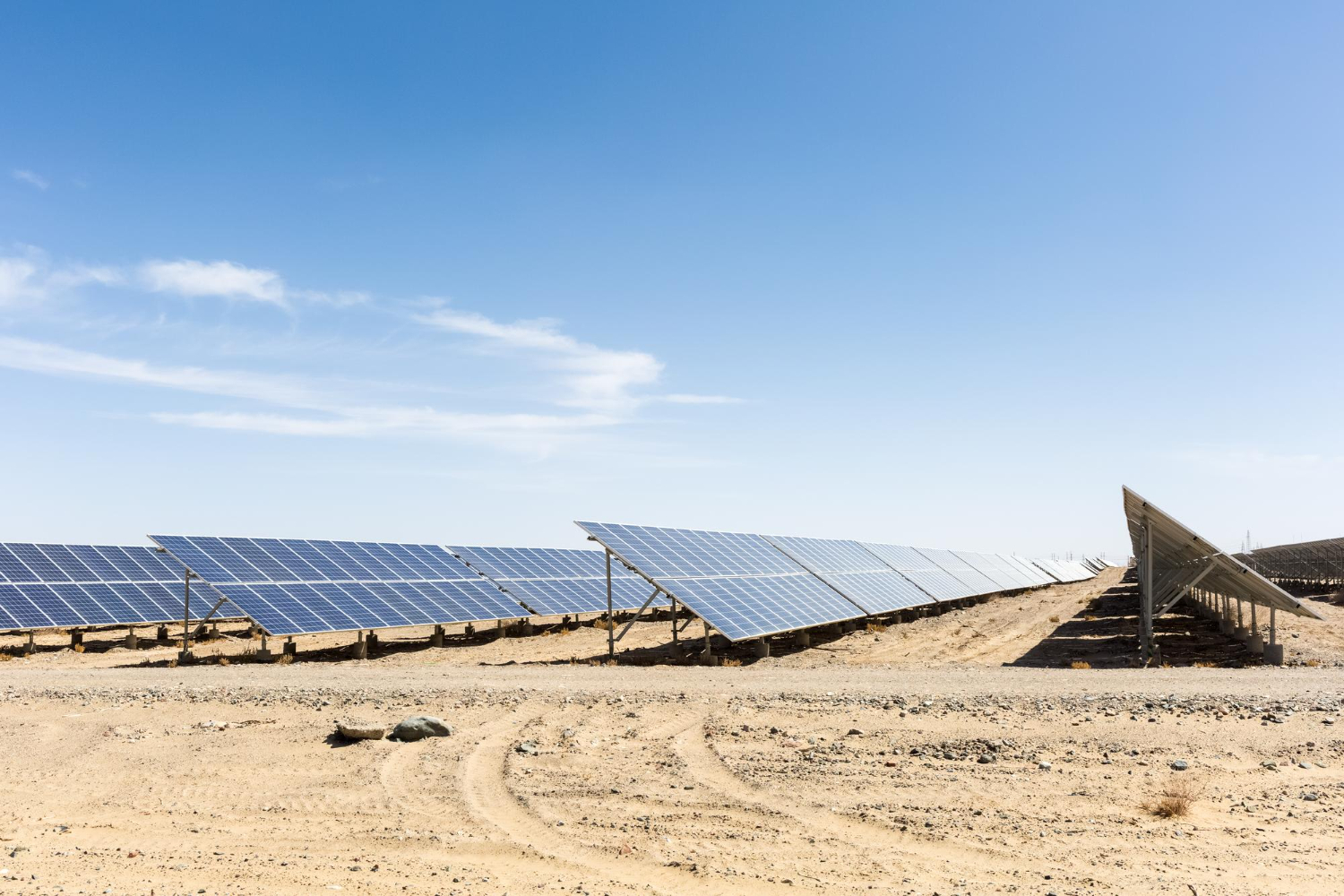
Nowhere is this distinction more consequential than in Africa, where energy demand is projected to double by 2040, yet the continent still attracts only about 3% of global energy investment despite holding 60% of the world's best solar resources.
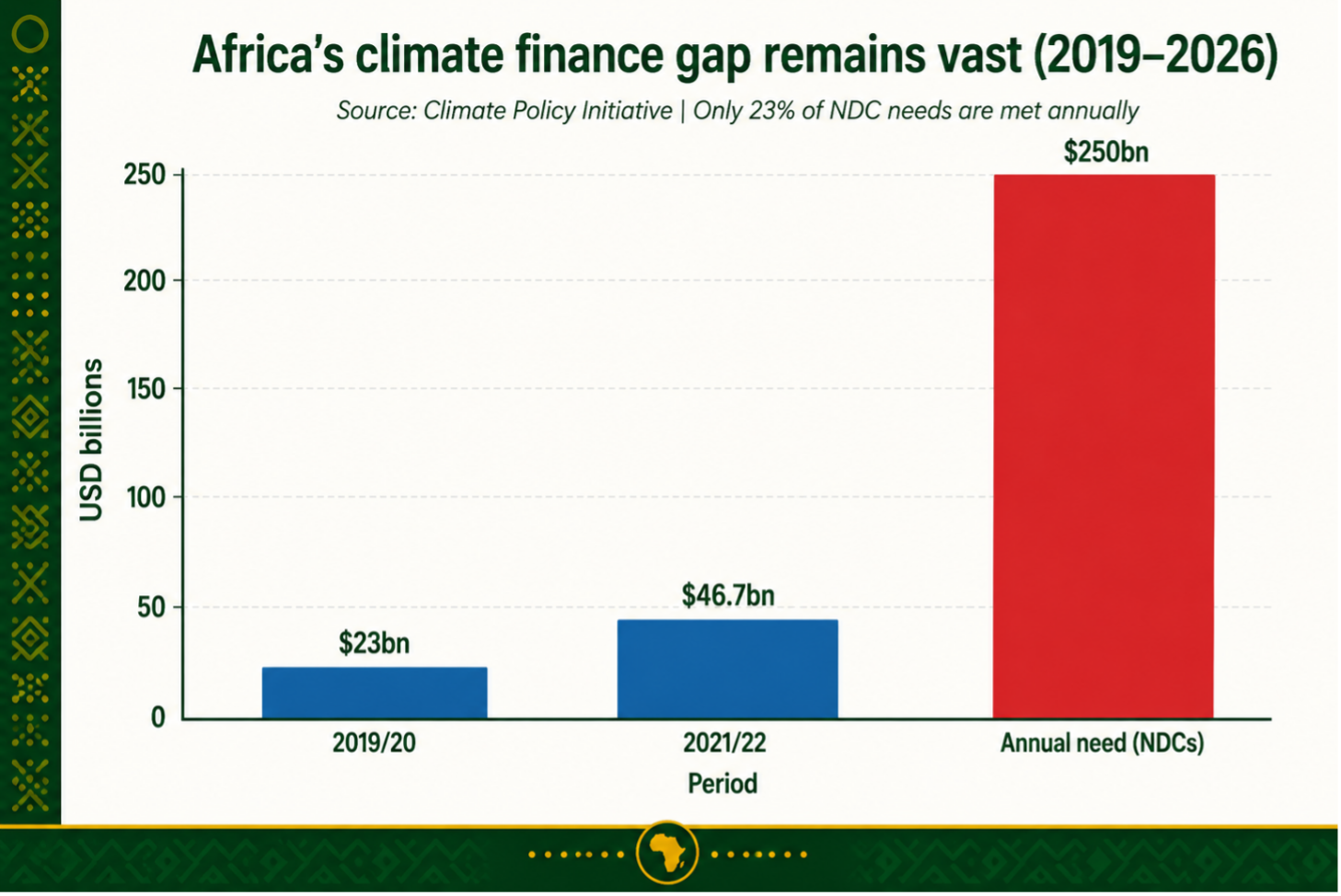
That gap is not abstract. Climate finance flows into Africa rose 48% between 2019/2020 and 2021/22, from $29.5 billion to $43.7 billion annually, crossing $50 billion for the first time in 2022; however, this still covers only 23% of the approximately $250 billion Africa needs every year to implement its Nationally Determined Contributions.
Where the Money Goes, and Where It Doesn't
The regional picture inside that shortfall is where the real story lives, and it should worry anyone thinking seriously about a just, continent-wide transition.
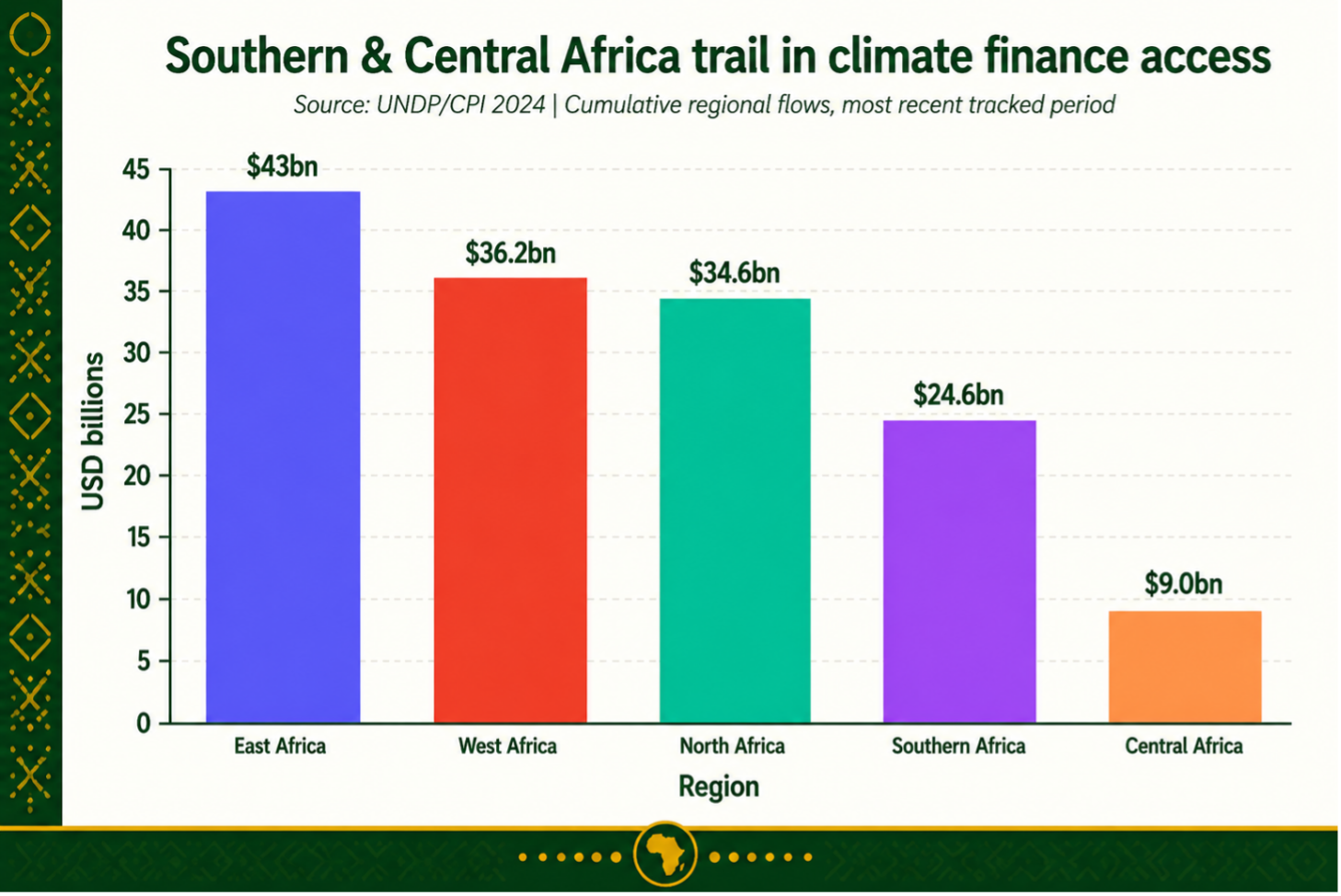
East Africa has mobilized the largest cumulative climate finance total, followed closely by West Africa and Northern Africa, while Southern Africa records the single largest proportional funding gap of any region on the continent, and Central Africa lags furthest behind in absolute terms, receiving barely over $1 billion in adaptation finance in 2023 alone.
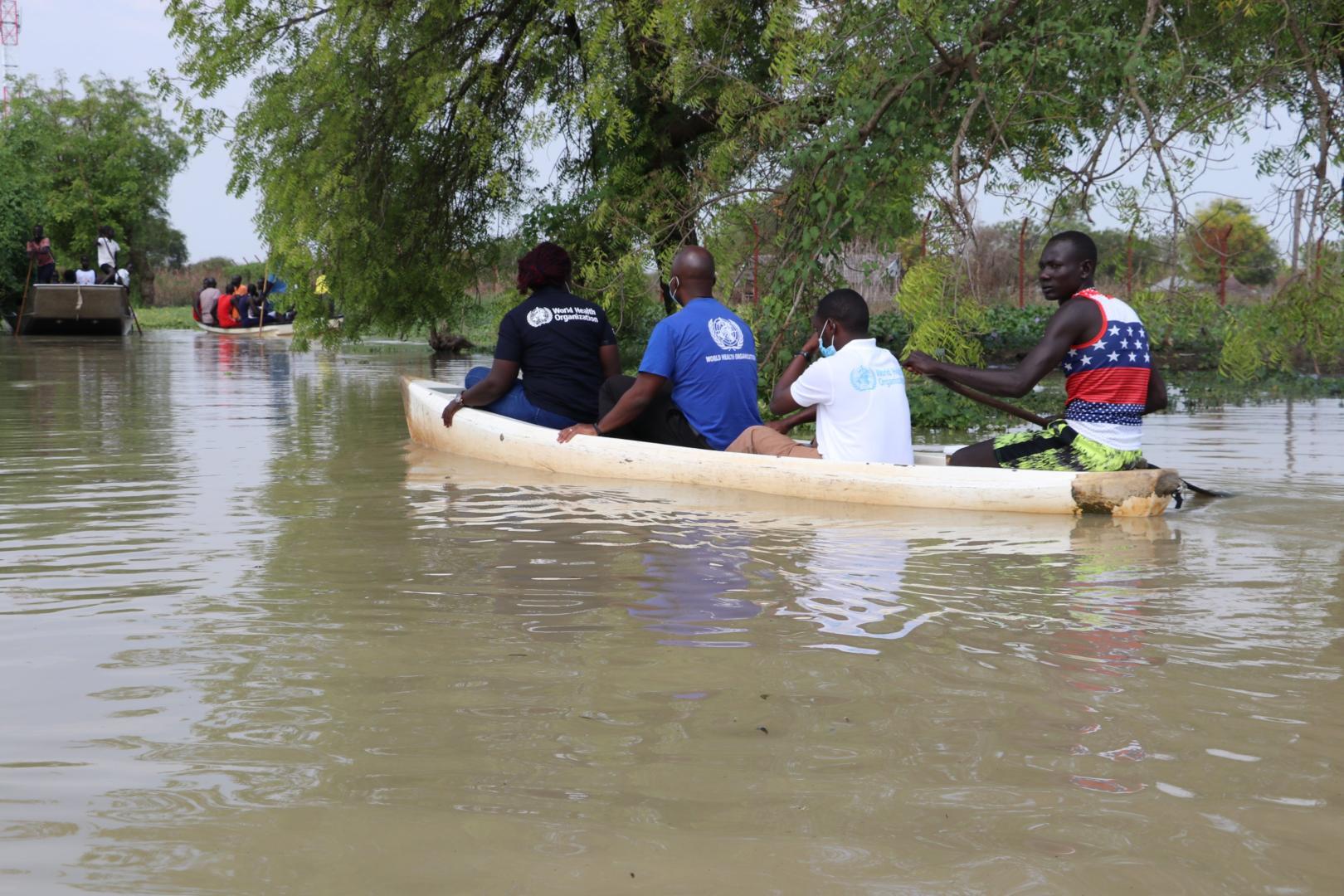
87% of Africa's tracked climate finance still comes from international sources, and just ten countries capture 46% of that total, rising to 76% when looking at private capital alone, leaving climate-vulnerable nations like Chad, South Sudan and Madagascar starved of the very investment the WBCSD framework is designed to unlock.
Meanwhile, multilateral development banks delivered a record $137 billion in global climate finance in 2024, with low- and middle-income economies receiving $85.1 billion, most of it structured as staged, milestone-based disbursement, precisely the "options-like" architecture the WBCSD paper endorses.
The chart below shows Africa's widening finance-versus-need gap continentally, followed by the regional disparities in how that limited pool is distributed.
 |  |
What Staged, Option-Style Capital Could Unlock
Imagine Nigerian mini-grid developers, Kenyan geothermal firms, and Egyptian green hydrogen ventures accessing capital the way the WBCSD's illustrative EuroTherm case does, small pilot tranches unlocking larger follow-on funding only once demand, policy support, or technical performance is proven.
This is not a hypothetical; Schroders' own research shows that a global equity portfolio tilted toward high avoided-emissions-intensity companies outperformed benchmarks by 10% over five years, evidence that capital markets do reward credible, well-structured decarbonization bets.
For African renewable developers who currently face some of the highest costs of capital in the world precisely because lenders price in policy and currency risk, an options-based framework that explicitly rewards staged de-risking could lower the cost of borrowing rather than merely the cost of carbon.
The payoff extends beyond project economics. The World Resources Institute has found that every dollar invested in African adaptation and resilience generates more than ten dollars in returns over a decade, a multiplier that strengthens the case for treating early-stage African decarbonization investments as options with asymmetric upside rather than speculative write-offs.
Conversely, the cost of inaction is compounding. Africa is warming faster than the global average, with a 1.5°C global rise translating into at least 3°C of warming on the continent, according to African Union leaders.
What African Capital Actors Must Demand
African finance ministries, development finance institutions, and private lenders should not wait passively for global standard-setters to finish refining avoided-emissions methodology; they need to shape it now, before it hardens into rules written without African data or African priorities in mind.
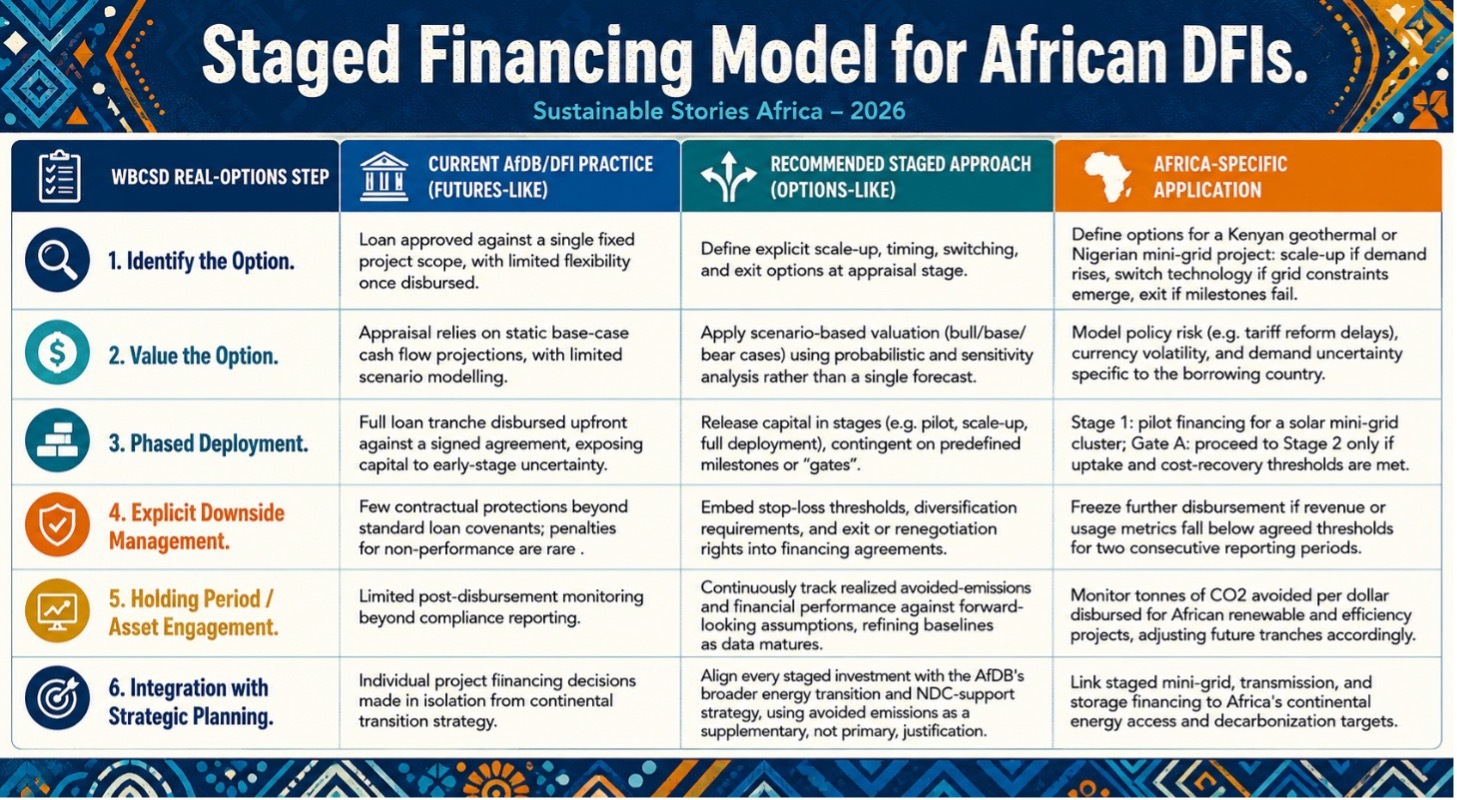
- Domestic development finance institutions and the African Development Bank should adopt staged, milestone-gated financing structures explicitly, mirroring the six-step real-options process the WBCSD outlines, rather than defaulting to rigid, upfront-heavy loan disbursements.
- African governments should push standard-setters such as PCAF, ISO, and WBCSD to ensure avoided-emissions baselines account for Africa's counterfactual reality, often diesel generators or biomass, not grid electricity, so continental projects are not undervalued.
- Regional blocs should prioritize closing the Southern and Central Africa funding gap directly, given these regions carry the largest proportional shortfalls despite comparable or greater renewable potential.
- Private capital providers active in Africa should adopt the Schroders-style avoided-emissions-intensity screening to identify commercially credible transition opportunities, rather than relying solely on carbon-inventory disclosures.
- African development banks should insist that international climate pledges, like the EU's €15.5 billion "Scaling Up Renewables in Africa" campaign, be structured as flexible, staged commitments that adapt to local market signals, not fixed disbursement schedules.
Path Forward – Africa Must Author This Framework
Africa cannot afford to be a passive recipient of a global avoided-emissions methodology built primarily around European and North American case studies.
The continent's development banks, regulators, and private financiers must actively co-design staged, options-based capital structures calibrated to African baselines, currencies, and risk realities.
Doing so would not just attract more capital; it would ensure that capital arrives in a form African markets can actually absorb, scale, and be accountable for, turning a global finance theory into a continental investment reality.