The 2026 WEF Global Risks Perception Survey downgraded environmental risks, not because the science shifted, but because geopolitical and economic turbulence drowned out the slower drumbeat of ecological collapse. Africa should be alarmed.
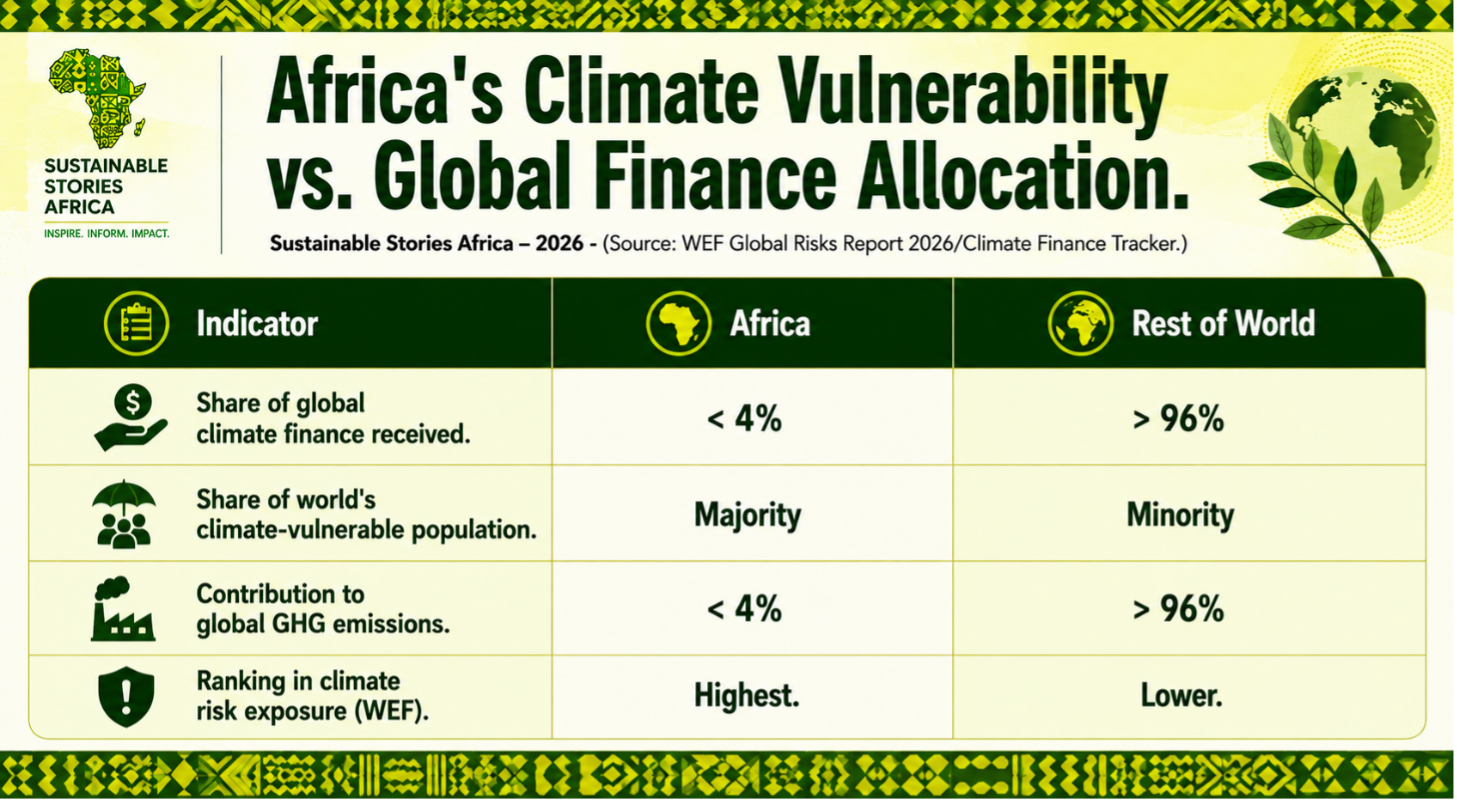
The continent contributes least to global greenhouse gas emissions yet faces the highest exposure to climate risk, food system disruption, extreme weather, coastal flooding and water scarcity.
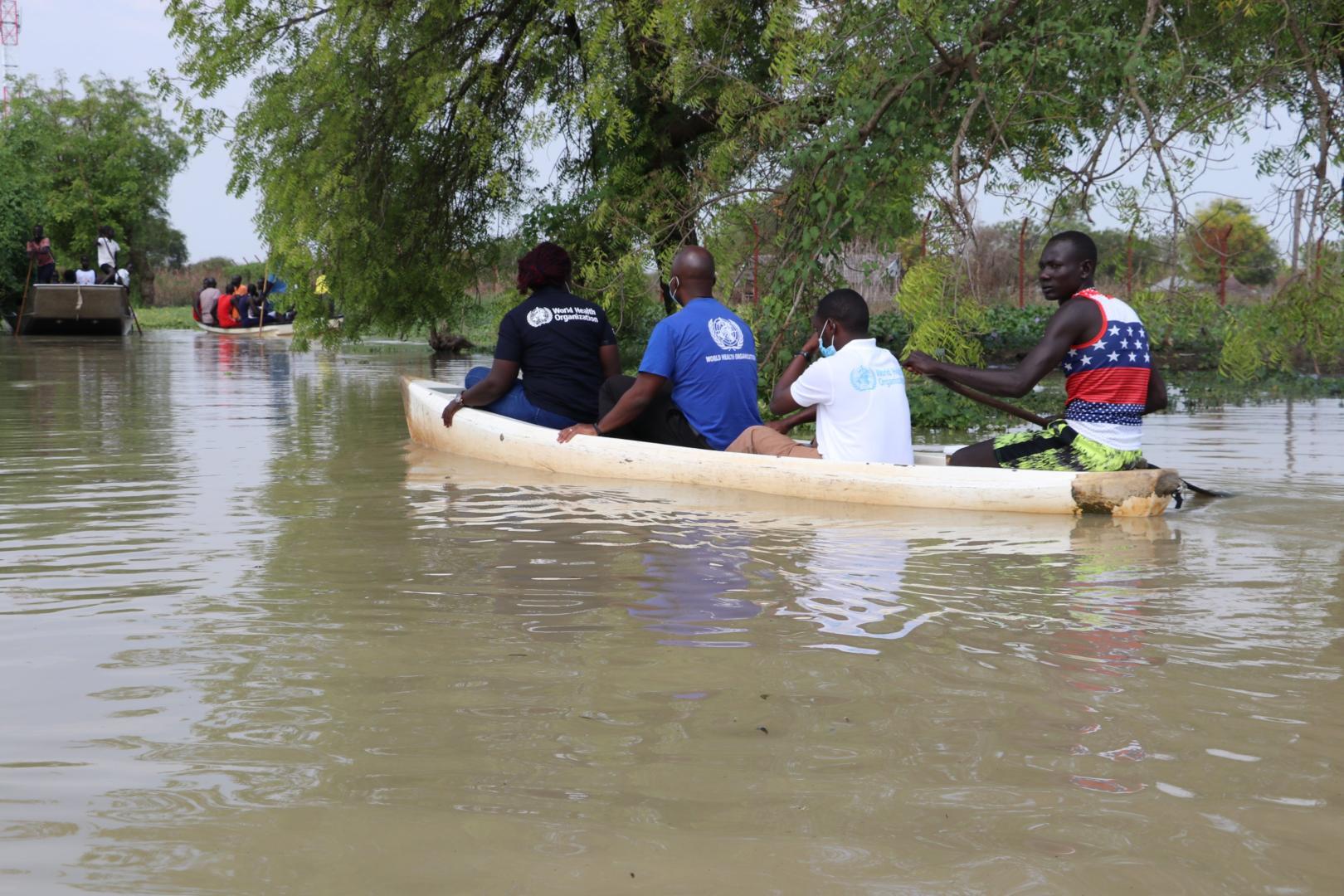
When global experts deprioritise environmental risk, African governments cannot afford to follow. The consequences will not be felt in Geneva or Washington; they will be felt in the Sahel, coastal Lagos and the shrinking shores of Lake Chad.
The Climate Clock Won't Wait for Us
Let's be direct: the WEF Global Risks Report 2026 reveals a world that, under pressure, is doing what humans do under pressure, prioritising the immediate over the existential.
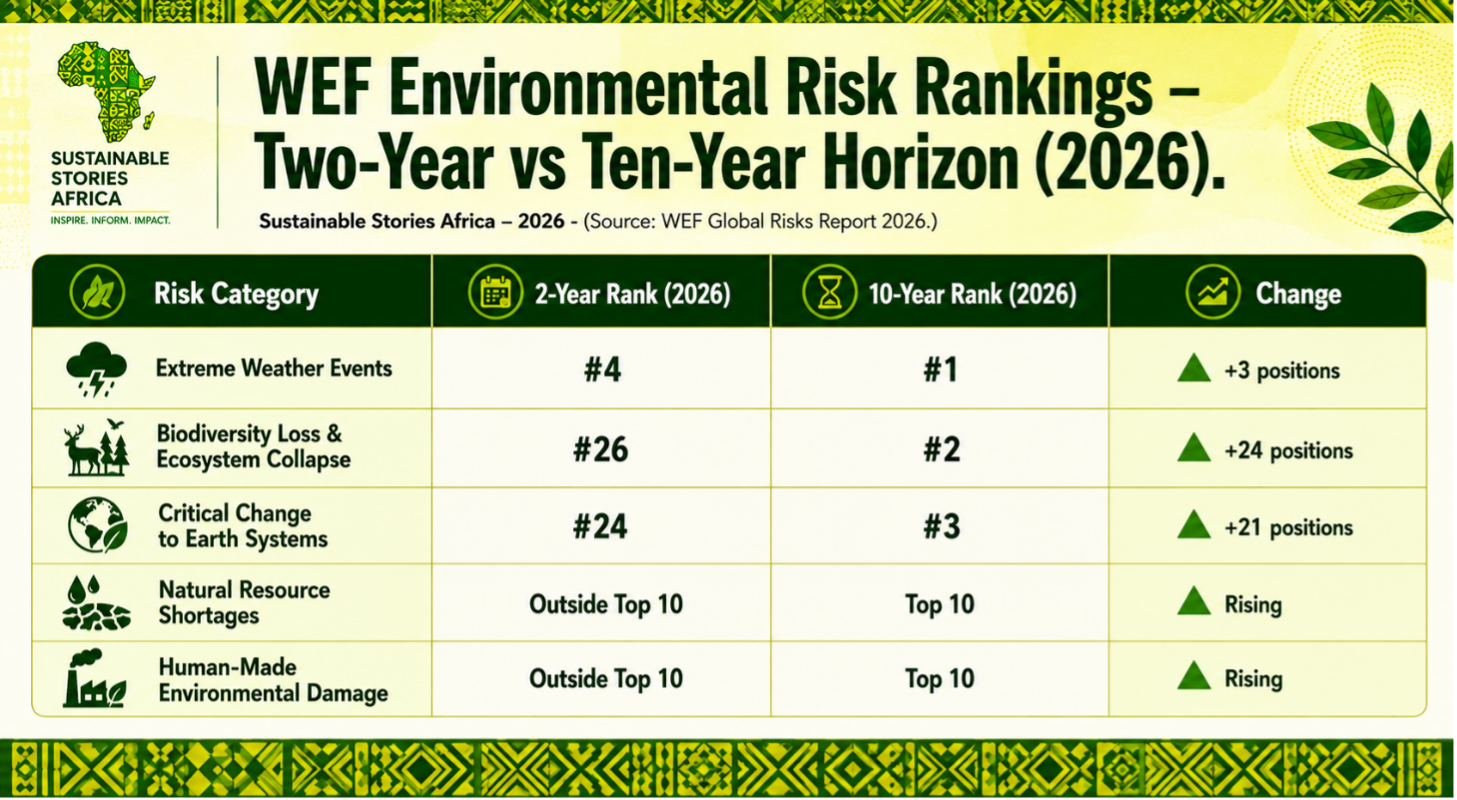
Geoeconomic confrontation has consumed the short-term attention of over 1,300 global experts. Economic downturn and inflation have surged eight positions each in the two-year risk ranking. Meanwhile, Critical Change to Earth Systems has fallen seven positions, Biodiversity Loss and Ecosystem Collapse have dropped five positions, and all environmental risks have declined in absolute severity scores over the two-year horizon.
The world is not saying the environment matters less. It is saying that other things matter more right now. That is a rational human response to an immediate crisis. It is also, from the perspective of the African continent, a catastrophic governance failure — because "right now" and "long-term" are not as separable as the survey data implies. Climate change is not a future risk for Africa. It is a current operational reality.
The Data That Should Stop Africa in Its Tracks
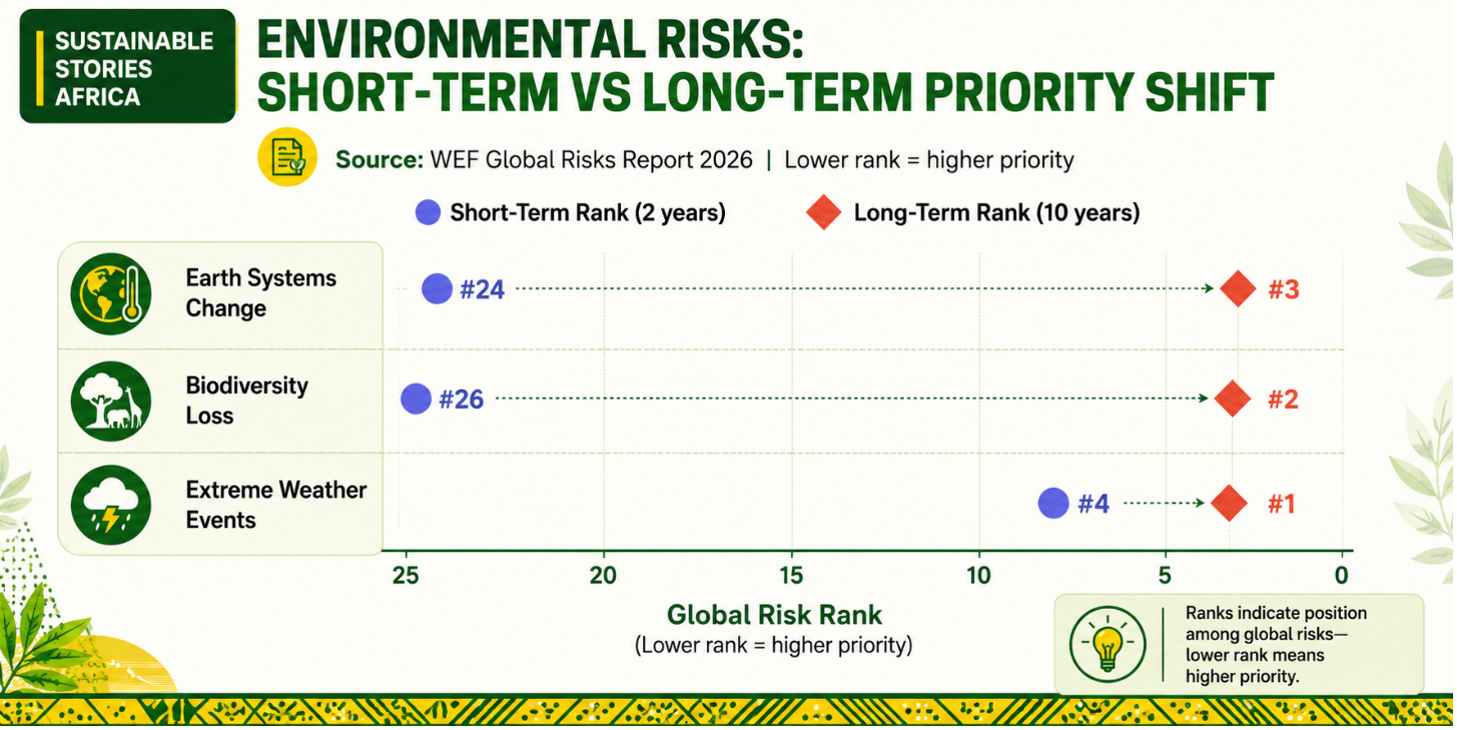
The WEF data on environmental risks reveals a troubling contradiction.
Five of the top ten long-term global risks are environmental, yet within the two-year policy horizon, economic and geopolitical concerns have systematically displaced them.
The numbers are unambiguous:
 |  |
- 74% of respondents anticipate a turbulent or stormy long-term outlook for environmental risks, the most pessimistic rating across all five risk domains
- The UN Environment Programme's Emissions Gap Report 2025 projects global temperatures will likely exceed 1.5°C above pre-industrial levels within the coming decade
- By 2030 – 2035, data centres alone could consume up to 20% of global electricity, further straining power grids already under pressure across the Global South
The gap between short-term risk attention and long-term risk reality is widening. The cost of that gap will be paid by the people and places least responsible for creating it.
Africa's Climate Exposure Is Not Abstract
The WEF report's global risk data takes on a different weight when contextualised against African realities. Consider three intersecting dynamics:
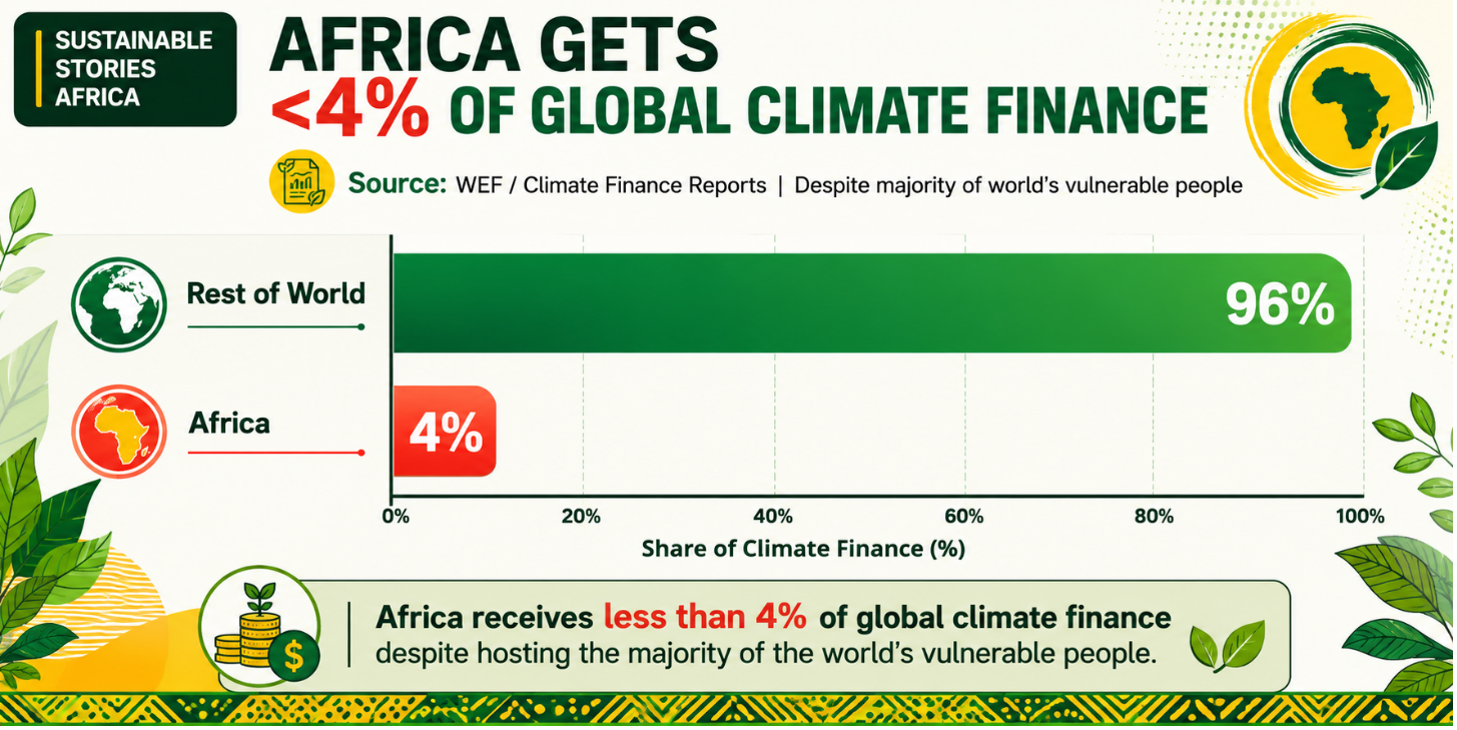
First: Africa leads in climate vulnerability but lags in adaptation finance.
- The continent has received less than 4% of global climate finance despite representing the majority of the world's climate-vulnerable population.
- The WEF warns that multilateral funding cuts are reducing development assistance, the very mechanism most relevant to addressing natural resource shortages and insufficient infrastructure in low-income countries.
 |  |
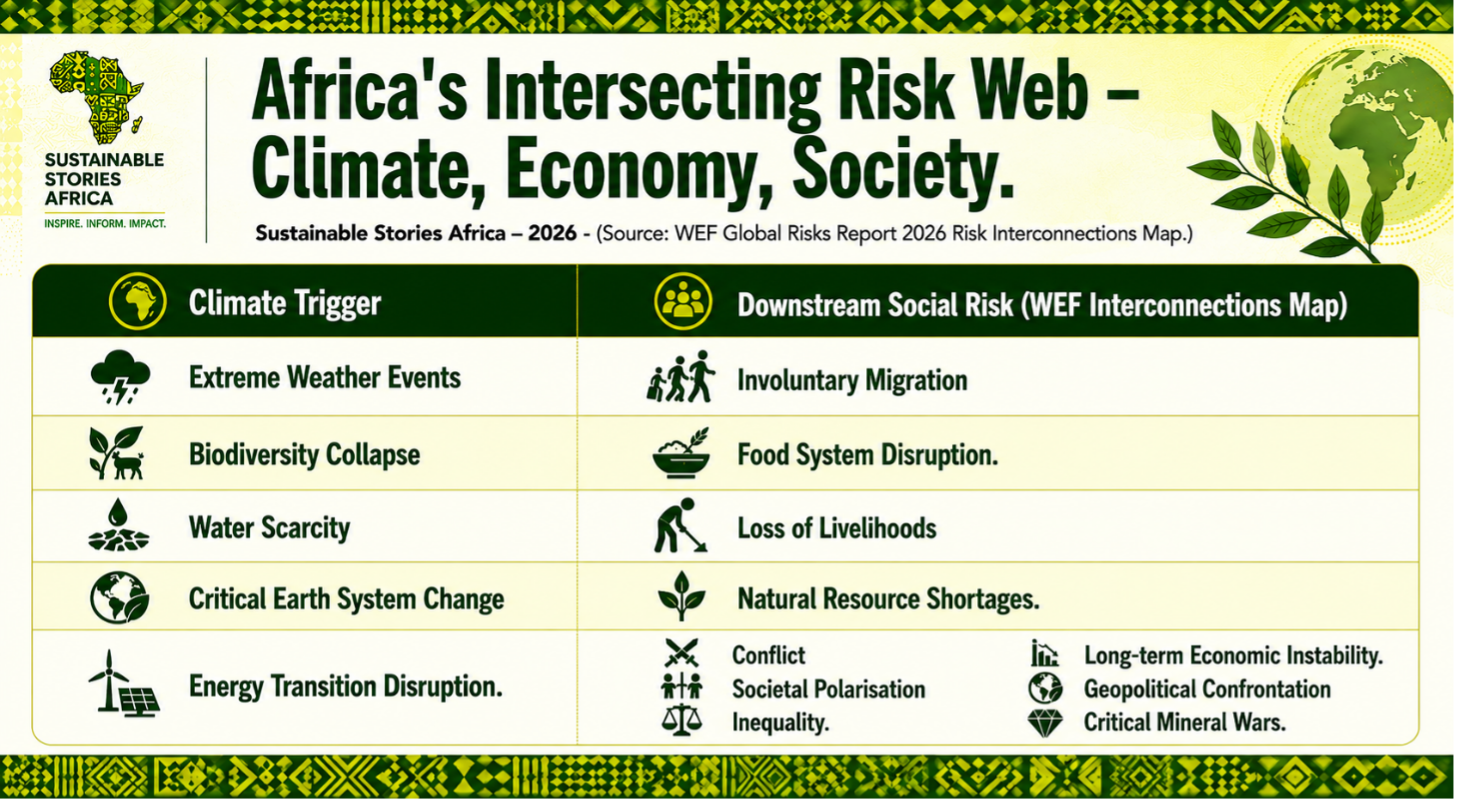
Second: Environmental and societal risks are inseparable in Africa.
- The WEF's own interconnections map shows that Extreme Weather Events feed directly into Involuntary Migration, Lack of Economic Opportunity, Inequality, and Societal Polarisation.
- In Sahelian countries, climate stress is already a primary driver of displacement and conflict. The WEF data confirms what African communities already know: these risk categories are not separate. They are the same crisis, viewed through different lenses.
Third: The energy transition itself is becoming a new arena of geoeconomic confrontation.
- The WEF warns that competition for critical minerals, such as cobalt, lithium, and rare earths, is intensifying, with "direct and indirect interventions by major powers in resource-rich parts of the world" cited as a rising risk.
- For African nations, this means the same energy transition that should represent a development opportunity is being appropriated as a geopolitical battleground.
What African Environmental Leadership Can Achieve
Here is the counter-narrative: Africa has an opportunity, if it acts with collective coherence, to define what responsible environmental leadership looks like in the age of competition.
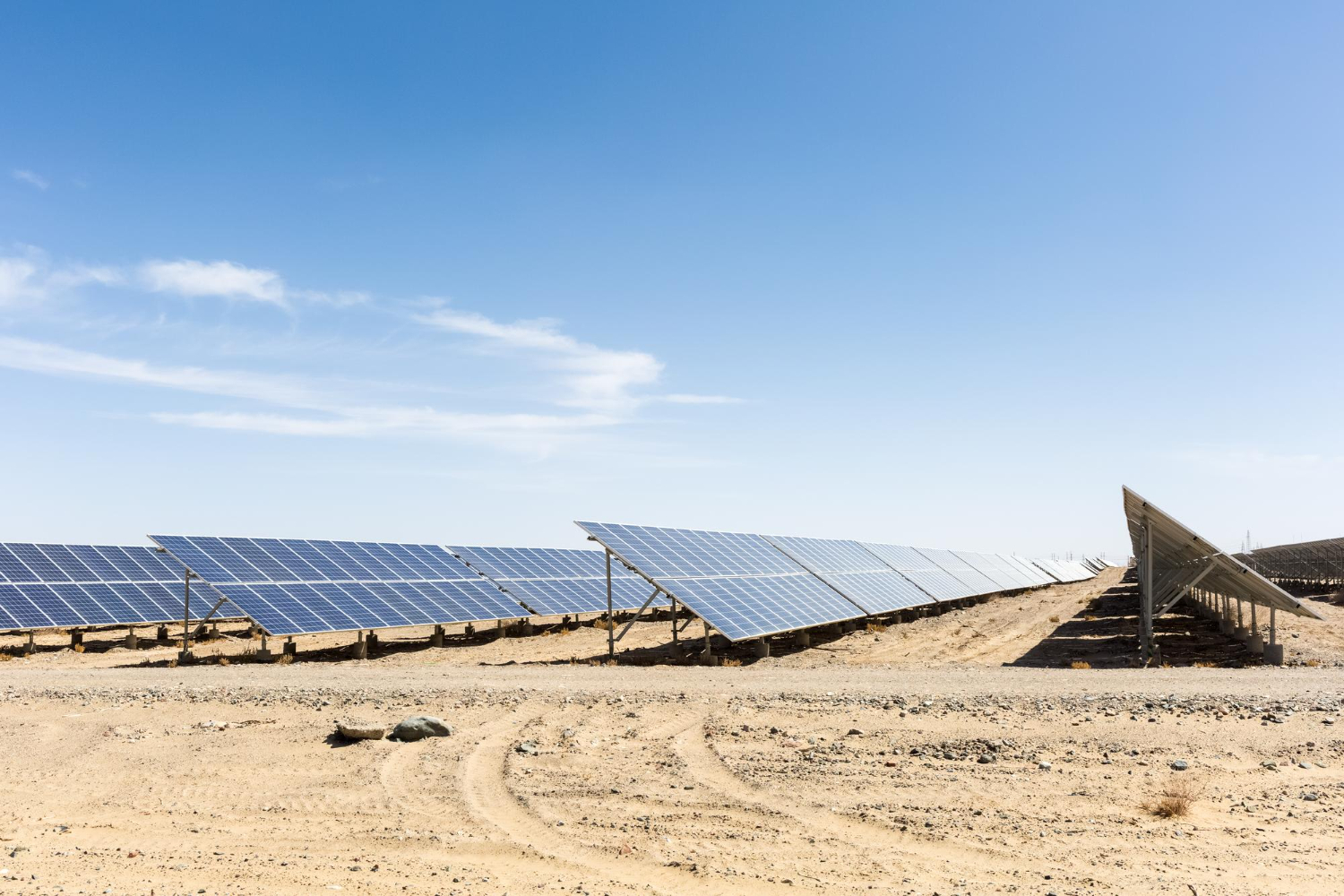
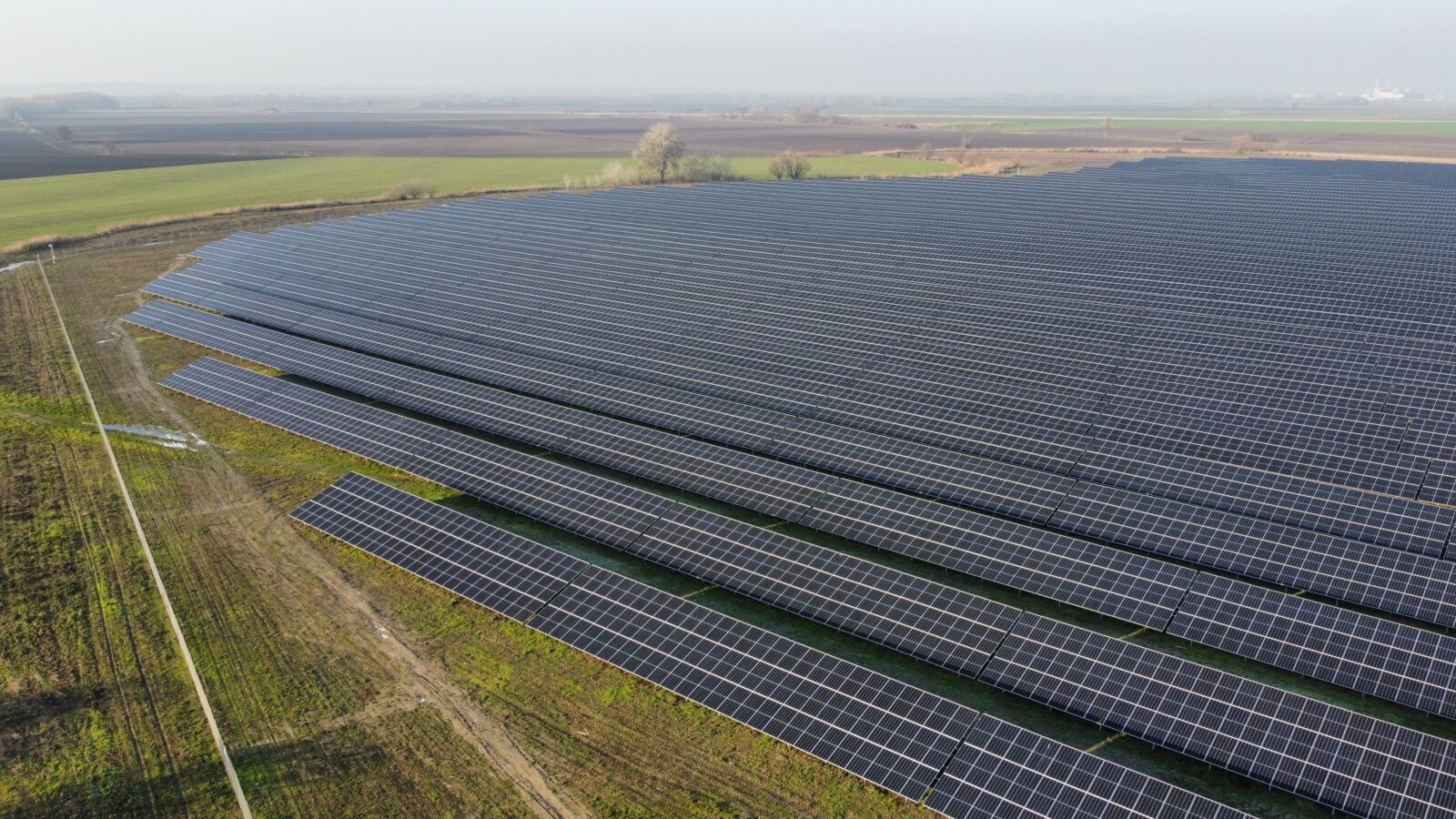
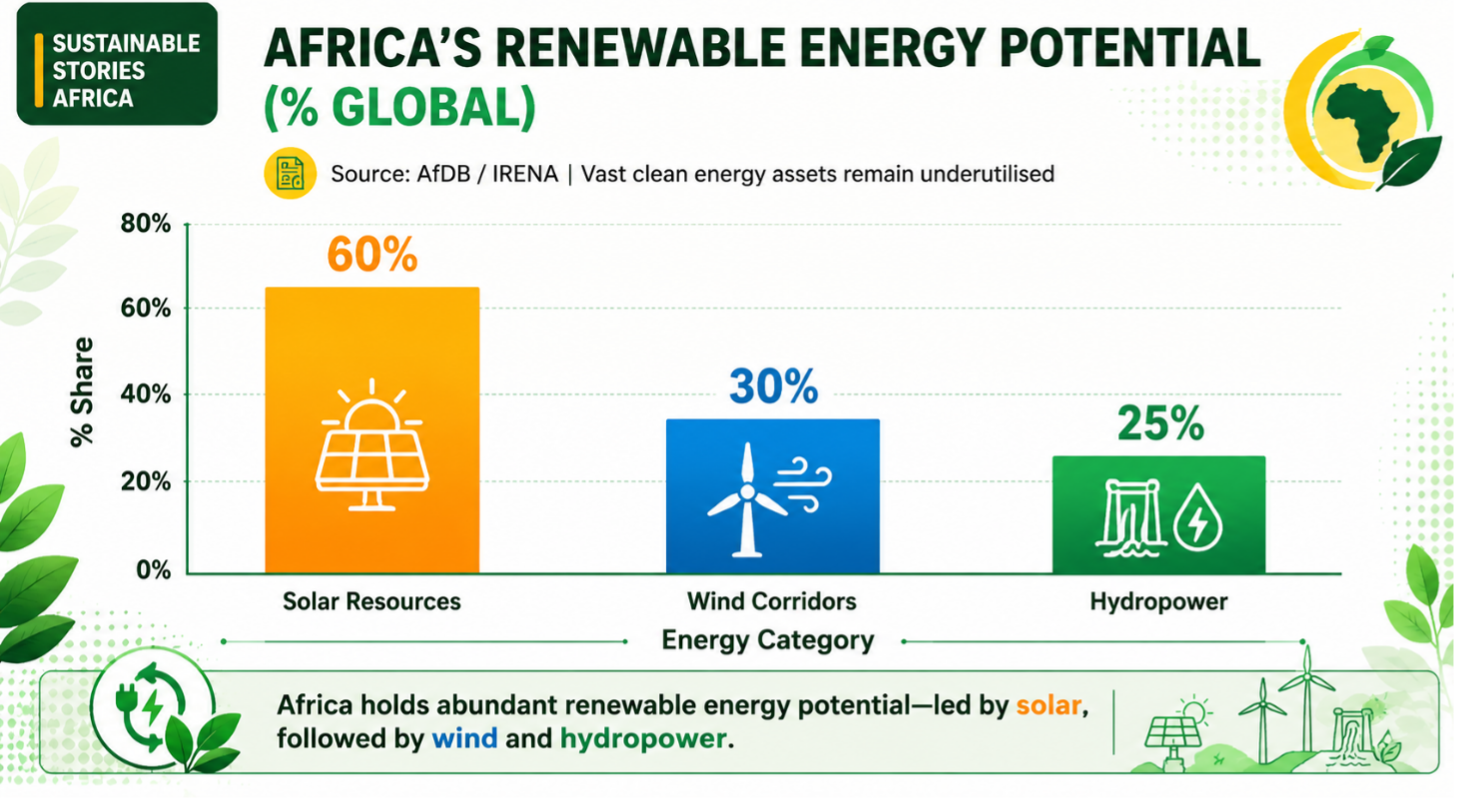
The continent that suffers most from climate inaction also holds the greatest renewable energy potential, 60% of the world's best solar resources, vast wind corridors, and hydropower potential that dwarfs its current utilisation.
If African nations operationalise their Nationally Determined Contributions (NDCs), activate the Just Energy Transition Partnerships (JETPs) now underway in South Africa and other markets, and leverage the AfDB's climate facility and the Green Climate Fund aggressively, they can leapfrog fossil-fuel dependency in a way that creates domestic jobs, energy security, and global climate credibility simultaneously.
The WEF report's own governance analysis shows that global treaties and agreements, including the Paris Agreement and the CBD, remain the primary instruments for reducing environmental risk.
Africa's climate diplomacy must not only defend these frameworks but must amplify the African voice within them, particularly as major powers retreat from multilateral commitments.
An African Environmental Agenda for 2026
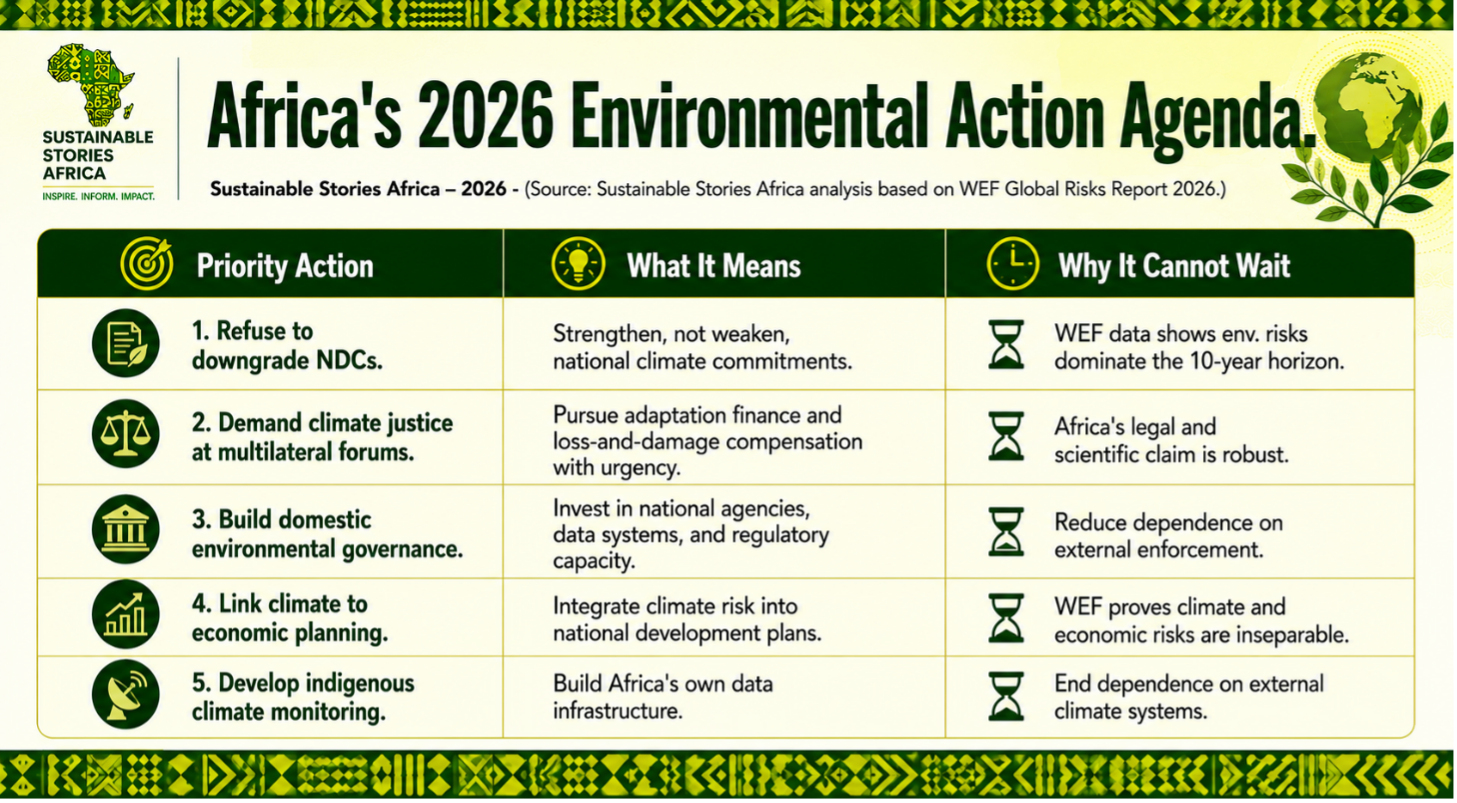
The WEF Global Risks Report 2026 makes the case inadvertently but powerfully: if African governments allow themselves to be caught up in the short-term noise of geopolitical and economic risk, they will repeat the mistakes of wealthier nations, sacrificing long-term environmental stability for short-term political convenience.
Five actions are non-negotiable for African environmental leadership in 2026:
Path Forward – Africa's Line in the Sand on Climate
The WEF Global Risks Report 2026 shows a world averting its eyes from the long-term environmental crisis it is creating.
Africa's governments, scientists, communities and civil society must serve as the world's conscience, and its own.
The climate emergency does not care about geoeconomic confrontation. Extreme weather will not wait for debt negotiations to conclude. Biodiversity collapse does not observe the calendar of international diplomacy.
For Africa, acting on environmental risk is not idealism. It is a survival strategy, and it starts now.