The OECD projects a 6.9% fall in net official development assistance in 2026 and an 11.6% drop in bilateral aid to sub-Saharan Africa.
Health faces some of the steepest projected cuts.
Governments and donors must decide which services to protect and how to cover the recurrent costs that keep them working.
A Third Year of Aid Decline
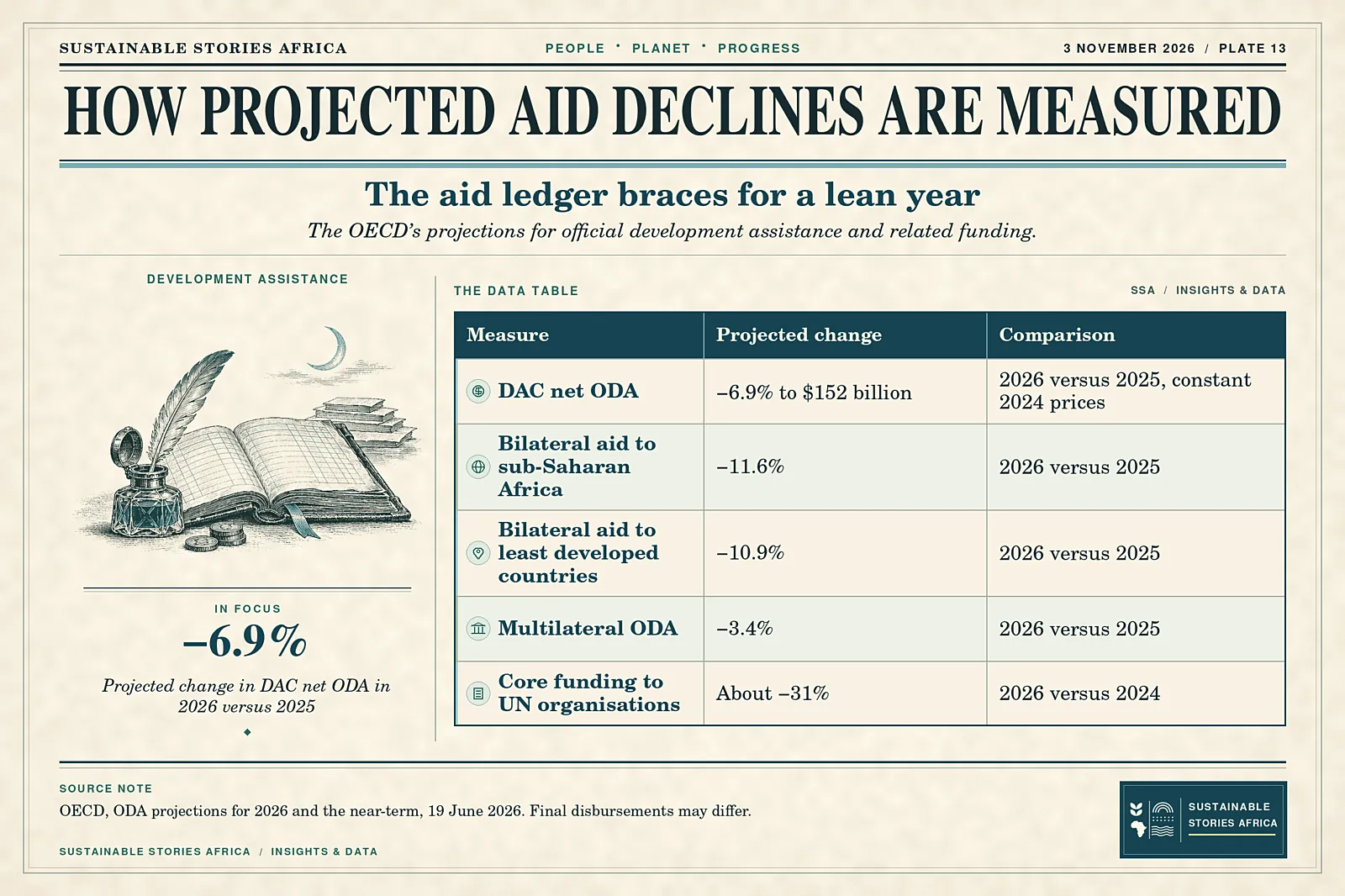
The OECD expects net official development assistance from members of its Development Assistance Committee to fall by 6.9% in 2026, to $152 billion in constant 2024 prices.
- That would be the lowest level since 2014 and mark a third consecutive annual decline.
- The projections follow a preliminary 23.3% decline in 2025.
Sub-Saharan Africa faces a sharper decline in bilateral aid.
- The OECD projects a further 11.6% fall in 2026, while bilateral aid to least developed countries is expected to drop by 10.9%.
Many countries belong to both groups.
- These percentages show overlapping exposures, and their effects depend on the services financed and the alternatives each country has.
The June projections matter for the next round of budget decisions.
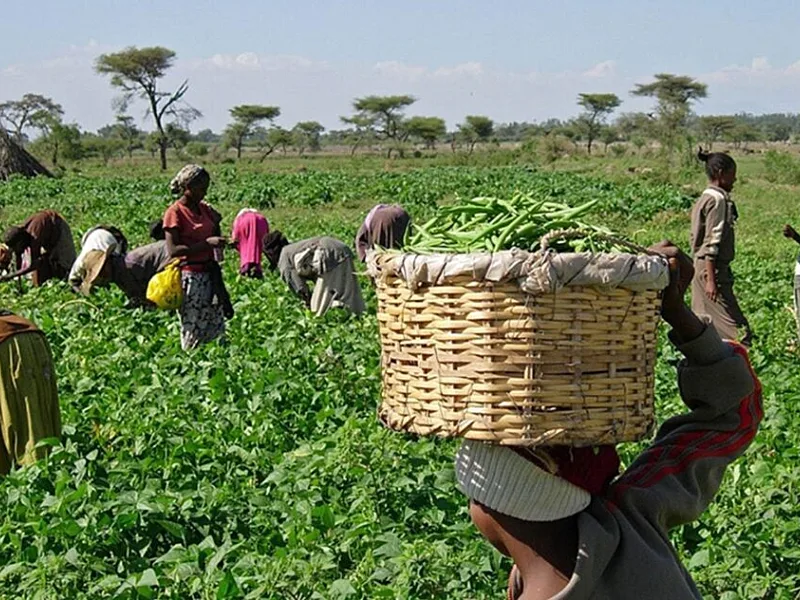
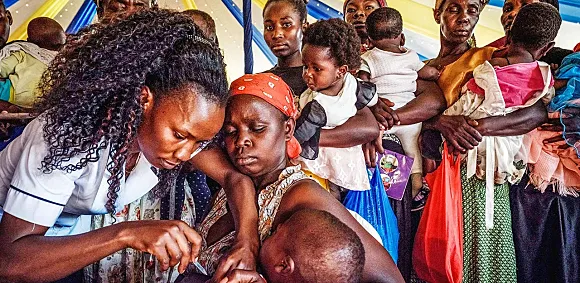
- An apparent national funding gap can translate into delayed malaria shipments, a clinic running out of tests or fewer staff conducting disease surveillance.
Ministries and donors need to identify these failure points early.
Where the Aid Retrenchment Hits Hardest
The OECD’s two-year comparison projects a 37.2% fall in bilateral aid to sub-Saharan Africa between 2024 and 2026, amounting to about $11.8 billion.
- That estimate uses the comparison methodology set out for the report’s regional series.
- It describes a longer period than the 11.6% year-on-year projection, and both measures must be read against their own baselines.
The same two-year comparison projects a 37.9% decline for contexts of high or extreme fragility in sub-Saharan Africa.
- This matters where governments have limited revenue or systems for delivering help to remote communities.
- Even if a government can raise replacement funding, medicines, staff and payment systems are separate contracts with donors.
The cuts also reflect choices in provider countries.
The OECD estimates that Germany, France, Japan, the United Kingdom and the United States accounted for 93% of the total 2025 decline in net ODA, with the United States accounting for 70%.
- A recipient reliant on a small number of donors can therefore face a sharp shock even when others maintain or increase funding.
The OECD combines provider survey responses, public announcements and other information about planned spending.
- The March 2026 survey received responses from 23 of 34 members and associates by June.
- Budgets can change as governments pass new measures or respond to a crisis.
- The projections provide a planning range, while decisions about a specific programme require direct confirmation of which funds are committed and when they will arrive.
Exchange rates and inflation can also change what a programme can buy with an agreed amount.
Why Health Services Face Compounding Risks
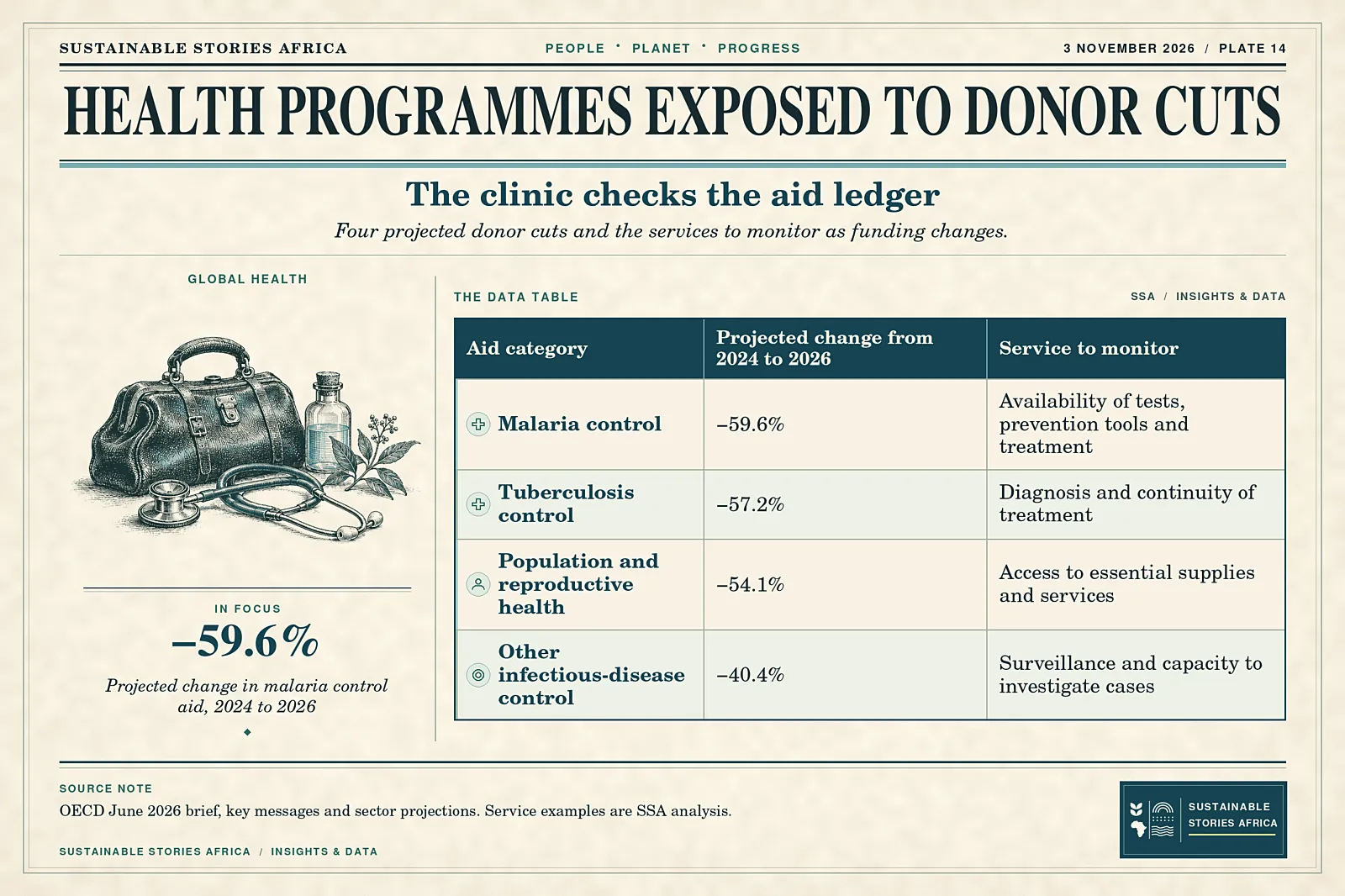
The OECD projects a 29% to 46% reduction in health aid between 2024 and 2026 across its scenarios.
- Its detailed estimates point to especially deep declines in malaria and tuberculosis control and in population and reproductive health.
- These are estimates for aid categories across recipients, and individual African programmes may see different changes.
A funded programme often combines several inputs.
- Treatment may depend on a laboratory, medicines, trained workers, transport to facilities and records that help patients complete a course.
- Covering the largest expense may leave the programme exposed if any of the smaller links stop working.
Multilateral channels face pressure of their own.
- The OECD projects a further 3.4% fall in multilateral ODA in 2026.
- It also expects core funding to UN organisations to fall by about 31% between 2024 and 2026.
- Plans that assume a multilateral organisation can replace withdrawn bilateral support need to identify a confirmed source and the timing of its disbursements.
A handover can be gradual even when donor budgets are falling quickly.
- A ministry might assume responsibility for staff first and take over medicines once procurement contracts and quality checks are ready.
- A donor could finance the gap between those steps if the timetable and costs are explicit.
- Gradual transfer is especially useful where programmes share laboratories or distribution networks.
- Closing one funding line without understanding those links can damage services whose own budgets appear intact.
Mapping shared costs makes the consequences of each decision visible.
What Protecting Essential Services Could Achieve
If a ministry can identify where an interruption would have the greatest health impact, it can preserve part of a programme while redesigning how it pays for the rest.
- For example, maintaining diagnostic capacity makes it easier to detect changes in disease burden and direct medicines where they are needed.
Donors can support that transition by understanding which services each will protect, sharing schedules and aligning handovers with national budget cycles.
- When several donors support different parts of one service, visibility over all the funding is essential.
- It can prevent a clinic from receiving equipment it cannot operate or medicines it cannot safely store.
Greater use of domestic procurement and budget systems can support continuity where they can deliver.
- Some transitions will take longer, especially in fragile settings or areas where non-government providers serve remote communities.
- These plans need realistic dates and explicit responsibility for each service.
Recipient governments also need to compare the cost of replacement funding with the cost of interruption.
- Some clinics could consolidate orders or use regional purchasing arrangements.
- Others need a domestic budget allocation because a regular service cannot depend on irregular appeals.
In the most aid-dependent countries, domestic revenue may be insufficient to cover all services quickly.
A prioritised plan gives development partners a clear view of the remaining gap and helps prevent an emergency allocation from displacing funding already committed to another essential service.
What Budget Teams Can Do Now
Finance and health ministries can map aid by programme, district, supplier and payment date.
- Matching commitments against expected disbursements shows where funds may run out before replacements are approved.
- A shared register should distinguish financing gaps from delivery problems such as long procurement lead times or shortages of trained staff.
Where services face interruption, authorities can identify a minimum package that preserves treatment, referral and reporting.
- Donors can explain what is legally committed and which transfers may change.
- A joint calendar gives governments time to choose whether to move money, reschedule procurement or ask for bridge funding.
Public reporting can focus on stockouts, missed visits and changes in coverage.
- These measures show who bears the impact of cuts and where responsibility transfer has worked.
- They should inform the next budget update, including which gaps will remain if the OECD’s projected decline persists.
Path Forward – How to Keep Services Running Longer
Governments and donors can agree on the services most exposed to interruption and publish who will fund and deliver them through the next budget cycle.
Coverage, stock and treatment records can reveal emerging gaps sooner than year-end aid totals.
These records should guide changes to bridge funding and longer-term domestic financing plans.