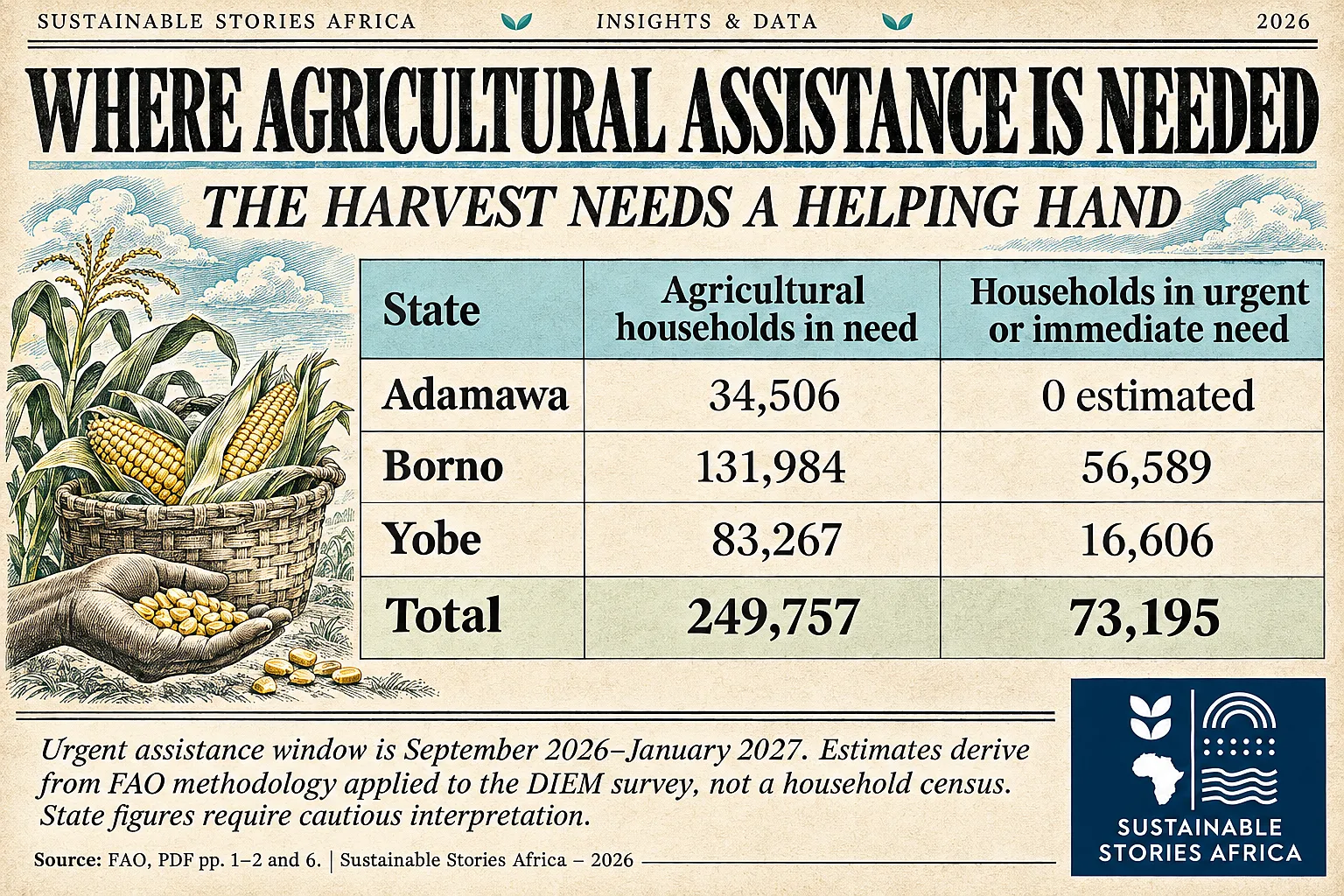
FAO estimates that 249,757 agricultural households need emergency assistance across Adamawa, Borno and Yobe, including 73,195 with urgent requirements between September 2026 and January 2027.
Rising costs and damaging coping strategies threaten future production.
The findings call for food support alongside timely livelihood assistance.
They are indicative estimates from a small survey, not a national census or proof that one external shock caused the crisis.
Emergency Farm Needs Extend Beyond Food
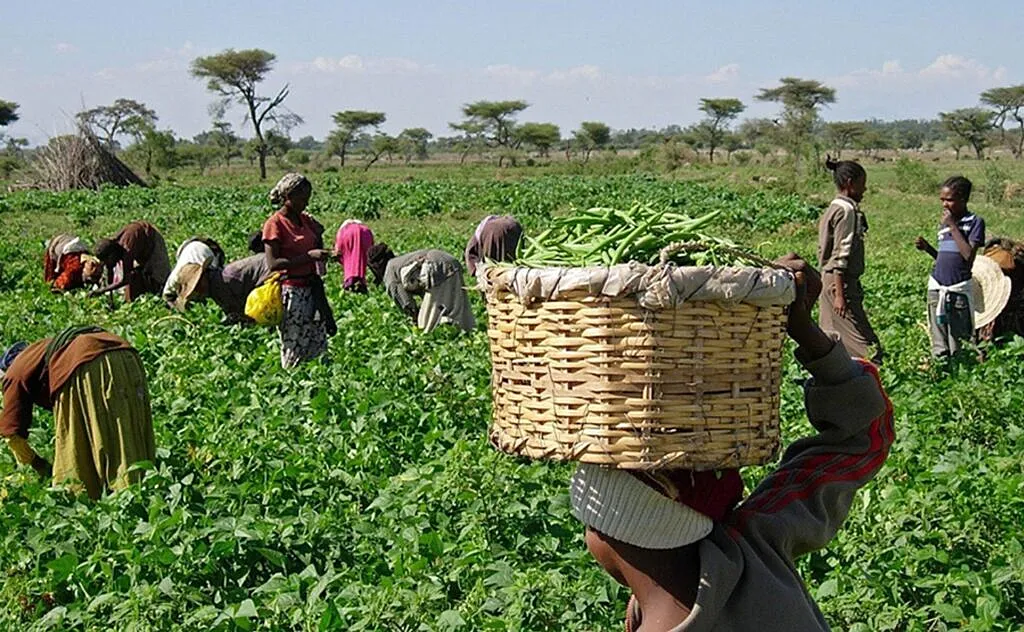
An estimated 249,757 agricultural households across Adamawa, Borno and Yobe require emergency agricultural assistance, according to a September FAO monitoring brief.
- Within that total, 73,195 households have urgent or immediate requirements during the September 2026-January 2027 period, placing productive support within the current humanitarian timetable.
The estimates represent about 2.28 million people, including 654,211 in the most severe category.
- Borno accounts for the largest share of agricultural households in need, followed by Yobe and Adamawa.
- Conflict, displacement, market constraints, and higher operating costs weaken farm livelihoods.
For Nigeria's response agencies and development partners, the issue is both immediate consumption and the ability to produce again.
- Households that borrow money, reduce inputs or sell productive assets may survive today's pressure, but become less able to withstand the next season.
- Assistance design needs to address those linked risks.
Borno Carries The Largest Estimated Caseload
Borno's estimated 131,984 agricultural households in need account for roughly 53% of the three-state total.
- The state also accounts for 56,589 of the 73,195 households classified as having urgent or immediate agricultural assistance needs.
- Yobe contributes the remaining 16,606 urgent households.
The table records zero urgent households for Adamawa while estimating 34,506 agricultural households in need there overall.
- This distinction should not be interpreted as an absence of hardship or a reason to exclude the state.
- It reflects the assessment’s classification and requires cautious local validation.
The underlying DIEM survey interviewed 478 households between July 13 and August 10.
- A separate MEAL survey covered 2,114 households during the same period and informed the broader analysis of emerging pressures.
Higher Costs Reach Farms Through Markets
The brief identifies cost escalation as a more prominent emerging channel than widespread physical shortages.
In its dedicated household analysis, 82% reported higher transport costs and 80% higher agricultural production costs, while fertiliser, fuel and food shortages were less common.
- These figures must retain their analytical context rather than be mixed with differently defined household groups.
The economic mechanism is straightforward.
- More expensive transport raises the cost of moving seed, fertiliser and produce
- Fuel costs affect machinery, irrigation and processing.
- Farmers can face tighter margins even when inputs are available.
- Households that also buy food then experience pressure on both income and consumption.
Secondary market evidence places fuel at an average of N1,300 per litre in August, compared with N1,180 in July.
- Urea prices cited from IFDC rose from about N35,000 per 50-kilogram bag in February to N50,000 in May.
The brief discusses the Strait of Hormuz crisis as a possible contributor to costs, alongside pre-existing insecurity and production constraints.
- The surveys do not establish that it caused the observed increases.
- Likewise, rainfall variability and El Niño are risk factors in the analysis, not explanations proven for every household loss.
Food access indicators reinforce the importance of purchasing power.
In the 478-household DIEM sample;
- 52% experienced moderate or severe food insecurity.
- The corresponding shares were 61% in Yobe, 52% in Borno and 42% in Adamawa.
- These survey indicators should not be presented as percentages of all state residents.
Protecting Assets Keeps Recovery Within Reach
FAO reports that approximately 96% of the estimated agricultural households in need require food assistance and 75% require agricultural livelihood support.
The categories overlap.
- They describe reasons to combine interventions, not separate populations that can be added together to produce a larger caseload.
Livelihood support protects productive capacity while consumption stabilises.
- Seeds, appropriate inputs, livestock services and help with production constraints are useful only if they match access conditions, household priorities and the relevant farming calendar.
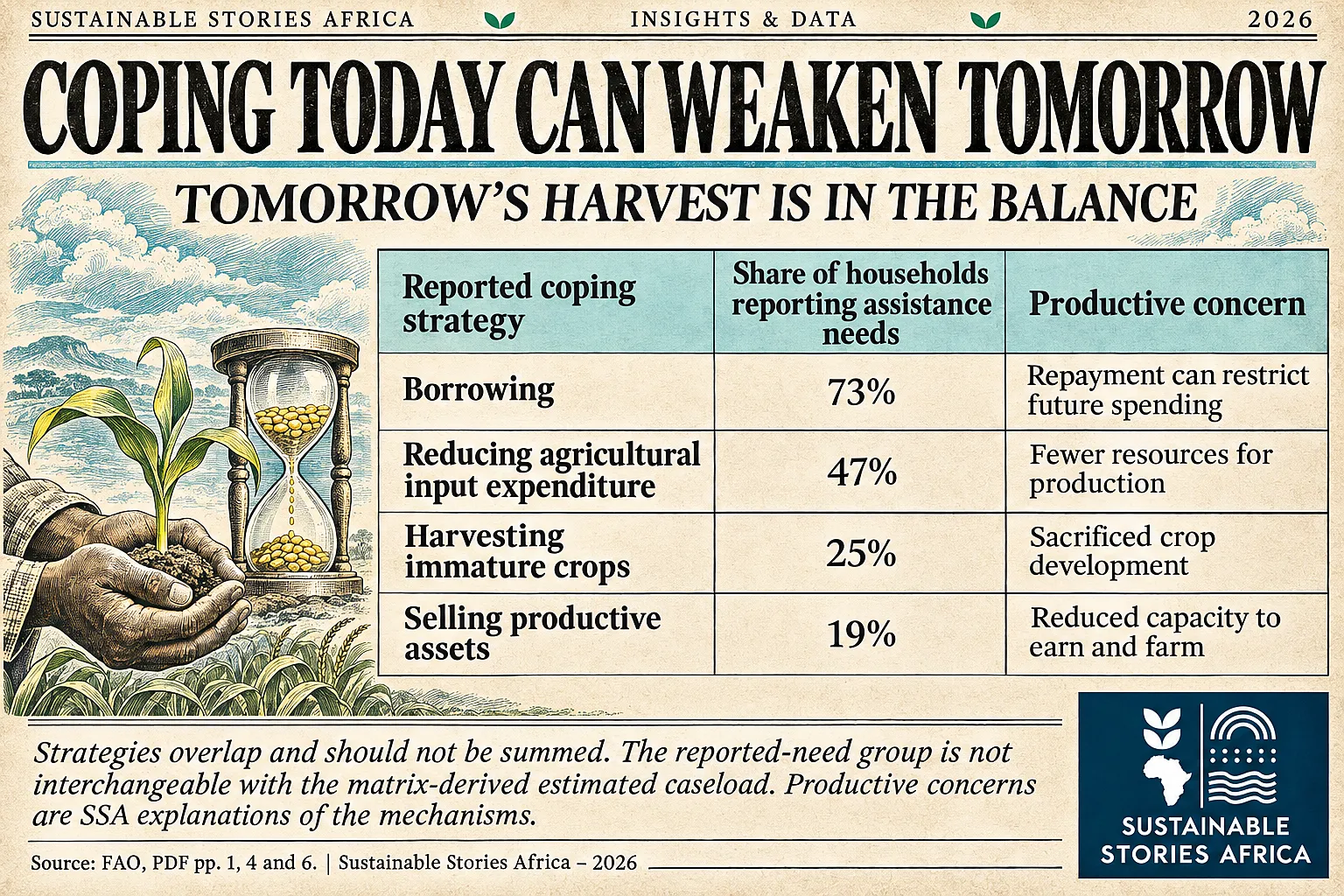
The distinction between relief and recovery becomes less useful when the same household needs both.
- Food support can reduce pressure to consume seed or sell assets, while livelihood assistance preserves the possibility of earning later.
The expected benefit is greater resilience, although the brief does not measure the effect of a completed intervention.
Fund Timely Support And Validate Targeting
Response agencies should use the estimates to prioritise field validation and delivery planning.
- Borno and Yobe warrant particular attention to urgent agricultural needs, while Adamawa's broader needs require continued assessment.
- Community-level information should refine targeting rather than mechanically reproduce small-sample state classifications.
As of November 2, the September-January urgency window is already in progress.
- Procurement and distribution plans should identify what can still arrive in time for local activities, including relevant dry-season production.
- Timing is part of effectiveness: an input delivered after the usable window may add little to production.
Coordinate food assistance and productive support around the same households where appropriate.
- Monitoring should distinguish unique recipients from service packages so overlapping needs do not become double-counted beneficiaries.
- This also helps explain why a household may receive both consumption assistance and agricultural inputs.
Delivery choices must reflect market access, safety and prices.
- Cash can help where supplies are accessible, and purchasing power is adequate; input provision may address specific shortages or quality constraints.
- Agencies should consult farmers and examine local markets before selecting either approach.
Public authorities and partners should track indicators that reveal whether productive capacity is stabilising.
- These include input use, access to fields and veterinary services, distress asset sales and food consumption.
- Pair measures of distribution volume with evidence that households could use the assistance.
The climate component should remain locally specific.
- The brief describes rainfall variability, dry spells and flooding risks rather than a uniform drought scenario.
Agricultural advice and contingency plans therefore need updated location-level weather information.
Stronger coordination among social protection, agriculture and climate services would make support more responsive to the combination of shocks households actually face.
Path Forward – For Timely Farm Recovery
Nigeria and its partners should validate local needs and deliver food and agricultural assistance within usable seasonal windows.
Borno and Yobe carry the largest estimated urgent caseloads.
Support should protect productive assets and track recovery alongside consumption.
Updated field evidence must guide targeting, with the survey's small samples and overlapping assistance categories kept clear.