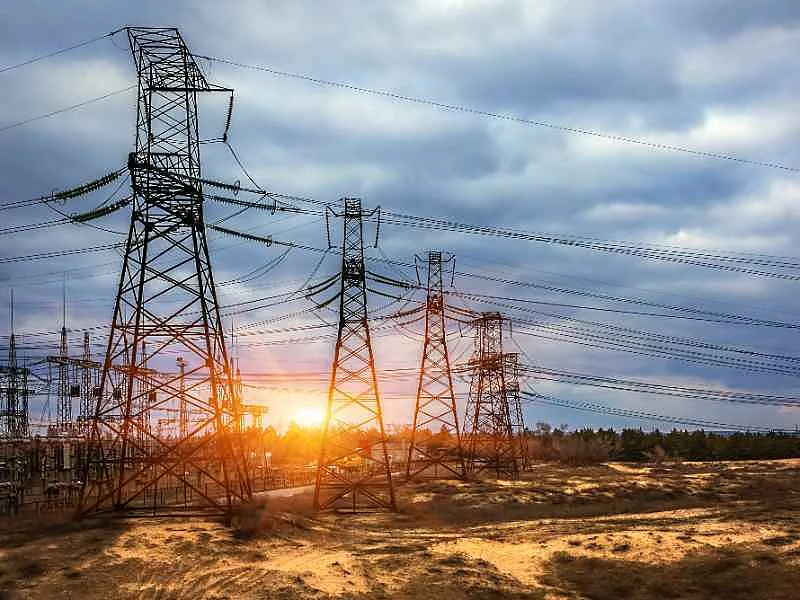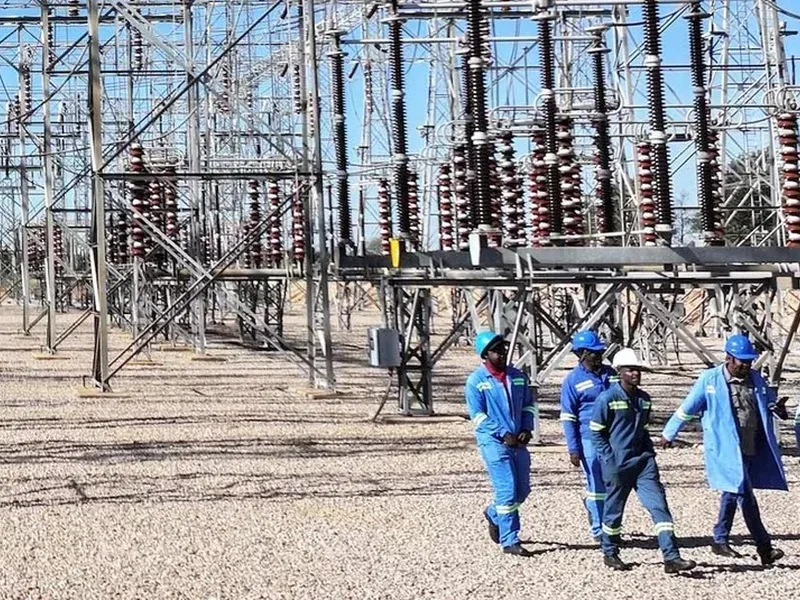
Hydropower gives Ethiopia a major clean-electricity advantage, but heavy dependence on one resource also exposes supply to rainfall and operational risks.
Solar, wind and geothermal could strengthen resilience if investment moves beyond announcements.
The IEA’s 2026 review argues for a complementary renewable system, connected to rural access, productive uses, reliable grids and financing arrangements that can turn promising resources into delivered services.
Renewable Leadership Needs A Broader Foundation
Ethiopia’s renewable-energy challenge is not simply to increase an already high clean-power share.
- It is to diversify supply, improve resilience and make energy useful to households, farms and industry.
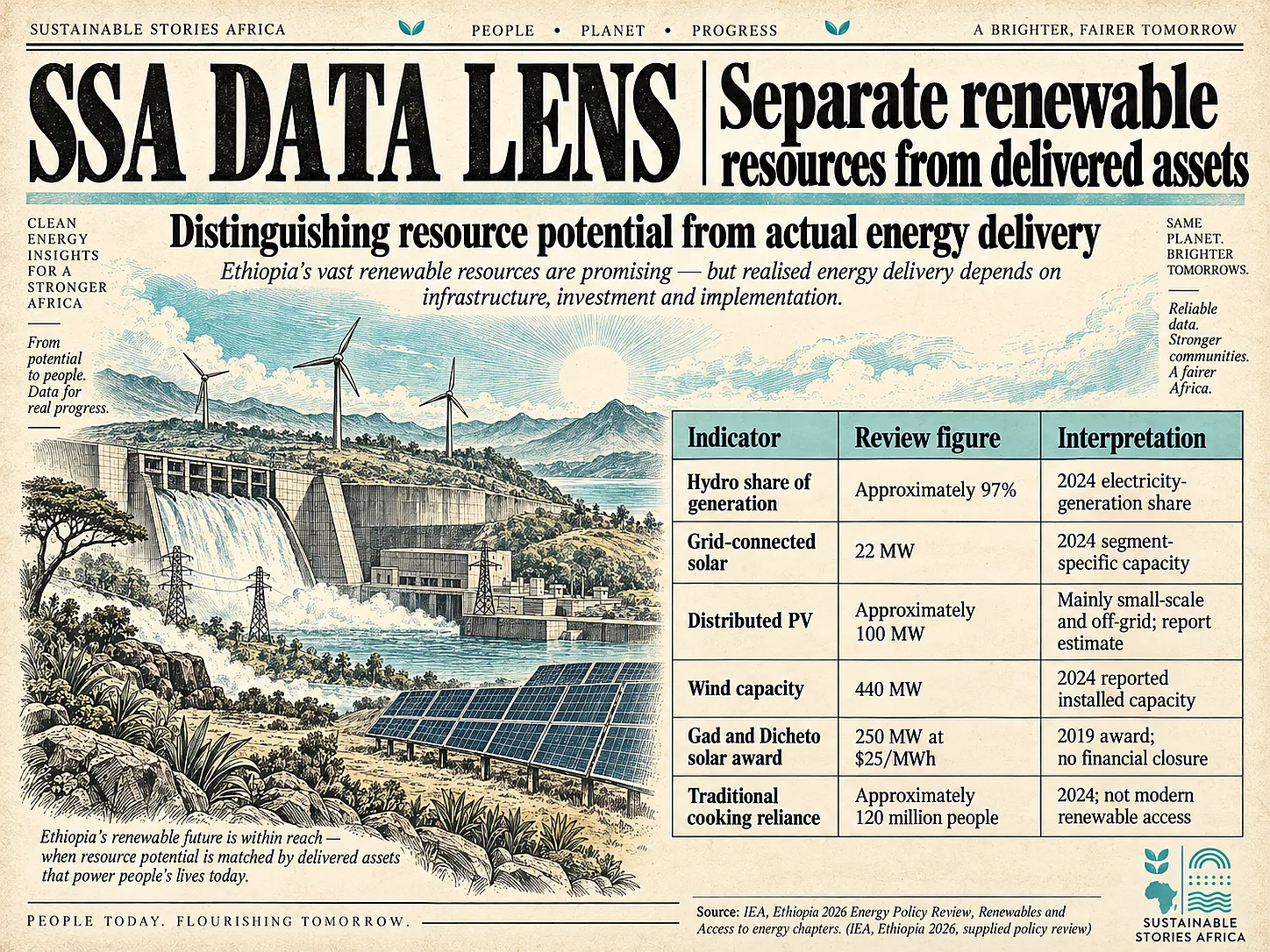
- Hydropower supplied about 97% of electricity generation in 2024, leaving the system heavily exposed to one resource.
This article draws especially on the Renewables chapter of the IEA’s Ethiopia 2026 Energy Policy Review, pages 57–79, while integrating the report’s power-sector, general-policy and access analysis.
- It treats electricity supply and wider energy use as different categories.
That distinction is critical.
- Ethiopia’s high renewable share in total energy supply includes extensive traditional biomass use.
- This does not mean most households already benefit from modern energy services or clean cooking.
- Renewable abundance and energy poverty can coexist
A Clean Grid Can Remain Vulnerable
Reservoir hydropower gives Ethiopia valuable low-carbon electricity and operational flexibility.
- However, reliance on rainfall and hydrological conditions creates exposure to drought and changing climate patterns.
- Equipment availability and maintenance also determine how much installed capacity can actually operate.
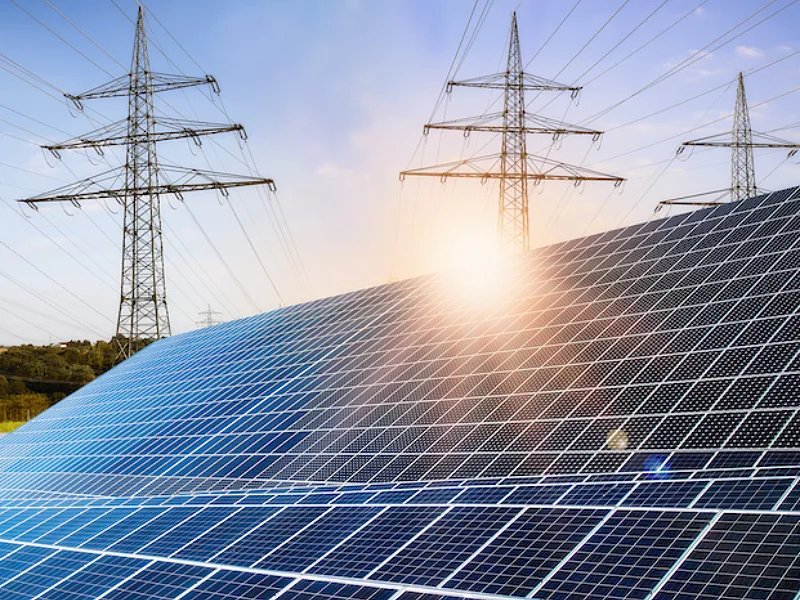
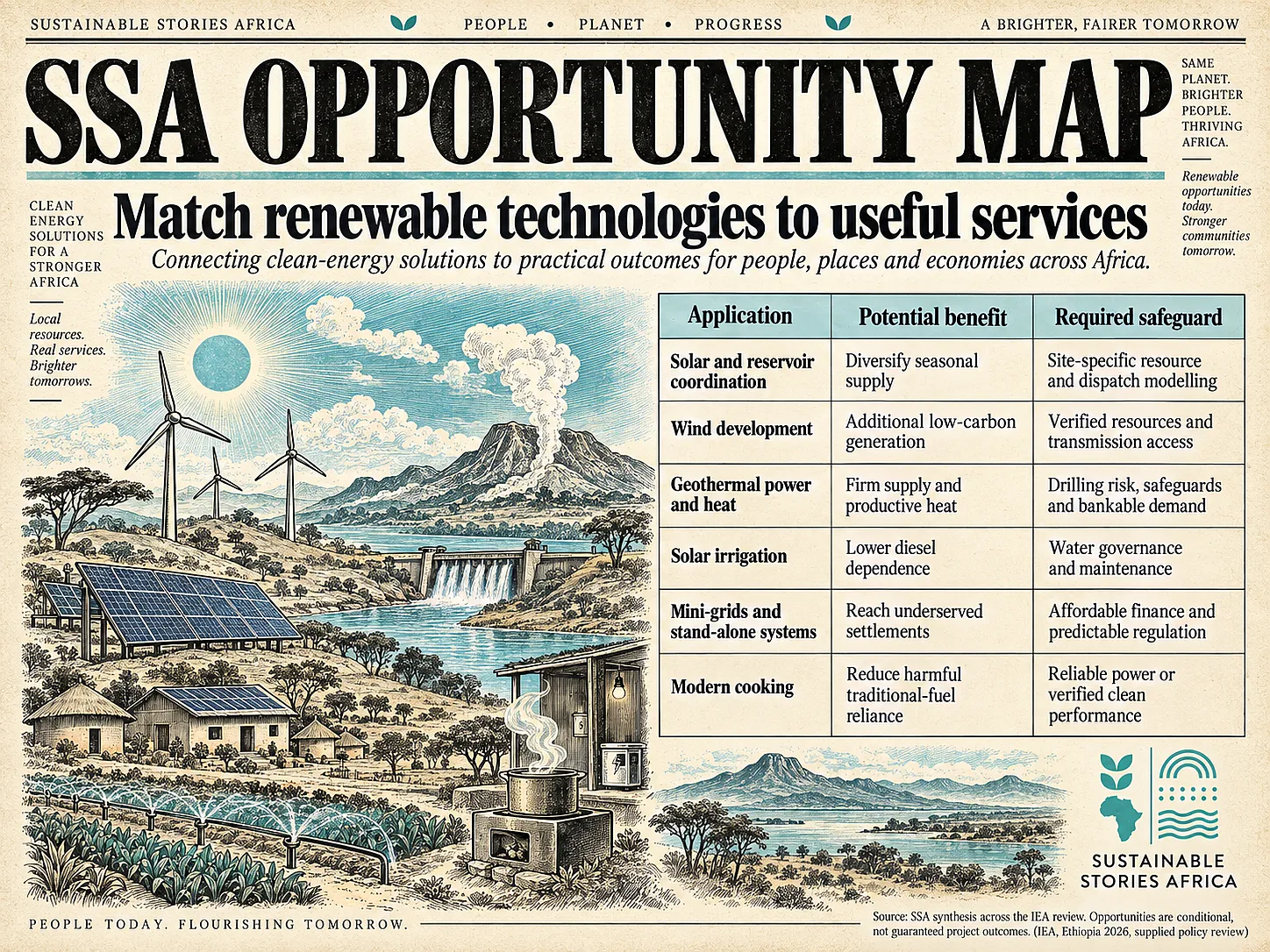
The IEA argues for a complementary system: solar and wind can contribute when resource conditions are favourable, while reservoirs and geothermal can provide balancing or firm output.
- The objective is a coordinated mix, not the replacement of one dominant technology with another.
Assess seasonal complementarity at project and system level.
- National rainfall patterns are not a substitute for reservoir modelling, and mapped wind potential is not evidence of a financeable wind farm.
- Resource quality, transmission access and actual demand all matter.
The National Energy Compact targets 14 GW of generation capacity by 2030 and at least 15% non-hydro renewable capacity.
- These ambitions require diversity, flexibility, maintenance and networks, not simply a higher renewable percentage.
- Capacity shares must also be distinguished from the share of electricity actually generated.
Strong Resources Have Not Guaranteed Project Delivery
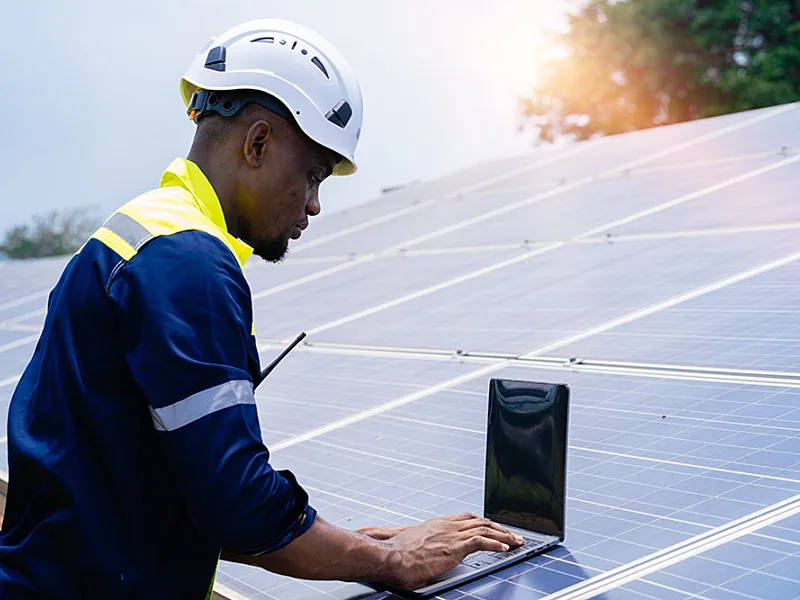
The review reports 22 MW of grid-connected solar capacity in 2024 and approximately 100 MW of distributed PV, mainly off-grid and small-scale systems.
- It records 440 MW of wind capacity for 2024. These figures refer to different technology segments and should retain their stated year and coverage.
Solar procurement illustrates the gap between a low bid and an operating asset.
- Gad and Dicheto, awarded in 2019 for a combined 250 MW at $25/MWh, did not reach financial closure.
- The review identifies financing, foreign-exchange and conflict-related obstacles.
- The tariff was an award, not a delivered electricity cost from operating projects.
Geothermal offers another form of diversification.
- The review describes substantial resources along the East African Rift and projects at varying stages of exploration and development.
- However, drilling risk, financing, institutions and grid infrastructure constrain progress.
- Technical potential is not installed capacity.
The review also contains project naming and numerical inconsistencies, so this article avoids aggregating its wind pipeline or treating all named developments as operational.
- For investors and policymakers, verified status is more useful than a large but ambiguous pipeline total.
The broader lesson is that resource assessment and competitive bidding need a delivery framework: land access, credible offtake, manageable currency risk, institutional capacity and a realistic route to construction.
The report’s mini-grid and solar-home-system analysis also shows why a diversified supply strategy needs more than resource maps.
- A remote settlement may have excellent sunlight but insufficient customer income to cover an unsubsidised system.
- A viable technology choice and an affordable commercial offer are separate tests.
Public support should therefore identify the gap it is intended to close: connection costs, household finance, developer risk or the additional cost of serving a remote location.
- Different barriers call for different instruments.
- A capital grant alone may not solve uncertain tariff approval, while a clear licence does not make an appliance affordable.
The same principle applies to utility-scale investment.
- A low quoted generation tariff is valuable only if the project reaches operation and the system can use its output.
- Procurement should make delivery conditions visible before awarding success to the cheapest bid.
This links renewable policy directly to the power-sector reforms examined elsewhere in the review.
Renewable Services Can Transform Rural Production
The IEA highlights solar irrigation, agrivoltaics and direct geothermal heat as applications that connect renewable resources to economic activity.
- These opportunities shift attention from selling electricity alone to providing useful services such as water pumping, drying and process heat.
For a farmer, solar irrigation can reduce dependence on diesel, but water availability and groundwater management remain essential
- A low-cost energy source does not make unlimited pumping sustainable.
- Equipment finance and maintenance also determine whether the system remains productive.
Agrivoltaics combines energy generation with agricultural land.
- Its value depends on crop suitability, design and local conditions, not on the assumption that every solar installation can also sustain profitable farming.
- Community participation and land rights should shape development from the start.
Direct geothermal heat could support agro-processing and light industry near suitable resources.
- The review argues that demand aggregation, standard business models and shared steam infrastructure could improve viability.
- Electricity-generation projects and heat-service projects share resources but have different commercial requirements.
Rural electrification also needs the right technology for the settlement.
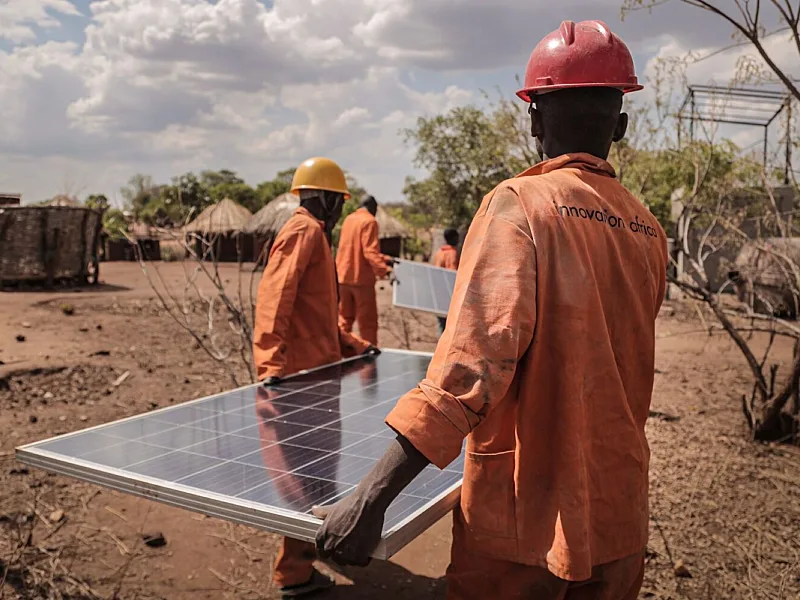
- Mini-grids can serve clustered demand and anchor customers, while stand-alone systems may suit dispersed households.
- The review records 39 utility-operated solar mini-grids and two privately operated systems, together serving fewer than 10,000 households at the time described.
- Their small footprint shows how far scale-up remains from ambition.
Make Renewable Investment Deliver Inclusive Services
Government should align renewable procurement with integrated power planning and realistic access pathways.
- A solar project should be assessed for its contribution to system value and local service, not only its auction price.
- Geothermal projects need staged risk-sharing and credible resource data before making large commitments.
The IEA recommends well-resourced auction institutions, transparent land allocation and a financing environment that addresses currency and offtaker risks.
- These measures are complementary: a strong auction process cannot compensate for an unfinanceable contract or unresolved land rights.
Off-grid regulation also needs operational clarity.
- The review describes uncertainty over tariff approval, licence duration and compensation when the main grid arrives.
- Clear geospatial plans and predictable procedures can reduce avoidable risk while preserving community consultation and environmental standards.
Affordability remains decisive.
- Solar home systems can provide a useful service without continuous fuel purchases, but upfront payment can exclude low-income households.
- Evaluate consumer financing, quality assurance, and after-sales support together.
- A cheap product that fails early does not provide affordable access.
Clean cooking belongs in this renewable strategy, not outside it.
- The review estimates around 120 million people still relied on traditional cooking methods in 2024.
- Electric cooking requires dependable networks and affordable appliances; biomass options require health, efficiency and sustainability scrutiny rather than an automatic clean label.
Biofuels need similar discipline.
- Domestic production can support diversification, but land, food security, water and life-cycle impacts determine whether it delivers genuine benefits.
- The report itself calls for long-term sustainability in bioethanol and biodiesel development.
A successful renewable strategy would therefore connect resource diversity with modern energy services.
- Measuring progress is not theoretical potential but dependable power, sustainable heat and productive opportunities that reach more people.
Path Forward – Diversify Resources And Deliver Useful Energy
Ethiopia should build a complementary renewable mix while improving project preparation, currency-risk management, land procedures and grid readiness.
Rural energy programmes need affordable finance, clear regulation and reliable after-sales service.
Hydropower remains a strategic strength.
Solar, wind and geothermal can reinforce it when investment decisions focus on delivered system value, sustainable resource use and better access to modern energy services.